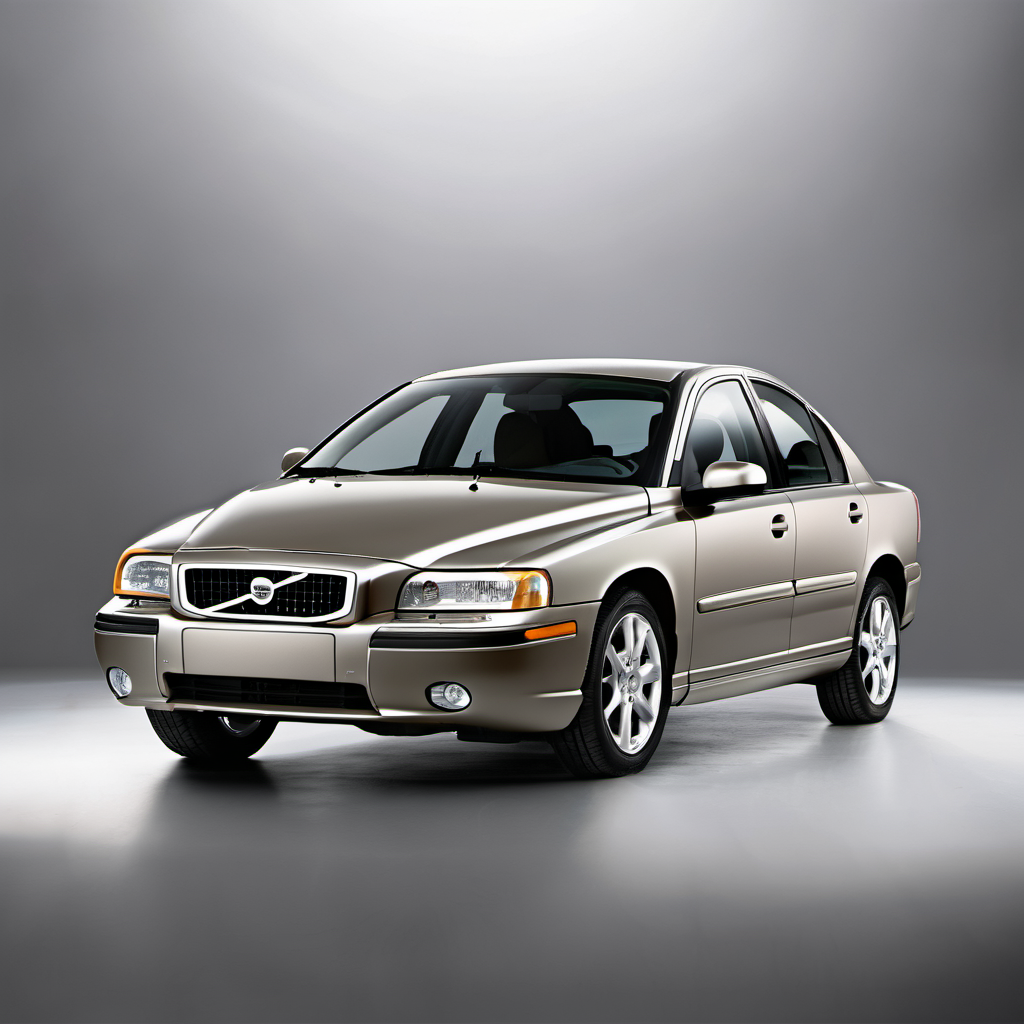
2005 Volvo S60 Sedan

2005 Volvo

S60Sedan

Sedan

The 2005 Volvo S60 is a compact European sport sedan built on Volvo's P2 platform, shared with the S80, V70, and XC70. In AWD T5 trim, it pairs a turbocharged 2.5L inline-5 with all-wheel drive, making it a surprisingly capable four-season sedan that fits right in with Wisconsin winters. It was positioned as Volvo's sportier offering without going full luxury-barge, giving it a tighter, more driver-focused feel than the bigger S80. Volvo's reputation for safety engineering is well-earned on the S60 — side curtain airbags, WHIPS whiplash protection, and a rigid safety cage were standard. The interior quality was solid for the mid-2000s, though it has aged in terms of tech and ergonomics. Ownership today means you're driving a 20-year-old Swedish sedan with European-sourced parts pricing to match. These cars can be reliable daily drivers when well-maintained, but deferred maintenance catches up fast and expensively. Oil changes with the correct spec, turbo care, and attention to the cooling system are non-negotiable. Budget accordingly and this S60 is a rewarding ownership experience; ignore the maintenance and it becomes a money pit.

Reliability
3/5
Verified data
Specs shown for S60 AWD — the most common configuration. Other trims may vary in engine, drivetrain, or fuel economy. Sign in to see your vehicle's exact specs.
Engine
[object Object]
Drivetrain
AWD
Fuel
Premium gasoline
MPG
17 city / 24 hwy / 20 combined
Seats
Doors
Body
Compact Cars

Overview

AI-curated

The 2005 Volvo S60 is a compact European sport sedan built on Volvo's P2 platform, shared with the S80, V70, and XC70. In AWD T5 trim, it pairs a turbocharged 2.5L inline-5 with all-wheel drive, making it a surprisingly capable four-season sedan that fits right in with Wisconsin winters. It was positioned as Volvo's sportier offering without going full luxury-barge, giving it a tighter, more driver-focused feel than the bigger S80. Volvo's reputation for safety engineering is well-earned on the S60 — side curtain airbags, WHIPS whiplash protection, and a rigid safety cage were standard. The interior quality was solid for the mid-2000s, though it has aged in terms of tech and ergonomics. Ownership today means you're driving a 20-year-old Swedish sedan with European-sourced parts pricing to match. These cars can be reliable daily drivers when well-maintained, but deferred maintenance catches up fast and expensively. Oil changes with the correct spec, turbo care, and attention to the cooling system are non-negotiable. Budget accordingly and this S60 is a rewarding ownership experience; ignore the maintenance and it becomes a money pit.

Known for
  • Strong crash-safety engineering and five-star ratings
  • Turbocharged inline-5 with punchy mid-range power
  • AWD system that handles Wisconsin winters confidently
  • Distinctive Scandinavian interior design
  • Higher-than-average European parts and repair costs
Best for
  • Drivers who want European sport-sedan feel on a used-car budget
  • Four-season daily driving in cold, snowy climates
  • Safety-conscious buyers who don't need the latest tech
  • Owners willing to stay on top of maintenance schedules
Watch for
  • Neglected timing belt and tensioner (engine damage if skipped)
  • Turbo seal and oil feed line wear at higher mileage
  • Throttle body and ETM (electronic throttle module) failure — a known P2-era issue
  • Expensive Volvo-specific parts and dealer diagnostic fees
  • Coolant system leaks from plastic expansion tank and hoses

Common issues by mileage

6 known

Electronic Throttle Module (ETM) Failure

high
Typically appears
60–120k mi
Estimated repair
$400 – $900

Timing Belt & Tensioner Wear

high
Typically appears
70–100k mi (interval-based)
Estimated repair
$600 – $1,100

VVT / Cam Timing Solenoid Failure

medium
Typically appears
80–150k mi
Estimated repair
$200 – $600

Turbocharger Oil Feed Line Sludge / Seal Leak

medium
Typically appears
100–180k mi
Estimated repair
$300 – $1,200

Coolant Expansion Tank Crack / Coolant Leak

high
Typically appears
60–120k mi
Estimated repair
$150 – $400

Oxygen / HO2S Sensor Heater Circuit Failure

medium
Typically appears
80–140k mi
Estimated repair
$150 – $450

Maintenance schedule

  1. 1
    Every 70k mi or 7 years, whichever comes first Timing belt, tensioner, and water pump replacement

    This is a non-negotiable on the 2.5T. Belt failure is catastrophic — it's an interference engine. Always replace the water pump and tensioner at the same time since labor is the same.

  2. 2
    Every 5,000 mi in mixed driving Engine oil change — use correct spec (VCC-RBS-2AE / 5W-30 full synthetic)

    The turbo and VVT solenoids are oil-quality sensitive. Wrong or old oil accelerates sludge buildup in the turbo feed lines and cam timing components. Don't stretch intervals on this engine.

  3. 3
    Every 3 years or 45k mi Coolant flush and expansion tank inspection

    The plastic expansion tank is a known failure point and becomes brittle with age. Inspect it at every service for cracks or weeping. A $25 tank failure can dump your coolant and overheat the engine.

  4. 4
    Every 100k mi or at signs of oil consumption PCV system cleaning or replacement

    The S60's PCV (breather) system clogs with age, causing crankcase pressure to build and push oil past seals and into the intake. A cheap fix ignored becomes a costly one.

  5. 5
    Every 60k mi Transmission fluid change (automatic)

    Volvo spec says lifetime fluid but real-world AWD use in cold climates degrades it faster. Fresh fluid at 60k intervals keeps the AW55 transmission shifting cleanly.

  6. 6
    Every 60k mi Spark plug replacement

    Iridium plugs are OEM spec. Worn plugs on a turbo engine cause misfires that stress the catalytic converter and can trigger multiple fault codes.

  7. 7
    Every 2 years Brake fluid flush

    Hygroscopic brake fluid absorbs moisture over time, lowering its boiling point. In a panic stop, old fluid can cause brake fade. Two-year intervals are Volvo's own recommendation.

  8. 8
    Every 37,500 mi AWD rear differential and Haldex coupling service

    The Haldex AWD unit has its own oil that gets overlooked. Skipping this service leads to AWD engagement hesitation and eventual clutch pack wear — an expensive repair.

Always defer to the manufacturer's service manual for warranty-mandated intervals.

Cost of ownership

Annual maintenance
$900 – $2,200
Fuel
Premium gasoline required; at current upper Midwest prices (~$3.60–$4.00/gal premium) expect $1,800–$2,400/yr at 12,000 mi/yr based on ~20 mpg combined.
Insurance
Typically $900–$1,400/yr for a 2005 model in southern Wisconsin, depending on driver profile. Volvo safety ratings help keep premiums reasonable.

This is not a cheap car to own on a per-repair basis. Parts are European-priced and some require Volvo-specific diagnostics. A healthy, maintained example runs $900–$1,400/yr in routine maintenance. Factor in a timing belt service ($700–$1,100) every 7 years and a periodic ETM or sensor repair and your true cost of ownership is $1,500–$2,500/yr in a realistic scenario. That said, buying a well-maintained S60 at a fair used price can still pencil out versus a newer car payment.
Seasonal care

Lake Geneva, WI
Winter
  • Switch to a full winter tire set on steel wheels before November — the AWD system helps traction but does not help stopping; winter tires do. Salt on Wisconsin roads is aggressive.
  • Inspect and flush coolant before freeze-up; the aging plastic expansion tank and hoses are vulnerable to pressure spikes in extreme cold.
  • Test the battery before December — Volvo's accessory load (heated seats, defrost, DSTC) drains a weak battery fast. Cold-crank amps matter sub-zero.
  • Top off with -40°F-rated windshield washer fluid. The S60's heated washer nozzles help but won't save you if the reservoir has summer mix.
  • Allow a 60–90 second idle warm-up in sub-zero temps before driving away hard; the turbo needs oil pressure to circulate before boost.
  • Check and clean underbody annually for salt accumulation, especially around the rear subframe mounts and brake lines — rust is the real long-term threat on Wisconsin cars.
Summer
  • Check tire pressure monthly — summer heat causes significant pressure fluctuations in performance tires. These cars typically run 35–38 PSI.
  • Inspect the A/C system — the S60's cabin blower motor resistor and A/C compressor clutch are known wear items. Test the system in May before you need it.
  • Watch coolant temperature on hot days in stop-and-go traffic; an aging thermostat or low coolant from a slow tank leak will show up first in summer heat.
  • Inspect serpentine belt and tensioner — heat accelerates rubber belt degradation. A belt failure at highway speed takes the power steering and alternator with it.

Comparable vehicles

If you're shopping for one

Red flags
  • No timing belt records past 70k miles — walk away or negotiate a steep discount to cover immediate service.
  • Check engine light on at time of sale — especially any cam timing or turbo codes; these indicate deferred mechanical repairs.
  • Overheating history or brown/milky coolant — potential head gasket damage on a high-repair-cost engine.
  • Heavy rust on underbody, especially subframe or brake lines — structural rust on a 20-year-old Wisconsin car is a safety issue, not just cosmetic.
  • Sluggish or hesitant throttle response — classic ETM failure sign on these P2 Volvos.
  • AWD shudder or 'clunking' in tight turns — worn Haldex coupling or rear differential, costly repair.
What to inspect
  • Ask for timing belt service records — if unknown, budget for immediate replacement before purchase.
  • Request ETM replacement history; if the original unit is still installed past 100k, it's a near-term repair.
  • Check for coolant in the overflow tank — look for brownish discoloration that signals a head gasket weep or cross-contamination.
  • Start the engine cold and listen for turbo whine or rattling on initial startup — indicates turbo bearing or oil feed issues.
  • Scan for DTCs before purchase, specifically any cam timing codes (P0012, P0015) or turbo bypass codes (P0033–P0035) that signal deferred mechanical issues.
  • Inspect the undercarriage for rust on the subframe, brake lines, and fuel lines — Wisconsin salt exposure is the biggest used-car killer on P2-era Volvos.
  • Test all electrical features: heated seats, sunroof, windows, DSTC — Volvo electronics are expensive to diagnose and repair.
  • Check the Haldex AWD engagement by finding a loose gravel or wet lot and doing a slow figure-8 — all four wheels should be pulling without shudder.
AI profile generated 8 days ago · claude-sonnet-4-6 · v2.