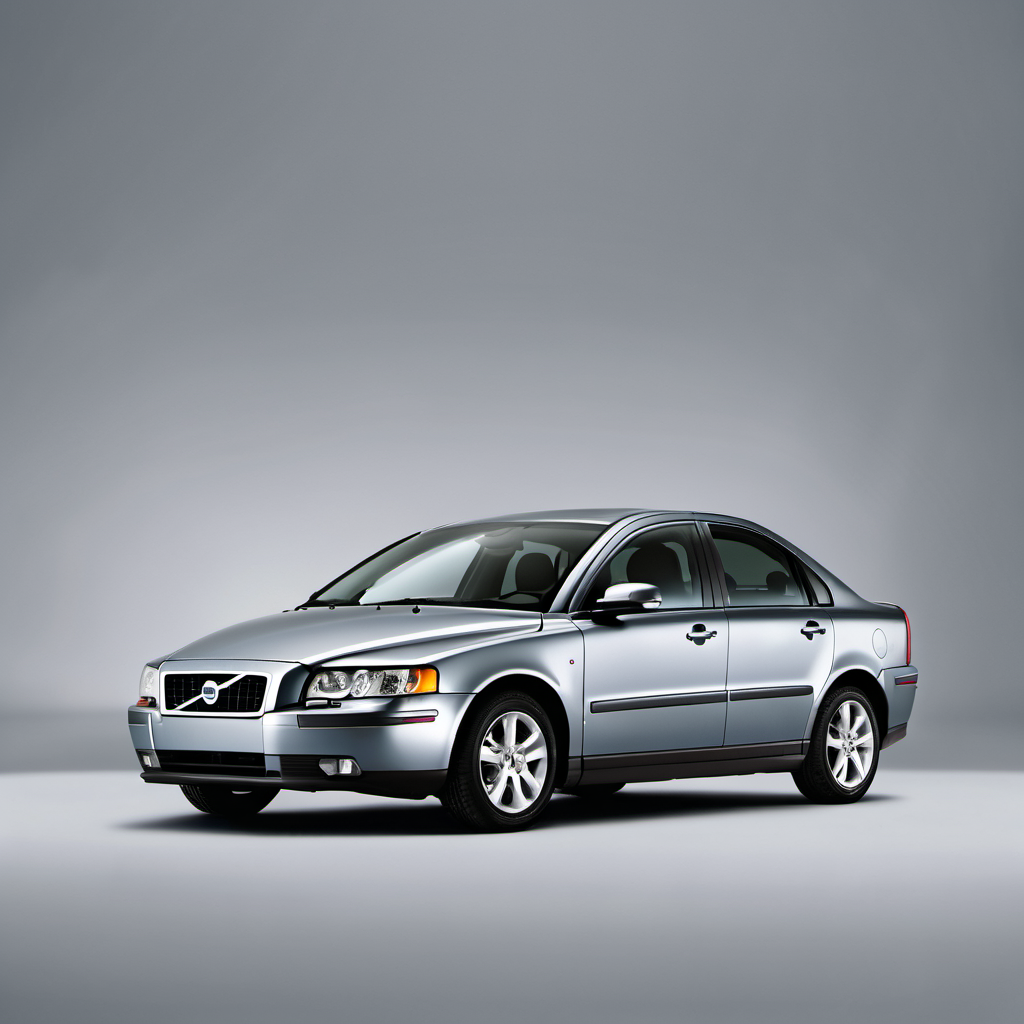
2005 Volvo S40 Sedan

2005 Volvo

S40Sedan

Sedan

The 2005 Volvo S40 is a compact European sedan built on the Ford-Mazda C1 platform, shared with the Mazda 3 and Ford Focus of that era. For this model year, the T5 AWD trim pairs a turbocharged 2.5-liter inline-five with Haldex-based all-wheel drive — a genuinely useful combination for Wisconsin winters. It punches above its size with a premium interior feel and strong safety credentials. The S40 was Volvo's entry point into the compact segment, competing with the Audi A4 and BMW 3 Series on style and safety but at a lower price. The five-cylinder turbo engine is a well-known Volvo unit shared across the S60, V70, and XC90 lineups, which means parts availability is reasonable, though specialty labor costs keep the ownership bill higher than domestic alternatives. At nearly 20 years old, most S40s on the road today are high-mileage examples. Reliability is decent for a European compact if the maintenance history is solid, but deferred maintenance — especially oil changes and timing belt service — can turn this into an expensive proposition quickly. Know the service history before you buy.

Reliability
3/5
Verified data
Specs shown for S40 AWD — the most common configuration. Other trims may vary in engine, drivetrain, or fuel economy. Sign in to see your vehicle's exact specs.
Engine
[object Object]
Drivetrain
AWD
Fuel
Premium gasoline
MPG
17 city / 25 hwy / 20 combined
Seats
Doors
Body
Compact Cars

Overview

AI-curated

The 2005 Volvo S40 is a compact European sedan built on the Ford-Mazda C1 platform, shared with the Mazda 3 and Ford Focus of that era. For this model year, the T5 AWD trim pairs a turbocharged 2.5-liter inline-five with Haldex-based all-wheel drive — a genuinely useful combination for Wisconsin winters. It punches above its size with a premium interior feel and strong safety credentials. The S40 was Volvo's entry point into the compact segment, competing with the Audi A4 and BMW 3 Series on style and safety but at a lower price. The five-cylinder turbo engine is a well-known Volvo unit shared across the S60, V70, and XC90 lineups, which means parts availability is reasonable, though specialty labor costs keep the ownership bill higher than domestic alternatives. At nearly 20 years old, most S40s on the road today are high-mileage examples. Reliability is decent for a European compact if the maintenance history is solid, but deferred maintenance — especially oil changes and timing belt service — can turn this into an expensive proposition quickly. Know the service history before you buy.

Known for
  • Strong safety ratings and Volvo crash engineering pedigree
  • Turbocharged inline-five with real punch for a compact sedan
  • AWD traction advantage in snow and ice
  • Premium Scandinavian interior quality and ergonomics
  • Shared platform with Ford/Mazda keeps some parts costs manageable
Best for
  • Drivers who want a compact European sedan with real winter capability
  • Safety-conscious buyers in snow-belt climates
  • Enthusiasts who want spirited driving without the BMW price tag
  • Commuters who can handle above-average maintenance costs
Watch for
  • Timing belt and tensioner service — catastrophic engine failure if neglected
  • Haldex AWD coupling requires its own fluid service, often skipped
  • PCV (oil trap) system clogs are nearly universal on high-mileage examples
  • Electronic gremlins become more common as the car ages past 15+ years
  • Parts and specialist labor costs are higher than domestic sedans of the same era

Common issues by mileage

6 known

PCV / Oil Trap System Clogging

high
Typically appears
80–150k mi
Estimated repair
$300 – $700

Timing Belt, Tensioner & Water Pump Failure

high
Typically appears
100–120k mi (or 10 years, whichever comes first)
Estimated repair
$700 – $1,200

Variable Valve Timing (VVT) / Camshaft Position Solenoid Faults

medium
Typically appears
80–150k mi
Estimated repair
$250 – $600

Turbocharger Bypass (Diverter) Valve Failure

medium
Typically appears
60–120k mi
Estimated repair
$150 – $400

Oxygen Sensor / Heater Circuit Failure

medium
Typically appears
80–130k mi
Estimated repair
$150 – $350

Haldex AWD Coupling Wear / Failure

medium
Typically appears
100–180k mi
Estimated repair
$500 – $1,800

Maintenance schedule

  1. 1
    Every 105k mi or 10 years — whichever comes first Timing belt, tensioner, and water pump replacement

    This is an interference engine. A snapped belt destroys the engine. If you can't verify the last service date, do it now regardless of mileage.

  2. 2
    Every 5,000–7,500 mi Engine oil and filter change — use full synthetic 0W-30 or 5W-30 meeting Volvo VCC-RBS2AE spec

    The 2.5T is sensitive to oil sludge. Extended intervals or wrong viscosity accelerate PCV clogging and VVT solenoid fouling.

  3. 3
    Every 60k mi or at first sign of oil leaks or rough idle PCV (oil trap) system inspection and cleaning/replacement

    The PCV oil separator is a near-universal failure point. A clogged trap builds crankcase pressure, causes gasket leaks, and can push oil into the intake.

  4. 4
    Every 37,500 mi or 3 years Haldex AWD coupling fluid change

    Haldex fluid degrades and causes the rear coupling to engage poorly or fail. Most owners skip this; the repair is expensive. Check if it's ever been done.

  5. 5
    Every 60k mi Spark plug replacement

    The inline-five runs best with fresh plugs. Worn plugs stress the ignition coils and can cause misfires under boost.

  6. 6
    Every 5 years Coolant system flush and thermostat inspection

    The water pump is driven by the timing belt — replace coolant when the belt is done. Old coolant accelerates pump bearing wear.

  7. 7
    Every 2 years Brake fluid flush

    Volvo's ABS and stability control systems are sensitive to moisture-contaminated fluid, especially in Wisconsin winters where corrosion is accelerated.

  8. 8
    Every 20k–30k mi Cabin and engine air filter replacement

    A clogged engine air filter reduces turbo efficiency and fuel economy. The cabin filter also protects the blower motor, which is moderately expensive to replace on this platform.

Always defer to the manufacturer's service manual for warranty-mandated intervals.

Cost of ownership

Annual maintenance
$900 – $2,200
Fuel
Requires premium gasoline. At typical Wisconsin driving of ~12,000 mi/yr and 20 MPG combined, expect roughly $2,000–$2,400/yr at current fuel prices.
Insurance
Typically moderate — comparable to other compact European sedans. Expect slightly higher premiums than domestic competitors due to parts and repair costs.

The S40 T5 AWD is not a cheap car to own at this age. Routine maintenance runs higher than domestic or Japanese rivals because of European part costs and specialist labor. Budget on the higher end if the car has deferred maintenance. A major service year (timing belt, Haldex fluid, PCV system) can easily push annual costs above $2,000. That said, a well-maintained example is not unreasonably expensive to keep on the road — the platform is solid and parts are not exotic.
Seasonal care

Lake Geneva, WI
Winter
  • Switch to a full synthetic 0W-30 if not already — cold starts below 0°F are hard on thicker oil and the turbo's oil feed
  • Test the battery every fall; cold cranking amps drop significantly below 20°F and this car's electronics demand a healthy battery
  • Flush and fill washer fluid reservoir with -20°F or colder rated fluid before first freeze — the low fluid line is tucked under the hood and freezes fast
  • Inspect and treat exposed underbody and brake lines for road salt corrosion — Wisconsin salt is brutal on early-2000s European steel
  • Verify the Haldex AWD system is functioning before relying on it in snow; a neglected Haldex coupling may not engage the rear axle reliably
  • Use dedicated winter tires on all four corners — AWD helps you go, it does not help you stop; the stock all-seasons are marginal in heavy snow
Summer
  • Check tire pressure monthly — summer heat increases pressure by 3–5 PSI and over-inflation wears tires unevenly
  • Inspect the intercooler and radiator for debris and bug buildup that restricts airflow — the turbo generates significant heat
  • Test A/C system performance early in the season; the compressor and refrigerant lines are aging on a 20-year-old car
  • Watch coolant temperature gauge during highway pulls in heat — a marginal thermostat or water pump shows itself in summer

Comparable vehicles

If you're shopping for one

Red flags
  • No documentation of timing belt replacement on a car over 105k mi or 10+ years old — walk away or demand a steep price reduction
  • Blue or white exhaust smoke indicating oil burning from a clogged PCV or worn turbo seals
  • Any indication the check engine light has been recently cleared without repairs
  • Harsh rear engagement or total rear-wheel slip on a slick surface (Haldex coupling failure)
  • Heavy rust on brake lines, frame rails, or fuel lines — repair costs can exceed the car's value
  • Mismatched paint panels or inconsistent gaps suggesting unreported collision history
What to inspect
  • Timing belt service records — ask for the receipt, not just the owner's word
  • Haldex AWD fluid service history — pull the rear differential cover drain and check fluid condition if records are absent
  • PCV system: look for oil residue around the intake, valve cover, or inside the air intake tube
  • Underbody rust — inspect the frame rails, brake lines, and fuel lines closely; Wisconsin salt attacks these aggressively on 20-year-old cars
  • Turbo outlet and intercooler boots for cracks or oil residue indicating a boost leak
  • All four oxygen sensors and check engine light history — pull stored codes before purchase
AI profile generated 58 min ago · claude-sonnet-4-6 · v2.