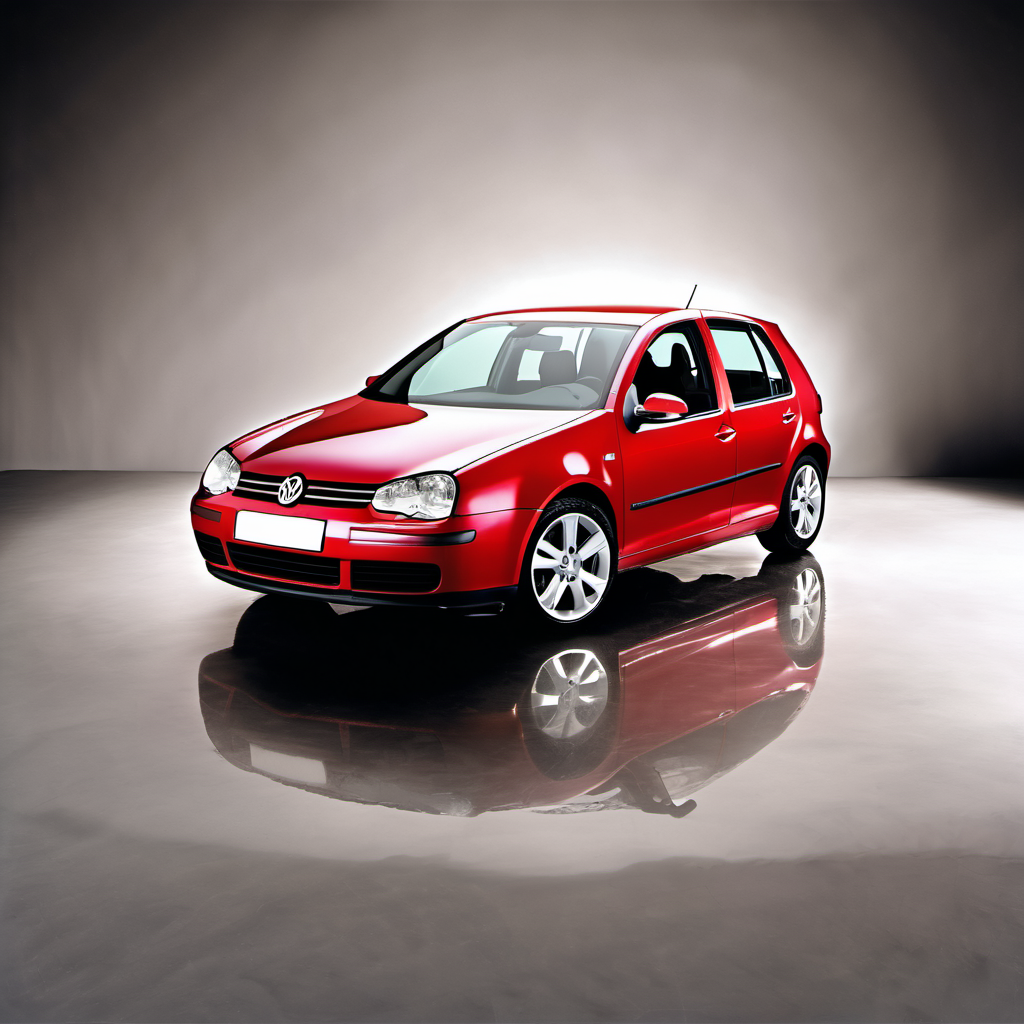
2005 Volkswagen Golf Hatchback

2005 Volkswagen

GolfHatchback

2.0L I4 · Hatchback

The 2005 Volkswagen Golf (Mk4 generation) is a compact European hatchback that earned a loyal following for its solid, planted feel and build quality that punched above its class. Sold in North America in both 2-door and 4-door body styles, the '05 Golf came with a choice of the 2.0L naturally aspirated four-cylinder or the 1.9L TDI diesel — the latter being one of the most fuel-efficient and long-lived powertrains VW ever put in a small car. The Mk4 Golf has a reputation for a tight, well-damped chassis and a cabin that felt more upscale than most competitors of its era. The flip side is that European-style complexity — independent rear suspension, a network of sensors and modules, and pricier VW-specific parts — makes this car more expensive to maintain than a comparable Honda or Toyota. Finding a shop fluent in VAG (Volkswagen Audi Group) diagnostics matters. At 20 years old, most surviving 2005 Golfs have cleared 150k miles. The ones still driving well were usually maintained on schedule with quality oil and had their cooling systems respected. The ones that weren't are actively expensive. Buy carefully.

Reliability
3/5
Verified data
Engine
2.0L I4
Drivetrain
FWD
Fuel
Gasoline
MPG
24 city / 31 hwy / 27 combined
Seats
5
Doors
4
Body
Hatchback
MSRP
$16,955

Overview

AI-curated

The 2005 Volkswagen Golf (Mk4 generation) is a compact European hatchback that earned a loyal following for its solid, planted feel and build quality that punched above its class. Sold in North America in both 2-door and 4-door body styles, the '05 Golf came with a choice of the 2.0L naturally aspirated four-cylinder or the 1.9L TDI diesel — the latter being one of the most fuel-efficient and long-lived powertrains VW ever put in a small car. The Mk4 Golf has a reputation for a tight, well-damped chassis and a cabin that felt more upscale than most competitors of its era. The flip side is that European-style complexity — independent rear suspension, a network of sensors and modules, and pricier VW-specific parts — makes this car more expensive to maintain than a comparable Honda or Toyota. Finding a shop fluent in VAG (Volkswagen Audi Group) diagnostics matters. At 20 years old, most surviving 2005 Golfs have cleared 150k miles. The ones still driving well were usually maintained on schedule with quality oil and had their cooling systems respected. The ones that weren't are actively expensive. Buy carefully.

Known for
  • Solid, planted European ride and handling
  • Exceptionally fuel-efficient 1.9L TDI diesel option
  • Above-average interior build quality for its class and era
  • Strong enthusiast following and parts availability
  • Mk4 platform shared with Jetta, Beetle, and Audi A3
Best for
  • Drivers who want European driving feel on a budget
  • Fuel-conscious commuters (especially TDI buyers)
  • DIY-capable owners comfortable with VAG platforms
  • Urban or suburban drivers who don't need more than 5 seats
Watch for
  • Higher-than-average repair costs vs. Japanese competitors
  • Cooling system failures if maintenance history is unknown
  • Coil pack failures on the 2.0L gasoline engine
  • Window regulator failures on all door configurations
  • Rust on underbody and rear wheel arches — especially in Wisconsin

Common issues by mileage

6 known

Ignition Coil Pack Failure (2.0L Gas)

high
Typically appears
60–120k mi
Estimated repair
$150 – $400

Coolant System Failure / Water Pump & Thermostat

high
Typically appears
80–150k mi
Estimated repair
$400 – $900

Power Window Regulator Failure

high
Typically appears
60–120k mi
Estimated repair
$150 – $350

Camshaft Position / VVT Solenoid Issues (timing over-retarded)

medium
Typically appears
80–150k mi
Estimated repair
$200 – $700

Oxygen Sensor / Heater Circuit Fault

medium
Typically appears
80–130k mi
Estimated repair
$150 – $400

Underbody & Rear Wheel Arch Rust

high
Typically appears
Any mileage — age-dependent in salt states
Estimated repair
$300 – $2,500

Maintenance schedule

  1. 1
    Every 5,000 miles or 1 year Engine oil change with VW 502.00-spec full synthetic

    The 2.0L I4 has tight oil passages; using the wrong spec oil or extending intervals accelerates sludge buildup and camshaft wear. VW 502.00 spec is mandatory, not optional.

  2. 2
    Every 40,000 miles or 4 years Coolant flush and thermostat/water pump inspection

    Mk4 cooling systems are the single biggest failure point. Water pumps and thermostats have a known service life; proactive replacement is far cheaper than an overheated engine.

  3. 3
    Every 60,000–80,000 miles (follow VW schedule) Timing belt, water pump, and tensioner replacement

    This is an interference engine. A snapped timing belt destroys the engine. At 20 years old, any unknown-history Golf must have this done before driving.

  4. 4
    Every 40,000 miles Spark plugs and ignition coil inspection

    The Mk4 2.0L is prone to coil pack failure. Inspect all four coils when replacing plugs; replacing one failing coil often buys only months before the next fails.

  5. 5
    Every 2 years regardless of mileage Brake fluid flush

    VW specifies a 2-year brake fluid interval. Moisture absorption in DOT 4 fluid lowers boiling point and can cause soft pedal feel in hard braking — especially relevant on hilly Wisconsin roads in wet conditions.

  6. 6
    Every fall before salt season Underbody and wheel arch rust inspection and treatment

    Wisconsin road salt is hard on Mk4 Golf underbodies. Inspect rear wheel arches, subframe mounting points, and brake lines annually. Catching surface rust early costs much less than structural repairs.

  7. 7
    Every 20,000 miles or 2 years Cabin air filter replacement

    The Mk4 cabin filter is easy to access and a clogged filter strains the blower motor — an expensive fix compared to a $15 filter.

  8. 8
    Every 50,000 miles Transmission fluid change (manual)

    VW's factory 'fill for life' claim is optimistic at this vehicle's age. Fresh gear oil noticeably improves shift feel and protects synchronizers on high-mileage examples.

Always defer to the manufacturer's service manual for warranty-mandated intervals.

Cost of ownership

Annual maintenance
$700 – $1,800
Fuel
Gasoline (premium not required). At 27 MPG combined and 15,000 miles/year, expect roughly $1,500–$1,800/year at current Midwest pump prices. TDI diesel owners fare better on fuel economy but diesel prices vary.
Insurance
Generally low — compact hatchback with modest horsepower. Expect $900–$1,400/year for full coverage in the Lake Geneva area depending on driver history.

A 2005 Golf is cheap to buy but not the cheapest to keep. Budget the higher end of the maintenance range if the car's history is unclear or mileage is over 120k. Parts cost more than equivalent Japanese cars, and finding a VAG-experienced independent shop is worth the effort. A well-maintained Golf is a satisfying, economical daily driver; a neglected one can quickly exceed its own market value in repair costs.
Seasonal care

Lake Geneva, WI
Winter
  • Switch to a full synthetic 5W-30 or 5W-40 (VW 502.00 spec) before temperatures drop below 20°F — cold-start protection is critical on the Mk4's tight-tolerance engine.
  • Test the battery every October. OEM-spec batteries in 20-year-old cars are long overdue; the Golf's electrical load with heated mirrors and rear defrost stresses a weak battery quickly.
  • Use winter-rated washer fluid rated to at least -20°F. The Mk4 has a rear wiper — make sure that reservoir is also filled and the rear wiper blade is in good shape.
  • Inspect rubber door seals and apply silicone protectant in fall — frozen seals on the Golf's frameless door glass can tear or cause the door to stick open in sub-zero weather.
  • Check brake lines along the underbody for salt corrosion each spring. The Mk4's metal brake lines run where salt spray concentrates.
  • Keep the fuel tank above the quarter mark in deep winter to reduce condensation in the fuel system and avoid fuel line freeze in extreme cold.
Summer
  • Check tire pressure monthly — Wisconsin summer heat causes pressure to rise 4–6 PSI. Mk4 Golfs are sensitive to handling changes from over-inflation.
  • Inspect and test the A/C system early in the season. The Mk4 A/C uses R-134a; a slow leak is common at this age and re-charging is inexpensive if caught early.
  • After winter, flush the underbody thoroughly with fresh water to clear road salt before it continues to work on brake lines, subframe, and suspension components.
  • Monitor coolant temperature closely in stop-and-go summer traffic — a marginal thermostat or low coolant that got through winter can boil over in July heat.

Comparable vehicles

If you're shopping for one

Red flags
  • No maintenance records and over 100k miles — walk away or budget $2,000+ for deferred maintenance catch-up.
  • Any evidence of overheating (milky oil cap residue, white exhaust, heater that runs hot then cold) — potential head gasket damage.
  • Timing belt service overdue or unknown — do not purchase without resolving this first on an interference engine.
  • Visible rust perforation on rear wheel arches or floor — structural repair cost can exceed the car's value.
  • Check engine light present on test drive — insist on a full VAG scan before purchase, not just a code read.
What to inspect
  • Pull the timing belt cover or service records — confirm the belt has been replaced. An overdue belt on an interference engine is a deal-breaker.
  • Check for coolant leaks around the water pump, thermostat housing, and upper/lower radiator hoses. Any weeping or residue is a yellow flag.
  • Test every power window multiple times — both up and down. Window regulator failure is near-universal on Mk4s and costs $150–$350 per door.
  • Inspect all four door sills, the spare tire well, and rear wheel arches for rust perforation — not just surface rust.
  • Cold-start the car and watch for smoke from the exhaust. Blue smoke signals oil burning; white smoke on a warm day can indicate a head gasket issue.
  • Plug in a VAG-COM (VCDS) scanner, not just a generic OBD-II reader — the Golf stores VAG-specific fault codes that a standard scanner will miss entirely.
AI profile generated 11 days ago · claude-sonnet-4-6 · v2.