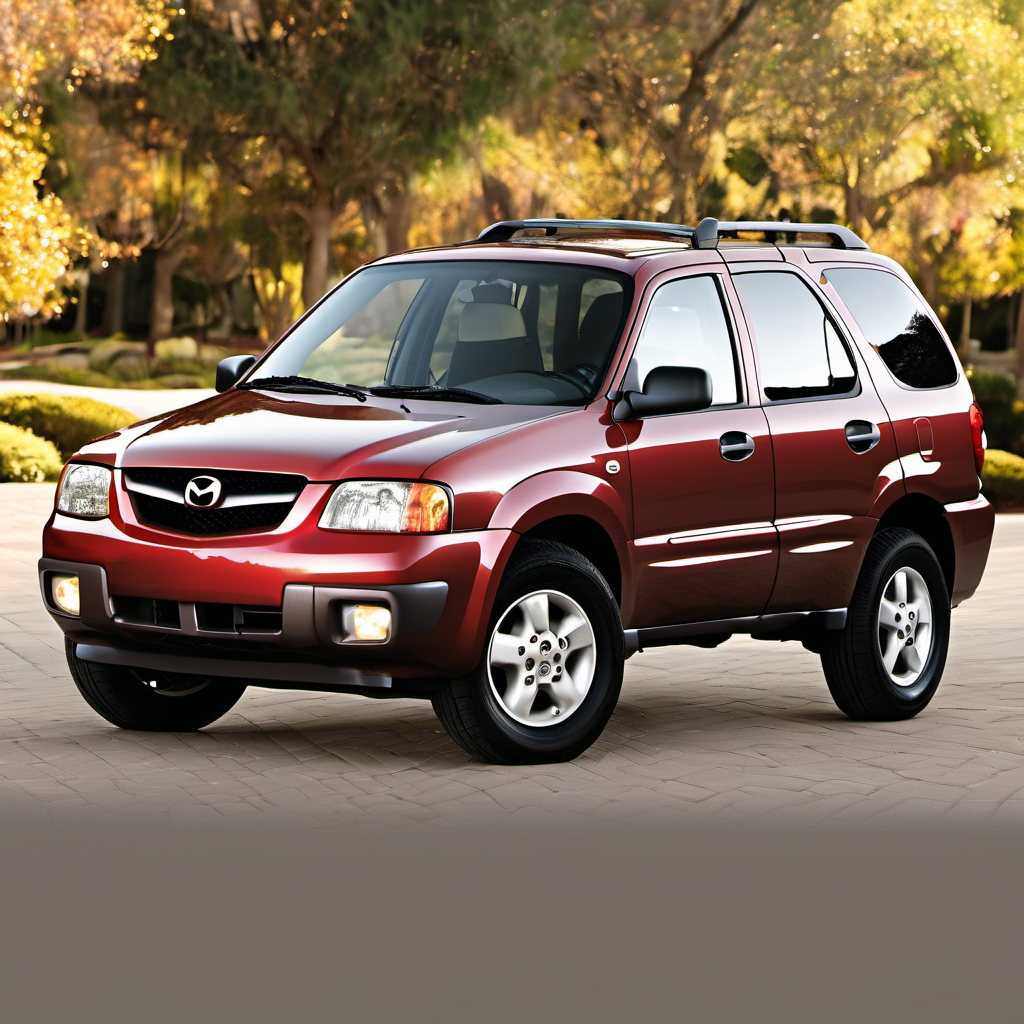
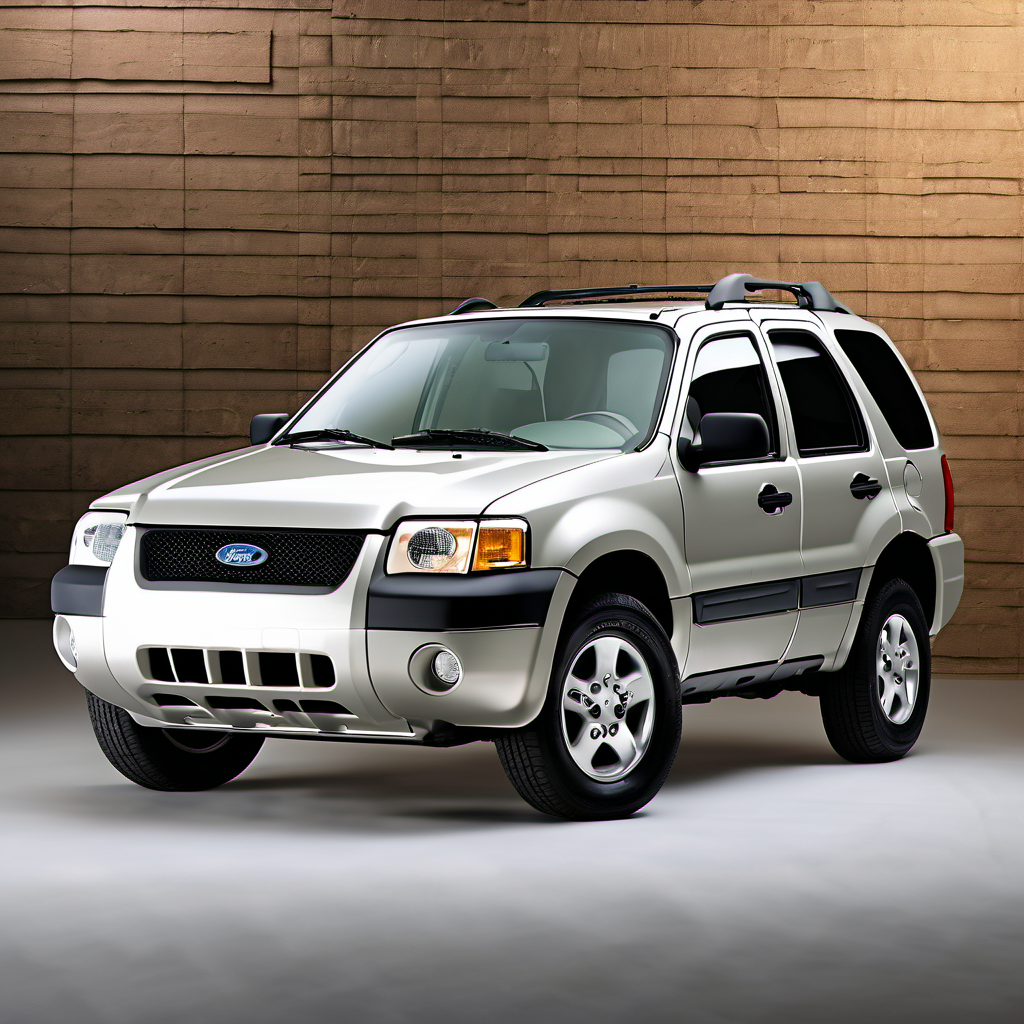
2005 MAZDA Tribute SUV

2005 MAZDA

TributeSUV

SUV

The 2005 Mazda Tribute is a compact SUV built on the same platform as the Ford Escape and first-generation Mercury Mariner — a Ford-Mazda joint venture that gave the Tribute solid bones but also tied its fate to Ford's parts supply chain. By 2005 Mazda had refreshed the Tribute with updated styling and a new 2.3L four-cylinder base engine, making it a practical, maneuverable choice for everyday driving. It seats five, rides in a car-like unibody chassis, and is genuinely easy to park and drive around town. The 2.3L four-cylinder FWD configuration is the most fuel-efficient and most common version found in the upper Midwest. It's not exciting, but it's adequate for daily commuting and light hauling. The interior is dated by today's standards, and cargo space is modest compared to later crossovers, but the layout is sensible and the driving position is comfortable. At this age — 20 years old — the Tribute is a high-mileage proposition for most buyers. Rust from Wisconsin road salt is the single biggest concern. Mechanically, well-maintained examples can soldier on, but deferred maintenance items (timing chain, coolant, brake lines) must be verified before purchase. Parts availability is generally good due to the Ford Escape platform overlap.

Reliability
3/5
Verified data
Specs shown for Tribute 2WD — the most common configuration. Other trims may vary in engine, drivetrain, or fuel economy. Sign in to see your vehicle's exact specs.
Engine
[object Object]
Drivetrain
FWD
Fuel
Gasoline
MPG
19 city / 23 hwy / 21 combined
Seats
Doors
Body
Sport Utility Vehicle - 2WD

Overview

AI-curated

The 2005 Mazda Tribute is a compact SUV built on the same platform as the Ford Escape and first-generation Mercury Mariner — a Ford-Mazda joint venture that gave the Tribute solid bones but also tied its fate to Ford's parts supply chain. By 2005 Mazda had refreshed the Tribute with updated styling and a new 2.3L four-cylinder base engine, making it a practical, maneuverable choice for everyday driving. It seats five, rides in a car-like unibody chassis, and is genuinely easy to park and drive around town. The 2.3L four-cylinder FWD configuration is the most fuel-efficient and most common version found in the upper Midwest. It's not exciting, but it's adequate for daily commuting and light hauling. The interior is dated by today's standards, and cargo space is modest compared to later crossovers, but the layout is sensible and the driving position is comfortable. At this age — 20 years old — the Tribute is a high-mileage proposition for most buyers. Rust from Wisconsin road salt is the single biggest concern. Mechanically, well-maintained examples can soldier on, but deferred maintenance items (timing chain, coolant, brake lines) must be verified before purchase. Parts availability is generally good due to the Ford Escape platform overlap.

Known for
  • Ford Escape platform sharing — parts are widely available
  • Car-like ride quality and easy maneuverability
  • Reliable 2.3L Duratec four-cylinder when properly maintained
  • Simple, no-frills interior layout
Best for
  • Budget-conscious buyers needing a small SUV
  • City and suburban commuters who want easy parking
  • Owners comfortable with high-mileage used vehicles
  • Drivers who do basic maintenance themselves
Watch for
  • Heavy rust on frame, subframe, and brake lines — critical in Wisconsin
  • Coolant crossover tube failures leading to overheating
  • High-mileage timing chain stretch and VCT solenoid sludging
  • Wheel bearing wear on front axle
  • Deferred maintenance from previous owners on 20-year-old examples

Common issues by mileage

6 known

Coolant crossover tube / intake manifold coolant leak

high
Typically appears
80–150k mi
Estimated repair
$300 – $700

Front wheel bearing failure

high
Typically appears
80–140k mi
Estimated repair
$180 – $350

VCT solenoid sludging / camshaft timing over-retarded

medium
Typically appears
90–160k mi
Estimated repair
$150 – $500

Oxygen sensor heater circuit failure (upstream sensor)

medium
Typically appears
100–160k mi
Estimated repair
$120 – $280

Subframe and brake line rust-through

high
Typically appears
Any mileage — age and salt exposure are primary drivers
Estimated repair
$400 – $2,200

Power window regulator failure

medium
Typically appears
100k+ mi
Estimated repair
$120 – $280

Maintenance schedule

  1. 1
    Every 5,000 miles or 6 months Engine oil and filter change

    The 2.3L Duratec's VCT (variable cam timing) system is sensitive to oil quality and level. Sludging from extended intervals is the leading cause of P0012/P0015 cam timing codes and solenoid failure. Use the manufacturer-specified viscosity.

  2. 2
    Every 30,000 miles or 2 years Coolant flush and inspection of crossover tube

    The plastic coolant crossover tube and intake manifold coolant passages are a known weak point. Fresh coolant slows internal corrosion; inspecting the tube catches cracks before they cause overheating.

  3. 3
    Every 2–3 years Brake fluid flush

    Brake fluid absorbs moisture over time, lowering its boiling point. On a 20-year-old vehicle in a salt environment, moisture-laden fluid also accelerates internal caliper and line corrosion.

  4. 4
    Every 30,000 miles or when any rumbling noise is noted Front wheel bearing inspection

    Front wheel bearings are a recurring wear item on this platform. Catching them early prevents rotor and hub damage that raises repair costs.

  5. 5
    Every year — more frequently after harsh winters Brake line inspection (full undercar)

    Wisconsin road salt aggressively corrodes steel brake lines. A failing brake line is a safety emergency. Annual inspection allows proactive replacement before failure.

  6. 6
    Every 15,000–20,000 miles Air filter replacement

    A clogged air filter hurts fuel economy and can cause rich-running conditions. Easy DIY job on this engine.

  7. 7
    Every 60,000 miles (iridium) or 30,000 miles (copper) Spark plug replacement

    The 2.3L runs well past 100k miles with fresh plugs. Worn plugs increase misfire risk and stress the ignition coils.

  8. 8
    Every 30,000–45,000 miles on a used vehicle with unknown history Transmission fluid change (automatic)

    The 4-speed automatic is durable but benefits from clean fluid. On any used vehicle with unknown service history, a fluid change is cheap insurance against premature clutch wear.

Always defer to the manufacturer's service manual for warranty-mandated intervals.

Cost of ownership

Annual maintenance
$600 – $1,400
Fuel
At 21 MPG combined and roughly 12,000 miles/year, expect around $1,800–$2,200/year at current Wisconsin fuel prices. The 2.3L four-cylinder is the more economical engine choice in this lineup.
Insurance
Typically low — older compact SUV with modest book value. Expect $700–$1,100/year for full coverage depending on driver profile, though liability-only is common at this vehicle value.

The Tribute is cheap to insure and relatively inexpensive to maintain when it's healthy. The real financial risk at 20 years old is surprise repairs: rust remediation, coolant system work, and wheel bearings can stack up quickly. Budget an additional $500–$1,000 contingency annually for age-related items. Parts costs are kept reasonable by the Ford Escape platform overlap — most mechanical parts are interchangeable and widely stocked.
Seasonal care

Lake Geneva, WI
Winter
  • Test the battery before first hard freeze — cold-cranking amps drop significantly below 0°F and a marginal battery will leave you stranded. Replace any battery over 4 years old proactively.
  • Switch to a winter-rated washer fluid rated to at least -20°F. Lake Geneva winters regularly hit those temps and plain fluid freezes in the reservoir and lines.
  • Inspect wiper blades before winter and consider winter-specific blades — the standard blades ice up in the hinge and streak badly below 20°F.
  • Check antifreeze concentration with a tester — the 2.3L coolant system is already a watch item; make sure the mix protects to at least -34°F.
  • Flush and inspect brake lines every fall given Wisconsin salt exposure. This is not optional on a 20-year-old vehicle.
  • Rinse the undercarriage every 1–2 weeks during heavy salt season, especially wheel wells and the subframe area where the Tribute is most vulnerable to rust.
Summer
  • Check tire pressure monthly — tires gain roughly 1 PSI for every 10°F increase in ambient temperature and overinflation causes center tread wear.
  • Inspect the A/C system for refrigerant level and condenser debris — the condenser sits low on the Tribute and collects road grime that restricts airflow.
  • Check coolant level and condition before summer heat. The crossover tube failure risk increases under sustained high-temperature operation.
  • Inspect the serpentine belt for cracking — heat accelerates rubber degradation and a 20-year-old belt may be overdue regardless of appearance.
  • Check brake pad thickness — summer is the right time for brake work before it gets too cold to do it comfortably, and before fall inspection season.

Comparable vehicles

If you're shopping for one

Red flags
  • Any visible rust penetrating the subframe or structural floor pan — walk away.
  • Coolant that is brown, rusty, or low with no explanation.
  • Check engine light — at this age and mileage, scan for codes before purchase; cam timing codes (P0012, P0015) may indicate sludge damage.
  • Soft or spongy brake pedal — could indicate a failing brake line, which is a safety emergency on a salt-belt vehicle of this age.
  • No maintenance records whatsoever on a vehicle this old.
  • Transmission that slips, hesitates, or clunks — rebuilds on this unit run $1,500–$2,800 at an independent shop.
What to inspect
  • Full undercar rust inspection — subframe, brake lines, fuel lines, and floor pans. This is the make-or-break item on any Wisconsin Tribute.
  • Coolant condition and level; look for milky residue under the oil cap (head gasket) or a cracked/seeping crossover tube.
  • Front wheel bearing noise — drive at 30–50 mph and listen for a low rumble that changes with steering input.
  • Oil change history documentation — VCT solenoid health depends on it. Check for sludge on the oil cap or dipstick.
  • Transmission shift quality — the 4-speed should shift smoothly with no slipping or harsh banging between gears.
  • A/C function — recharging an aging system can be a money pit if the compressor or condenser is failing.
AI profile generated 13 days ago · claude-sonnet-4-6 · v2.