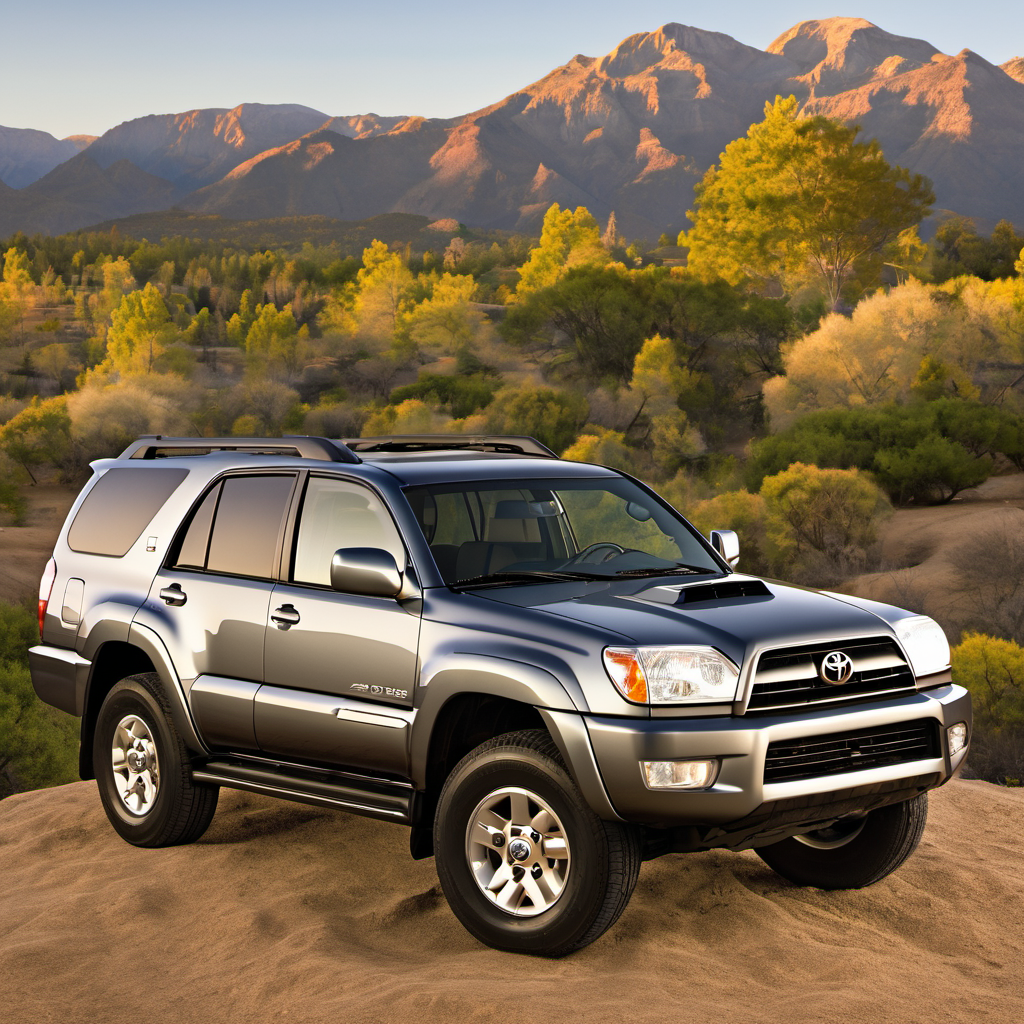
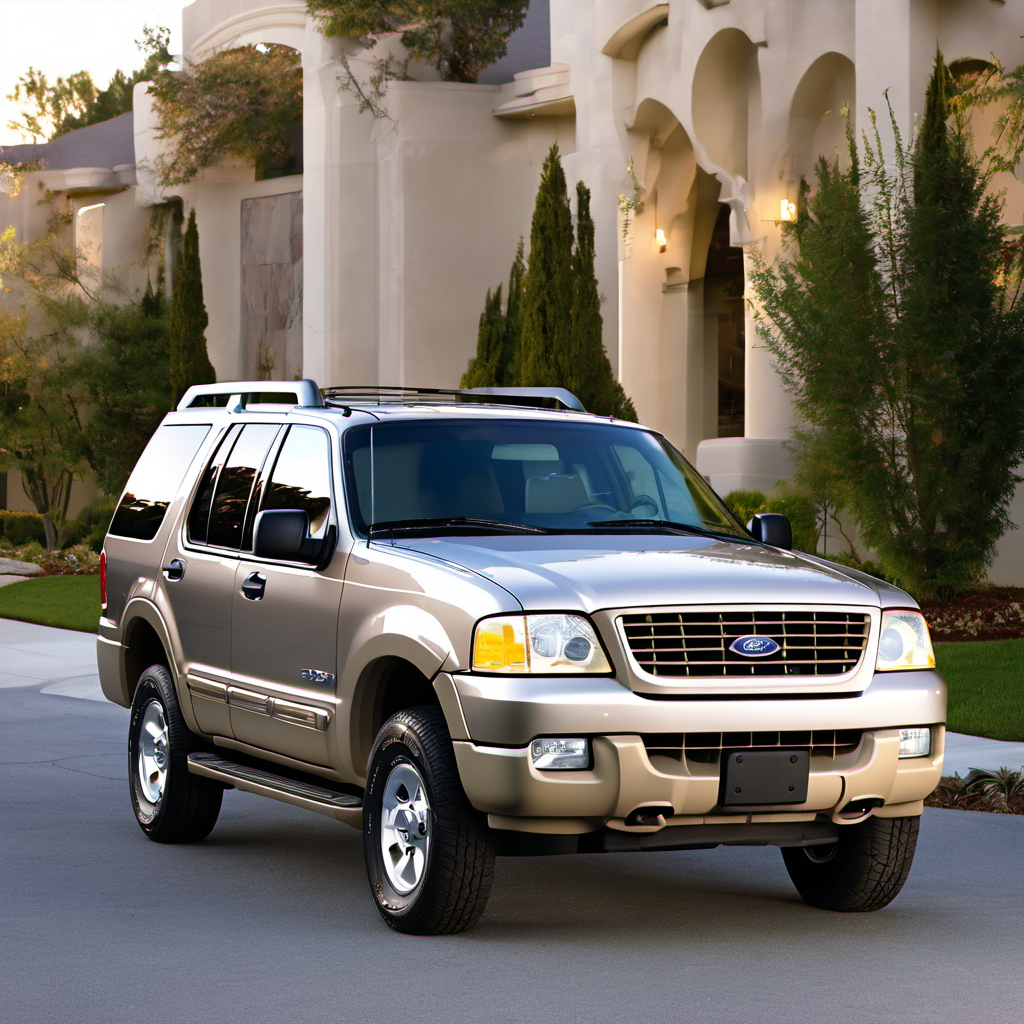
2004 Toyota 4Runner SUV

2004 Toyota

4RunnerSUV

SUV

The 2004 Toyota 4Runner is the first model year of the fourth-generation (N210) platform, a significant redesign that brought a more refined interior, a new 4.0L V6, and a fully independent rear suspension — a departure from the solid rear axle of the previous generation. It sits in the mid-size body-on-frame SUV class and was built to compete with the Ford Explorer and Jeep Grand Cherokee while offering Toyota's reputation for longevity. The 4.0L 1GR-FE V6 is one of Toyota's most durable engines. Paired with a 5-speed automatic, it delivers confident power for towing (up to 5,000 lbs) and trail use. The standard RWD trim is the volume seller; part-time 4WD (4x4 V6) and full-time 4WD (V8 or Sport Edition) were also available. This generation 4Runner built a strong reputation for high-mileage reliability and is a popular used buy. Buyers should note that the independent rear suspension, while more comfortable on-road, introduced new wear points compared to the old solid axle — notably rear differential and rear lower control arm bushings. Overall, this is a truck that rewards attentive maintenance and punishes neglect of fluids and undercarriage care.

Reliability
4/5
Verified data
Specs shown for 4Runner 2WD — the most common configuration. Other trims may vary in engine, drivetrain, or fuel economy. Sign in to see your vehicle's exact specs.
Engine
[object Object]
Drivetrain
RWD
Fuel
Gasoline
MPG
16 city / 20 hwy / 18 combined
Seats
Doors
Body
Sport Utility Vehicle - 2WD

Overview

AI-curated

The 2004 Toyota 4Runner is the first model year of the fourth-generation (N210) platform, a significant redesign that brought a more refined interior, a new 4.0L V6, and a fully independent rear suspension — a departure from the solid rear axle of the previous generation. It sits in the mid-size body-on-frame SUV class and was built to compete with the Ford Explorer and Jeep Grand Cherokee while offering Toyota's reputation for longevity. The 4.0L 1GR-FE V6 is one of Toyota's most durable engines. Paired with a 5-speed automatic, it delivers confident power for towing (up to 5,000 lbs) and trail use. The standard RWD trim is the volume seller; part-time 4WD (4x4 V6) and full-time 4WD (V8 or Sport Edition) were also available. This generation 4Runner built a strong reputation for high-mileage reliability and is a popular used buy. Buyers should note that the independent rear suspension, while more comfortable on-road, introduced new wear points compared to the old solid axle — notably rear differential and rear lower control arm bushings. Overall, this is a truck that rewards attentive maintenance and punishes neglect of fluids and undercarriage care.

Known for
  • Bulletproof 4.0L 1GR-FE V6 engine
  • Strong towing and off-road capability for a mid-size SUV
  • High long-term reliability and resale value
  • Comfortable, truck-like ride with body-on-frame durability
  • Excellent parts availability even at high mileage
Best for
  • Owners who want a rugged SUV that can go 200k+ miles
  • Light to moderate off-road use and towing
  • Wisconsin winters with 4WD trim and all-season or winter tires
  • Families needing a durable daily driver with real capability
  • Buyers who prefer low long-term repair costs over low purchase price
Watch for
  • VVT-i oil sludge if oil changes were skipped — kills camshaft hardware
  • Rear differential wear on high-mileage examples, especially if towed
  • Frame and undercarriage rust on Wisconsin/salt-belt trucks
  • Worn rear IFS bushings and lower control arm at higher mileage
  • Secondary air injection pump failures (emissions-related, common 80–120k)

Common issues by mileage

6 known

VVT-i System Sludge / Camshaft Timing Codes

medium
Typically appears
80–150k mi
Estimated repair
$300 – $1,200

VVT-i Solenoid / Oil Control Valve Failure

medium
Typically appears
90–160k mi
Estimated repair
$150 – $500

Secondary Air Injection Pump Failure

high
Typically appears
80–120k mi
Estimated repair
$400 – $900

Rear Differential Wear / Noise

medium
Typically appears
100–180k mi
Estimated repair
$500 – $2,500

Rear IFS Lower Control Arm Bushings

medium
Typically appears
100–150k mi
Estimated repair
$250 – $700

Oxygen / A/F Sensor Heater Circuit Faults

low
Typically appears
100–200k mi
Estimated repair
$150 – $400

Maintenance schedule

  1. 1
    Every 5,000 miles or 6 months — do not stretch to 10k Engine oil & filter change

    The 1GR-FE VVT-i system is highly sensitive to oil quality. Dirty oil causes sludge in the cam passages, leading to expensive timing/VVT repairs. This is the single most important maintenance item on this engine.

  2. 2
    Every 30,000 miles or sooner if towing Rear differential fluid service

    The IFS rear diff on this generation is a common wear point. Fresh fluid extends bearing and gear life significantly; neglected fluid leads to expensive rebuilds.

  3. 3
    Every 30,000 miles Transfer case and front differential fluid

    These fluids break down and are frequently overlooked on used examples. Critical for 4WD function and longevity.

  4. 4
    Every 5 years or 100,000 miles (Toyota Super Long Life Coolant) Coolant flush

    Degraded coolant raises corrosion risk in the aluminum engine block and heads. Use Toyota SLLC or equivalent pink OAT coolant — do not mix with green coolant.

  5. 5
    Every 60,000 miles Spark plugs (iridium)

    Factory iridium plugs last 60k reliably. Worn plugs cause misfires and stress the ignition coils, which are an added replacement cost.

  6. 6
    Every fall and spring Undercarriage rust inspection

    Lake Geneva road salt is hard on the frame, brake lines, and suspension components. Catching surface rust early with treatment prevents the structural rust that makes these trucks expensive to repair or unsafe.

  7. 7
    Every 2–3 years Brake fluid flush

    Brake fluid absorbs moisture over time, lowering boiling point and corroding ABS hardware from the inside — especially important in a Wisconsin truck that sees wet and salty conditions year-round.

  8. 8
    Every 30,000 miles or when visibly dirty Air filter

    A clogged air filter reduces fuel economy and can increase fueling demands on a vehicle already in the 17–18 MPG range. Quick and inexpensive.

Always defer to the manufacturer's service manual for warranty-mandated intervals.

Cost of ownership

Annual maintenance
$600 – $1,400
Fuel
At 18 MPG combined and 15,000 miles/year, expect roughly $2,500–$3,200/year at current Midwest gas prices (~$3.20–$3.80/gal regular).
Insurance
Typically $900–$1,400/year for a 2004 model in southern Wisconsin depending on driver profile and coverage level.

The 4Runner is not the cheapest truck to fuel, but its mechanical reliability keeps repair bills low when maintained. Annual costs stay modest unless deferred maintenance catches up — especially VVT-i repairs or rear differential work, which can push a single-year bill well over $2,000. Budget for a differential fluid service and brake flush if the history is unknown on a used purchase.
Seasonal care

Lake Geneva, WI
Winter
  • Switch to a quality 0W-20 or 5W-30 full synthetic if not already running one — cold-start oil flow is critical for the VVT-i system at sub-zero Wisconsin temperatures.
  • Test the battery load before November. Cold weather dramatically reduces cranking capacity; a battery over 4 years old is a risk.
  • Fill the washer fluid reservoir with a rated -20°F or lower fluid. The reservoir is large and standard fluid will freeze in the lines on brutal Wisconsin nights.
  • Inspect wiper blades and consider winter-specific blades — standard blades ice up in freezing rain and leave dangerous blind spots.
  • Rinse the undercarriage every 2 weeks during salting season, especially around the rear suspension, frame rails, and brake lines where salt collects.
  • If equipped with 4WD, cycle the system in a safe, empty lot early in the season to verify it engages and disengages properly before you need it in an emergency.
Summer
  • Check tire pressure after the first heat wave — pressure rises roughly 1 PSI per 10°F increase and overinflated tires wear unevenly and reduce wet-road traction.
  • Inspect the A/C system operation early in the season; the 2004 4Runner A/C is robust but refrigerant leaks from aged o-rings become common on 20-year-old examples.
  • Check coolant level and condition before summer heat — the 1GR-FE runs warm under load and low or degraded coolant accelerates head gasket stress.
  • Inspect the air filter after spring; pollen and road dust accumulate quickly and hurt efficiency in city driving.

Comparable vehicles

If you're shopping for one

Red flags
  • Oil sludge visible under the oil cap or in the valve cover — walk away unless priced to cover a full engine top-end service.
  • Any rust through on the frame, especially near suspension mounting points — repair costs can exceed truck value.
  • Seller cannot provide any oil change history and the truck has over 100,000 miles.
  • Clunking or grinding from the rear end under load or turns — could signal a failing rear differential.
  • Check engine light with multiple VVT-i or oxygen sensor codes active simultaneously — often a sign of layered neglect.
What to inspect
  • Pull the oil cap and check for sludge — brown mayonnaise-like buildup means oil changes were skipped and VVT-i damage is likely in progress.
  • Check the frame rails, rear crossmember, and rear suspension mounting points for rust perforation — not just surface rust. This is the most critical structural check on any salt-belt 4Runner.
  • Test the 4WD engagement (if equipped) — shift through all modes including 4Lo and listen for grinding or failure to engage.
  • Inspect rear differential for leaks, noise on turns, or play — have it serviced immediately if history is unknown.
  • Look for any active check engine light codes, especially VVT-i-related codes (P0012, P0015, P0022, P0025) which signal deferred maintenance.
AI profile generated 4 days ago · claude-sonnet-4-6 · v2.