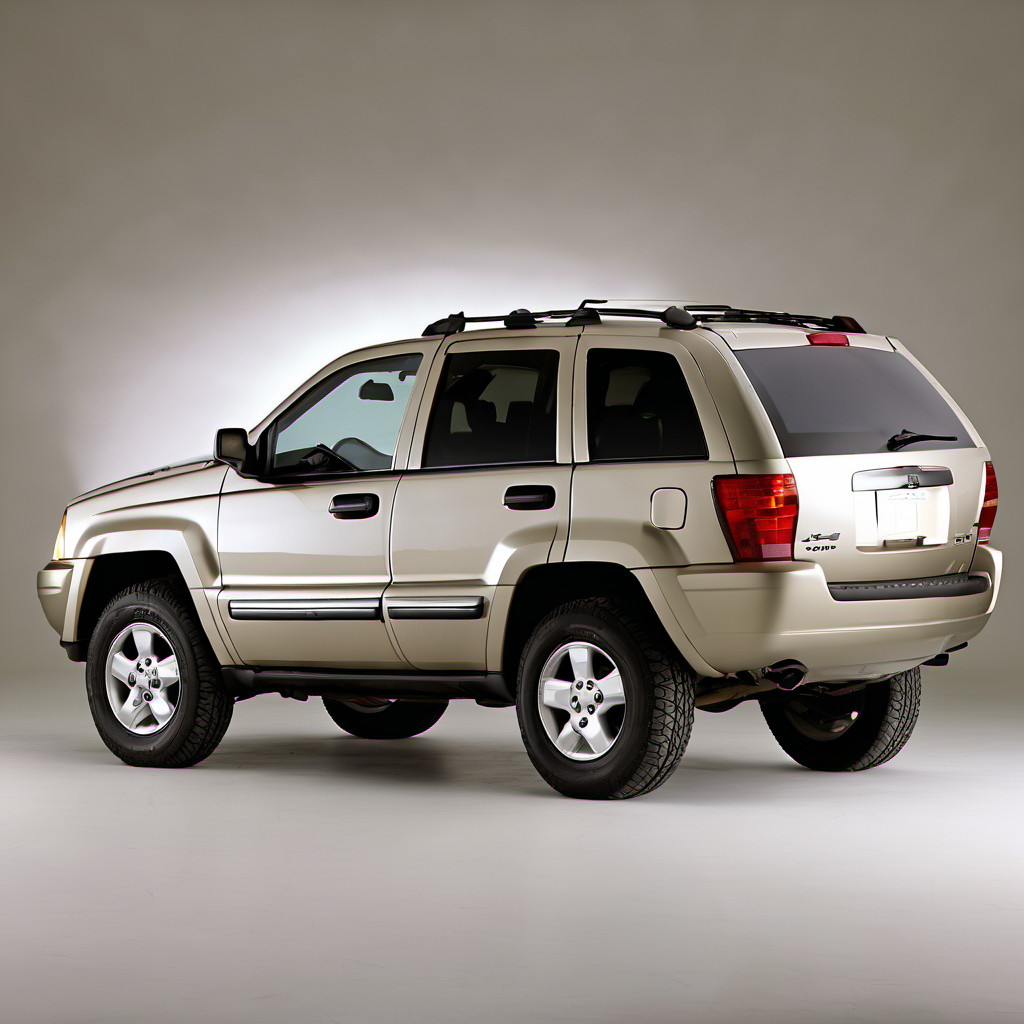
2004 Jeep Grand Cherokee SUV

2004 Jeep

Grand CherokeeSUV

4.0L I6 · SUV

The 2004 Jeep Grand Cherokee (WJ generation, final year) is a mid-size SUV that earned a loyal following for its capable off-road hardware and car-like ride — an unusual combination for its era. It was offered with a range of engines including the 4.0L inline-six, 4.7L V8, and the high-output 4.7L V8, paired with either Quadra-Trac or Quadra-Drive 4WD systems. At 20 years old, these trucks are now deep into high-mileage territory. The ones that survive are typically well-maintained examples; the neglected ones have usually already left the road. Rust is the number-one killer in Wisconsin — check every inch of the frame, floor, and rocker panels before buying. Mechanically, the 4.0L inline-six is one of the toughest engines Jeep ever built and is the powertrain to seek out. Ownership costs are moderate if you stay on top of fluids and address small issues early. Parts availability is good and independent shops are comfortable working on these. Budget for suspension and transfer case maintenance as mileage climbs.

Reliability
3/5
Verified data
Specs shown for Grand Cherokee 2WD — the most common configuration. Other trims may vary in engine, drivetrain, or fuel economy. Sign in to see your vehicle's exact specs.
Engine
[object Object]
Drivetrain
4WD
Fuel
Gasoline
MPG
14 city / 19 hwy / 16 combined
Seats
5
Doors
4
Body
SUV
MSRP
$29,995

Overview

AI-curated

The 2004 Jeep Grand Cherokee (WJ generation, final year) is a mid-size SUV that earned a loyal following for its capable off-road hardware and car-like ride — an unusual combination for its era. It was offered with a range of engines including the 4.0L inline-six, 4.7L V8, and the high-output 4.7L V8, paired with either Quadra-Trac or Quadra-Drive 4WD systems. At 20 years old, these trucks are now deep into high-mileage territory. The ones that survive are typically well-maintained examples; the neglected ones have usually already left the road. Rust is the number-one killer in Wisconsin — check every inch of the frame, floor, and rocker panels before buying. Mechanically, the 4.0L inline-six is one of the toughest engines Jeep ever built and is the powertrain to seek out. Ownership costs are moderate if you stay on top of fluids and address small issues early. Parts availability is good and independent shops are comfortable working on these. Budget for suspension and transfer case maintenance as mileage climbs.

Known for
  • Rugged, proven off-road capability with Quadra-Drive 4WD
  • 4.0L inline-six — one of the most durable engines of its generation
  • Car-like on-road ride quality for a body-on-frame SUV
  • Strong towing capacity (up to 6,500 lbs with V8)
  • Interior quality that was class-competitive in its day
Best for
  • Buyers who want affordable used 4WD capability
  • Light to moderate off-road use and trail driving
  • Families needing a capable winter/snow vehicle in the upper Midwest
  • Owners comfortable with older-vehicle upkeep and DIY maintenance
Watch for
  • Frame and rocker panel rust — critical issue in salt-belt states like Wisconsin
  • Transfer case and differential fluid neglect leading to expensive drivetrain repairs
  • 4.7L V8 head gasket and oil consumption history on higher-mileage examples
  • Electrical gremlins and PCM issues on vehicles this age
  • Leaking rear main seals and valve cover gaskets at higher mileage

Common issues by mileage

6 known

Rust — Frame, Rockers, and Floor Pans

high
Typically appears
Any mileage, age-dependent
Estimated repair
$500 – $4,000

Transfer Case Failure (NV247/NV249) — Fluid Neglect

high
Typically appears
80–150k mi
Estimated repair
$800 – $2,500

Oxygen Sensor Failure / Heater Circuit (Bank 1 & 2)

medium
Typically appears
80–150k mi
Estimated repair
$120 – $400

Valve Cover Gasket and Rear Main Seal Oil Leaks

high
Typically appears
100k+ mi
Estimated repair
$150 – $500

ABS / Brake Module Faults and Wheel Speed Sensor Failure

medium
Typically appears
100k+ mi
Estimated repair
$200 – $900

Maintenance schedule

  1. 1
    Every 3,000–5,000 miles Engine oil and filter change

    The 4.0L I6 is tolerant but rewards frequent oil changes at this age. Many are burning or seeping a little oil — check level every fill-up.

  2. 2
    Every 30,000 miles or at purchase Transfer case and differential fluid service

    The NV247/NV249 transfer case is sensitive to fluid condition. Neglected fluid is the leading cause of expensive transfer case failures on these trucks. Change it; don't sample it.

  3. 3
    Every 30,000 miles Transmission fluid and filter change

    The 545RFE automatic runs hot when towing or in heavy traffic. Fresh fluid extends life significantly on a 20-year-old unit.

  4. 4
    Every 2 years or at purchase Coolant flush and thermostat inspection

    The 4.0L is prone to running hot if coolant is old or the thermostat sticks. Overheating is one of the few things that kills this engine.

  5. 5
    Annually — before winter Full undercarriage inspection and rust treatment

    Lake Geneva roads are salted heavily. Inspect frame rails, control arm mounts, and floor pans every fall. Address surface rust before it becomes structural.

  6. 6
    Every 60,000 miles Spark plugs, ignition wires, and coil pack inspection

    Old ignition components cause misfires that can be misdiagnosed as bigger problems. Inexpensive insurance at this age.

  7. 7
    Every 2 years Brake fluid flush

    Moisture-saturated brake fluid lowers boiling point and corrodes ABS module internals — a known failure point on this generation.

  8. 8
    Annually Inspect and lubricate front axle U-joints and driveshaft slip yoke

    These are greaseable on the 4.0L models. Dry U-joints fail quickly under 4WD use and replacement gets expensive if the front axle is involved.

Always defer to the manufacturer's service manual for warranty-mandated intervals.

Cost of ownership

Annual maintenance
$700 – $2,000
Fuel
Expect roughly $2,200–$2,800/year at current prices based on 15,000 miles annually and 16 MPG combined. The V8 will land at the higher end.
Insurance
Typically $900–$1,400/year for a 20-year-old truck in Wisconsin; varies significantly by driver history and coverage level.

This is an affordable truck to own if it's rust-free and properly maintained. Routine maintenance is cheap and parts are plentiful. The risk is deferred maintenance catching up — a transfer case, transmission, or rust repair can easily run $1,500–$4,000 and erase years of savings. Buy a clean one, keep up with fluids, and it's a solid value.
Seasonal care

Lake Geneva, WI
Winter
  • Flush and refill washer fluid with a -20°F or lower rated formula before first freeze — Lake Geneva winters will freeze standard fluid in the reservoir lines.
  • Switch to winter wiper blades; the stock blades ice up quickly on sub-zero mornings.
  • Test the battery in October — cold-cranking a 4.0L or 4.7L at -10°F demands a strong battery. Replace anything over 4–5 years old proactively.
  • Verify 4WD engagement (4Hi and 4Lo) before you need it in an emergency. Engage and disengage the system a few times in a safe area at the start of the season.
  • Rinse the undercarriage every 1–2 weeks when roads are salted. The frame and brake lines on these trucks are rust magnets.
  • Check tire pressure monthly — pressure drops roughly 1 PSI per 10°F. Under-inflated tires hurt traction on snow and ice.
Summer
  • Inspect the A/C system in May — the compressor and expansion valve are common leak points on 20-year-old systems. Recharge if cooling is weak.
  • Check tire pressure after hot days — pressure rises in heat and over-inflation causes uneven wear and a harsher ride.
  • Monitor coolant temperature gauge during hot-weather towing or stop-and-go traffic; the 4.0L can run warm with a weak water pump or aged thermostat.
  • Inspect rubber CV boots and axle seals for cracking — summer heat accelerates rubber deterioration on a vehicle this age.
  • Check the transmission cooler lines for seeping fluid — heat cycles cause the rubber sections to crack on older Jeeps.

Comparable vehicles

If you're shopping for one

Red flags
  • Any soft or rust-perforated frame metal — walk away, this is a safety issue and not cost-effective to repair on a truck this age
  • Check engine light with camshaft timing codes (P0012, P0015, P0022, P0025) on a 4.7L V8 — timing chain or VVT system repairs can exceed the vehicle's value
  • Evidence of overheating history (stained coolant reservoir, warped thermostat housing, new head bolts)
  • Clunking or grinding from the transfer case in any 4WD range
  • Multiple U-codes (U0100–U0104) indicating CAN bus communication failures — can signal PCM or wiring harness problems that are expensive to trace on a 20-year-old vehicle
  • Lifted or body-modified examples with unknown off-road history — inspect axles, driveshafts, and skid plates extra carefully
What to inspect
  • Frame rails under the rear seat and behind the rear wheels — first rust failure points on WJ Cherokees in Wisconsin
  • Rocker panels and floor pans for rust-through (lift the carpet inside)
  • Transfer case — listen for grinding, whining, or binding in 4WD engagement
  • Valve cover and rear main seal for active oil leaks (check the belly of the engine and bellhousing area)
  • Transmission fluid condition and color — dark, burnt fluid on a high-mileage example is a red flag
  • Coolant condition — milky or oily coolant on a 4.7L V8 suggests head gasket issues
  • All four wheel wells and inner fenders for accumulated salt-packed rust
AI profile generated 20 days ago · claude-sonnet-4-6 · v2.