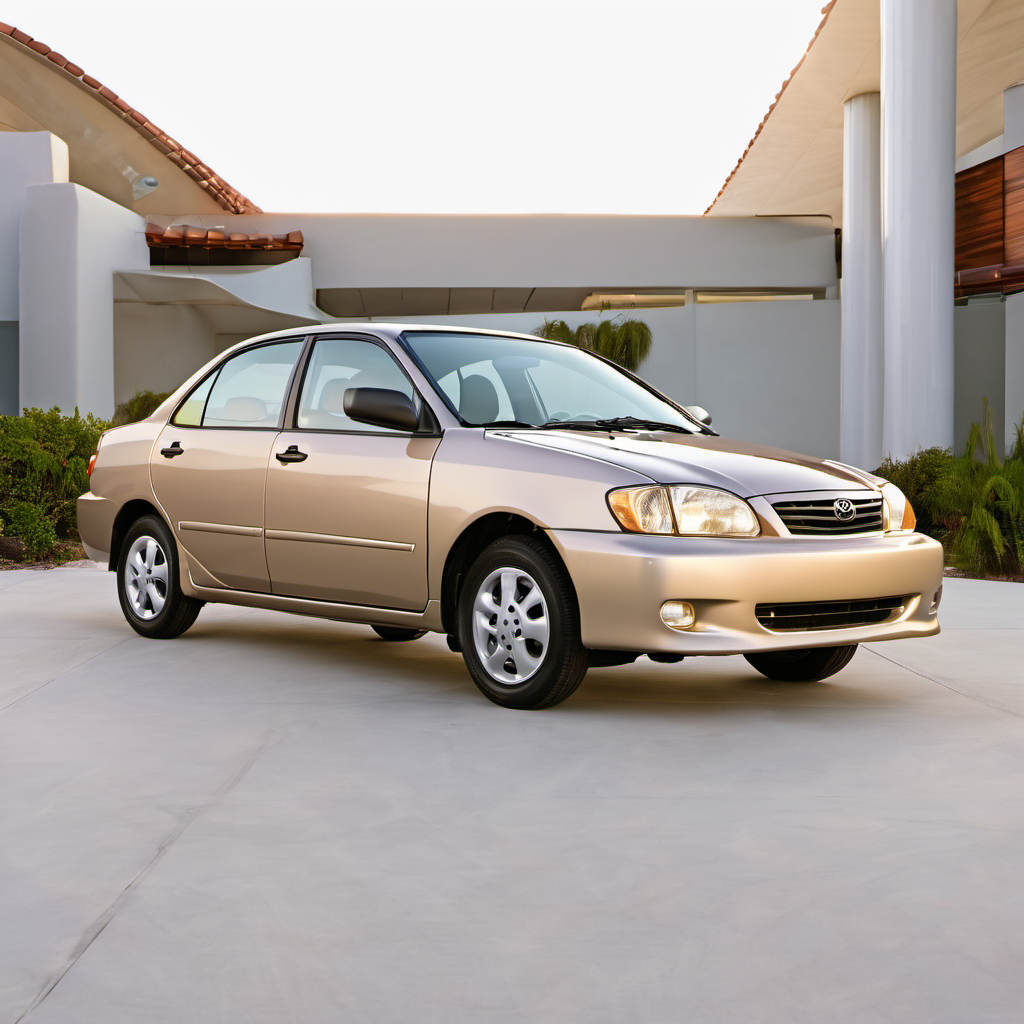
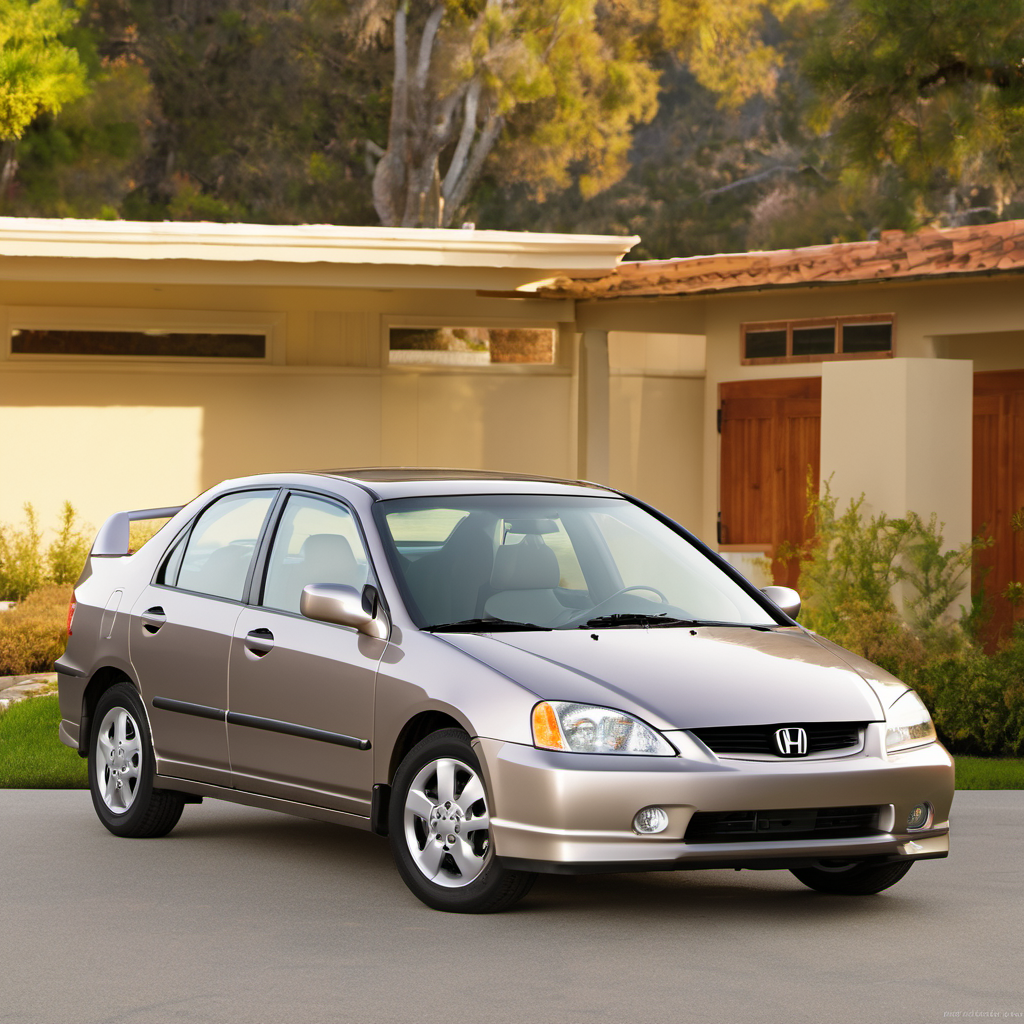
2003 Toyota Corolla Sedan

2003 Toyota

CorollaSedan

Sedan

The 2003 Toyota Corolla is the ninth generation of Toyota's long-running compact sedan, built on the E120 platform and sold at the peak of Corolla's reputation for near-bulletproof reliability. This generation ran from 2003–2008 and is widely regarded as one of the best value used cars in existence — parts are cheap, mechanics know them cold, and well-maintained examples routinely cross 200,000 miles without major engine work. Powered by Toyota's 1ZZ-FE 1.8L four-cylinder paired to a four-speed automatic or five-speed manual, it's not exciting, but it is honest. Fuel economy is strong for its era, the cabin is practical, and the car asks very little of its owner beyond regular oil changes and fluid checks. At 20+ years old, most survivors have high mileage. The key variables on a used example are oil change discipline (the 1ZZ-FE punishes neglect with oil consumption) and rust — Wisconsin salt exposure is a serious concern on any car from this era.

Reliability
4/5
Verified data
Specs shown for Corolla — the most common configuration. Other trims may vary in engine, drivetrain, or fuel economy. Sign in to see your vehicle's exact specs.
Engine
[object Object]
Drivetrain
FWD
Fuel
Gasoline
MPG
25 city / 34 hwy / 28 combined
Seats
Doors
Body
Compact Cars

Overview

AI-curated

The 2003 Toyota Corolla is the ninth generation of Toyota's long-running compact sedan, built on the E120 platform and sold at the peak of Corolla's reputation for near-bulletproof reliability. This generation ran from 2003–2008 and is widely regarded as one of the best value used cars in existence — parts are cheap, mechanics know them cold, and well-maintained examples routinely cross 200,000 miles without major engine work. Powered by Toyota's 1ZZ-FE 1.8L four-cylinder paired to a four-speed automatic or five-speed manual, it's not exciting, but it is honest. Fuel economy is strong for its era, the cabin is practical, and the car asks very little of its owner beyond regular oil changes and fluid checks. At 20+ years old, most survivors have high mileage. The key variables on a used example are oil change discipline (the 1ZZ-FE punishes neglect with oil consumption) and rust — Wisconsin salt exposure is a serious concern on any car from this era.

Known for
  • Exceptional long-term reliability when properly maintained
  • Low cost of ownership and widely available parts
  • Fuel-efficient 1.8L four-cylinder engine
  • Simple, easy-to-service FWD layout
  • Strong resale value relative to age
Best for
  • Budget-conscious daily commuters
  • First-time car owners wanting low-maintenance transportation
  • High-mileage drivers who prioritize fuel economy
  • Owners who want to do basic DIY maintenance
Watch for
  • Oil consumption on high-mileage 1ZZ-FE engines (piston ring wear)
  • Rust on underbody, subframe, and brake lines — serious concern in Wisconsin
  • Catalytic converter failure on neglected or high-mileage examples
  • Automatic transmission issues if fluid was never serviced

Common issues by mileage

6 known

Oil consumption / piston ring wear (1ZZ-FE)

high
Typically appears
100–175k mi
Estimated repair
$800 – $2,500

Catalytic converter failure

medium
Typically appears
120–180k mi
Estimated repair
$350 – $800

Oxygen / A/F sensor heater circuit failure

medium
Typically appears
80–150k mi
Estimated repair
$150 – $350

Rust on brake lines, subframe, and underbody

high
Typically appears
Any — age/exposure driven
Estimated repair
$300 – $2,000

Automatic transmission fluid degradation / shifting issues

medium
Typically appears
90–150k mi
Estimated repair
$100 – $600

Power window regulator failure

medium
Typically appears
80–150k mi
Estimated repair
$150 – $300

Maintenance schedule

  1. 1
    Every 5,000 miles — do not stretch to 7,500+ on a high-mileage 1ZZ-FE Engine oil and filter change

    The 1ZZ-FE is prone to piston ring wear accelerated by dirty or low oil. Regular changes are the single best thing you can do to extend engine life.

  2. 2
    Every 1,000 miles on any example over 100k Check engine oil level between changes

    High-mileage 1ZZ-FE engines can consume a quart every 1,000–2,000 miles. Running low causes accelerated wear. Make it a habit at every fuel stop.

  3. 3
    Every 30,000 miles if never done; inspect condition first Automatic transmission fluid service

    Toyota calls this fluid 'lifetime,' but that's optimistic at 20+ years. Degraded fluid causes sluggish shifting and premature wear. On a used purchase, service it regardless of claimed history.

  4. 4
    Every 50,000 miles or 5 years Coolant flush

    Toyota's long-life coolant does degrade. Acidic coolant attacks the aluminum head and water pump. This is cheap insurance.

  5. 5
    Every 60,000 miles (iridium plugs) Spark plug replacement

    Worn plugs on the 1ZZ-FE can cause rough idle and misfires. Iridium plugs are stock — use OEM-equivalent replacements.

  6. 6
    Every spring after winter salt season Underbody rust inspection

    Brake lines, subframe mounting points, and rear suspension components are rust targets on Wisconsin cars. Catching corrosion early is far cheaper than emergency brake line replacement.

  7. 7
    Every 2 years or 30,000 miles Brake fluid flush

    Brake fluid absorbs moisture over time, lowering its boiling point and accelerating internal corrosion in calipers and wheel cylinders — a real issue on older cars in salt climates.

  8. 8
    Every 60,000 miles or any sign of cracking/fraying Drive belt (serpentine/accessory) inspection

    Belt failure leaves you stranded. On a 20-year-old car, replace proactively if history is unknown.

Always defer to the manufacturer's service manual for warranty-mandated intervals.

Cost of ownership

Annual maintenance
$400 – $900
Fuel
At 29 MPG combined and ~15,000 miles/year, expect roughly $1,500–$1,800/year at current Midwest gas prices. One of the more affordable cars to fuel in this segment.
Insurance
Typically one of the lowest-cost vehicles to insure in its class — expect $800–$1,400/year for full coverage depending on driver profile and carrier in Wisconsin.

The 2003 Corolla remains one of the cheapest cars to own in real-world terms. Routine maintenance is inexpensive, parts are plentiful, and the engine rarely needs major work if oil was changed consistently. Budget toward the higher end of the maintenance range if the car has deferred service history or is over 150k miles.
Seasonal care

Lake Geneva, WI
Winter
  • Test and replace the battery proactively if it's over 4 years old — the 1ZZ-FE demands a strong crank in sub-zero Lake Geneva mornings, and a marginal battery will fail when temps drop below 0°F.
  • Switch to a full-synthetic 5W-30 or 0W-20 oil before winter to ensure proper cold-start lubrication — critical for ring/cylinder wear protection on high-mileage engines.
  • Inspect and replace wiper blades with winter-rated blades; top off washer fluid with a rated -20°F or lower formula. Standard fluid will freeze solid in the nozzles.
  • Check tire tread depth carefully — the FWD Corolla handles winter adequately with good all-season or dedicated winter tires, but becomes genuinely unsafe on worn treads.
  • Flush and inspect brake lines every fall — salt-belt rust on brake lines is a serious safety issue on cars this age. A line that fails on a winter stop is catastrophic.
  • Rinse the underbody thoroughly after heavy salt exposure, especially around wheel wells, subframe, and suspension components.
Summer
  • Check tire pressure monthly — tires gain roughly 1 PSI per 10°F of ambient temperature increase, and overinflated tires reduce wet-road grip.
  • Inspect the cooling system (hoses, clamps, coolant level and condition) before summer heat — a 20-year-old car is more susceptible to heat soak and coolant breakdown.
  • Test the A/C system early in the season — the Corolla's R-134a system is straightforward to service, but compressor issues are easier to diagnose before the heat wave hits.
  • Check the cabin air filter — often neglected on this generation, a clogged filter kills A/C airflow noticeably in summer heat.

Comparable vehicles

If you're shopping for one

Red flags
  • Blue smoke from the exhaust, especially on cold start or during deceleration — indicates advanced piston ring wear or valve seal failure.
  • Visible rust scale on the underside brake lines or subframe — not surface rust, but deep flaking or perforation. This is a safety and repair cost issue.
  • Sludged or extremely dark oil with no recent service records — the 1ZZ-FE engine does not recover well from chronic oil neglect.
  • Slipping, hunting, or delayed engagement from the automatic transmission with dark burnt fluid — transmission rebuild or replacement is costly relative to the car's value.
  • Any active check engine light without a clear, documented diagnosis — especially oxygen sensor or catalytic converter codes on an unserviced high-mileage engine.
What to inspect
  • Pull the oil dipstick — look for sludge or a milky color (coolant intrusion). Dark, gritty oil on a car that 'just had an oil change' is a red flag for neglect.
  • Add a quart of oil, run the engine for 10 minutes, then recheck — a quick oil consumption screen before purchase.
  • Get under the car and physically inspect brake lines, fuel lines, and subframe mounting points for rust. On a Wisconsin car this age, rust can be a deal-breaker or a major price negotiating point.
  • Test drive long enough to reach full operating temp — watch for rough idle, hesitation, or oil-burning blue smoke at startup or under load.
  • Check all power windows multiple times — regulator failures are common and annoying.
  • Inspect the automatic transmission: fluid should be reddish, not brown/black, and should not smell burnt. Ask for any fluid change records.
AI profile generated 13 days ago · claude-sonnet-4-6 · v2.