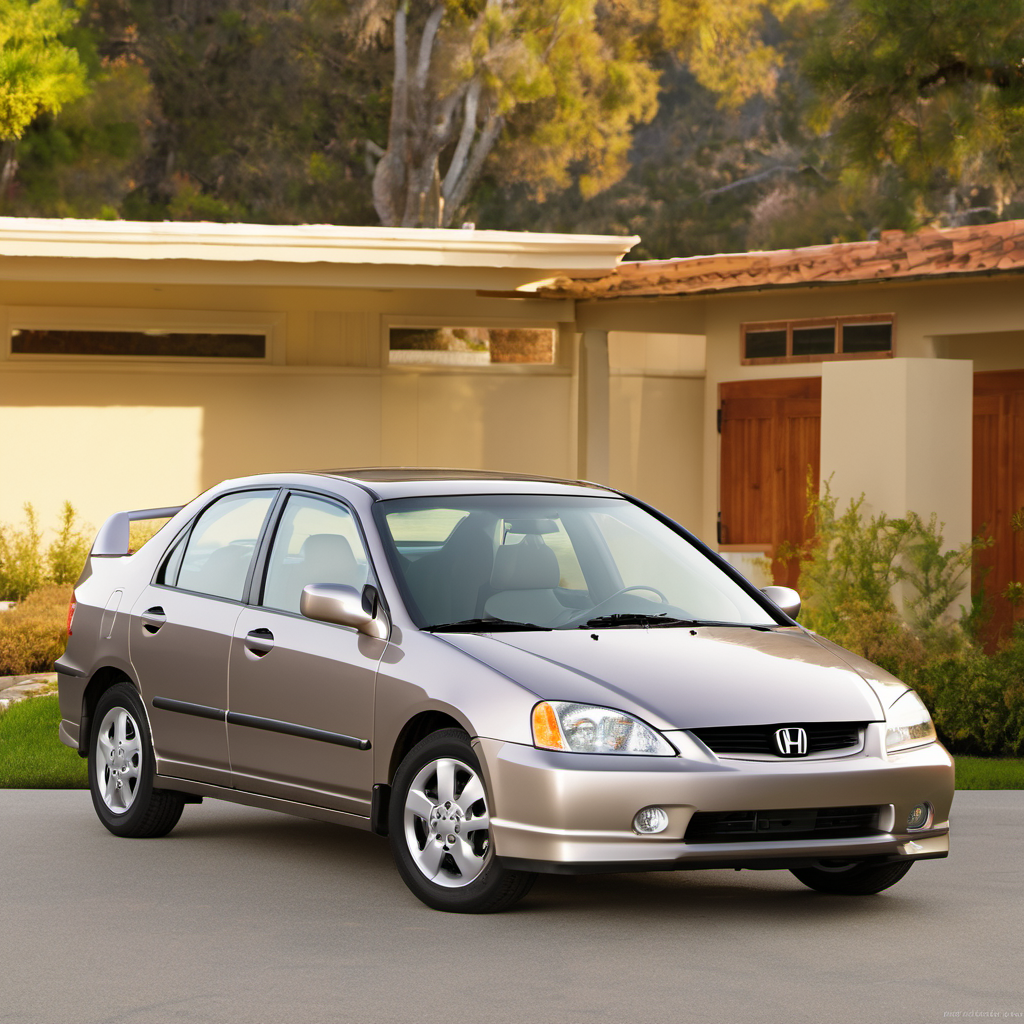
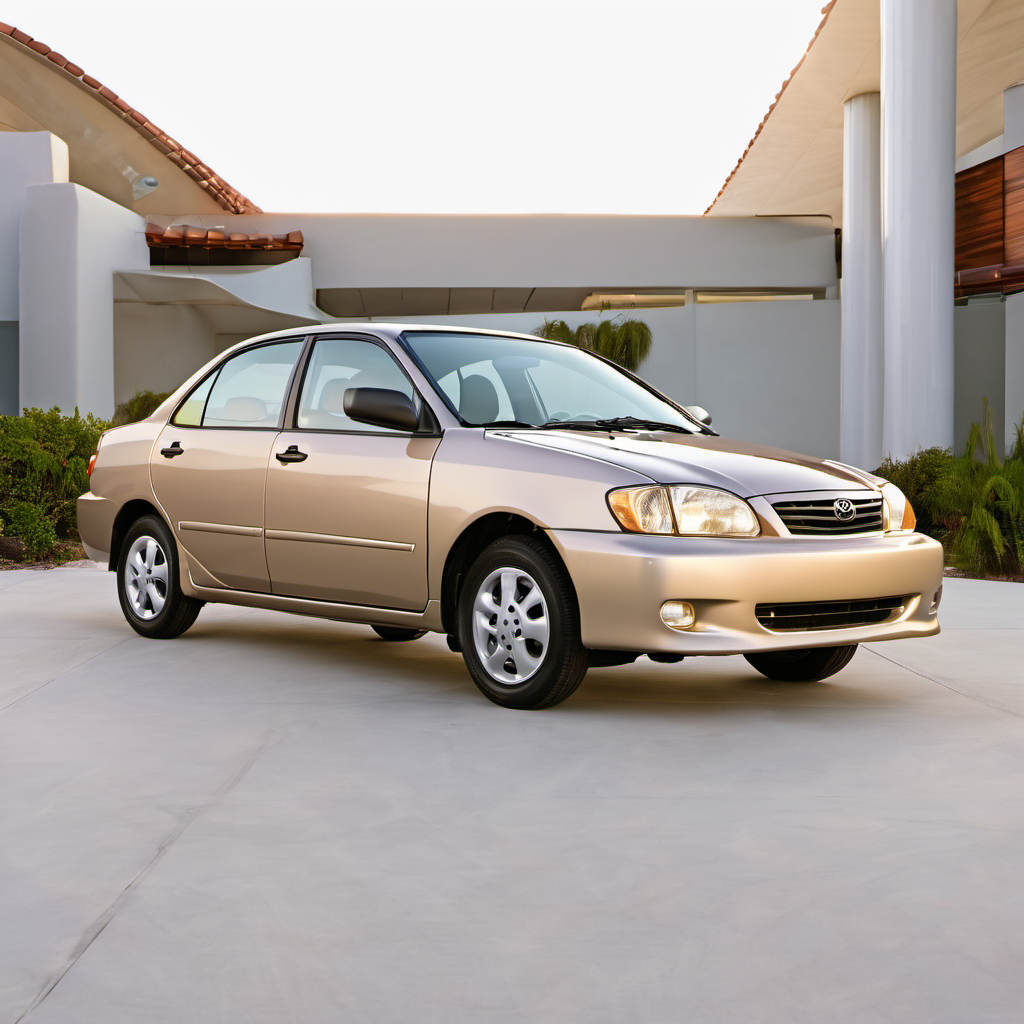
2003 Honda Civic Coupe

2003 Honda

CivicCoupe

Coupe

The 2003 Honda Civic Coupe is part of the seventh-generation Civic (2001–2005), one of the most dependable compact cars ever built. It pairs a peppy 1.7L four-cylinder with a lightweight body, giving it excellent fuel economy and a reputation for lasting well past 200,000 miles with basic upkeep. The coupe body style shaves a little weight and adds some style over the sedan, with no meaningful mechanical differences. At over 20 years old, most of these are now high-mileage daily drivers or second cars. The good news is that parts are plentiful and cheap, independent shops know them cold, and the engines are famously forgiving. The bad news is that rust — especially in Wisconsin — is the real threat to longevity at this age. This is a practical, economical commuter. It won't excite you on the highway, but it will start every single Wisconsin morning, sip gas, and rarely leave you stranded if you keep up with maintenance.

Reliability
4/5
Verified data
Specs shown for Civic — the most common configuration. Other trims may vary in engine, drivetrain, or fuel economy. Sign in to see your vehicle's exact specs.
Engine
[object Object]
Drivetrain
FWD
Fuel
Gasoline
MPG
29 city / 36 hwy / 32 combined
Seats
Doors
Body
Compact Cars

Overview

AI-curated

The 2003 Honda Civic Coupe is part of the seventh-generation Civic (2001–2005), one of the most dependable compact cars ever built. It pairs a peppy 1.7L four-cylinder with a lightweight body, giving it excellent fuel economy and a reputation for lasting well past 200,000 miles with basic upkeep. The coupe body style shaves a little weight and adds some style over the sedan, with no meaningful mechanical differences. At over 20 years old, most of these are now high-mileage daily drivers or second cars. The good news is that parts are plentiful and cheap, independent shops know them cold, and the engines are famously forgiving. The bad news is that rust — especially in Wisconsin — is the real threat to longevity at this age. This is a practical, economical commuter. It won't excite you on the highway, but it will start every single Wisconsin morning, sip gas, and rarely leave you stranded if you keep up with maintenance.

Known for
  • Exceptional long-term reliability
  • Outstanding fuel economy for its era
  • Low cost of ownership and cheap parts
  • Simple, mechanic-friendly engine bay
  • Strong resale value even at high mileage
Best for
  • Budget-conscious daily commuters
  • First-time car owners
  • High-mileage buyers who prioritize reliability over features
  • City and suburban driving
Watch for
  • Rust on rocker panels, wheel wells, and subframe — critical at this age in the Midwest
  • Aging automatic transmission (if equipped) — known weak point on this generation
  • Worn suspension bushings and ball joints on high-mileage examples
  • Cracked or brittle plastic interior components due to age
  • Oxygen sensor and VTEC-related issues as sensors age

Common issues by mileage

6 known

Automatic Transmission Slipping / Shift Flare

high
Typically appears
100k–160k mi
Estimated repair
$1,800 – $3,500

Oxygen Sensor Failure (upstream or downstream)

high
Typically appears
80k–150k mi
Estimated repair
$150 – $350

Timing Belt / Water Pump Wear

high
Typically appears
90k–105k mi (service interval)
Estimated repair
$350 – $600

Rocker Panel and Subframe Rust

high
Typically appears
Any mileage on Midwest / road-salt vehicles
Estimated repair
$300 – $2,500

Ball Joint and Front Suspension Bushing Wear

medium
Typically appears
100k–180k mi
Estimated repair
$200 – $600

A/C Compressor Failure

medium
Typically appears
120k–200k mi
Estimated repair
$500 – $900

Maintenance schedule

  1. 1
    Every 5,000 miles or 6 months Oil and Filter Change

    The D17 runs clean on conventional oil but is old enough that shorter intervals help catch leaks and sludge early. Use 5W-20 as specified.

  2. 2
    Every 105,000 miles or 7 years Timing Belt and Water Pump Replacement

    This is an interference engine — if the timing belt snaps, the engine is destroyed. If there's no record of this service, treat it as overdue.

  3. 3
    Every 30,000 miles (use Honda ATF-Z1 or equivalent) Automatic Transmission Fluid Change

    The 4-speed auto is sensitive to fluid condition. Neglected fluid is the #1 cause of premature transmission failure on this generation.

  4. 4
    Every 30,000 miles Spark Plugs

    OEM-spec plugs keep the lean-burn system running efficiently. Worn plugs cause misfires and fuel economy drop-off.

  5. 5
    Every 5 years or 60,000 miles Coolant Flush

    Honda's blue coolant degrades and becomes acidic over time. Old coolant accelerates water pump seal wear.

  6. 6
    Every 3 years Brake Fluid Flush

    Brake fluid absorbs moisture over time, lowering its boiling point. Critical for Wisconsin driving with temperature swings.

  7. 7
    Every 30,000 miles or at each tire rotation Inspect CV Axle Boots

    Cracked boots let grease escape and contaminate the joint. Catching a torn boot early saves the whole axle.

  8. 8
    Every spring (after salt season ends) Inspect Undercarriage for Rust

    Road salt accumulates all winter. An annual undercarriage wash and inspection catches subframe or brake line rust before it becomes a safety issue.

Always defer to the manufacturer's service manual for warranty-mandated intervals.

Cost of ownership

Annual maintenance
$400 – $900
Fuel
At 32 MPG combined and ~12,000 miles/year, expect roughly $1,400–$1,700/year at $3.75–$4.50/gal. One of the cheaper daily drivers to fuel.
Insurance
Typically one of the lowest-cost vehicles to insure in its class — expect $700–$1,200/year for a standard adult driver in Wisconsin, depending on coverage.

At this age and price point, the Civic is a genuinely cheap vehicle to own. Routine maintenance is inexpensive because parts are widely available and labor is straightforward. The main financial risk is deferred maintenance catching up — particularly a neglected timing belt or automatic transmission fluid. Budget extra in years where timing belt service or transmission service is due.
Seasonal care

Lake Geneva, WI
Winter
  • Test the battery before freeze season — a battery over 4 years old should be load-tested. Cold cranking amps drop sharply below 0°F, and this car's charging system won't save a weak battery.
  • Switch to a winter-rated washer fluid rated to at least -20°F. The standard reservoir capacity is small; keep a spare jug in the trunk.
  • Install a dedicated set of winter tires on steel wheels. All-season tires lose grip below 40°F on Wisconsin roads and ice.
  • Flush old brake fluid before winter — moisture-contaminated fluid can boil or absorb freeze-point issues in caliper pistons.
  • Coat the undercarriage and rocker panels with a rust inhibitor before first snowfall — road salt is this car's biggest long-term enemy.
  • Check that the block heater (if equipped) or battery tender connection is functional for sub-zero overnight temps.
Summer
  • Inspect the A/C system — refrigerant loss is common on 20-year-old systems. Recharge if needed before peak heat.
  • Check tire pressure monthly — pressure drops about 1 PSI for every 10°F of temperature change, affecting fuel economy and handling.
  • Inspect coolant level and hose condition — old coolant hoses become brittle and can fail under summer heat soak.
  • Check that the radiator cooling fan operates correctly — a failing fan causes overheating in slow traffic, especially with the A/C running.

Comparable vehicles

If you're shopping for one

Red flags
  • Any rust penetrating the subframe, floor pan, or structural rockers — walk away.
  • Automatic transmission that slips, shudders, or refuses to engage — likely end-of-life.
  • No timing belt service records on a high-mileage example — the previous owner may have been playing with fire.
  • Salvage or rebuilt title — parts availability is good, but accident damage on a small car can compromise structural integrity.
  • Excessive blue or white exhaust smoke at startup — points to worn valve seals or head gasket issues.
What to inspect
  • Crawl under the rocker panels, rear wheel arches, and subframe with a flashlight and probe — rust perforation here can make the car structurally unsound and unrepairable.
  • Check for transmission slipping, delayed engagement, or shuddering between 1st and 2nd gear on a test drive — especially on automatics.
  • Ask for timing belt service records. If it can't be proven, budget $400–$600 for the job immediately.
  • Check the automatic transmission fluid condition — should be pink/red and not smell burnt. Dark brown or burnt smell is a red flag.
  • Look for oil leaks around the valve cover gasket and cam seals — common at this age and inexpensive to fix, but they signal overall maintenance habits.
  • Check that the A/C blows cold and the cooling fan kicks on when the A/C is engaged.
AI profile generated 1 mo ago · claude-sonnet-4-6 · v2.