2003 Saturn VUE SUV

2003 Saturn

VUESUV

SUV

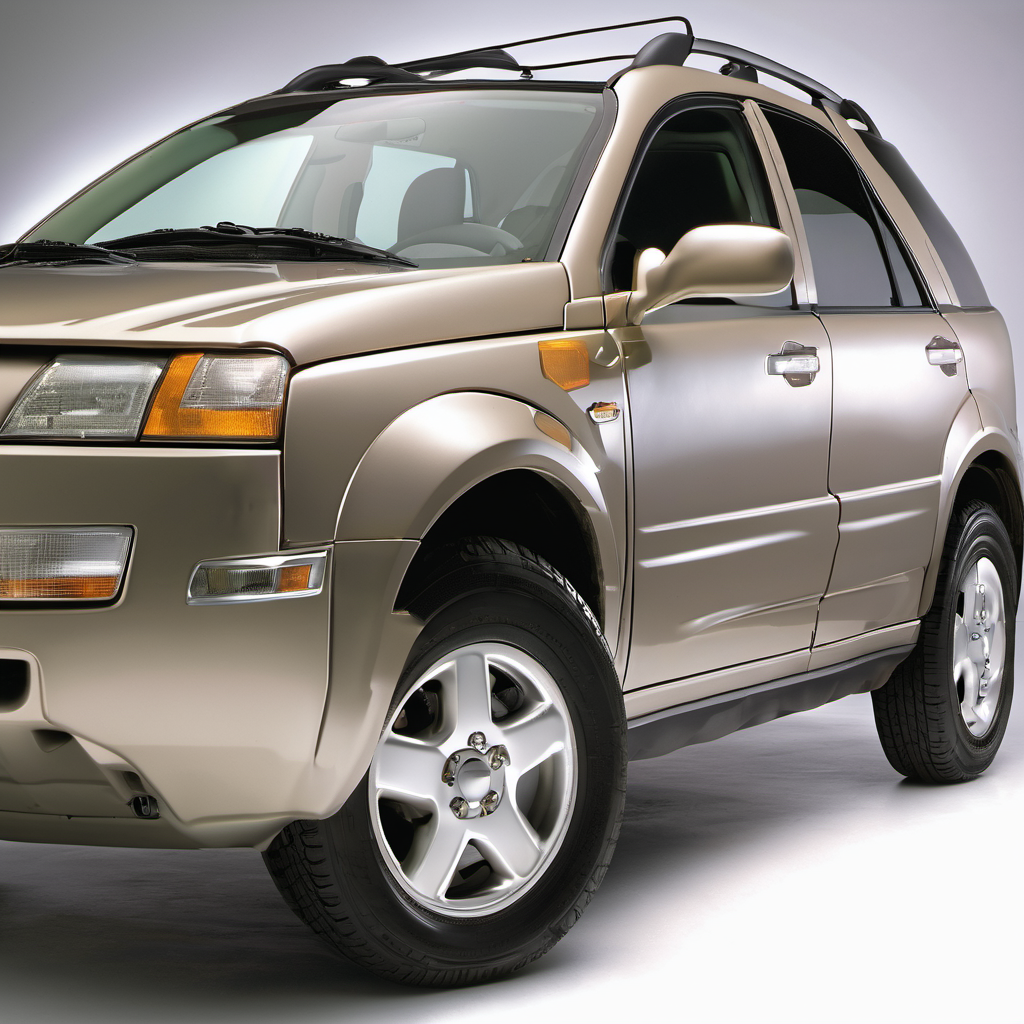
The 2003 Saturn VUE was Saturn's first SUV, built on GM's Delta platform and aimed squarely at budget-conscious compact SUV shoppers. It offered a car-like ride with an SUV silhouette, and the base 2.2L four-cylinder kept the sticker price and fuel costs reasonable for its era. Saturn positioned the VUE as a no-haggle, approachable alternative to the Honda CR-V and Toyota RAV4. In practice it delivered decent utility and adequate power, but the first-generation (2002–2005) had real reliability weak spots — particularly around the transmission and AWD system — that hold it back compared to Japanese rivals. This is an older, high-depreciation vehicle. Parts availability from GM's supply chain has thinned since Saturn's 2010 closure. Budget accordingly for sourcing, and scrutinize any used example carefully before buying.

Reliability
2/5
Verified data
Specs shown for Vue FWD — the most common configuration. Other trims may vary in engine, drivetrain, or fuel economy. Sign in to see your vehicle's exact specs.
Engine
[object Object]
Drivetrain
FWD
Fuel
Gasoline
MPG
19 city / 26 hwy / 22 combined
Seats
Doors
Body
Sport Utility Vehicle - 2WD

Overview

AI-curated

The 2003 Saturn VUE was Saturn's first SUV, built on GM's Delta platform and aimed squarely at budget-conscious compact SUV shoppers. It offered a car-like ride with an SUV silhouette, and the base 2.2L four-cylinder kept the sticker price and fuel costs reasonable for its era. Saturn positioned the VUE as a no-haggle, approachable alternative to the Honda CR-V and Toyota RAV4. In practice it delivered decent utility and adequate power, but the first-generation (2002–2005) had real reliability weak spots — particularly around the transmission and AWD system — that hold it back compared to Japanese rivals. This is an older, high-depreciation vehicle. Parts availability from GM's supply chain has thinned since Saturn's 2010 closure. Budget accordingly for sourcing, and scrutinize any used example carefully before buying.

Known for
  • Affordable entry price and low-pressure Saturn dealership experience
  • Smooth, car-like ride quality for its class
  • Decent fuel economy with the base 2.2L four-cylinder
  • Unique polymer body panels that resist minor dents and door dings
Best for
  • Budget-minded buyers who need basic SUV utility
  • Light-duty daily commuters with mostly pavement use
  • DIY-friendly owners comfortable sourcing GM parts
Watch for
  • CVT transmission failures (Honda-sourced unit notorious for early death)
  • Rear differential and AWD system problems on AWD trims
  • Rust on frame, subframe, and brake lines — a serious concern in salt-belt Wisconsin
  • Plastic timing chain guides wearing prematurely on the 2.2L Ecotec
  • Parts availability challenges since Saturn brand discontinuation

Common issues by mileage

6 known

CVT Transmission Failure

high
Typically appears
60–120k mi
Estimated repair
$2,500 – $5,000

Timing Chain & Guide Wear (2.2L Ecotec)

medium
Typically appears
80–150k mi
Estimated repair
$600 – $1,400

Oxygen Sensor / O2 Sensor Heater Failure

medium
Typically appears
80–130k mi
Estimated repair
$150 – $350

Subframe & Brake Line Rust (Salt Belt)

high
Typically appears
Any — age-dependent
Estimated repair
$400 – $2,500

Maintenance schedule

  1. 1
    Every 5,000 miles Engine oil & filter change (use full synthetic 5W-30)

    The 2.2L Ecotec's timing chain and variable valve system depend on clean, high-flow oil. Stretching oil changes accelerates guide and chain wear — one of this engine's known failure points.

  2. 2
    Every 30,000 miles CVT fluid service (if CVT-equipped)

    The Honda-sourced CVT fluid degrades and overheats under normal use. Fresh fluid is the single best thing you can do to extend CVT life. Never skip or delay this service.

  3. 3
    Every 5 years or 100,000 miles Coolant flush

    The Ecotec is sensitive to coolant degradation. Old coolant becomes acidic and attacks the water pump and gaskets.

  4. 4
    Every year — more often after harsh winters Brake line inspection

    Wisconsin road salt attacks the steel brake lines on this vintage. A failed brake line is a safety emergency. Inspect visually every fall before winter.

  5. 5
    Every year Subframe and undercarriage rust inspection

    Salt-belt VUEs frequently develop serious subframe rust. Catch it early when repair is still affordable; a fully rusted subframe can make the car uneconomical to fix.

  6. 6
    Every 60,000 miles Spark plug replacement

    The Ecotec's iridium plugs hold their gap well, but worn plugs stress the ignition coils, which are a secondary failure point.

  7. 7
    Every fall, before Wisconsin winter Battery load test

    Cold cranking demands spike in sub-zero temperatures. A battery that tests marginal in October will likely fail in January.

  8. 8
    Every 5,000–7,500 miles; re-check when temps drop 20°F Tire rotation and pressure check

    Tire pressure drops roughly 1 PSI per 10°F. Under-inflated tires in Wisconsin winters reduce traction and accelerate wear on an already modest FWD platform.

Always defer to the manufacturer's service manual for warranty-mandated intervals.

Cost of ownership

Annual maintenance
$600 – $1,800
Fuel
At 22 MPG combined and ~15,000 miles/year, expect roughly $1,600–$2,000/year at current Midwest gas prices. Premium grade is not required.
Insurance
Generally low — older, low-value vehicle with modest performance. Expect $600–$1,100/year depending on driver profile and coverage level.

Day-to-day costs are modest if the transmission holds. The risk is a single large repair — a CVT replacement alone can exceed the car's market value on a high-mileage 2003 example. Set aside a repair reserve; don't assume low purchase price means low total cost.
Seasonal care

Lake Geneva, WI
Winter
  • Load-test the battery every October — sub-zero Lake Geneva winters will expose any weak cell fast.
  • Switch to full synthetic 5W-30 oil if not already using it; it flows better on cold starts and protects the timing chain during the first seconds of startup.
  • Flush and fill washer fluid with a -20°F or lower rated formula before first freeze — standard fluid will ice up in the lines.
  • Inspect and replace wiper blades; consider winter-specific blades that handle ice and snow loading better.
  • Inspect brake lines and undercarriage for salt damage each fall before road salting begins — this vintage is especially vulnerable.
  • Keep the fuel tank at least half full to reduce condensation in the fuel system and add weight over the front wheels for FWD traction.
Summer
  • Check A/C refrigerant charge and cabin air filter — a clogged filter significantly cuts airflow on hot days.
  • Inspect coolant level and condition; the Ecotec runs warm and a compromised cooling system can overheat quickly in summer traffic.
  • Re-check tire pressure after winter — pressure rises roughly 1 PSI per 10°F, and summer heat can push them above spec, increasing center-tread wear.
  • Inspect CVT or transmission cooler lines for any weeping — heat stress accelerates CVT fluid breakdown.

Comparable vehicles

If you're shopping for one

Red flags
  • Any CVT slipping, shuddering, or jerking — assume replacement is needed, not repair.
  • Visible rust bubbling on the lower rocker panels or wheel arches, which usually means far worse rust underneath.
  • Check engine light on or recently cleared — always scan for pending codes.
  • AWD badge on a vehicle with any drivetrain vibration or clunking — rear differential repairs are costly and parts are increasingly scarce.
  • Missing service records, especially for CVT fluid changes — a CVT with no documented service is a near-certain future failure.
What to inspect
  • Get the vehicle on a lift and have a tech probe every inch of the subframe, control arm mounting points, and brake lines for rust perforation — not just surface rust.
  • Confirm whether the transmission is the CVT or the 5-speed manual. If CVT, pull the fluid: dark, burnt-smelling fluid is a major red flag.
  • Start from cold and listen for timing chain rattle in the first 5–10 seconds — a rattling chain on startup signals worn guides.
  • Test the A/C, heat, and all powered accessories; electrical gremlins in aging Saturn interiors are common.
  • Check for any stored DTCs with an OBD-II scan before purchase — pay special attention to camshaft timing codes (P0012, P0015) and O2 sensor codes.
AI profile generated 11 days ago · claude-sonnet-4-6 · v2.