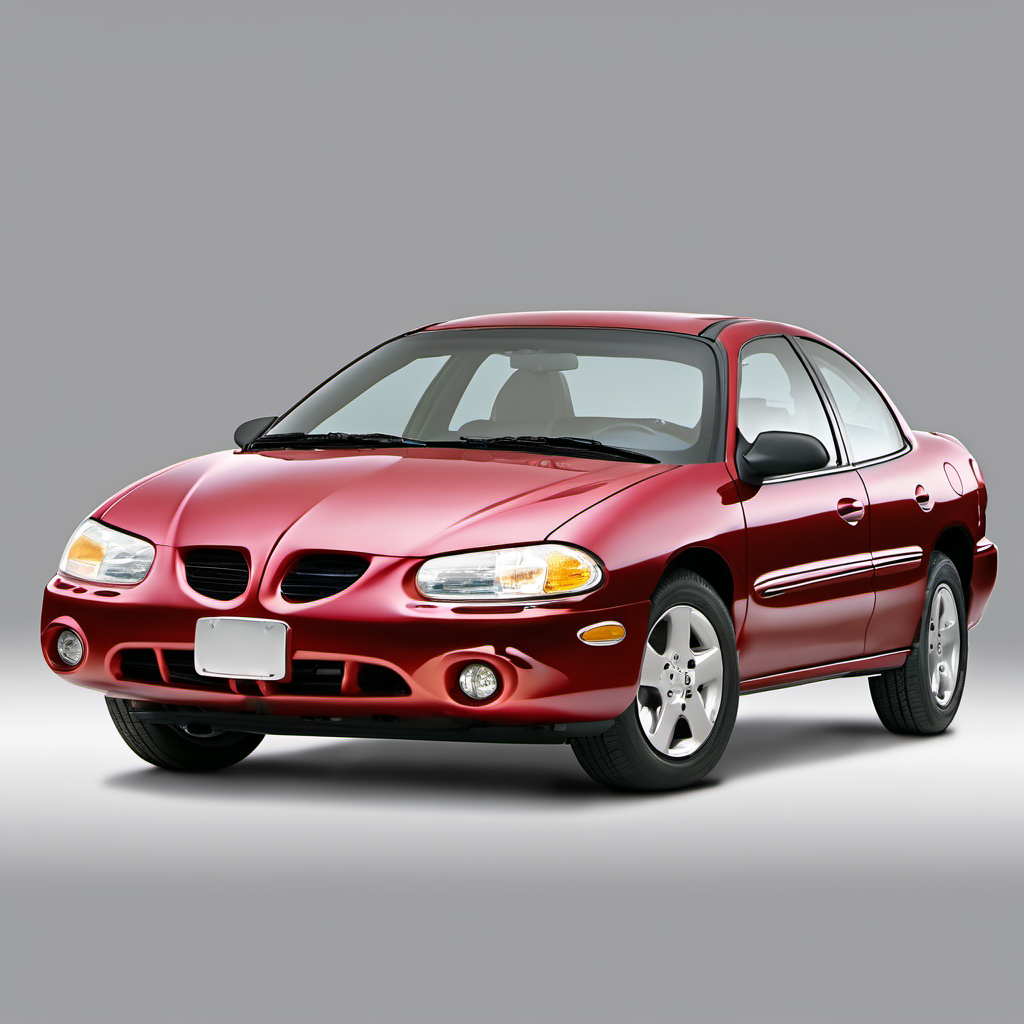
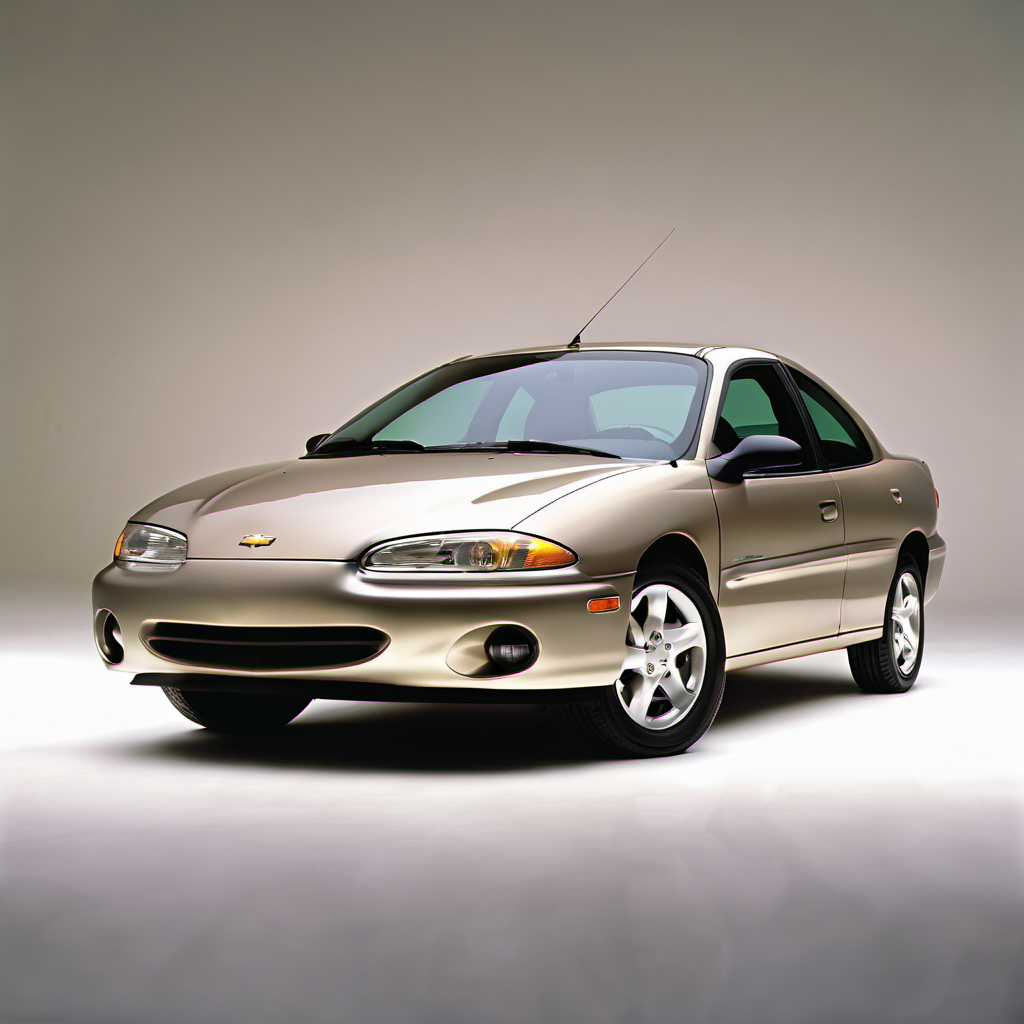
2003 Pontiac Grand Am Sedan

2003 Pontiac

Grand AmSedan

Sedan

The 2003 Pontiac Grand Am Sedan is a front-wheel-drive compact car that was one of GM's best-selling models throughout its final generation (1999–2005). Aimed squarely at budget-conscious buyers wanting a sportier-looking alternative to the Cavalier or Malibu, it came standard with a 2.2L Ecotec four-cylinder and was also available with a 3.4L V6. By 2003 the platform was aging, but the Ecotec engine itself was a genuine improvement over older GM four-cylinders. On the road the Grand Am is competent but unremarkable — ride quality is firm, interior materials are budget-grade, and road noise is noticeable. Fuel economy is respectable for the era at around 25 MPG combined. The 4-cylinder version is the more reliable of the two engine choices and is easier to maintain. At this point in its life the Grand Am is a high-mileage used-car proposition. Many examples in the upper Midwest have lived through 20+ Wisconsin winters, meaning rust and worn suspension components are the top concerns — not the engine.

Reliability
3/5
Verified data
Specs shown for Grand Am — the most common configuration. Other trims may vary in engine, drivetrain, or fuel economy. Sign in to see your vehicle's exact specs.
Engine
[object Object]
Drivetrain
FWD
Fuel
Gasoline
MPG
21 city / 30 hwy / 25 combined
Seats
Doors
Body
Compact Cars

Overview

AI-curated

The 2003 Pontiac Grand Am Sedan is a front-wheel-drive compact car that was one of GM's best-selling models throughout its final generation (1999–2005). Aimed squarely at budget-conscious buyers wanting a sportier-looking alternative to the Cavalier or Malibu, it came standard with a 2.2L Ecotec four-cylinder and was also available with a 3.4L V6. By 2003 the platform was aging, but the Ecotec engine itself was a genuine improvement over older GM four-cylinders. On the road the Grand Am is competent but unremarkable — ride quality is firm, interior materials are budget-grade, and road noise is noticeable. Fuel economy is respectable for the era at around 25 MPG combined. The 4-cylinder version is the more reliable of the two engine choices and is easier to maintain. At this point in its life the Grand Am is a high-mileage used-car proposition. Many examples in the upper Midwest have lived through 20+ Wisconsin winters, meaning rust and worn suspension components are the top concerns — not the engine.

Known for
  • Sporty styling that outsold its segment for years
  • Reliable 2.2L Ecotec four-cylinder engine
  • Budget-friendly purchase and insurance costs
  • Firm, sport-tuned suspension
  • Simple, well-understood drivetrain for independent shops
Best for
  • Budget commuters who need reliable A-to-B transportation
  • Younger drivers or first-time car buyers
  • City and suburban driving with occasional highway use
  • Owners comfortable with DIY or independent-shop maintenance
Watch for
  • Rust on rocker panels, wheel wells, and subframe in salt-belt examples
  • Worn lower ball joints and struts on high-mileage cars
  • Passlock II anti-theft system causing no-start conditions
  • Aging interior plastics and trim that crack or rattle
  • The 3.4L V6 (if present) has significantly more issues than the 2.2L

Common issues by mileage

6 known

Passlock II Anti-Theft No-Start

high
Typically appears
Any mileage
Estimated repair
$50 – $300

Worn Lower Ball Joints

high
Typically appears
80–150k mi
Estimated repair
$200 – $450

Strut and Strut Mount Wear

high
Typically appears
80–130k mi
Estimated repair
$300 – $700

Instrument Cluster Gauge Failure (Speedometer, Fuel Gauge)

medium
Typically appears
60–120k mi
Estimated repair
$150 – $400

Oxygen Sensor / HO2S Heater Circuit Fault

medium
Typically appears
80–150k mi
Estimated repair
$100 – $300

Rocker Panel and Subframe Rust (Salt-Belt)

high
Typically appears
Any mileage, age-related
Estimated repair
$200 – $2,000

Maintenance schedule

  1. 1
    Every 5,000 miles or 6 months Engine oil and filter change

    The 2.2L Ecotec is oil-change sensitive. Neglected oil is the primary cause of early engine wear on this motor. Use the GM-recommended 5W-30.

  2. 2
    Every 5 years or 100,000 miles Coolant flush

    Degraded coolant turns acidic and attacks the water pump and thermostat housing — both common failure points on aging Ecotec engines.

  3. 3
    Every 60,000 miles Spark plug replacement

    The 2.2L uses conventional spark plugs on this generation. Fresh plugs maintain fuel economy and prevent misfires.

  4. 4
    Every 60,000 miles or at first sign of cracking Serpentine belt inspection and replacement

    Belt failure leaves you stranded. Cold Wisconsin winters accelerate belt cracking — inspect each spring.

  5. 5
    Every 30,000 miles or with every tire rotation Lower ball joint inspection

    Ball joint failure on the Grand Am can cause sudden loss of steering control. These wear faster on pothole-heavy Midwest roads.

  6. 6
    Every 2–3 years Brake fluid flush

    Brake fluid absorbs moisture over time, lowering the boiling point. Critical for fade-free stops in hilly or stop-and-go driving.

  7. 7
    Every fall (before winter) Battery load test

    A marginal battery that starts fine in September will often fail in January. Sub-zero temperatures cut cranking power significantly.

  8. 8
    Every 45,000–60,000 miles Transmission fluid change (automatic)

    The 4T45-E automatic in this car is reliable when the fluid is maintained. Neglected fluid leads to harsh shifts and eventual failure.

Always defer to the manufacturer's service manual for warranty-mandated intervals.

Cost of ownership

Annual maintenance
$500 – $1,200
Fuel
At 25 MPG combined and typical Lake Geneva driving mix, expect roughly $1,800–$2,200/year at current regular-grade gas prices.
Insurance
Generally low — the Grand Am is an inexpensive, older vehicle with modest horsepower. Expect $700–$1,100/year for full coverage depending on driver profile and history.

The Grand Am is cheap to own when it's healthy. Parts are widely available and inexpensive, and any independent shop knows this platform well. The risk is deferred maintenance catching up — especially rust repair and suspension work, which can run $1,000–$2,500+ on a heavily-used salt-belt car. Budget accordingly if buying a high-mileage example.
Seasonal care

Lake Geneva, WI
Winter
  • Load-test the battery every fall — cold starts on a weak battery are the #1 breakdown cause in Wisconsin winters.
  • Switch to a 5W-30 full synthetic if not already using one; it flows better at sub-zero temperatures and protects the Ecotec on cold starts.
  • Flush wiper fluid reservoir and refill with a -40°F rated washer fluid — the stock reservoir is exposed and road salt spray is constant.
  • Inspect the undercarriage for rust on the subframe, brake lines, and fuel lines before winter; salt accelerates existing corrosion rapidly.
  • Keep the gas tank at least half full to reduce condensation in the fuel system and add weight over the front drive wheels.
  • Check tire tread depth and consider dedicated winter tires — FWD helps in snow but worn all-seasons on ice are dangerous.
Summer
  • Check tire pressure monthly — pressures drop about 1 PSI per 10°F of temperature change, and summer heat can cause under-inflation.
  • Inspect the A/C system for proper cooling; the Grand Am's A/C is simple but condenser leaks and low refrigerant are common on aged examples.
  • Check coolant level and condition — heat soak in stop-and-go traffic can stress an aging cooling system. Watch for the temperature gauge creeping up.
  • Inspect belts and hoses for heat-related cracking or softening, especially if they haven't been replaced in several years.

Comparable vehicles

If you're shopping for one

Red flags
  • Visible rust perforation on rocker panels or subframe — walk away.
  • Security light on or history of repeated no-start events without clear diagnosis.
  • Overheating history or milky oil — potential head gasket failure.
  • Missing service records on a car over 100k miles — unknown maintenance is a big risk on aging GM platforms.
  • Evidence of flood damage: musty smell, stained carpet, corrosion on fuse block.
What to inspect
  • Rocker panels, rear wheel arches, and subframe for rust — poke with a screwdriver if needed. Severe rust can make the car unsafe and uneconomical to repair.
  • Lower ball joints: grab each front wheel at 9 and 3 o'clock and try to wiggle it. Any clunking or play means replacement is due.
  • Test the Passlock system by starting the car cold; if it cranks but won't fire, or the security light flashes, budget for anti-theft diagnosis.
  • Check instrument cluster gauges — speedometer and fuel gauge are known to fail on this generation.
  • Listen for strut clunking over bumps and check for uneven tire wear, which indicates worn suspension.
  • Verify A/C blows cold and heat works properly before buying.
  • Check all four brake rotors and pads — inspect for deep grooving or heat cracking.
  • Pull the oil dipstick and look for milky or sludgy oil, which signals a head gasket or cooling issue.
AI profile generated 13 days ago · claude-sonnet-4-6 · v2.