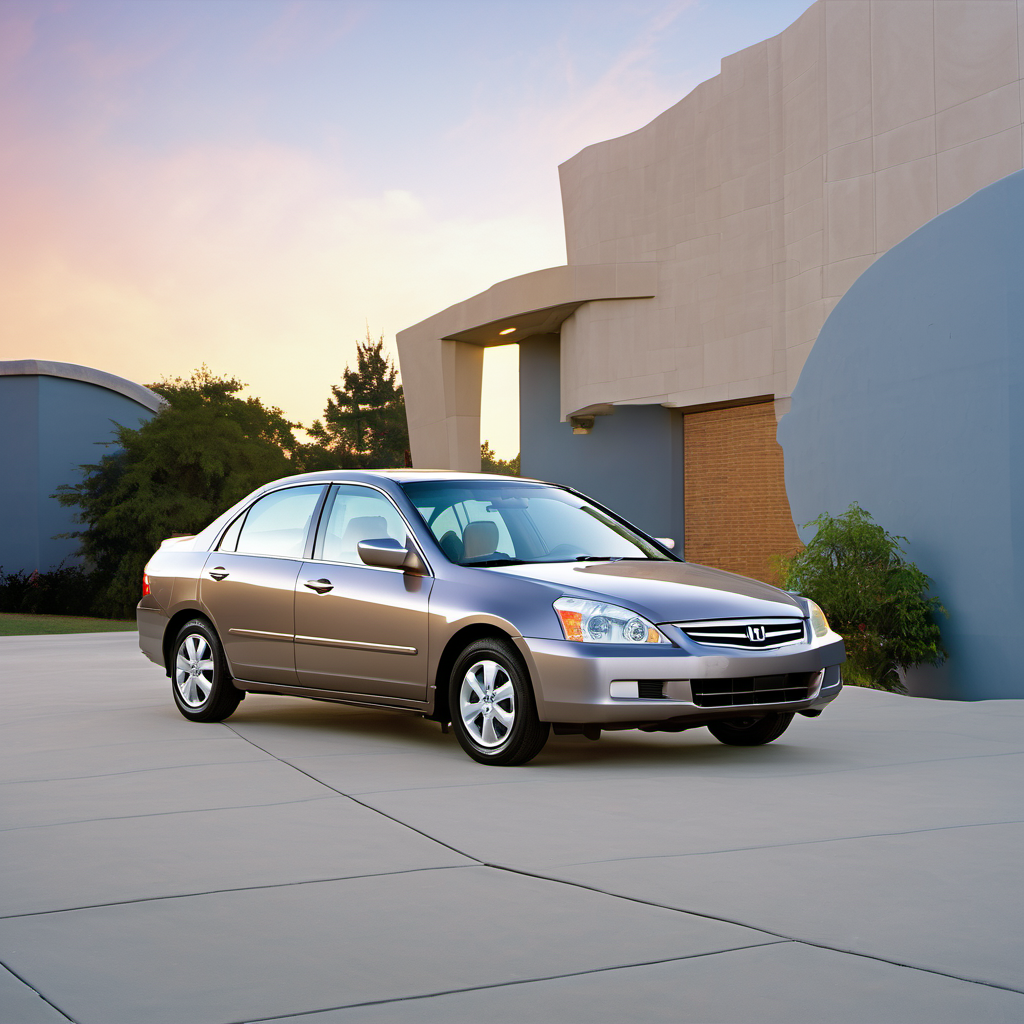
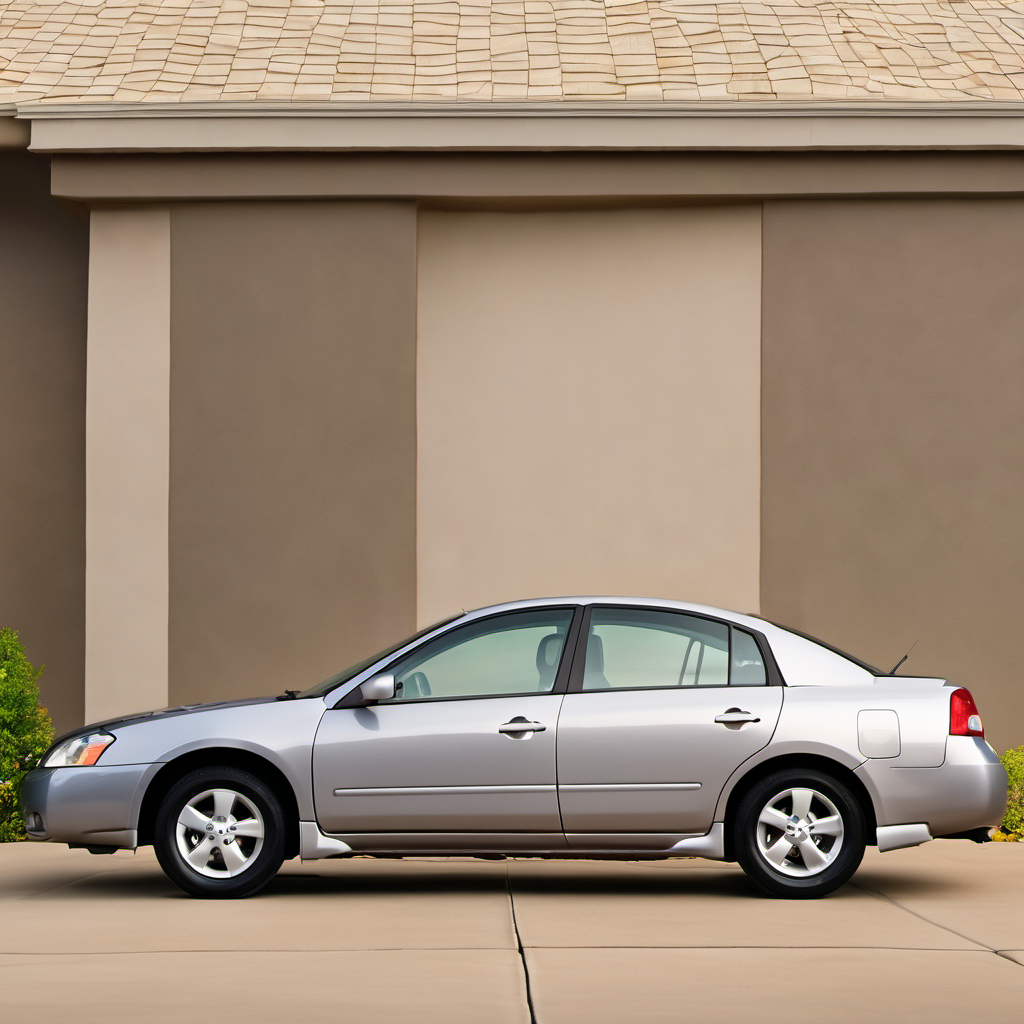
2003 Honda Accord Sedan

2003 Honda

AccordSedan

Sedan

The 2003 Honda Accord Sedan is part of the seventh-generation Accord (2003–2007), widely regarded as one of the best iterations of Honda's mid-size family sedan. The 4-cylinder models received an all-new 2.4L DOHC i-VTEC engine that year — a significant step up from previous generations in refinement and fuel economy. The 7th-gen Accord struck a balance between a roomy, comfortable interior and responsive, fun-to-drive dynamics that was rare in the segment at the time. With proper maintenance, these cars routinely surpass 200,000 miles. Many examples are still on the road in Wisconsin doing daily-driver duty, which speaks to the fundamental durability of the K24 engine and Honda's overall build quality. Parts are plentiful and inexpensive, and virtually any independent shop knows this platform cold. At 20+ years old, any surviving example should be evaluated on its maintenance history. The 2003 model year was the first year of this generation, which means early-production quirks are possible — particularly around the automatic transmission and the power door lock actuators.

Reliability
4/5
Verified data
Specs shown for Accord — the most common configuration. Other trims may vary in engine, drivetrain, or fuel economy. Sign in to see your vehicle's exact specs.
Engine
[object Object]
Drivetrain
FWD
Fuel
Gasoline
MPG
21 city / 31 hwy / 25 combined
Seats
Doors
Body
Midsize Cars

Overview

AI-curated

The 2003 Honda Accord Sedan is part of the seventh-generation Accord (2003–2007), widely regarded as one of the best iterations of Honda's mid-size family sedan. The 4-cylinder models received an all-new 2.4L DOHC i-VTEC engine that year — a significant step up from previous generations in refinement and fuel economy. The 7th-gen Accord struck a balance between a roomy, comfortable interior and responsive, fun-to-drive dynamics that was rare in the segment at the time. With proper maintenance, these cars routinely surpass 200,000 miles. Many examples are still on the road in Wisconsin doing daily-driver duty, which speaks to the fundamental durability of the K24 engine and Honda's overall build quality. Parts are plentiful and inexpensive, and virtually any independent shop knows this platform cold. At 20+ years old, any surviving example should be evaluated on its maintenance history. The 2003 model year was the first year of this generation, which means early-production quirks are possible — particularly around the automatic transmission and the power door lock actuators.

Known for
  • Exceptionally durable 2.4L K24 4-cylinder engine
  • Comfortable, spacious interior for the class
  • Strong long-term reliability and low cost of ownership
  • High parts availability and shop familiarity
Best for
  • Budget-conscious daily drivers who want reliable transportation
  • High-mileage commuters
  • First-time used car buyers seeking a proven platform
  • Owners who prefer independent shop maintenance over dealer
Watch for
  • Automatic transmission failures, especially on early 7th-gen models
  • Power steering hose leaks at higher mileage
  • Rust on underbody and wheel arches — critical in Wisconsin salt country
  • Worn engine mounts causing vibration at idle

Common issues by mileage

6 known

Automatic Transmission Failure

high
Typically appears
80–150k mi
Estimated repair
$1,800 – $3,500

VTC (Variable Timing Control) Actuator Rattle on Cold Start

medium
Typically appears
80–150k mi
Estimated repair
$300 – $700

Power Steering Hose Leak

high
Typically appears
100–180k mi
Estimated repair
$150 – $350

Engine Mount Deterioration (Vibration at Idle)

medium
Typically appears
100–180k mi
Estimated repair
$200 – $500

Power Door Lock Actuator Failure

high
Typically appears
60–150k mi
Estimated repair
$100 – $250

Underbody / Wheel Arch Rust (Wisconsin Salt Exposure)

high
Typically appears
Any mileage on unsalted-unprotected cars
Estimated repair
$500 – $3,000

Maintenance schedule

  1. 1
    Every 30,000 miles — do NOT wait for 'lifetime' Transmission fluid change (automatic)

    The 5-speed automatic in the 2003 is the single biggest vulnerability on this car. Fresh Honda-spec ATF is the cheapest insurance you can buy. Using a drain-and-fill (not a flush) is preferred on high-mileage units.

  2. 2
    Every 5,000 miles or per Honda Maintenance Minder Engine oil change with Honda-approved 5W-20

    The K24 engine is oil-sensitive. Low or degraded oil is the primary cause of VTC actuator wear and early timing chain issues. Do not stretch intervals.

  3. 3
    Inspect at 100,000 miles; replace tensioner if any rattle is present Timing chain inspection / tensioner check

    The K24 uses a timing chain (not a belt), so no scheduled replacement — but the chain tensioner can wear, especially with infrequent oil changes. A cold-start rattle that goes away quickly is the warning sign.

  4. 4
    Every 15,000 miles or at each oil change Power steering fluid check and hose inspection

    The high-pressure PS hose is a common leak point on this generation. Catching a weep early saves the rack and pump.

  5. 5
    Every 30,000 miles (standard plugs) or 100,000 miles (factory iridium) Spark plug replacement

    Fresh plugs maintain fuel economy and smooth idle. On a 20-year-old car, verify what's currently installed before assuming iridium interval.

  6. 6
    Every 3 years regardless of mileage Brake fluid flush

    Honda specifies this interval for a reason — brake fluid absorbs moisture over time, lowering boiling point. Wisconsin's wet winters accelerate this.

  7. 7
    Every spring (after road-salt season ends) Underbody wash and rust inspection

    Salt accumulation on subframe, brake lines, and fuel lines is the #1 long-term killer of Wisconsin Accords. Catching surface rust before it penetrates brake lines or the subframe saves thousands.

  8. 8
    Every 60,000 miles or 5 years Coolant flush

    Degraded coolant becomes acidic and attacks the aluminum engine block and heater core. Fresh Honda-spec blue coolant prevents internal corrosion.

Always defer to the manufacturer's service manual for warranty-mandated intervals.

Cost of ownership

Annual maintenance
$400 – $900
Fuel
At 25 MPG combined and ~15,000 miles/year, expect roughly $1,650–$2,000/year at current Midwest gas prices (~$3.30–$3.50/gal). The 4-cylinder is the frugal choice over the V6.
Insurance
Low to moderate — 20-year-old sedan with modest book value. Expect $600–$1,100/year depending on driver history and coverage level.

The 2003 Accord 4-cylinder is one of the most affordable cars to own and operate in its class. Routine maintenance is inexpensive, parts are widely available, and the K24 engine rarely needs major work if oil changes are kept up. The main budget wildcard is the automatic transmission — if it's never been serviced, budget for a fluid service immediately and watch for any shift hesitation.
Seasonal care

Lake Geneva, WI
Winter
  • Switch to 0W-20 or 5W-20 full synthetic if not already running it — cold-start oil flow is critical for the VTC actuator and timing chain tensioner at Wisconsin sub-zero temps.
  • Test the battery before first hard freeze. A battery over 4 years old on a 20-year-old car should be replaced proactively — cold cranking amps drop sharply below 0°F.
  • Top off windshield washer fluid with -20°F or -40°F rated fluid. The stock reservoir and lines can crack if filled with summer fluid that freezes.
  • Inspect rubber brake lines and steel brake lines for rust/corrosion before winter — salt accelerates any existing damage and brake line failure is a safety emergency.
  • Install winter wiper blades — standard blades ice up and skip across the windshield in sleet and freezing rain.
  • Keep the gas tank at least half full to reduce fuel line condensation and add weight over the front-wheel-drive axle in slippery conditions.
Summer
  • Check tire pressure monthly — tires gain roughly 1 PSI for every 10°F increase in temperature and overinflation causes uneven wear and reduced wet-road grip.
  • Inspect the A/C system for refrigerant charge and cabin air filter — a clogged filter kills cooling efficiency and the A/C on a 20-year-old car may need a recharge.
  • Check coolant level and condition — overheating risk rises in stop-and-go traffic; a marginal cooling system that survived winter may fail under summer load.
  • Inspect serpentine belt and tensioner for cracking — heat accelerates belt degradation and a snapped belt leaves you stranded and can damage the power steering pump.

Comparable vehicles

If you're shopping for one

Red flags
  • Automatic transmission that slips, hesitates, or clunks — repair cost can equal or exceed the car's value.
  • Check engine light on — scan codes before purchase; VTC/camshaft timing codes (P0012, P0022) or oxygen sensor codes (P0031, P0032) indicate deferred maintenance.
  • No maintenance records and over 100k miles — the transmission fluid history is especially critical and unknowable without records.
  • Visible rust on brake lines under the car — safety-critical and expensive to fix properly.
  • Oil that is black, sludgy, or very low on the dipstick — signals chronic neglect that shortens K24 engine life.
  • Musty interior or water stains on floor mats — can indicate windshield seal leaks, which lead to ECU corrosion on this generation.
What to inspect
  • Transmission shift quality: Drive the car through all gears and feel for hesitation, slipping, or harsh engagement — especially between 1st and 2nd gear. Any abnormality is a significant red flag on the 2003.
  • Cold-start engine rattle: Start from fully cold. A ticking or rattling sound in the first 2–3 seconds can indicate VTC actuator wear (tied to P0012/P0022). Should go away quickly with fresh oil; if it lingers, budget for repair.
  • Power steering: Turn lock-to-lock and look for fluid on the ground afterward. Check the high-pressure hose at the rack for weeping.
  • Underbody rust: Get the car on a lift. Check subframe mounting points, rear trailing arm brackets, brake lines, and fuel lines. Surface rust is common; perforated brake lines or cracked subframe mounts are deal-breakers.
  • Wheel arch and rocker panel rust: Wisconsin cars commonly rust here first. Poke suspected bubbles — soft or flaking metal indicates structural rust.
  • Engine mounts: With the engine idling, put in Drive with foot on brake and feel for excessive vibration through the floor or steering wheel. Worn mounts are common and cause drivetrain stress.
AI profile generated 17 days ago · claude-sonnet-4-6 · v2.