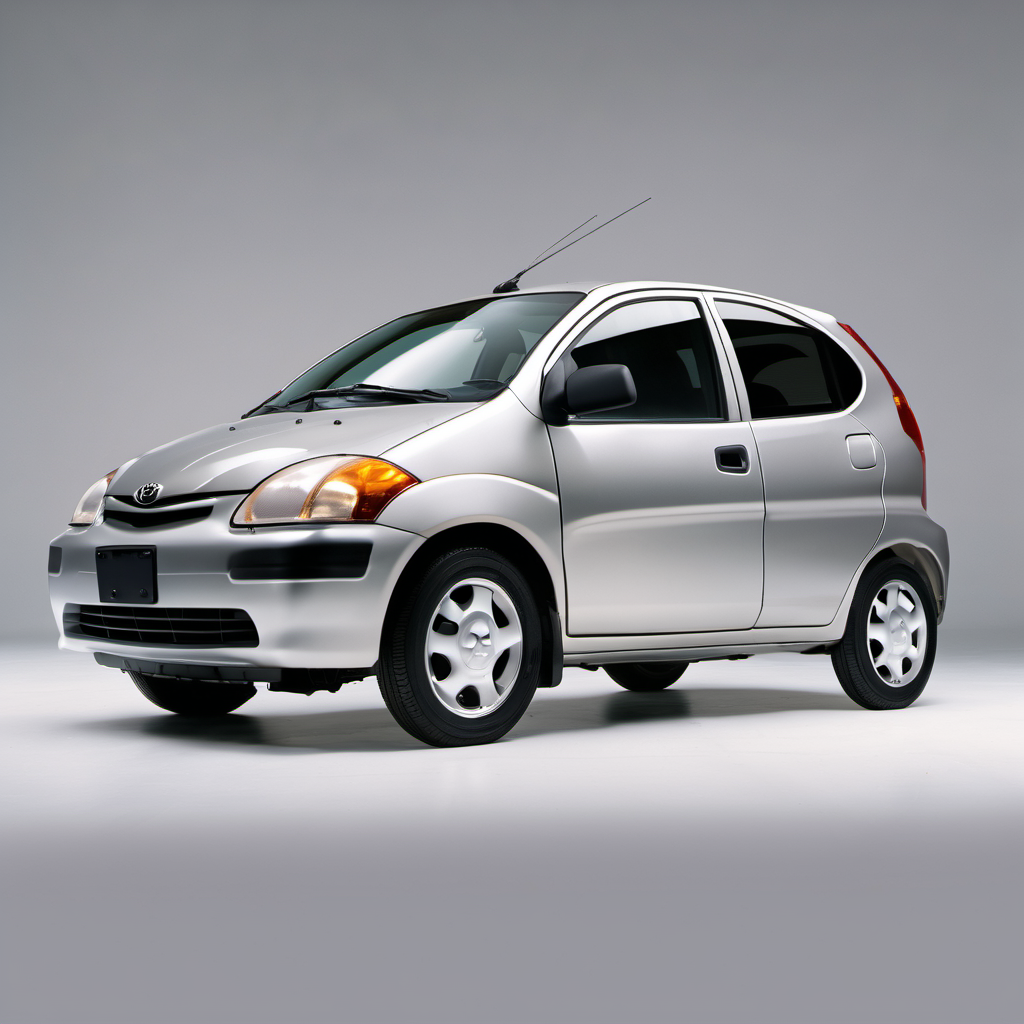
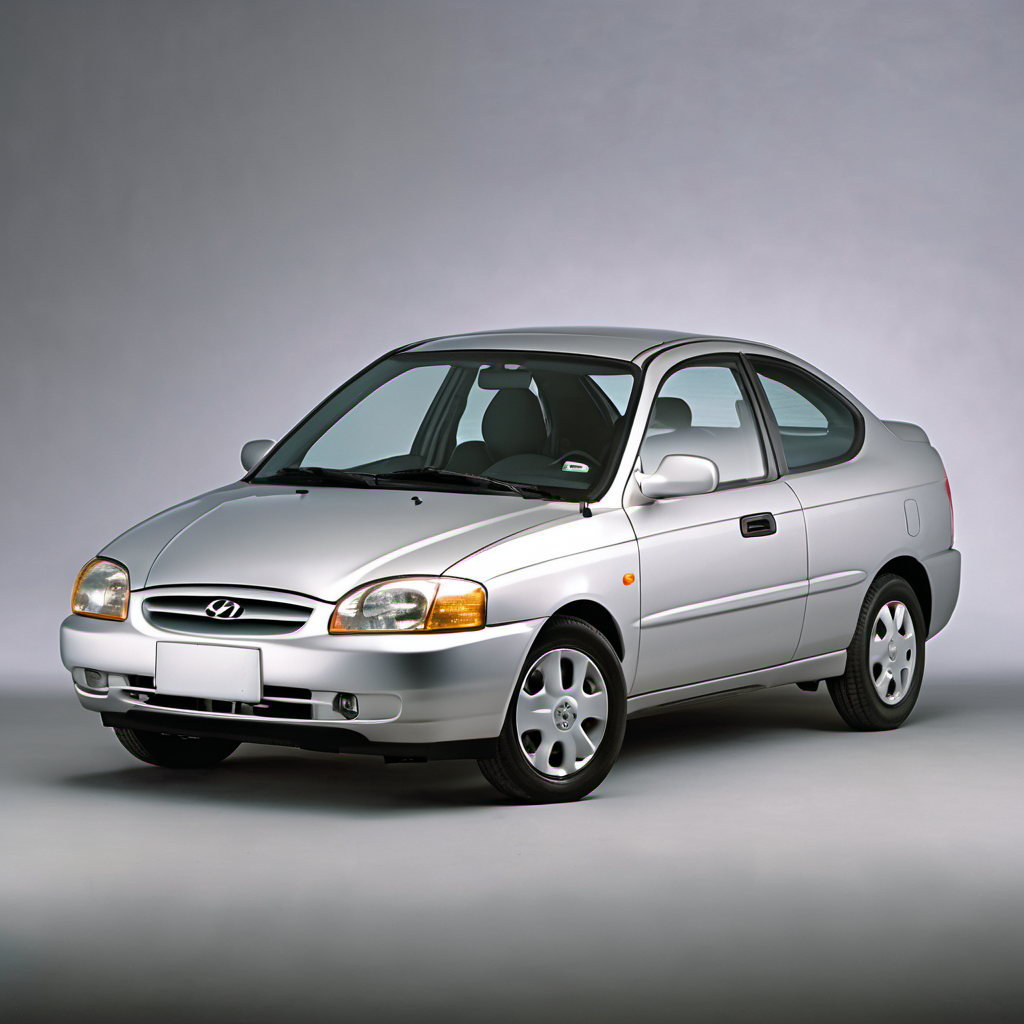
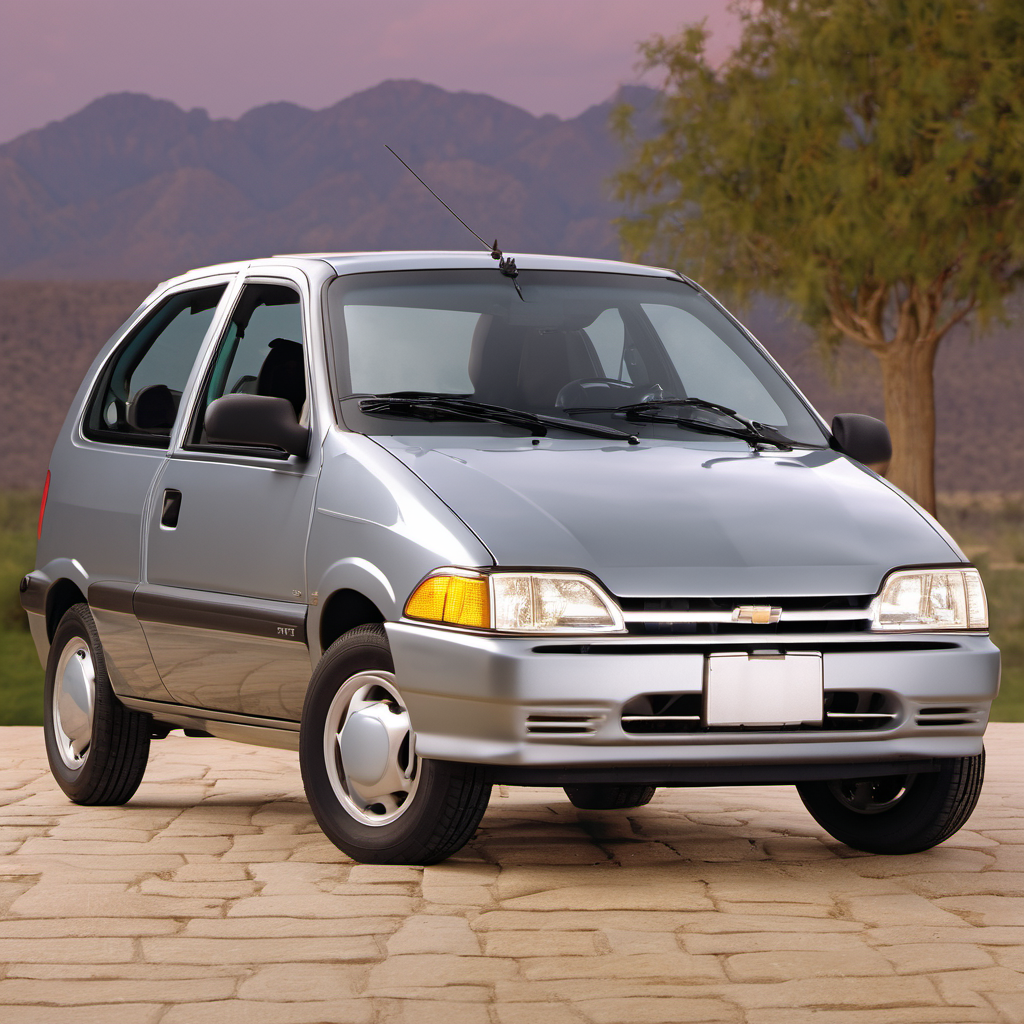
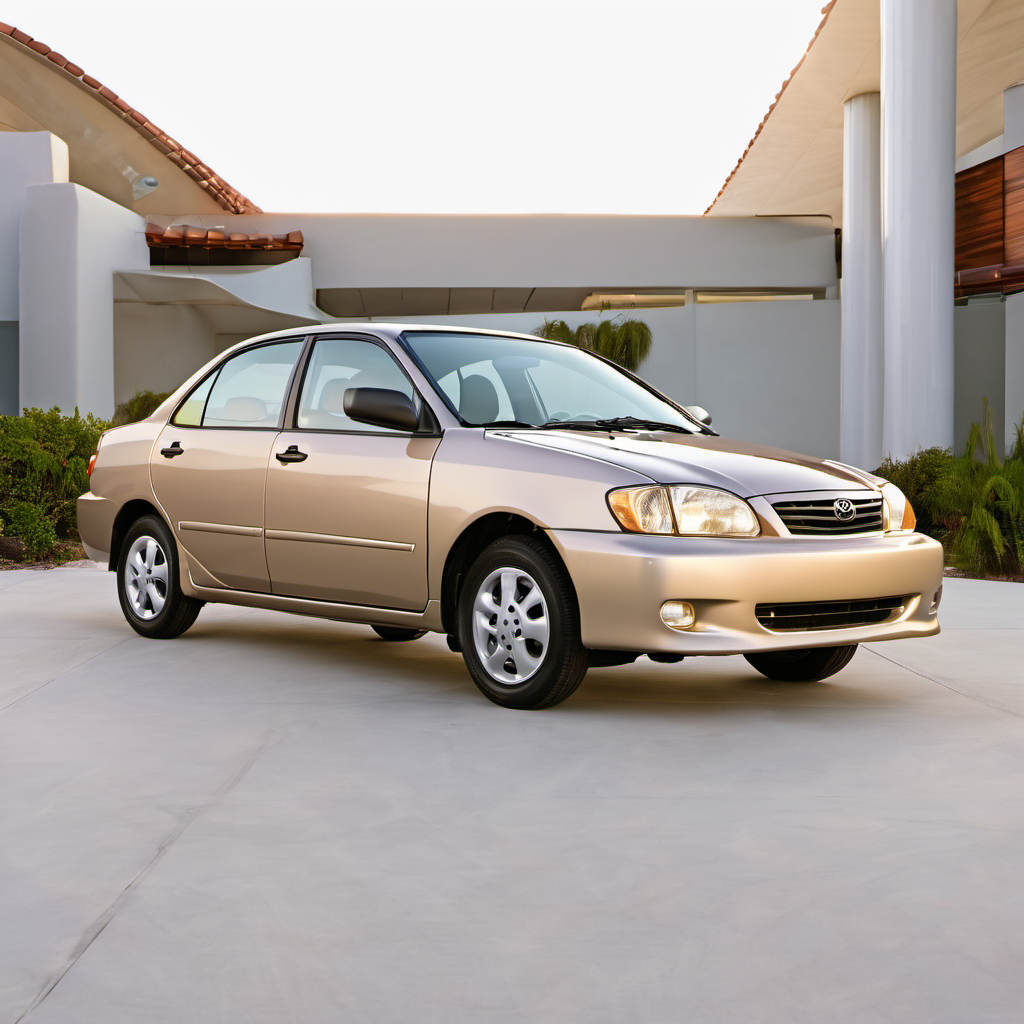
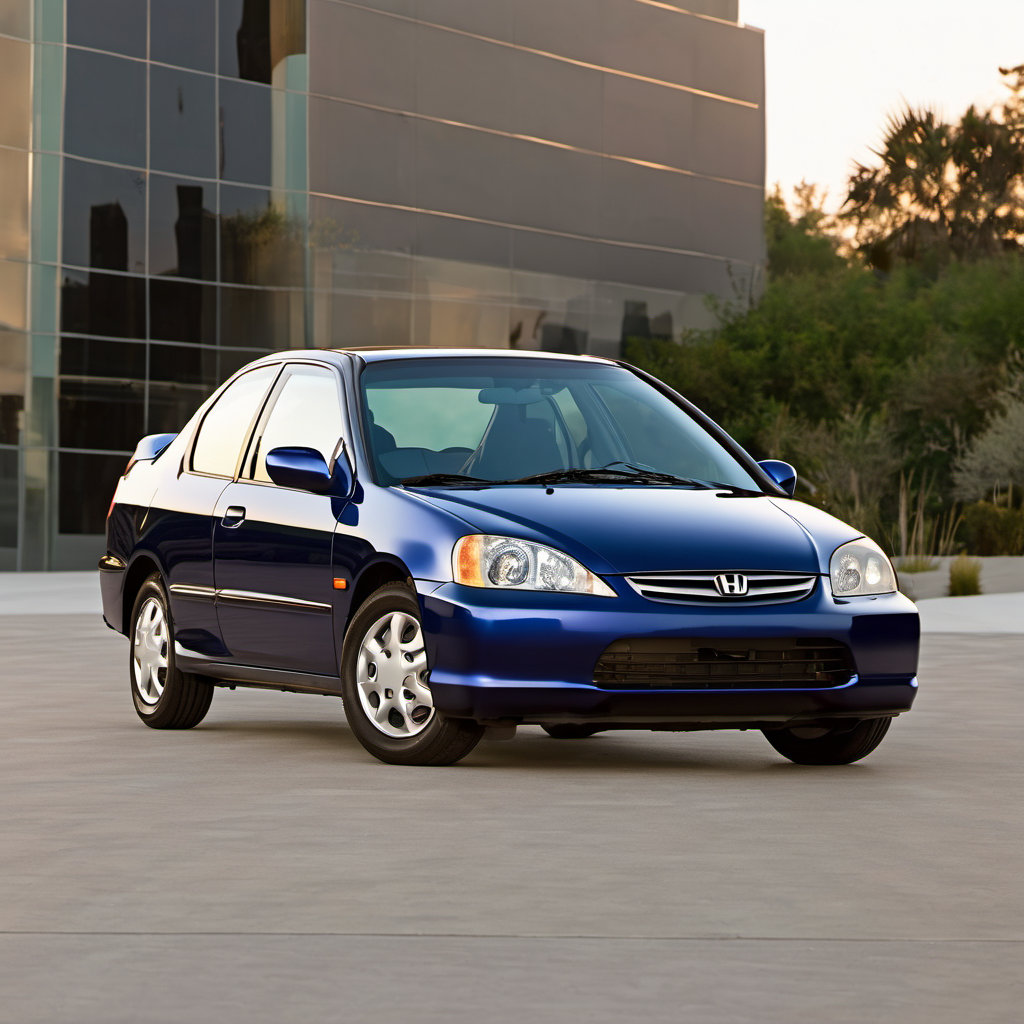
2001 Toyota Echo Coupe

2001 Toyota

EchoCoupe

Coupe

The 2001 Toyota Echo is a subcompact economy car built on Toyota's NCP platform. It was sold in both sedan and coupe body styles, and shared its 1NZ-FE engine with the first-generation Prius. The Echo punched well above its sticker price in real-world reliability — it was essentially a stripped-down appliance designed to rack up miles cheaply, and it does exactly that. Fuel economy is the headliner: the Echo was among the most efficient non-hybrid cars of its era, routinely delivering 35+ mpg on the highway for drivers with a light foot. The interior is utilitarian to a fault — the center-mounted gauge cluster is polarizing, storage is scarce, and road noise is prominent — but none of that matters if your goal is cheap, dependable transportation. These cars are now 20+ years old, so condition and maintenance history dominate any buying decision. Well-kept examples still sell because the mechanicals are genuinely durable. Rust is the primary enemy at this age, especially in Wisconsin.

Reliability
4/5
Verified data
Specs shown for Echo — the most common configuration. Other trims may vary in engine, drivetrain, or fuel economy. Sign in to see your vehicle's exact specs.
Engine
[object Object]
Drivetrain
FWD
Fuel
Gasoline
MPG
27 city / 35 hwy / 30 combined
Seats
Doors
Body
Compact Cars

Overview

AI-curated

The 2001 Toyota Echo is a subcompact economy car built on Toyota's NCP platform. It was sold in both sedan and coupe body styles, and shared its 1NZ-FE engine with the first-generation Prius. The Echo punched well above its sticker price in real-world reliability — it was essentially a stripped-down appliance designed to rack up miles cheaply, and it does exactly that. Fuel economy is the headliner: the Echo was among the most efficient non-hybrid cars of its era, routinely delivering 35+ mpg on the highway for drivers with a light foot. The interior is utilitarian to a fault — the center-mounted gauge cluster is polarizing, storage is scarce, and road noise is prominent — but none of that matters if your goal is cheap, dependable transportation. These cars are now 20+ years old, so condition and maintenance history dominate any buying decision. Well-kept examples still sell because the mechanicals are genuinely durable. Rust is the primary enemy at this age, especially in Wisconsin.

Known for
  • Exceptional real-world fuel economy for a non-hybrid
  • Bulletproof 1NZ-FE engine shared with the first-gen Prius
  • Minimalist, no-frills interior with a quirky center-mounted gauge cluster
  • Low ownership cost when maintained
  • Surprisingly roomy front seats for a subcompact
Best for
  • Budget-conscious commuters focused on low operating costs
  • High-mileage city and highway driving
  • First-time car owners or college students
  • Anyone who wants a simple, easy-to-work-on Toyota
Watch for
  • Rust on rocker panels, floor pans, and rear wheel arches — severe on Wisconsin cars
  • Aging rubber: coolant hoses, CV axle boots, and motor mounts degrade at this mileage
  • Thin body panels dent and crumple easily; check for hidden accident damage
  • Oil consumption can develop on high-mileage examples
  • Parts availability shrinking as the model ages

Common issues by mileage

6 known

Rust on rocker panels and floor pans

high
Typically appears
Any age-related — typically 15+ years in salt-belt states
Estimated repair
$500 – $3,000

CV axle boot cracking / joint failure

high
Typically appears
80,000–150,000 mi
Estimated repair
$180 – $450

Oil consumption — piston ring wear

medium
Typically appears
120,000–200,000 mi
Estimated repair
$0 – $2,500

Oxygen sensor heater circuit failure

medium
Typically appears
80,000–150,000 mi
Estimated repair
$150 – $350

Motor and transmission mount degradation

high
Typically appears
100,000–160,000 mi
Estimated repair
$150 – $400

Cooling system hose and thermostat failure

medium
Typically appears
100,000+ mi
Estimated repair
$120 – $400

Maintenance schedule

  1. 1
    Every 5,000 miles or 6 months — whichever comes first Engine oil and filter change

    The 1NZ-FE runs clean on conventional oil at this interval. Stretched intervals accelerate ring wear and sludge buildup on these small engines, which leads to oil consumption issues.

  2. 2
    Every 50,000 miles or 5 years Coolant flush

    The original Toyota Long Life Coolant is well past its service life on a 2001. Fresh coolant prevents corrosion in the aluminum block and head.

  3. 3
    Every 60,000 miles Spark plugs

    The 1NZ-FE uses iridium plugs from the factory. Worn plugs on a small four-cylinder noticeably reduce fuel economy and smoothness.

  4. 4
    Every 30,000 miles or at each oil change on high-mileage examples CV axle boots inspection

    Cracked boots let grease escape and allow debris into the joint. Catching a torn boot early means a boot replacement (~$80–150); a failed joint means a full axle ($180–450).

  5. 5
    Every 2 years Brake fluid flush

    Brake fluid is hygroscopic — it absorbs moisture over time, lowering its boiling point and promoting caliper and master cylinder corrosion.

  6. 6
    Every fall before winter Underbody rust inspection and treatment

    Salt-belt corrosion is the number-one life-shortener for this generation Echo. Inspect rocker panels, floor pans, and rear wheel arches annually. Treat bare metal promptly.

  7. 7
    Every fall Battery test

    Cold cranking amps drop significantly in sub-zero temperatures. A battery that passes in summer can leave you stranded at -10°F. The Echo's small alternator doesn't tolerate a marginal battery well.

  8. 8
    Every 30,000 miles or as needed Air filter replacement

    A clogged air filter hurts fuel economy noticeably on a small-displacement engine. Inexpensive and quick to inspect.

Always defer to the manufacturer's service manual for warranty-mandated intervals.

Cost of ownership

Annual maintenance
$300 – $700
Fuel
At 30 MPG combined and ~12,000 miles/year, expect roughly $1,500–$1,700/year at $3.75–$4.25/gallon. One of the cheapest non-hybrid commuters to fuel.
Insurance
Typically among the lowest in its class due to low vehicle value, simple safety features, and cheap parts. Expect $600–$1,100/year for full coverage depending on driver profile.

The Echo earns its reputation as a cheap-to-own car. Routine maintenance is inexpensive, fuel costs are low, and the engine rarely demands major repairs when serviced consistently. The wildcard on a 20+ year old example is rust repair and aging rubber components — budget $500–$1,500 in deferred catch-up work when buying a used example unless service records prove otherwise.
Seasonal care

Lake Geneva, WI
Winter
  • Test the battery every fall — cold starts near or below 0°F will expose a weak battery immediately, and a dead battery in a Lake Geneva winter is a genuine safety issue.
  • Switch to a full-synthetic 0W-20 or 5W-30 oil before winter for easier cold starts and faster oil circulation at low temperatures.
  • Fill the washer fluid reservoir with a -20°F or lower rated fluid. The Echo's small reservoir empties quickly in heavy road-spray conditions.
  • Inspect the underbody and rocker panels before the first salt season. Apply rust-inhibiting treatment to any bare metal — road salt is the primary killer of these cars in Wisconsin.
  • Confirm the cooling system antifreeze is rated to at least -34°F. Flush and refill if the last service date is unknown.
  • Keep the gas tank at least half full to reduce moisture condensation in the fuel system and add weight over the front-drive wheels.
Summer
  • Check tire pressure monthly — tires lose or gain roughly 1 PSI per 10°F of temperature change, and under-inflated tires hurt the Echo's fuel economy noticeably.
  • Inspect the A/C system — the refrigerant charge and cabin filter should be verified before summer heat. The Echo's small cabin heats up quickly.
  • Check coolant level and condition. Heat soak is a risk on a 20+ year old cooling system with original or aged hoses.
  • Inspect drive belts for cracking or glazing — heat accelerates rubber degradation on aging belts.

Comparable vehicles

If you're shopping for one

Red flags
  • Any rust penetrating through the floor pan or rocker panels — walk away, as structural rust repair on a low-value car rarely pencils out.
  • No service records or oil change history — a neglected 1NZ-FE can develop sludge that's expensive to address.
  • White smoke from the exhaust on a warm engine — indicates coolant burning, a likely head gasket issue.
  • Check engine light on — have codes pulled before purchase; oxygen sensor and emissions codes are common and manageable, but dig deeper if cam timing codes appear.
  • Grinding or clunking from the front wheels during the test drive — likely worn CV joints or wheel bearings, both expensive relative to the car's value.
What to inspect
  • Crawl underneath and check the rocker panels, floor pans, and rear wheel arches for rust perforation — this is the make-or-break inspection on any Wisconsin or salt-belt Echo.
  • Start the engine cold and listen for ticking (low oil pressure) or rattling (worn timing chain tensioner) before it warms up.
  • Check for oil consumption: pull the dipstick on a warm engine after the test drive and note the level. Ask the seller how often they add oil between changes.
  • Inspect CV axle boots for tears or grease sling (black grease splattered inside the wheel well).
  • Test the A/C — recharging an old system on a 20+ year old car can open a can of worms if seals are dry-rotted.
  • Look for signs of overheating in the service history (headgasket issues, coolant in oil, white exhaust smoke).
  • Check all four corners of the body for evidence of collision repair — thin body panels on the Echo don't always show obvious waviness.
AI profile generated 11 days ago · claude-sonnet-4-6 · v2.