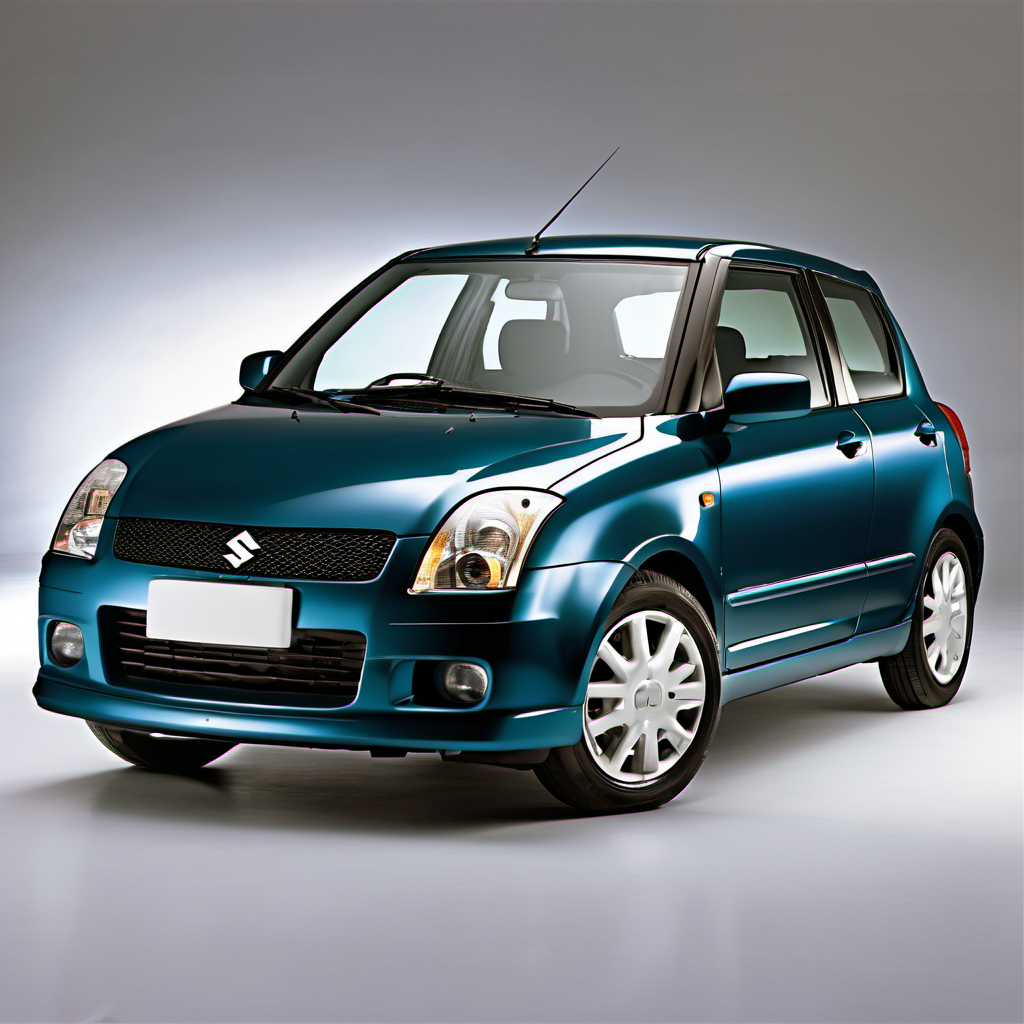
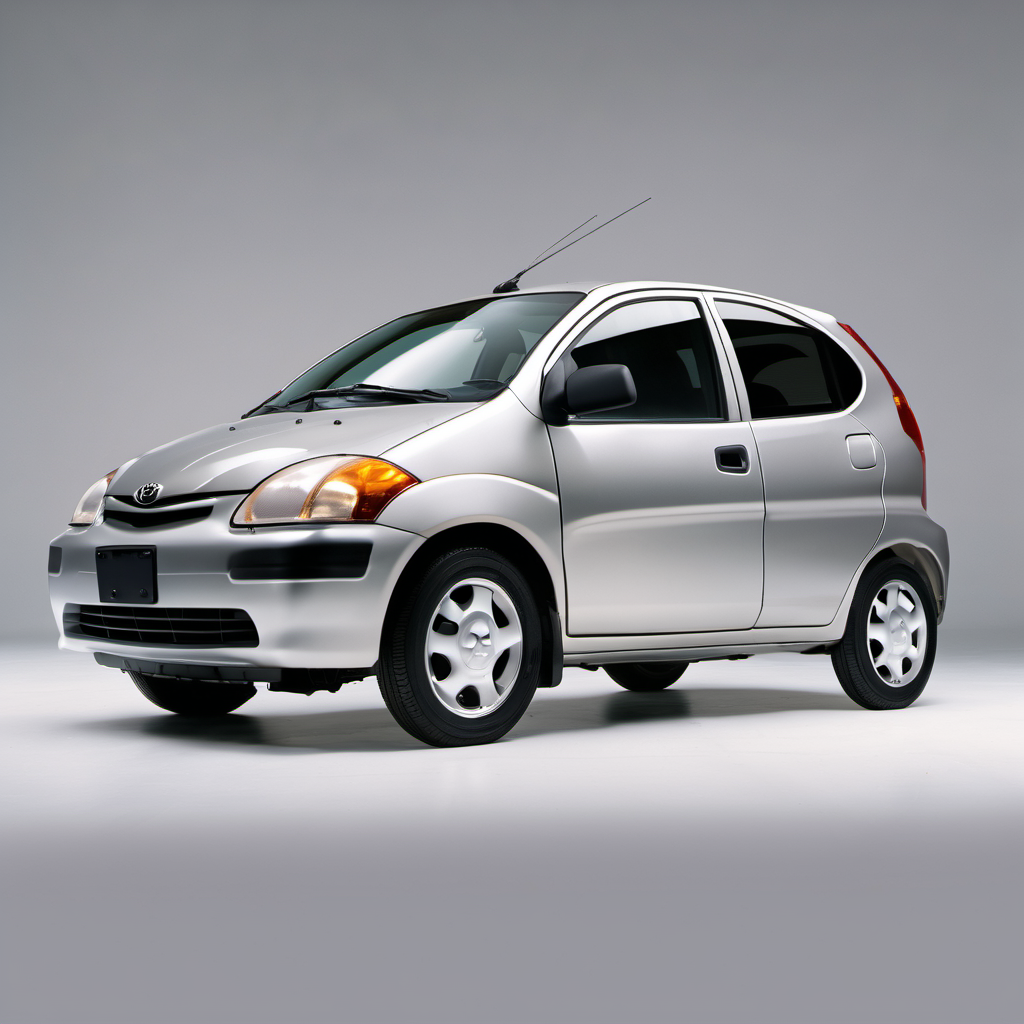
2001 Suzuki Swift Hatchback

2001 Suzuki

SwiftHatchback

Hatchback

The 2001 Suzuki Swift is a subcompact hatchback that traces its roots to the Geo Metro and earlier Suzuki Cultus platform — a no-frills economy car built for maximum fuel efficiency and minimal running costs. By 2001, the Swift was near the end of its North American run, offered with a tiny 1.3L four-cylinder and a featherweight curb weight that made it one of the most fuel-efficient non-hybrid vehicles on the road at the time. It was never about performance or luxury. The Swift delivered point-A-to-point-B reliability for city commuters who could keep up with basic maintenance. Parts availability has thinned considerably since Suzuki exited the U.S. market in 2012, so sourcing some components now requires patience or specialty suppliers. For a car approaching its mid-twenties, condition is everything. Rust is the primary enemy — especially on vehicles that spent time in Midwest or Northeast salt-belt states. A solid, well-maintained Swift can still be a practical, cheap-to-run daily driver. A neglected one is a money pit in a small package.

Reliability
3/5
Verified data
Specs shown for Swift — the most common configuration. Other trims may vary in engine, drivetrain, or fuel economy. Sign in to see your vehicle's exact specs.
Engine
[object Object]
Drivetrain
FWD
Fuel
Gasoline
MPG
26 city / 31 hwy / 28 combined
Seats
Doors
Body
Subcompact Cars

Overview

AI-curated

The 2001 Suzuki Swift is a subcompact hatchback that traces its roots to the Geo Metro and earlier Suzuki Cultus platform — a no-frills economy car built for maximum fuel efficiency and minimal running costs. By 2001, the Swift was near the end of its North American run, offered with a tiny 1.3L four-cylinder and a featherweight curb weight that made it one of the most fuel-efficient non-hybrid vehicles on the road at the time. It was never about performance or luxury. The Swift delivered point-A-to-point-B reliability for city commuters who could keep up with basic maintenance. Parts availability has thinned considerably since Suzuki exited the U.S. market in 2012, so sourcing some components now requires patience or specialty suppliers. For a car approaching its mid-twenties, condition is everything. Rust is the primary enemy — especially on vehicles that spent time in Midwest or Northeast salt-belt states. A solid, well-maintained Swift can still be a practical, cheap-to-run daily driver. A neglected one is a money pit in a small package.

Known for
  • Exceptional fuel economy for its era
  • Very low purchase and operating costs
  • Lightweight, easy-to-maneuver city car
  • Simple mechanicals that a competent DIYer can service
  • Long-running platform shared with Geo Metro
Best for
  • Budget-conscious city commuters
  • Drivers who log low annual mileage
  • DIY mechanics comfortable with older economy cars
  • Buyers looking for a cheap second or errand car
Watch for
  • Severe rust on floor pans, rocker panels, and subframe — common in salt-belt states
  • Shrinking parts supply since Suzuki left the U.S. market
  • Minimal crash protection by modern standards
  • Air conditioning (if equipped) is marginal in hot weather
  • Thin interior materials that deteriorate quickly with age

Common issues by mileage

6 known

Rust — rocker panels, floor pans, and subframe

high
Typically appears
Any mileage on salt-belt vehicles
Estimated repair
$500 – $3,000

Worn suspension bushings and ball joints

high
Typically appears
100k+ mi
Estimated repair
$200 – $600

Timing chain / valve timing wear (oil sludge related)

medium
Typically appears
100–150k mi
Estimated repair
$300 – $800

Coolant leaks — water pump and hoses

medium
Typically appears
80–130k mi
Estimated repair
$150 – $450

Clutch wear (manual transmission)

medium
Typically appears
90–130k mi
Estimated repair
$400 – $750

Maintenance schedule

  1. 1
    Every 5,000 miles or 6 months Engine oil and filter change

    The 1.3L runs tight clearances; clean oil prevents sludge buildup that can cause timing and valve wear on these older engines.

  2. 2
    Every 2 years or 30,000 miles Coolant flush

    Degraded coolant accelerates corrosion inside the cooling system — a real concern on a 20+ year-old aluminum-headed engine.

  3. 3
    Every 30,000 miles Spark plugs

    Standard copper plugs are correct for this engine. Fresh plugs maintain fuel economy and easy cold starts, critical in Wisconsin winters.

  4. 4
    Every 2 years Brake fluid flush

    Moisture-saturated brake fluid lowers boiling point and promotes corrosion in calipers and wheel cylinders — a safety issue on a lightweight car with minimal stopping power margin.

  5. 5
    Every year — before and after winter Inspect brake lines and fuel lines for rust

    Thin steel lines on salt-belt cars rust from the outside in. A rusted brake line failure is catastrophic and common on Midwestern cars this age.

  6. 6
    Every fall Inspect and lubricate door seals and hinges

    Door seals on these cars crack and shrink with age. Failed seals allow water and road salt inside, accelerating floor pan rust.

  7. 7
    Every fall Battery load test

    A marginal battery in a Wisconsin winter will leave you stranded. The 1.3L is easy to start when healthy, but a weak battery on a cold morning is a common failure point.

  8. 8
    Monthly through winter; full inspection each spring Undercarriage wash and rust inspection

    Road salt in Lake Geneva–area winters accelerates rust dramatically on an already rust-prone platform. Catching it early is the difference between a $200 patch and a $2,000 repair.

Always defer to the manufacturer's service manual for warranty-mandated intervals.

Cost of ownership

Annual maintenance
$400 – $1,200
Fuel
At ~28 MPG combined and typical upper Midwest driving, expect roughly $900–$1,200/year in fuel at current prices — one of the lowest fuel costs of any non-hybrid vehicle.
Insurance
Liability-only coverage on a vehicle this age and value is typical; expect $400–$700/year depending on driver profile. Full coverage rarely makes financial sense given the car's market value.

The Swift is about as cheap to own as cars get — when it's healthy. Fuel and insurance are very low. The catch is that deferred maintenance, rust repair, and hard-to-find parts can surprise owners with bills that exceed the car's market value. Budget for a thorough pre-purchase inspection and keep up with annual rust checks. A well-maintained example runs inexpensively; a neglected one is a sinkhole.
Seasonal care

Lake Geneva, WI
Winter
  • Load-test the battery every fall — a weak battery will fail at the worst time in sub-zero Lake Geneva temps
  • Switch to a full-synthetic 5W-30 oil for easier cold cranking and better startup protection
  • Replace wiper blades with winter-rated blades before first snowfall; the lightweight hood is prone to collecting ice
  • Use a washer fluid rated to at least -20°F — slush and salt spray will empty the reservoir fast
  • Inspect and touch up any bare metal or paint chips before winter to prevent salt from accelerating rust on an already rust-vulnerable body
  • Flush brake lines and inspect for rust-through before winter; salt dramatically accelerates corrosion on steel brake lines on this platform
Summer
  • Check tire pressure monthly — small tires lose pressure with heat and are more sensitive to under-inflation than larger vehicles
  • Inspect the cooling system (hoses, water pump, thermostat) before summer heat; a 20+ year-old cooling system has limited margin for failure
  • If equipped with A/C, have the refrigerant level and compressor checked — the system on these cars is marginal even when working properly
  • Check that the radiator and condenser fins are clean and unobstructed; heat soak in traffic is a concern with such a small cooling system

Comparable vehicles

If you're shopping for one

Red flags
  • Any soft or holed floor pan — walk away, repair cost will exceed the car's value
  • Rust-perforated rocker panels or visible subframe corrosion
  • No maintenance records on a 20+ year-old car — too much unknown history
  • Smoke from exhaust on startup (blue = oil burning, white = coolant)
  • Missing or non-functional heat/defrost — a safety issue in Wisconsin winters, and often a sign of deeper neglect
  • Parts sourcing issues already evident — seller mentions difficulty finding parts or has jury-rigged repairs
What to inspect
  • Floor pans — press firmly in the driver and passenger footwells; soft spots mean rust-through
  • Rocker panels and sills — probe with a screwdriver for hidden rot under any body filler
  • Subframe and front crossmember for rust perforation — a structural failure here makes the car unsafe to drive
  • Brake lines and fuel lines along the undercarriage for rust bubbling or pinhole leaks
  • Clutch engagement point — if the clutch grabs at the very top of pedal travel, replacement is near
  • Coolant condition and oil fill cap for milky residue (head gasket concern on a high-mileage example)
AI profile generated 8 days ago · claude-sonnet-4-6 · v2.