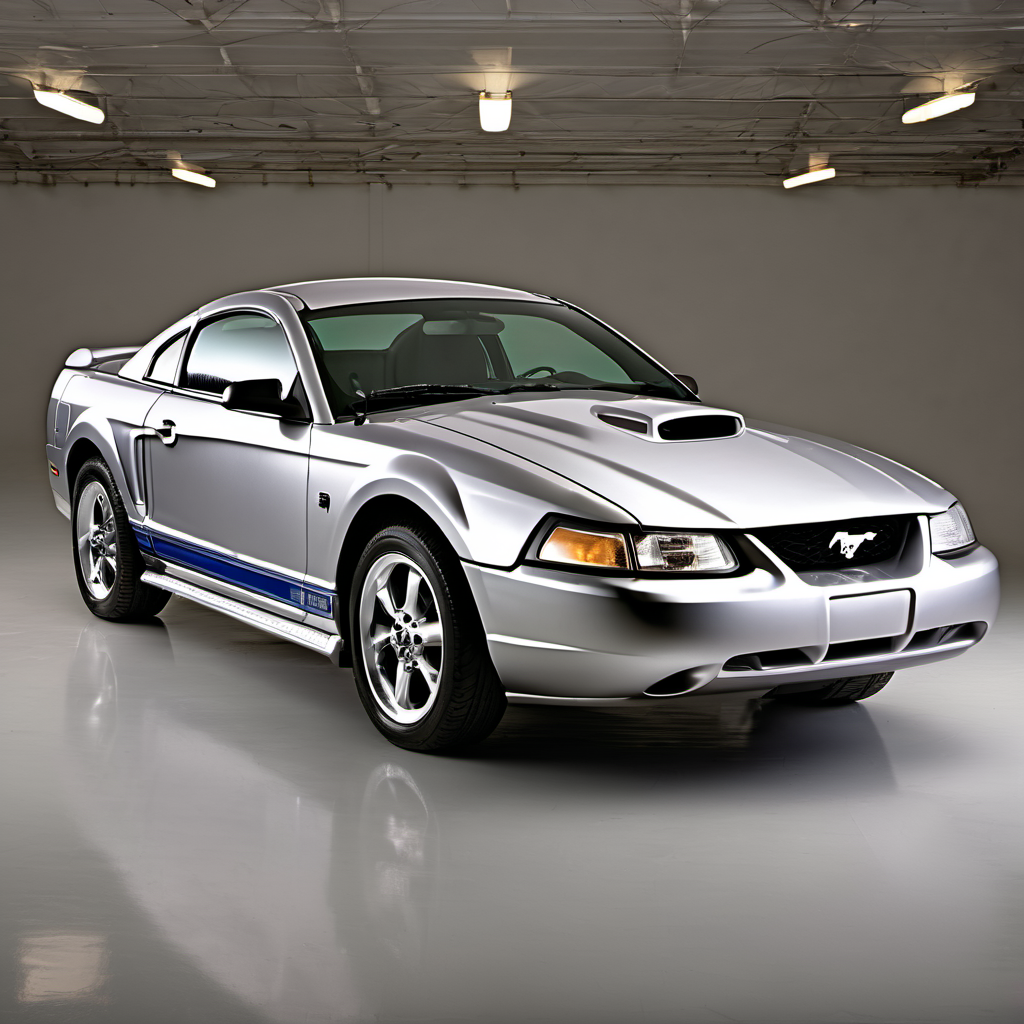
2000 Ford Mustang Convertible

2000 Ford

MustangConvertible

Convertible

The 2000 Ford Mustang Convertible is a fourth-generation (SN95) pony car built on Ford's Fox-derived platform. This convertible is powered by the 3.8L Essex V6, making it the entry-level Mustang of the era — affordable to buy, relatively light, and sporting enough to be fun on a back road without the insurance hit of the GT. It's an iconic American drop-top that has aged into genuine classic territory. The SN95 platform is well-understood by independent shops everywhere, and parts availability remains excellent. The V6 convertible was a volume seller, which means a deep used-car market and plenty of community knowledge for common repairs. That said, 25 years of age means rust, wear, and deferred maintenance are the norm rather than the exception on surviving examples. For a Lake Geneva driver, the convertible top adds weather-sealing and drainage concerns that a coupe doesn't have. Wisconsin salt seasons are hard on the underbody of any rear-wheel-drive car, and this one is no exception. Budget for rust inspection and top maintenance as regular ownership costs.

Reliability
3/5
Verified data
Specs shown for Mustang — the most common configuration. Other trims may vary in engine, drivetrain, or fuel economy. Sign in to see your vehicle's exact specs.
Engine
[object Object]
Drivetrain
RWD
Fuel
Gasoline
MPG
18 city / 25 hwy / 20 combined
Seats
Doors
Body
Subcompact Cars

Overview

AI-curated

The 2000 Ford Mustang Convertible is a fourth-generation (SN95) pony car built on Ford's Fox-derived platform. This convertible is powered by the 3.8L Essex V6, making it the entry-level Mustang of the era — affordable to buy, relatively light, and sporting enough to be fun on a back road without the insurance hit of the GT. It's an iconic American drop-top that has aged into genuine classic territory. The SN95 platform is well-understood by independent shops everywhere, and parts availability remains excellent. The V6 convertible was a volume seller, which means a deep used-car market and plenty of community knowledge for common repairs. That said, 25 years of age means rust, wear, and deferred maintenance are the norm rather than the exception on surviving examples. For a Lake Geneva driver, the convertible top adds weather-sealing and drainage concerns that a coupe doesn't have. Wisconsin salt seasons are hard on the underbody of any rear-wheel-drive car, and this one is no exception. Budget for rust inspection and top maintenance as regular ownership costs.

Known for
  • Iconic American pony-car styling with drop-top fun
  • Affordable entry into the Mustang lineup
  • Large, well-supported aftermarket parts ecosystem
  • Simple, robust pushrod V6 engine that mechanics know cold
  • Rear-wheel drive character that rewards driver skill
Best for
  • Enthusiasts who want a classic American convertible on a budget
  • Weekend cruisers and fair-weather drivers
  • First-time classic/collectible car owners
  • DIY mechanics looking for a well-documented platform
Watch for
  • Significant underbody rust on cars from salt-belt states
  • Convertible top leaks, tears, and deteriorated weatherstripping
  • Intake manifold coolant leaks — a known 3.8L Essex V6 problem
  • Head gasket failure on the 3.8L, especially if overheating history exists
  • Worn or cracked convertible top hydraulic lines and pump seals

Common issues by mileage

6 known

Intake Manifold Coolant Leak (Lower Gasket)

high
Typically appears
60–120k mi
Estimated repair
$350 – $700

Head Gasket Failure

medium
Typically appears
80–150k mi
Estimated repair
$900 – $1,800

Convertible Top Leaks / Weatherstrip Deterioration

high
Typically appears
Any mileage on a 25-year-old car
Estimated repair
$150 – $600

Oxygen Sensor Heater Circuit Failure

medium
Typically appears
80–130k mi
Estimated repair
$120 – $280

Underbody / Frame Rail Rust

high
Typically appears
Any mileage on salt-belt cars
Estimated repair
$200 – $2,500

Rear Axle Seal Leaks

medium
Typically appears
70–120k mi
Estimated repair
$150 – $350

Maintenance schedule

  1. 1
    Every 2 years or 30k mi Coolant system flush and thermostat inspection

    The 3.8L Essex V6 is sensitive to cooling system neglect. Degraded coolant accelerates intake manifold gasket failure. Always use Ford-approved coolant mix — do not use straight water.

  2. 2
    Inspect at 60k mi; replace proactively by 100k if not already done Intake manifold lower gasket inspection

    This is the single most common repair on the 3.8L. Catching a small seep early prevents a much more expensive head gasket job.

  3. 3
    Every spring and fall Convertible top inspection and lubrication

    Inspect all weatherstripping, drain channels at the base of the top, and hydraulic lines if equipped. Clogged drains flood the interior; cracked seals let in Wisconsin rain and snow melt.

  4. 4
    Monthly during winter; full inspection every spring Underbody wash and inspection

    Lake Geneva roads are heavily salted November through March. Salt accumulates in frame rails, floor pan seams, and suspension mounting points. Catching surface rust before it becomes structural rust is critical on a 25-year-old RWD car.

  5. 5
    Every 30k mi Spark plugs and wires replacement

    Stock plug wires on a car this age are almost certainly due. Worn ignition components on the 3.8L cause rough idle, poor fuel economy, and misfires.

  6. 6
    Every 45k mi or 5 years Transmission fluid change (manual)

    The T-45 or T-5 manual transmission uses gear oil that breaks down over time. Fresh fluid prevents synchro wear and hard shifting, especially in cold Wisconsin starts.

  7. 7
    Every 30k mi or 3 years Rear differential fluid change

    The 7.5-inch or 8.8-inch rear axle on this generation should have fluid changed regularly. Look for leaks at axle seals and pinion seal at every change.

  8. 8
    Every fall before winter Battery load test

    A battery that passes a surface charge test in September can still fail to start the car at -10°F. Load testing before winter season is inexpensive insurance.

Always defer to the manufacturer's service manual for warranty-mandated intervals.

Cost of ownership

Annual maintenance
$600 – $1,800
Fuel
At 20 MPG combined and typical Wisconsin driving, expect roughly $1,800–$2,400/year at current fuel prices. Premium is not required — 87 octane is fine.
Insurance
Typically $800–$1,400/year for a 25-year-old V6 convertible in Wisconsin; varies widely by driver age, record, and whether it's a daily driver or seasonal vehicle. Classic/collector car policies may be available and cheaper if mileage is low.

This is a low-cost car to own on paper, but the age-related wild cards are real. A clean, well-maintained example costs $600–$900/year in routine maintenance. A neglected one can deliver a $2,000+ intake manifold or top replacement bill in year one. Budget conservatively, especially for rust remediation and convertible top work, which can spike costs significantly. Parts are cheap and plentiful — labor is your main expense.
Seasonal care

Lake Geneva, WI
Winter
  • Load-test the battery every fall — cold cranking amps matter at Lake Geneva temps. A weak battery will leave you stranded.
  • Switch to a full-synthetic 5W-30 if not already running it — the 3.8L benefits from thinner cold-weather oil viscosity for faster startup lubrication.
  • Inspect and replace wiper blades with winter-rated blades; keep the reservoir filled with rated -40°F washer fluid — road spray is constant on Wisconsin highways.
  • Rinse the underbody at a touchless car wash every 2–3 weeks during salt season. Pay attention to the convertible top drain channels, which can freeze and back up into the interior.
  • If the car is stored seasonally, use a quality breathable car cover and a battery tender — do not use an airtight cover over the convertible top, as trapped moisture causes mildew and seal deterioration.
  • Check tire pressure monthly — every 10°F drop in temperature reduces pressure by ~1 PSI. RWD on winter roads requires properly inflated tires.
Summer
  • Inspect the convertible top fabric before summer for cracks, pinholes, and weatherstrip separation. Water intrusion is easier to find on a dry day than mid-rainstorm.
  • Check A/C performance early in the season — the system may have lost refrigerant over winter storage and recharging is much cheaper than diagnosing a seized compressor.
  • Monitor coolant temp gauge closely in stop-and-go traffic. The 3.8L can heat soak in traffic, and a faulty cooling fan relay is common on cars this age.
  • Check tire pressure in the morning before driving — summer heat causes expansion; overinflated tires reduce wet-road grip.
  • Inspect convertible top hydraulic lines if equipped for cracking; heat accelerates rubber degradation.
  • Clean and condition weatherstripping with a rubber protectant at the start of summer to prevent cracking and improve the top seal.

Comparable vehicles

If you're shopping for one

Red flags
  • Any sign of overheating history — discolored coolant, warped thermostat housing, staining around the intake manifold.
  • Soft or spongy brake pedal — could indicate old fluid, worn master cylinder, or corroded lines from salt exposure.
  • Rust perforation anywhere on the floor, frame rails, or rear subframe — walk away unless you have a fabricator's budget.
  • A convertible top that won't latch flush or has visible gaps at the windshield header — water will find its way in every rain.
  • Mismatched paint panels suggesting prior collision repair — have a magnet or paint thickness gauge handy.
  • Oil in the coolant or coolant in the oil — signs of head or intake gasket failure already in progress.
What to inspect
  • Pull the floor mats and check the carpet for moisture — convertible top leaks soak the interior quietly for years before anyone notices mold or rot.
  • Inspect all four corners of the convertible top where it meets the windshield header and rear tub for cracked or lifted weatherstripping.
  • Verify the top opens, closes, and latches fully; listen for hydraulic pump whining or sluggish movement.
  • Smell the interior for mildew — a sure sign of chronic water intrusion.
  • Check the coolant reservoir for a milky or oily film, which indicates a compromised head gasket or intake manifold gasket.
  • Put a cold-engine start on video — watch for blue or white exhaust smoke in the first 30 seconds.
  • Get under the car and check frame rails, floor pan, and torque boxes at the rear — these rust out first on Wisconsin/salt-belt cars.
  • Check the rear axle housing and differential cover for fluid seeps.
  • Inspect all four tires for uneven wear patterns, which can point to alignment issues caused by bent or rusted suspension components.
AI profile generated 8 days ago · claude-sonnet-4-6 · v2.