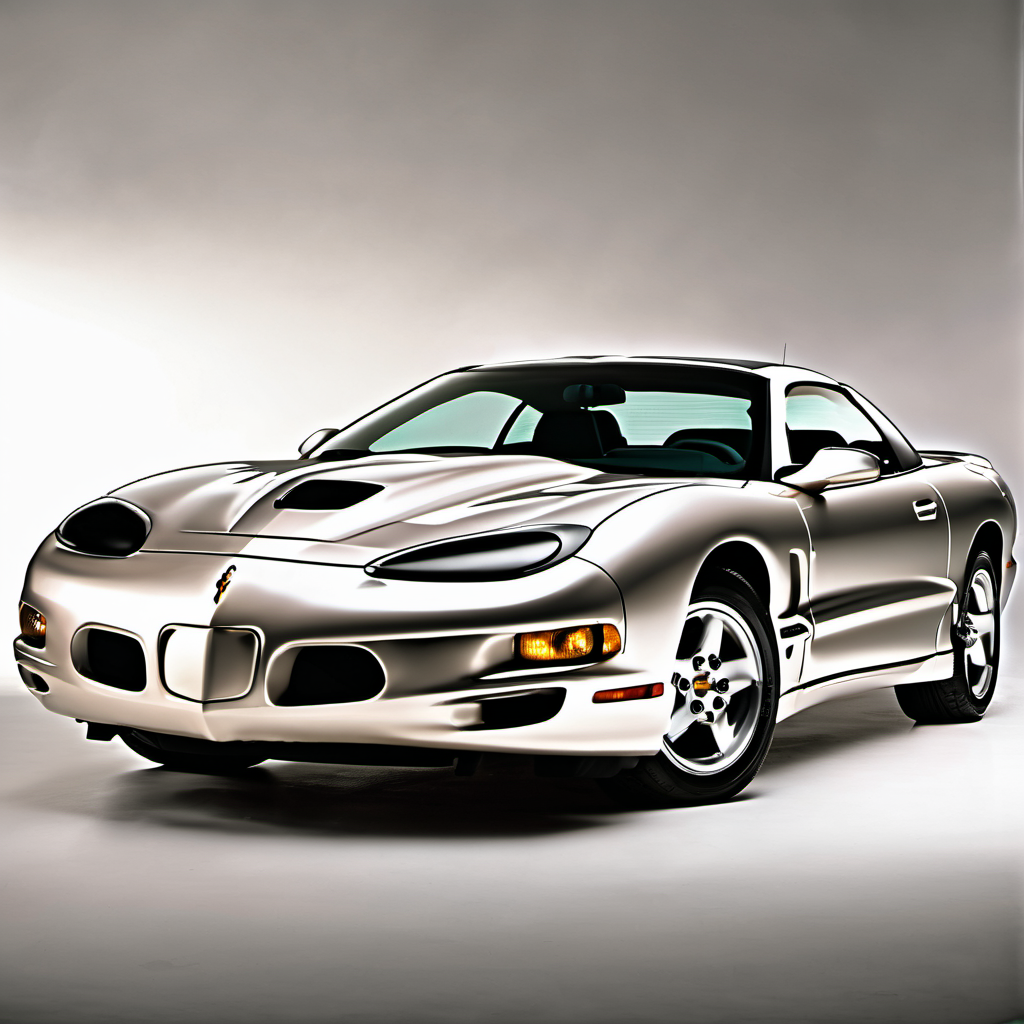
2000 Pontiac Firebird Coupe

2000 Pontiac

FirebirdCoupe

3.8L V6 · Coupe

The 2000 Pontiac Firebird Coupe is a fourth-generation (F-body) rear-wheel-drive American pony car that shared its platform with the Chevrolet Camaro. It came standard with a 3.8L V6 and offered the legendary LS1 V8 in Formula and Trans Am trims. By 2000 the platform was well-sorted, offering genuine performance at a relatively modest price. Production ended in 2002, making these late-model examples increasingly collectible. The F-body is a true driver's car — long hood, short deck, reclined driving position, and a wide, planted stance. The LS1-equipped cars are particularly prized for their high-revving power and tuning potential, but the V6 base car still delivers a sporting experience and strong fuel economy for the segment. Rear-wheel drive on Wisconsin roads means winter practicality is limited without dedicated snow tires. At 20-plus years old, any surviving Firebird needs a thorough inspection. Parts availability is generally good thanks to the Camaro parts-sharing and a loyal enthusiast community, but rust — especially in the lower rockers, floor pans, and T-top channels — is the biggest threat to long-term survival in salt-belt states like Wisconsin.

Reliability
3/5
Verified data
Engine
3.8L V6
Drivetrain
RWD
Fuel
Gasoline
MPG
18 city / 28 hwy / 21 combined
Seats
4
Doors
2
Body
Coupe
MSRP
$20,585

Overview

AI-curated

The 2000 Pontiac Firebird Coupe is a fourth-generation (F-body) rear-wheel-drive American pony car that shared its platform with the Chevrolet Camaro. It came standard with a 3.8L V6 and offered the legendary LS1 V8 in Formula and Trans Am trims. By 2000 the platform was well-sorted, offering genuine performance at a relatively modest price. Production ended in 2002, making these late-model examples increasingly collectible. The F-body is a true driver's car — long hood, short deck, reclined driving position, and a wide, planted stance. The LS1-equipped cars are particularly prized for their high-revving power and tuning potential, but the V6 base car still delivers a sporting experience and strong fuel economy for the segment. Rear-wheel drive on Wisconsin roads means winter practicality is limited without dedicated snow tires. At 20-plus years old, any surviving Firebird needs a thorough inspection. Parts availability is generally good thanks to the Camaro parts-sharing and a loyal enthusiast community, but rust — especially in the lower rockers, floor pans, and T-top channels — is the biggest threat to long-term survival in salt-belt states like Wisconsin.

Known for
  • Iconic F-body styling shared with Chevrolet Camaro
  • LS1 V8 option delivering strong naturally-aspirated performance
  • Rear-wheel drive with large, grippy rear tires
  • T-top or hatch roof configurations that can develop leaks with age
  • Loyal enthusiast community with strong aftermarket support
Best for
  • Enthusiasts who want an affordable American performance coupe
  • Weekend drivers and fair-weather cruisers
  • Collectors interested in late F-body production
  • Drivers who can store or garage the car through harsh winters
Watch for
  • Rocker panel and floor pan rust — common and expensive to repair in Wisconsin
  • T-top seals and hatch weatherstripping that leak, leading to wet carpets and mold
  • High-mileage examples with deferred maintenance on cooling system or power steering
  • Modified cars with unknown engine or suspension work
  • Worn rear wheel bearings and rear axle seals on high-mileage units

Common issues by mileage

6 known

Intake manifold gasket failure (V6)

high
Typically appears
70–120k mi
Estimated repair
$400 – $750

Power steering line leaks (return and pressure hoses)

high
Typically appears
80–150k mi
Estimated repair
$200 – $500

T-top / hatch weatherstripping failure causing water intrusion

high
Typically appears
Any mileage / age-related
Estimated repair
$150 – $600

Oxygen sensor failure / heater circuit fault

medium
Typically appears
80–130k mi
Estimated repair
$150 – $350

Rear axle seal leaks and worn rear wheel bearings

medium
Typically appears
100–160k mi
Estimated repair
$200 – $500

Body and chassis rust — rocker panels, floor pans, frame rails

high
Typically appears
Any age on salt-belt cars
Estimated repair
$500 – $5,000

Maintenance schedule

  1. 1
    Every 3 years or 45k miles Cooling system flush and thermostat/hose inspection

    The 3.8L V6 is known for intake manifold gasket failures triggered by cooling system neglect. Fresh coolant and a healthy thermostat are cheap insurance against a $500+ repair.

  2. 2
    Annually Power steering fluid and hose inspection

    F-body power steering lines are notorious for weeping and eventually bursting, especially at hose ends. Inspect for wet spots and soft hose sections every year.

  3. 3
    Every fall before winter Inspect and treat rocker panels, door sills, and floor pans for rust

    Wisconsin road salt collects in the lower body seams. Annual inspection and touch-up with rust converter or wax-based undercoating can prevent structural damage.

  4. 4
    Annually, before rainy season Inspect T-top / hatch seals and drain channels

    Clogged T-top drain tubes cause water to pool under the carpet, leading to rust in the floor pans and mold in the interior.

  5. 5
    Every 30k miles Spark plugs and wires

    The 3.8L runs well with fresh ignition components. Worn wires cause misfires and rough cold starts — especially relevant for Wisconsin winters.

  6. 6
    Every 50k miles or 5 years Rear differential fluid change

    Neglected diff fluid thickens in cold weather and accelerates wear on gears and bearings. Worth changing on any used F-body with unknown service history.

  7. 7
    Every 60k miles or at first check-engine light Inspect oxygen sensors

    Aged O2 sensors run rich, hurt fuel economy, and can eventually damage the catalytic converter — an expensive downstream cost.

  8. 8
    Every fall Battery test and terminal cleaning

    Cold-cranking amps drop sharply below 0°F. A marginal battery in October will leave you stranded in January. Clean terminals prevent voltage drop issues in the aging electrical system.

Always defer to the manufacturer's service manual for warranty-mandated intervals.

Cost of ownership

Annual maintenance
$600 – $1,400
Fuel
Expect 18–21 MPG combined with the V6 on regular unleaded. LS1 V8 cars require premium and return roughly 16–24 MPG depending on driving style.
Insurance
Generally affordable for a 20+ year old sports car — often $800–$1,400/year for full coverage in Wisconsin, but rates rise sharply for younger drivers or modified vehicles.

A clean, well-maintained 2000 Firebird is a reasonably affordable car to own if you handle routine maintenance yourself or use an independent shop. The main budget risk is deferred maintenance catching up — intake gaskets, cooling system, and rust remediation can easily exceed $2,000 in a single visit on a neglected car. Budget more if the car has a T-top or is a V8 Formula/Trans Am with performance modifications.
Seasonal care

Lake Geneva, WI
Winter
  • Test the battery in October — cold-cranking amps fade fast on an aging battery and sub-zero starts will expose any weakness.
  • Switch to a full-synthetic oil (5W-30 or as specified) before first freeze to ensure quick cold starts and immediate oil flow.
  • Rinse the underside thoroughly after any road-salt exposure — rocker panels, rear wheel wells, and the rear axle are especially vulnerable.
  • Consider storing the car November through March. The RWD platform, low ground clearance, and wide summer tires make it genuinely hazardous in snow.
  • If driving in winter, use dedicated winter tires on a steel wheel set — summer performance tires harden below 45°F and lose traction.
  • Top off washer fluid with a -30°F-rated formula and confirm the defroster grid on the rear hatch is functional.
Summer
  • Check tire pressure monthly — performance tires lose and gain pressure quickly with temperature swings. Check cold, before driving.
  • Inspect the cooling system before hot-weather driving; the 3.8L is sensitive to low coolant and a degraded thermostat.
  • Run the A/C regularly and have it pressure-tested if output is weak — the evaporator and condenser seals age on cars this old.
  • Check power steering hoses for seeping fluid; heat accelerates deterioration of aging rubber lines.
  • If the car has T-tops, inspect drain tubes and seals before summer thunderstorms to prevent interior water damage.
  • Park in shade when possible — the dark interior and large greenhouse heat-soak quickly, and prolonged UV exposure degrades the dash and door panels on 20+ year old interiors.

Comparable vehicles

If you're shopping for one

Red flags
  • Soft or bubbled lower rocker panels — rust behind the sheetmetal is likely structural
  • Wet or musty-smelling carpet with no explanation — indicates chronic T-top or hatch leak
  • Milky or low coolant in the reservoir on a V6 — classic early sign of intake manifold gasket failure
  • Engine modifications with no documentation — tuned LS1 cars may have been driven hard or built with unknown-quality parts
  • Check engine light on or recently cleared codes — always scan before purchase
  • Frame or floor pan repairs with visible welds or patches — evaluate carefully before buying a salt-belt car with hidden structural rust
What to inspect
  • Lift the carpet in the driver's footwell and trunk — look and smell for moisture, rust, or mold from T-top/hatch leaks
  • Inspect rocker panels and lower door skins with a flashlight and magnet for filler or rust perforation
  • Check all four corners of the undercarriage for frame rail and floor pan rust — pay special attention to the rear subframe mounting points
  • Start the engine cold — a 3.8L that stumbles, runs rough, or shows coolant loss after warm-up is likely on its way to an intake gasket failure
  • Check power steering reservoir for foamy or discolored fluid and trace all hoses for weeping
  • Confirm the T-top panels seal evenly, latch without force, and that drain holes in the channels are clear
  • On V8 cars, verify oil pressure at idle and look for signs of oil consumption (blue smoke, fouled plugs)
AI profile generated 2 days ago · claude-sonnet-4-6 · v2.