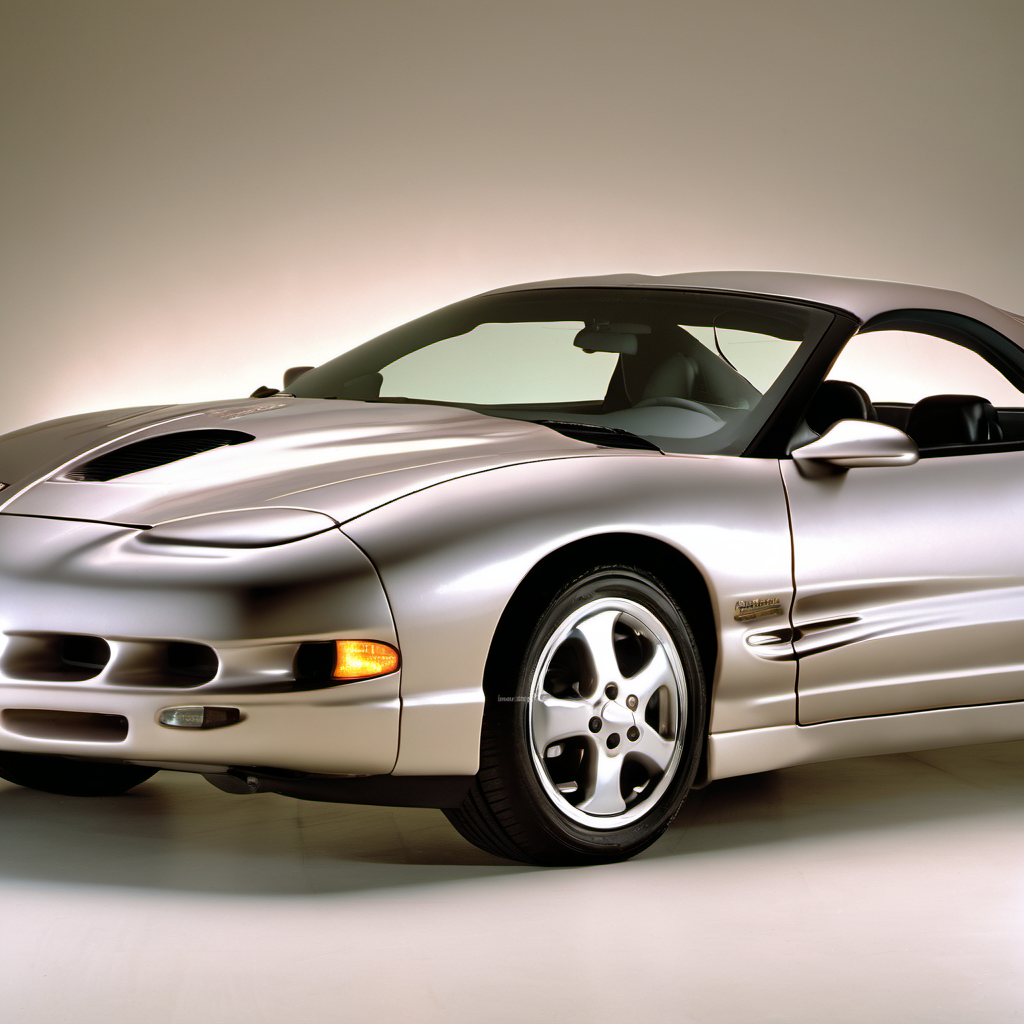
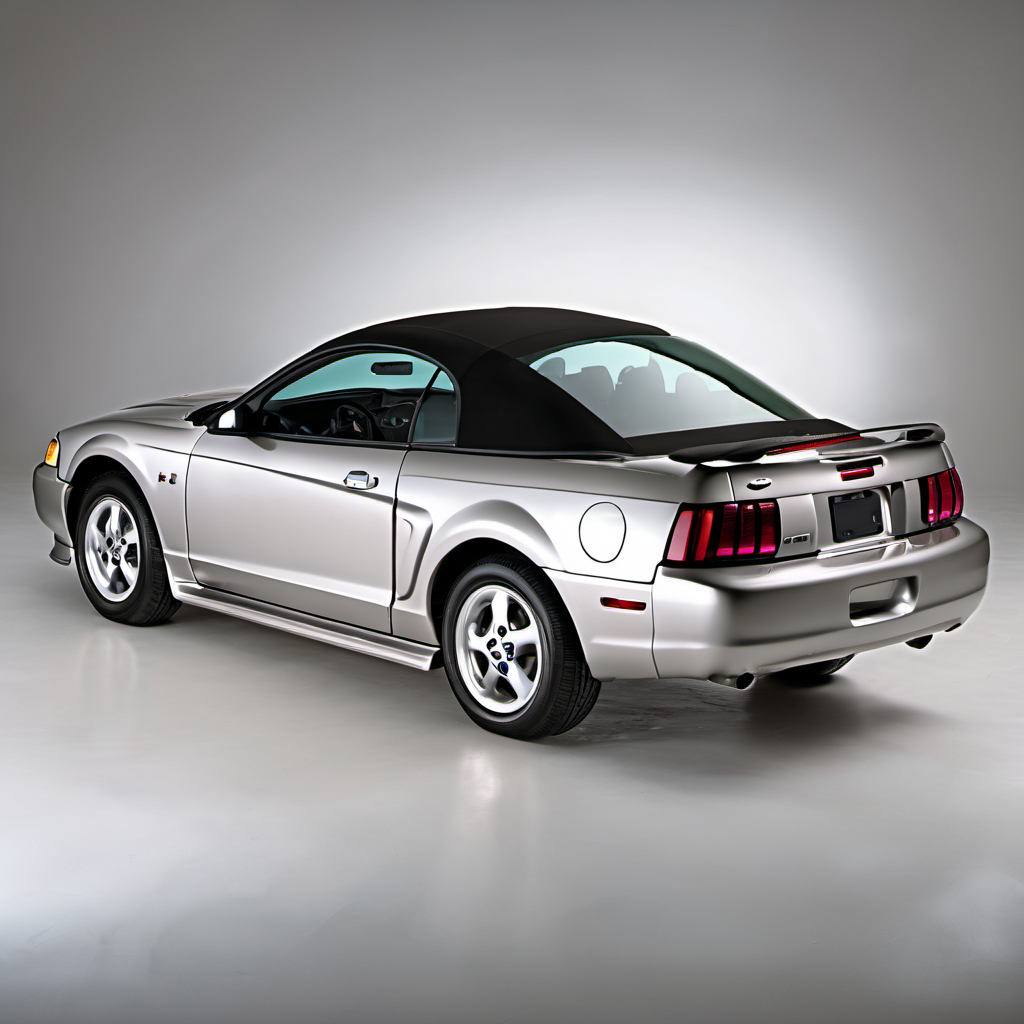
1999 Pontiac Firebird Convertible

1999 Pontiac

FirebirdConvertible

3.8L V6 · Convertible

The 1999 Pontiac Firebird Convertible is a fourth-generation (1993–2002) F-body pony car built on the same platform as the Chevrolet Camaro. By 1999 GM had refined the platform considerably — the base 3.8L V6 and optional 5.7L LS1 V8 (shared with the Corvette) made this one of the quickest bang-for-the-buck sports cars on the market. The convertible added open-air driving to an already compelling package, though it also added weight, some structural flex, and a power soft-top mechanism that needs periodic attention. The LS1-equipped Formula and Trans Am trims are collector favorites and daily drivers alike, capable of 0–60 in the low 5-second range with bulletproof V8 longevity when maintained. The V6 base model is more affordable to insure and feed but lacks the character that makes the Firebird iconic. Either way, this is a two-plus-two grand tourer that rewards enthusiast ownership and punishes neglect. With Pontiac discontinued in 2010 and the F-body line ended in 2002, parts availability is increasingly dependent on the aftermarket and Camaro cross-compatibility. A well-documented, rust-free example is the key — Wisconsin salt exposure is this car's biggest long-term enemy.

Reliability
3/5
Verified data
Engine
3.8L V6
Drivetrain
RWD
Fuel
Gasoline
MPG
18 city / 28 hwy / 22 combined
Seats
4
Doors
2
Body
Convertible
MSRP
$26,999

Overview

AI-curated

The 1999 Pontiac Firebird Convertible is a fourth-generation (1993–2002) F-body pony car built on the same platform as the Chevrolet Camaro. By 1999 GM had refined the platform considerably — the base 3.8L V6 and optional 5.7L LS1 V8 (shared with the Corvette) made this one of the quickest bang-for-the-buck sports cars on the market. The convertible added open-air driving to an already compelling package, though it also added weight, some structural flex, and a power soft-top mechanism that needs periodic attention. The LS1-equipped Formula and Trans Am trims are collector favorites and daily drivers alike, capable of 0–60 in the low 5-second range with bulletproof V8 longevity when maintained. The V6 base model is more affordable to insure and feed but lacks the character that makes the Firebird iconic. Either way, this is a two-plus-two grand tourer that rewards enthusiast ownership and punishes neglect. With Pontiac discontinued in 2010 and the F-body line ended in 2002, parts availability is increasingly dependent on the aftermarket and Camaro cross-compatibility. A well-documented, rust-free example is the key — Wisconsin salt exposure is this car's biggest long-term enemy.

Known for
  • LS1 V8 performance rivaling much more expensive sports cars
  • Shared Camaro F-body platform — wide parts and knowledge base
  • Iconic late-1990s American muscle styling
  • Solid rear axle with good straight-line traction
  • Torquey, long-lived V8 engine when oil is kept clean
Best for
  • Enthusiasts who want V8 performance on a budget
  • Weekend/seasonal drivers who garage the car in winter
  • Collectors eyeing appreciating late F-body examples
  • Highway cruising and road trips
Watch for
  • Rust on floors, rockers, rear quarters, and convertible top frame
  • Convertible top hydraulic or motor failures
  • High insurance costs relative to vehicle value
  • Aging plastic interior trim that cracks and shrinks
  • Structural flex on convertible body — listen for cowl and door rattles

Common issues by mileage

6 known

Intake Manifold Gasket Failure (V6 models)

high
Typically appears
60–120k mi
Estimated repair
$400 – $750

Convertible Top Motor or Hydraulic Pump Failure

high
Typically appears
50–150k mi
Estimated repair
$300 – $900

Weatherstripping Deterioration and Water Leaks

high
Typically appears
Any mileage on 25+ year old car
Estimated repair
$150 – $600

Oxygen Sensor Failure / Heater Circuit

medium
Typically appears
80–150k mi
Estimated repair
$120 – $300

T-56 Manual Transmission Shifter Wear / Synchro Issues

medium
Typically appears
80–150k mi
Estimated repair
$500 – $2,500

Floor Pan and Rocker Panel Rust

high
Typically appears
Any — accelerated by Wisconsin road salt
Estimated repair
$500 – $4,000

Maintenance schedule

  1. 1
    Every 5,000 miles or 6 months Engine oil and filter change

    The LS1 is sensitive to oil sludge from extended drain intervals. Fresh oil is the single best thing you can do for longevity. Use a quality 5W-30.

  2. 2
    Every 2 years / 30,000 miles Coolant flush and inspect intake manifold gaskets (V6)

    The 3.8L V6 has plastic intake manifold gaskets notorious for leaking coolant internally or externally. Catching early prevents a hydrolocked engine.

  3. 3
    Every spring before use season Convertible top mechanism lubrication and inspection

    Hinges, pivot points, and hydraulic lines dry out and crack in Wisconsin winters. Lube prevents motor overload and torn top fabric.

  4. 4
    Every spring and fall Weatherstripping inspection and conditioning

    Cracked or shrunken seals let water into the cabin and trunk, leading to floor rust and mold. Silicone conditioner extends seal life significantly.

  5. 5
    Every 2 years Brake fluid flush

    The ABS system on F-bodies is sensitive to moisture-laden fluid. Fresh fluid prevents corrosion inside ABS modulators, which are expensive to replace.

  6. 6
    Every 30,000 miles (V6) / 60,000 miles (LS1) Spark plugs and plug wires

    Worn plugs cause misfires and poor fuel economy. On the LS1, GM recommended AC Delco plugs — aftermarket plugs can cause fitment issues.

  7. 7
    Every fall before winter storage; every spring after Undercarriage rust inspection and treatment

    Wisconsin salt aggressively attacks the F-body's floor pans, rockers, and rear frame rails. Early treatment is far cheaper than patch panels.

  8. 8
    Every fall Battery load test

    Cold Wisconsin winters demand a strong battery. A battery that passes a basic voltage test can still fail a load test and leave you stranded at -10°F.

Always defer to the manufacturer's service manual for warranty-mandated intervals.

Cost of ownership

Annual maintenance
$600 – $1,800
Fuel
Budget for premium fuel on LS1 V8 models (recommended). V6 runs regular. At current upper Midwest prices and typical 8,000–10,000 seasonal miles, expect $900–$1,400/year for the V6 and $1,200–$1,800 for the V8.
Insurance
Sports car classification raises rates. Expect $900–$1,800/year for a driver over 25 with a clean record in the Lake Geneva area. Agreed-value collector car insurance may be cheaper and smarter if the car is garaged and driven seasonally.

This is a seasonal car for most Wisconsin owners, which helps control fuel and maintenance costs. The big budget risks are convertible top repairs, rust remediation, and any major drivetrain work on a now-25-year-old vehicle. Budget an extra $500–$1,000 as a surprise fund each year, especially in the first two years of ownership while you learn what the car needs.
Seasonal care

Lake Geneva, WI
Winter
  • Store the car indoors if at all possible — road salt is the #1 killer of F-body convertibles. Even a heated garage a few days a week helps.
  • Before storage, wash and thoroughly dry the undercarriage, then apply a rust inhibitor to exposed metal on floor pans and frame rails.
  • Store with a full tank of fuel and a fuel stabilizer to prevent ethanol-blend fuel from degrading over a 4–5 month storage period.
  • Use a battery tender (trickle charger) throughout storage to keep the battery healthy — a dead battery left discharged all winter often won't recover.
  • Fold the convertible top up and store the car covered indoors; never store with the top down, as cold causes vinyl/canvas to crack and seals to set in compressed positions.
  • Check tire pressure before spring — tires lose roughly 1 PSI per 10°F drop and can flat-spot during prolonged storage.
Summer
  • Inspect the convertible top fabric for UV cracking or pinholes before the season — water intrusion is easier to prevent than to remediate.
  • Check A/C refrigerant charge and cabin filter; the F-body A/C is marginal in extreme heat and needs to be in top shape.
  • Monitor tire pressure weekly in summer — heat raises pressure and an already firm performance tire can be dangerously overinflated on a hot day.
  • Inspect coolant level and hose condition before long drives; the 3.8L V6 in particular can run hot if the cooling system is neglected.
  • Clean and condition convertible top weatherstripping with silicone spray to prevent summer sun from hardening seals and causing leaks.

Comparable vehicles

If you're shopping for one

Red flags
  • Any visible floor pan rust holes or bubbling paint along the rocker panels — repair costs can exceed the car's value.
  • Convertible top that hesitates, stops mid-cycle, or shows oily stains near hinges — hydraulic pump or motor replacement is $300–$900+.
  • Mismatched paint panels or poorly blended paint — suggests a prior accident that may have bent the already-flexible convertible body structure.
  • Engine oil with a milky or frothy appearance — internal coolant leak, potentially a cracked head or failed intake gasket.
  • A seller who won't let you take it to an independent shop for a pre-purchase inspection — walk away.
  • No maintenance records on a high-mileage example — unknown oil change history on an LS1 is a serious gamble.
What to inspect
  • Floor pans and rocker panels — press firmly; soft spots mean rust perforation. Bring a flashlight and inspection mirror.
  • Convertible top: cycle it fully up and down, look for torn fabric, bent bows, slow/grinding motor, and hydraulic line leaks (oily residue near hinges).
  • Weatherstripping around all four windows and the trunk — squeeze it; cracked or hardened seals mean water is already getting in.
  • Check the trunk carpet and spare tire well for water stains or standing moisture — a sure sign of leaking seals.
  • For V6 models: check coolant for oily sheen (intake gasket leak) and look for white residue around intake manifold seams.
  • For LS1 models: check for oil consumption by pulling the dipstick cold vs. after a warm drive. LS1s with worn valve stem seals smoke briefly on cold start.
  • Look underneath at the rear frame rails and differential mount for rust scale or previous patch welds.
  • Check all power accessories: windows, top, locks, mirrors — electrical repairs on a 25-year-old GM are time-consuming.
AI profile generated 8 days ago · claude-sonnet-4-6 · v2.