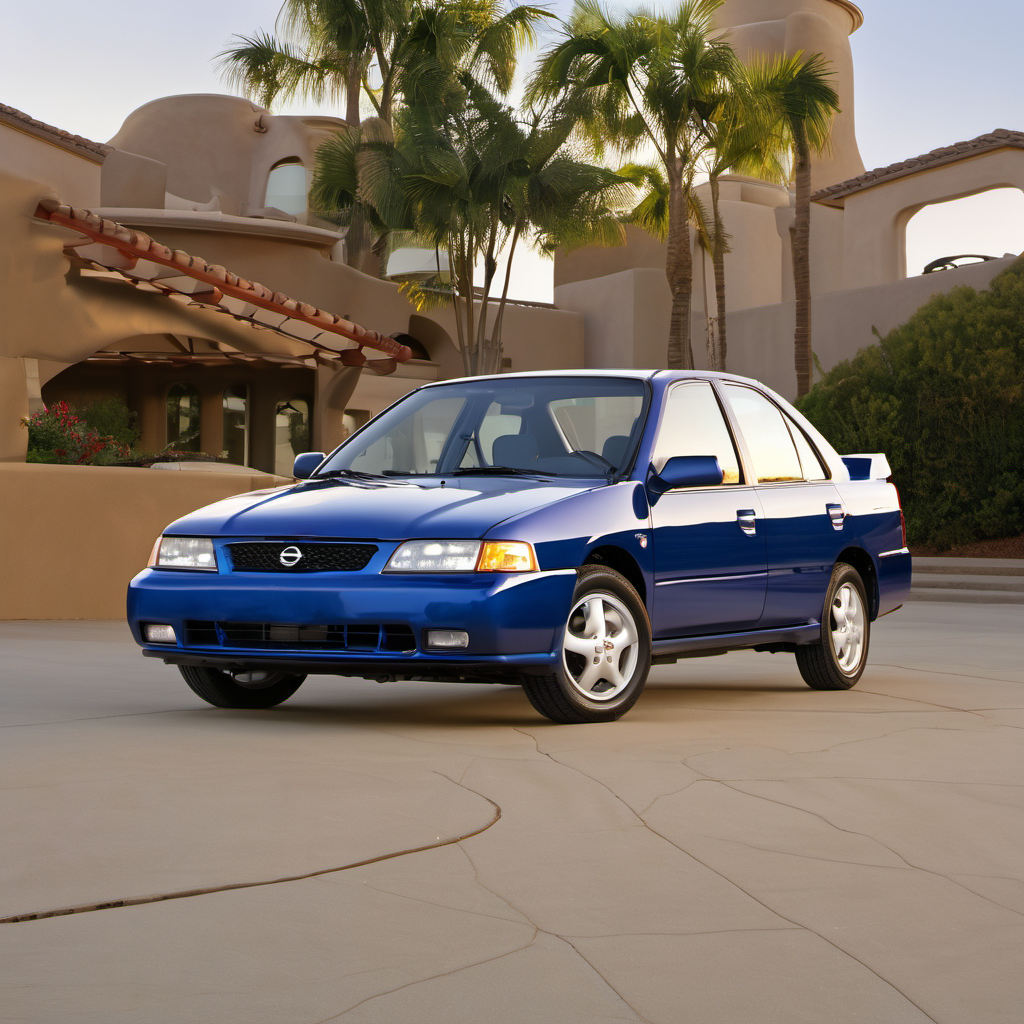
1999 Nissan Sentra Sedan

1999 Nissan

SentraSedan

1.6L I4 (GA16DE) · Sedan

The 1999 Nissan Sentra is a compact front-wheel-drive sedan from the B14 generation, sold during Nissan's last year of that platform before the B15 redesign arrived for 2000. It was positioned as an affordable, fuel-efficient commuter — simple, light, and easy to work on. The standard engine is the 1.6L GA16DE inline-4, paired with either a 5-speed manual or 4-speed automatic. At 25 years old, any surviving 1999 Sentra is firmly in high-mileage territory. The GA16DE engine is mechanically robust when maintained, but age-related issues — rubber seals, coolant hoses, oxygen sensors, and suspension bushings — are now the main concerns rather than design flaws. Rust is a serious consideration for Wisconsin examples. This is a simple car with inexpensive parts and straightforward repairs. If the body and undercarriage are solid, it can still serve as a reliable daily driver at very low operating cost.

Reliability
3/5
Verified data
Engine
1.6L I4 (GA16DE)
Drivetrain
FWD
Fuel
Gasoline
MPG
28 city / 38 hwy / 32 combined
Seats
5
Doors
4
Body
Sedan
MSRP
$12,249

Overview

AI-curated

The 1999 Nissan Sentra is a compact front-wheel-drive sedan from the B14 generation, sold during Nissan's last year of that platform before the B15 redesign arrived for 2000. It was positioned as an affordable, fuel-efficient commuter — simple, light, and easy to work on. The standard engine is the 1.6L GA16DE inline-4, paired with either a 5-speed manual or 4-speed automatic. At 25 years old, any surviving 1999 Sentra is firmly in high-mileage territory. The GA16DE engine is mechanically robust when maintained, but age-related issues — rubber seals, coolant hoses, oxygen sensors, and suspension bushings — are now the main concerns rather than design flaws. Rust is a serious consideration for Wisconsin examples. This is a simple car with inexpensive parts and straightforward repairs. If the body and undercarriage are solid, it can still serve as a reliable daily driver at very low operating cost.

Known for
  • Low purchase and operating cost
  • Simple, accessible GA16DE engine easy to maintain
  • Excellent fuel economy for its era
  • Light curb weight makes it nimble in traffic
Best for
  • Budget-conscious daily commuters
  • Student or first-car buyers
  • Low-mileage city driving
  • Owners comfortable with basic DIY maintenance
Watch for
  • Severe underbody rust from Wisconsin road salt — this is the #1 killer of these cars
  • Coolant hoses and radiator degrading with age regardless of mileage
  • Oxygen sensor failures leading to poor fuel economy and emissions issues
  • Worn suspension bushings and ball joints on uneven roads
  • Automatic transmission longevity if fluid was never serviced

Common issues by mileage

6 known

Coolant hose deterioration and radiator leaks

high
Typically appears
Any mileage at 20+ years
Estimated repair
$150 – $450

Underbody and exhaust rust (Wisconsin-specific)

high
Typically appears
Any mileage
Estimated repair
$200 – $1,500

Front suspension wear — ball joints and bushings

medium
Typically appears
100–160k mi
Estimated repair
$200 – $550

Idle air control valve (IACV) issues causing rough idle

medium
Typically appears
80–130k mi
Estimated repair
$80 – $250

Automatic transmission slipping or delayed engagement (if fluid never changed)

medium
Typically appears
120k+ mi
Estimated repair
$400 – $2,200

Maintenance schedule

  1. 1
    Every 5,000 miles or 6 months Engine oil and filter change

    The GA16DE has small oil passages that clog with sludge from extended drain intervals. Consistent changes are the single biggest factor in engine longevity on this car.

  2. 2
    Every 2 years or immediately if not documented Coolant flush and hose inspection

    At 25 years old, original or old coolant becomes acidic and attacks the aluminum head. Hoses of this age crack internally even when they look fine outside.

  3. 3
    Every 30,000 miles; immediately if fluid is dark or smells burnt Automatic transmission fluid change

    Nissan's RE4F03A transmission in this generation holds up well when fluid is maintained but degrades quickly when neglected past 100k.

  4. 4
    Every 30,000 miles Spark plugs replacement

    Standard copper plugs are inexpensive; worn plugs cause misfires and strain the ignition coil.

  5. 5
    At major service intervals; listen for rattle on cold start Timing chain inspection

    The GA16DE uses a timing chain, not a belt — it doesn't need scheduled replacement, but a rattling chain on startup signals low oil pressure or chain stretch and should not be ignored.

  6. 6
    Annually, every winter prep Brake line and fuel line inspection

    Wisconsin salt corrodes steel brake and fuel lines from the outside. A failed brake line is a safety emergency. Catch pinhole leaks early.

  7. 7
    Thorough wash after every major salt event; annual undercoating if lines and floor are still solid Undercoating / underbody wash

    Salt accumulates in body seams and frame pockets. Flushing it out extends the car's structural life significantly.

  8. 8
    Every 15,000–20,000 miles Air filter replacement

    A clogged air filter hurts fuel economy noticeably on this small engine and can contribute to rough idle.

Always defer to the manufacturer's service manual for warranty-mandated intervals.

Cost of ownership

Annual maintenance
$400 – $900
Fuel
At ~32 MPG combined and average Wisconsin driving of 12,000 mi/yr, expect roughly $1,400–$1,700/yr at current regional gas prices.
Insurance
Typically $600–$1,000/yr for full coverage in Wisconsin depending on driver profile; liability-only is often $300–$500 on a car of this value.

This is one of the cheapest vehicles to own and run when the body and undercarriage are sound. Parts are inexpensive and widely available. The big financial wildcard on a 25-year-old Wisconsin car is rust repair — a severely corroded undercarriage can cost more to fix than the car is worth. Get a thorough undercarriage inspection before committing to any major maintenance investment.
Seasonal care

Lake Geneva, WI
Winter
  • Test the battery before November — cold cranking amps drop sharply below 20°F and a marginal battery that starts fine in October will fail in January
  • Switch to a 5W-30 or 5W-20 full synthetic oil if using conventional; the thinner cold-start viscosity protects the GA16DE's small oil passages during sub-zero starts
  • Inspect and replace wiper blades with winter-rated blades; fill washer fluid with a -20°F or colder rated formula — Lake Geneva winters regularly hit those temps
  • Check antifreeze concentration with a tester — should protect to at least -34°F for Wisconsin conditions
  • Flush undercarriage thoroughly after every significant salt event; pay special attention to the rocker panels, rear wheel wells, and subframe mounts on this generation
  • Inspect brake lines closely in fall — salt-induced pinhole leaks often reveal themselves after the first freeze-thaw cycle
Summer
  • Check tire pressure monthly — pressure drops roughly 1 PSI for every 10°F of temperature change; underinflated tires on hot pavement increase blowout risk on this light car
  • Inspect the cooling system cap, thermostat, and fan operation before summer heat — a 25-year-old car sitting in traffic needs a fully functional cooling system
  • Run the A/C system; if it blows warm, the refrigerant charge has likely leaked down over the years — recharging and leak inspection is worthwhile before a heat wave
  • Check the serpentine belt and tensioner for cracking; heat accelerates rubber degradation on aged components

Comparable vehicles

If you're shopping for one

Red flags
  • Any bubbling, flaking, or soft spots in the floor pans, rocker panels, or rear wheel arches — structural rust is a deal-breaker
  • Rust-weeping brake line fittings at the rear axle or under the master cylinder
  • Coolant that is brown, oily, or has a sweet smell from the exhaust — points to head gasket failure
  • Automatic transmission fluid that is dark brown or smells burnt — factor in a potential rebuild
  • Mismatched paint panels or uneven body gaps suggesting prior accident repair
  • No maintenance records whatsoever on a 25-year-old car — impossible to know what has and hasn't been done
What to inspect
  • Put the car on a lift and inspect every inch of the undercarriage — subframe, brake lines, fuel lines, floor pans, and rocker panels. Rust is the primary reason to walk away from a Wisconsin example.
  • Start the engine cold and listen for timing chain rattle in the first 5–10 seconds of startup
  • Check for coolant in the oil (milky dipstick) and oil in the coolant reservoir — signs of a head gasket issue
  • Test the automatic transmission through all gears including reverse; delayed engagement or slipping is expensive to fix relative to the car's value
  • Inspect all rubber coolant hoses by squeezing them — they should feel firm, not mushy or crunchy
  • Check that the A/C blows cold and the heater works fully — blower motor resistors commonly fail on cars this age
AI profile generated 13 days ago · claude-sonnet-4-6 · v2.