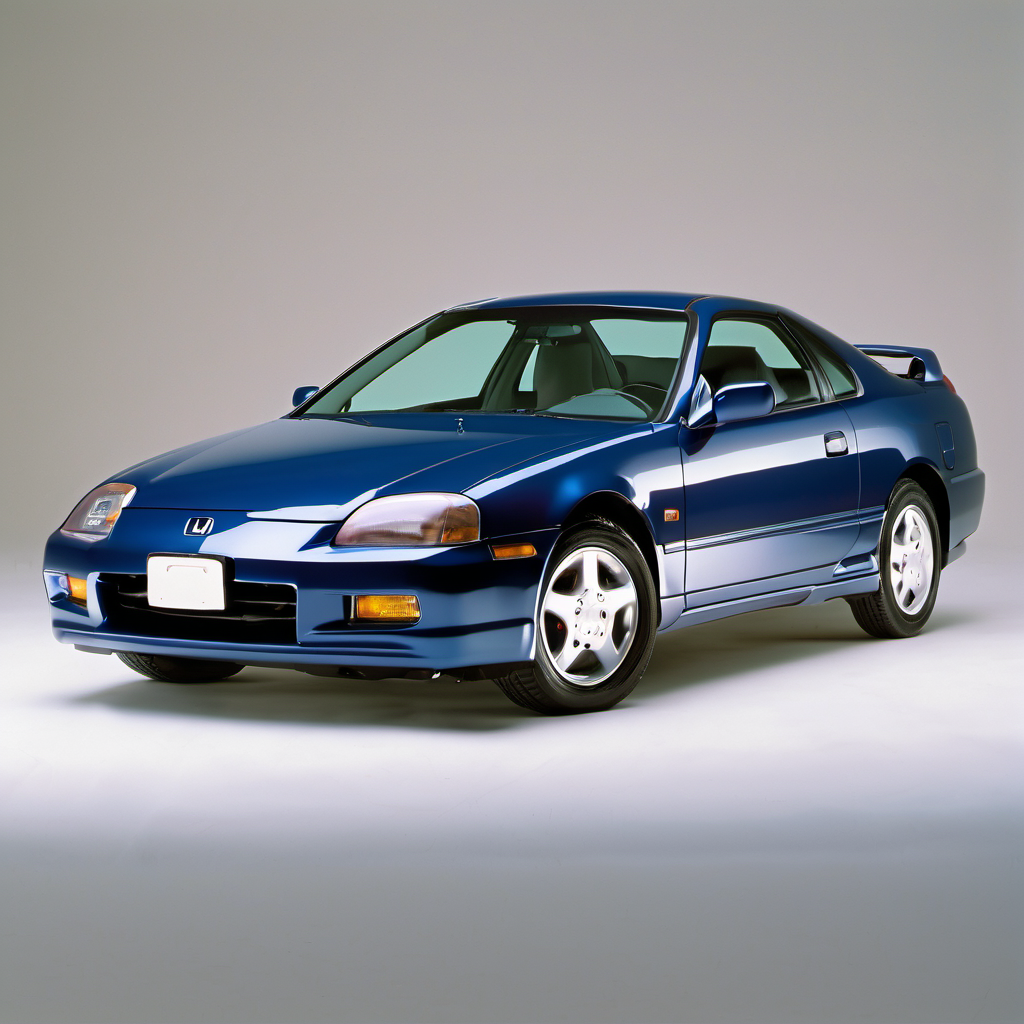
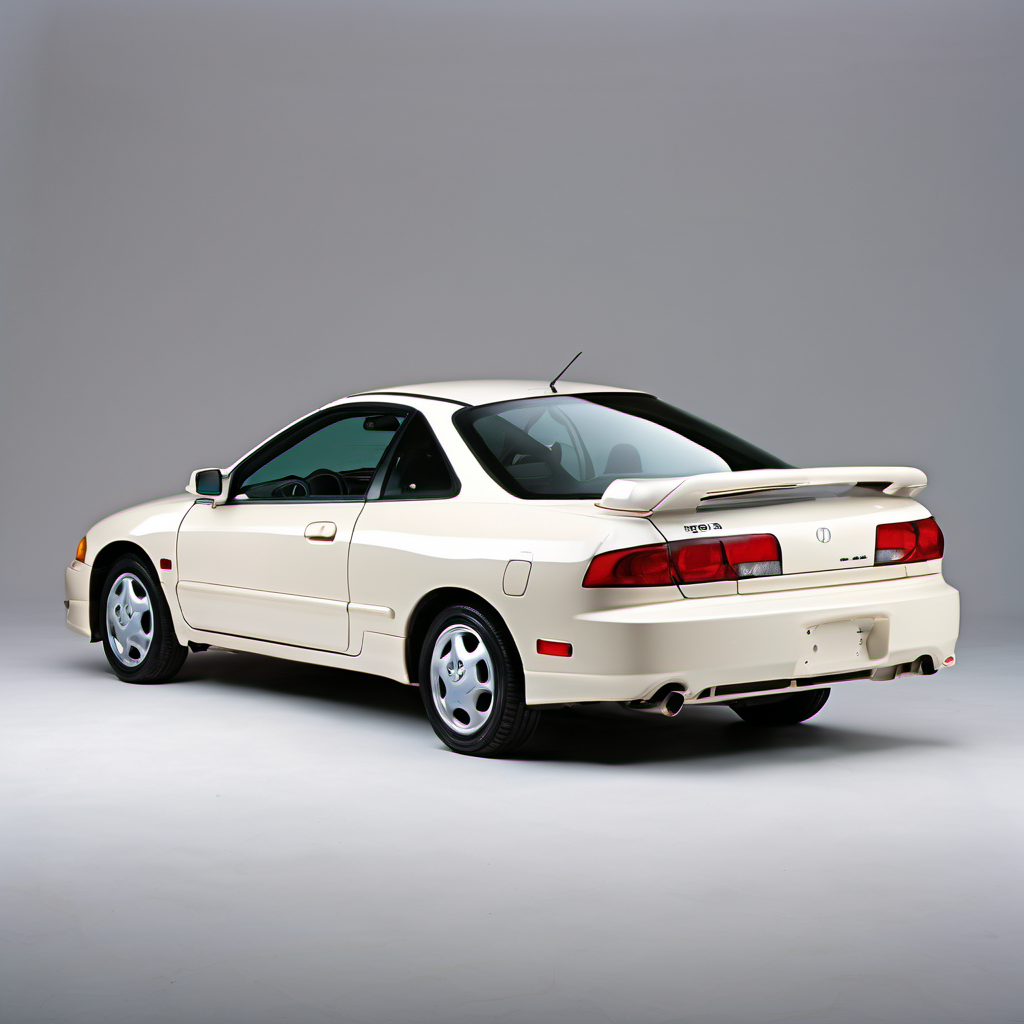
1998 Honda Prelude Coupe

1998 Honda

PreludeCoupe

Coupe

The 1998 Honda Prelude is the fifth-generation version of Honda's long-running sport coupe, sold in its final full design cycle before the nameplate was discontinued in 2001. It's a front-wheel-drive, two-door coupe built squarely around driving enjoyment — low, sleek, and powered by Honda's 2.2L DOHC-VTEC four-cylinder. The base SH (Super Handling) trim added Honda's Active Torque Transfer System (ATTS), a mechanically clever front differential that could vector torque to the outside wheel in corners. At 27 years old, surviving Preludes are enthusiast-kept or project cars. The VTEC engine is famously durable when maintained, but these cars are now old enough that deferred maintenance, rust, and worn suspension components are more likely than engine failure. Parts availability is decent thanks to the Honda aftermarket community, but some interior and trim pieces can be hard to source. For Lake Geneva drivers, the low ground clearance and sport-tuned suspension make this a fair-weather or mild-winter car at best. It's not designed for heavy snow, and road salt exposure is a serious rust concern on any example that wintered in the upper Midwest.

Reliability
4/5
Verified data
Specs shown for Prelude — the most common configuration. Other trims may vary in engine, drivetrain, or fuel economy. Sign in to see your vehicle's exact specs.
Engine
[object Object]
Drivetrain
FWD
Fuel
Premium gasoline
MPG
19 city / 25 hwy / 21 combined
Seats
Doors
Body
Subcompact Cars

Overview

AI-curated

The 1998 Honda Prelude is the fifth-generation version of Honda's long-running sport coupe, sold in its final full design cycle before the nameplate was discontinued in 2001. It's a front-wheel-drive, two-door coupe built squarely around driving enjoyment — low, sleek, and powered by Honda's 2.2L DOHC-VTEC four-cylinder. The base SH (Super Handling) trim added Honda's Active Torque Transfer System (ATTS), a mechanically clever front differential that could vector torque to the outside wheel in corners. At 27 years old, surviving Preludes are enthusiast-kept or project cars. The VTEC engine is famously durable when maintained, but these cars are now old enough that deferred maintenance, rust, and worn suspension components are more likely than engine failure. Parts availability is decent thanks to the Honda aftermarket community, but some interior and trim pieces can be hard to source. For Lake Geneva drivers, the low ground clearance and sport-tuned suspension make this a fair-weather or mild-winter car at best. It's not designed for heavy snow, and road salt exposure is a serious rust concern on any example that wintered in the upper Midwest.

Known for
  • Rev-happy 2.2L DOHC-VTEC engine with strong top-end pull
  • Sharp, communicative front-wheel-drive handling
  • Tight, driver-focused interior with excellent seating position
  • Available ATTS torque-vectoring differential on SH trim
  • Honda's reputation for long engine life with proper maintenance
Best for
  • Enthusiast drivers who enjoy a rev-to-redline driving experience
  • Weekend/fair-weather use in Wisconsin — not a year-round winter car
  • Owners willing to do their own maintenance or source an independent Honda specialist
  • Collectors preserving a late-90s Honda sport coupe
Watch for
  • Rust on rocker panels, floor pans, and subframe — critical at this age in the Midwest
  • Modified or high-revved engines with unknown service history
  • Worn or cracked rubber bushings throughout the suspension
  • Aging VTEC solenoid and oil pressure switches causing rough VTEC engagement
  • Sun-cracked or brittle interior plastics from age

Common issues by mileage

6 known

Timing Belt Failure

high
Typically appears
Any mileage — interval-based, every 90k mi
Estimated repair
$400 – $700

VTEC Solenoid / Oil Pressure Switch Failure

high
Typically appears
80k–150k mi
Estimated repair
$150 – $350

Camshaft Position Sensor / Timing Concerns

medium
Typically appears
100k+ mi
Estimated repair
$150 – $400

Oxygen Sensor Heater Circuit Failure

medium
Typically appears
80k–130k mi
Estimated repair
$100 – $300

Suspension Bushing and Ball Joint Wear

high
Typically appears
Any mileage on a 25-year-old car
Estimated repair
$400 – $1,200

Rocker Panel and Floor Pan Rust

high
Typically appears
Any — especially Midwest-wintered cars
Estimated repair
$500 – $3,000

Maintenance schedule

  1. 1
    Every 90,000 miles or immediately if history is unknown Timing Belt & Water Pump Replacement

    The H22A is an interference engine — a snapped belt will bend valves and potentially destroy the engine. On a car this age, replace it regardless of mileage if you can't verify when it was last done. Do the water pump at the same time since labor overlaps.

  2. 2
    Every 5,000 miles Engine Oil Change with High-Quality 5W-30

    VTEC hydraulic operation depends on clean oil at proper pressure. Dirty or low oil is the #1 killer of VTEC solenoids and will accelerate camshaft wear. Use a quality conventional or synthetic oil meeting Honda's spec.

  3. 3
    Every 30,000 miles or when VTEC engagement feels rough VTEC Solenoid Screen Cleaning

    A small screen on the VTEC solenoid can clog with sludge, causing delayed or harsh VTEC engagement. Cleaning it is a low-cost preventive step that's easy to overlook.

  4. 4
    Every 5 years or 60,000 miles Coolant Flush

    Honda's original blue coolant degrades over time, dropping pH and corroding aluminum components. The H22A has aluminum cylinder head and cooling passages — fresh coolant protects them.

  5. 5
    Annually on any Prelude of this age Full Suspension Inspection (Bushings, Ball Joints, Tie Rods)

    At 25+ years, every rubber bushing is a candidate for cracking or collapse. Worn bushings dramatically hurt the Prelude's otherwise precise handling and can create unsafe looseness.

  6. 6
    Every 2–3 years Brake Fluid Flush

    Brake fluid is hygroscopic and absorbs moisture over time, lowering its boiling point. On a sport coupe driven enthusiastically, fresh fluid is a cheap safety upgrade.

  7. 7
    Every 30,000 miles Spark Plugs (Iridium)

    The VTEC engine's high-revving nature puts more demand on the ignition system. Iridium plugs maintain sharp ignition at high RPM and hold the gap longer than standard copper plugs.

  8. 8
    Annually — especially before and after Wisconsin winter Underbody Rust Inspection and Treatment

    Road salt accelerates rust on the subframe, brake lines, and fuel lines. Catch surface rust early with fluid film or undercoating treatment. Structural rust on subframe rails is a safety issue and a costly repair.

Always defer to the manufacturer's service manual for warranty-mandated intervals.

Cost of ownership

Annual maintenance
$600 – $1,800
Fuel
Runs on regular 87 octane per Honda's spec for the H22A4, though some owners use 91 to maximize VTEC performance. At current Wisconsin prices and ~12,000 miles/year, expect roughly $1,400–$1,700/year in fuel.
Insurance
Typically low-to-moderate — it's a 25-year-old sport coupe with modest book value. Agreed-value collector car insurance may be worth exploring if the car is a clean, original example.

A well-maintained Prelude with a known history can be quite affordable to run — Honda parts are not exotic, and an independent shop familiar with Hondas can service it without dealer prices. The wildcard is age: a car this old can need $2,000–$5,000 in one-time deferred maintenance (timing belt, suspension refresh, seals) before settling into a normal routine. Budget for that catch-up work upfront when buying.
Seasonal care

Lake Geneva, WI
Winter
  • The Prelude's 4.7-inch ground clearance makes it genuinely unsuited for snow above a few inches — consider winter storage in Lake Geneva if possible.
  • If driving in winter, fit a dedicated set of winter tires on steel wheels. The stock low-profile all-seasons are dangerous on ice.
  • Use a battery tender if storing — the stock battery and any aging electrical connections will struggle with sub-zero starts. Cold-weather battery failure is common on cars this old.
  • Switch to a full synthetic 5W-30 if not already — it flows better on cold starts and protects the VTEC system before oil pressure builds.
  • Flush washer fluid reservoir and fill with a rated -30°F or lower formula. The low cowl angle means the windshield fogs and ices quickly.
  • Rinse the underbody thoroughly after any drive on salted roads — the existing bodywork and brake lines on a 25-year-old car have limited remaining rust resistance.
Summer
  • Check tire pressure monthly — Wisconsin summer heat causes significant pressure gain (roughly 1 PSI per 10°F). Preludes run low-profile tires that are sensitive to over-inflation.
  • Inspect the cooling system before hot weather: hoses, clamps, thermostat, and coolant concentration. The H22A runs warm and cannot afford a coolant leak.
  • Test A/C performance early in the season — R-134a systems on cars this age often have slow leaks at O-rings. Recharge before you need it.
  • Check rubber weatherstripping around the doors and hatch — cracked seals let in heat and highway noise and allow water intrusion.

Comparable vehicles

If you're shopping for one

Red flags
  • No timing belt service record on a car with 90k+ miles
  • Rust holes or heavy bubbling on rocker panels, floor pans, or subframe
  • Missing or rough VTEC engagement during a test drive
  • Evidence of track, drag, or autocross use without documented supporting maintenance
  • Aftermarket engine management or unknown engine swap — verify what's actually under the hood
  • Overheating history or replaced head gasket without documentation of proper repair
What to inspect
  • Timing belt service record — non-negotiable on an interference engine. If the seller can't prove it, price it in or walk away.
  • Rocker panels, door sills, rear wheel arches, and floor pans for rust — poke with a screwdriver if needed. Midwest rust can be structural.
  • Undercarriage: inspect subframe, brake lines, and fuel lines for heavy corrosion.
  • VTEC engagement: at about 5,500 RPM the engine should have a noticeable, clean surge of power. Rough or absent VTEC engagement signals solenoid or oil pressure problems.
  • Suspension feel: test drive on an uneven road. Any clunking, looseness, or vagueness in steering points to worn bushings, ball joints, or tie rod ends.
  • Oil condition and level: pull the dipstick. Dark, gritty, or low oil on a VTEC Honda is a red flag.
  • Check for modifications: lowering springs, aftermarket intakes, and engine swaps are common in this community and can mask maintenance neglect or introduce reliability issues.
AI profile generated 12 days ago · claude-sonnet-4-6 · v2.