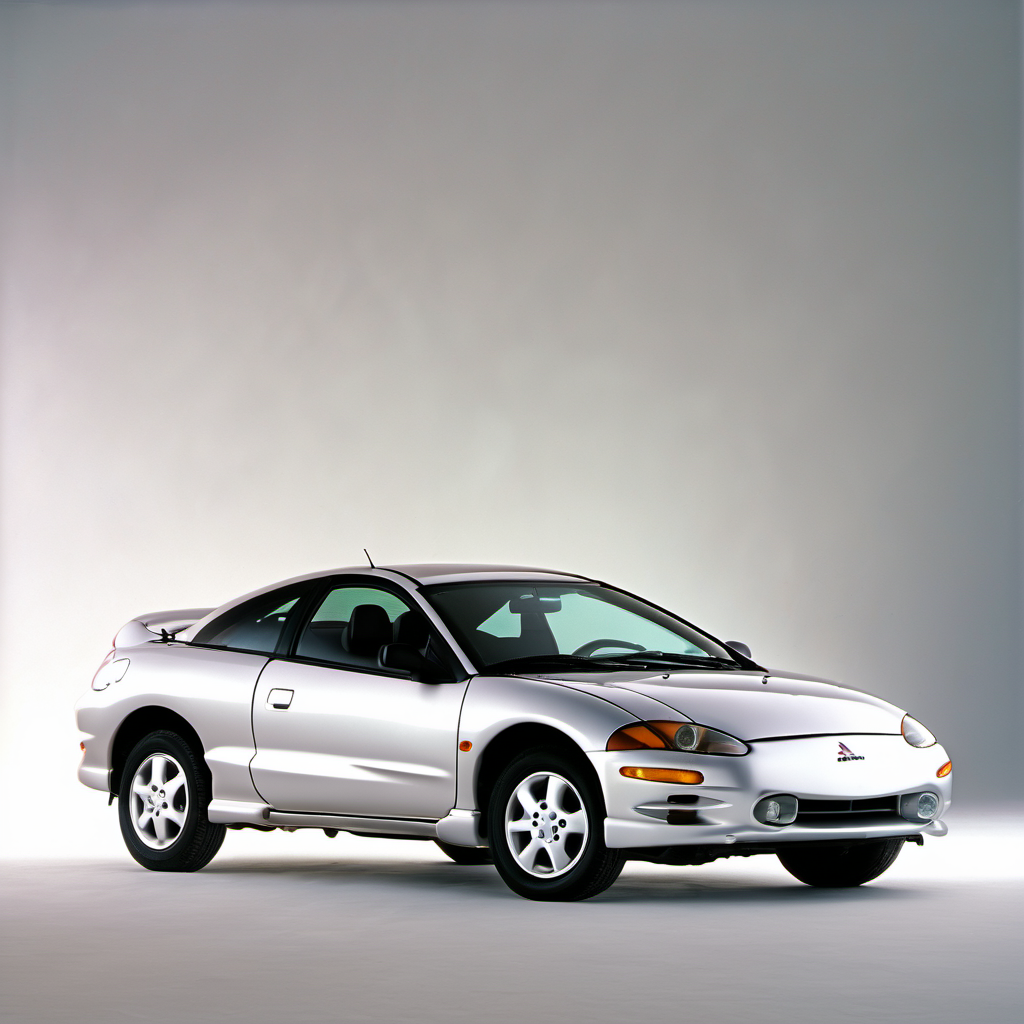
1998 Mitsubishi Eclipse Coupe

1998 Mitsubishi

EclipseCoupe

Coupe

The 1998 Mitsubishi Eclipse is a second-generation (2G) sport coupe that earned a devoted following for its aggressive styling and — in turbocharged trim — genuinely quick performance for its era. The GST and GSX trims carried a 210-hp turbocharged 2.0L four-cylinder derived from the Mitsubishi/Chrysler DSM platform, making them popular in the enthusiast and tuner communities. The base GS and RS used a naturally aspirated 2.0L or 2.4L, but the turbo cars are far more sought after. By 1998 these cars are well into their ownership history, meaning most examples have passed through multiple hands, been modified, or both. The DSM community is active and parts support remains decent, but finding a clean, unmolested example takes patience. Deferred maintenance and amateur tuning work are the biggest risks when buying used. For a Lake Geneva driver, the Eclipse coupe is a fair-weather machine at heart. It sits low, FWD traction in snow is marginal, and the turbo system demands more cold-weather attention than a typical daily driver. Expect to invest in keeping one right — these reward owners who stay on top of maintenance and punish those who don't.

Reliability
2/5
Verified data
Specs shown for Eclipse Convertible — the most common configuration. Other trims may vary in engine, drivetrain, or fuel economy. Sign in to see your vehicle's exact specs.
Engine
[object Object]
Drivetrain
FWD
Fuel
Premium gasoline
MPG
18 city / 24 hwy / 20 combined
Seats
Doors
Body
Minicompact Cars

Overview

AI-curated

The 1998 Mitsubishi Eclipse is a second-generation (2G) sport coupe that earned a devoted following for its aggressive styling and — in turbocharged trim — genuinely quick performance for its era. The GST and GSX trims carried a 210-hp turbocharged 2.0L four-cylinder derived from the Mitsubishi/Chrysler DSM platform, making them popular in the enthusiast and tuner communities. The base GS and RS used a naturally aspirated 2.0L or 2.4L, but the turbo cars are far more sought after. By 1998 these cars are well into their ownership history, meaning most examples have passed through multiple hands, been modified, or both. The DSM community is active and parts support remains decent, but finding a clean, unmolested example takes patience. Deferred maintenance and amateur tuning work are the biggest risks when buying used. For a Lake Geneva driver, the Eclipse coupe is a fair-weather machine at heart. It sits low, FWD traction in snow is marginal, and the turbo system demands more cold-weather attention than a typical daily driver. Expect to invest in keeping one right — these reward owners who stay on top of maintenance and punish those who don't.

Known for
  • Strong turbocharged 4G63T engine with high tuning potential
  • Sharp, sporty styling that still turns heads
  • Active DSM enthusiast community and parts availability
  • Quick acceleration in GST/GSX trim for its era
  • Shared DSM platform with Eagle Talon and Mitsubishi Galant VR-4
Best for
  • Enthusiasts comfortable with hands-on ownership
  • Weekend sport driving and autocross
  • Drivers who want a tuner-friendly platform with community support
  • Those seeking an affordable entry into late-90s Japanese performance
Watch for
  • Heavy modification history — many examples have been tuned or abused
  • Turbo system neglect leading to expensive repairs
  • Oil leaks from valve cover, front crankshaft seal, and turbo feed lines
  • Rust on rocker panels, floor pans, and wheel arches — critical in Midwest climates
  • Cooling system issues that can lead to head gasket failures if ignored

Common issues by mileage

6 known

Turbo oil feed line clogging / turbo failure

high
Typically appears
80–150k mi
Estimated repair
$600 – $1,800

Coolant system leaks and head gasket failure

high
Typically appears
80–130k mi
Estimated repair
$900 – $2,200

Crankshaft and camshaft seal oil leaks

high
Typically appears
60–120k mi
Estimated repair
$250 – $700

Oxygen sensor / heater circuit failure

medium
Typically appears
70–120k mi
Estimated repair
$150 – $400

Transmission synchro wear (2nd gear grind)

medium
Typically appears
80–140k mi
Estimated repair
$800 – $2,000

Rust on rocker panels, floor pans, and chassis

high
Typically appears
All mileages on Midwest examples
Estimated repair
$500 – $3,500

Maintenance schedule

  1. 1
    Every 3,000–4,000 mi Engine oil change with turbo-rated full-synthetic oil

    The 4G63T turbo is oil-dependent for bearing lubrication. Shorter intervals and quality synthetic oil prevent turbo coking and premature bearing wear — the leading cause of turbo failure on these engines.

  2. 2
    Every 2 years Coolant flush and system pressure test

    The 2G cooling system is prone to leaks at hoses, the water pump, and the radiator. A compromised system leads directly to overheating and head gasket failure.

  3. 3
    Every 60,000 mi or 5 years Timing belt and water pump replacement

    The 4G63T is an interference engine — a snapped timing belt destroys valves and pistons. On a 25-year-old car, replace on time regardless of apparent belt condition.

  4. 4
    Every 30,000 mi Spark plug replacement (use OEM-spec platinum or iridium)

    Turbocharged engines are harder on plugs. Worn plugs cause misfires and can allow detonation that damages pistons under boost.

  5. 5
    Every 60,000 mi or at turbo service Inspect and replace turbo oil feed and return lines

    These braided or rubber lines crack and clog with age. A restricted oil feed will kill a new turbo in short order.

  6. 6
    Every 2 years Brake fluid flush

    Brake fluid absorbs moisture over time, lowering boiling point and promoting internal corrosion — especially relevant in Wisconsin's wet winters.

  7. 7
    Every spring after winter Inspect rocker panels, wheel arches, and floor pan for rust

    Road salt accelerates rust on these thin-shelled Japanese coupes. Catching surface rust early costs far less than structural repair later.

  8. 8
    Every 30,000 mi Check and top off differential/transmission fluid

    The manual transmission on these cars is a known weak point at high mileage. Fresh fluid extends synchro life and makes shifts cleaner.

Always defer to the manufacturer's service manual for warranty-mandated intervals.

Cost of ownership

Annual maintenance
$700 – $2,000
Fuel
Premium unleaded recommended for the turbocharged engine; expect $2,000–$2,800/yr at average driving with current upper Midwest fuel prices.
Insurance
Generally moderate for a sport coupe of this age; expect $900–$1,500/yr depending on driver profile, though some carriers treat it as a collector/enthusiast vehicle.

A well-maintained 1998 Eclipse GST can be reasonably affordable to own if you handle routine work yourself or have a trusted independent shop. The danger is deferred maintenance — skipping oil changes or ignoring coolant leaks turns a $500 repair into a $2,500 one fast. Budget on the higher end if the car's history is unknown.
Seasonal care

Lake Geneva, WI
Winter
  • Check battery health before first hard freeze — the 4G63T's cold-start fuel demands drain a weak battery quickly; replace any battery over 4 years old.
  • Switch to a full-synthetic 0W-40 or 5W-30 oil for cold-weather starts; the turbo bearings need oil pressure immediately at startup in sub-zero temps.
  • Let the engine idle 60–90 seconds before driving in temps below 20°F to allow oil to circulate through the turbo before putting it under load.
  • Upgrade to winter-rated wiper blades and use -20°F or colder rated washer fluid — the low cowl on this coupe lets slush pack against the wipers quickly.
  • Inspect and treat rocker panels and underbody with rust inhibitor before the first salt application season; this car's low ride height puts the undercarriage in the salt spray zone.
  • Consider dedicated winter tires on a second set of wheels — FWD traction in Wisconsin snow is limited, and performance summer tires become dangerous below 40°F.
Summer
  • Monitor coolant temperature closely — the turbo adds heat load and the stock cooling system has limited reserve; a stuck thermostat or weak water pump shows up fast on hot days.
  • Check tire pressure monthly; summer heat increases pressure and under-inflated tires reduce handling precision on a sport-tuned suspension.
  • Inspect the intercooler and turbo piping connections for cracking — heat cycles cause rubber couplers to split, leading to boost leaks and poor performance.
  • Run the A/C system early in the season to verify it's holding refrigerant; recharging a leaking system repeatedly without finding the leak wastes money.
  • Check brake pad thickness before summer if the car sees any spirited driving; the lightweight coupe stops short but pads wear faster with enthusiastic use.

Comparable vehicles

If you're shopping for one

Red flags
  • Any evidence of engine modification (aftermarket ECU, upgraded fuel injectors, boost controller) without a corresponding professional tune — detonation damage is invisible until it isn't.
  • Overheating history or a recently replaced head gasket without a root cause explanation.
  • Missing or fabricated timing belt service records on a high-mileage example.
  • Salvage, rebuilt, or flood title — structural integrity and wiring integrity are difficult to verify.
  • Rust perforation on floor pans or frame rails — this car is not worth repairing structurally.
  • Coolant that looks brown, oily, or milky — points to head gasket failure or severe neglect.
What to inspect
  • Pull codes before purchase — turbo-related codes P0033/P0034/P0035 indicate possible boost control or wastegate issues; O2 sensor codes P0030–P0032 suggest neglected sensor service.
  • Check for oil in the intercooler pipes (indicates turbo seal wear) and coolant in the oil (head gasket red flag).
  • Look under the car for fresh oil on the rear of the engine block — front crankshaft seal and cam seals are common leak points at this age.
  • Inspect all four rocker panels, the rear wheel arches, and the floor pans with a flashlight for rust perforation — non-negotiable on any Midwest-stored example.
  • Drive it hard and listen for boost surge, detonation pinging, or transmission grind on 2nd gear upshifts.
  • Ask for all service records; specifically look for timing belt replacement documentation.
AI profile generated 11 days ago · claude-sonnet-4-6 · v2.