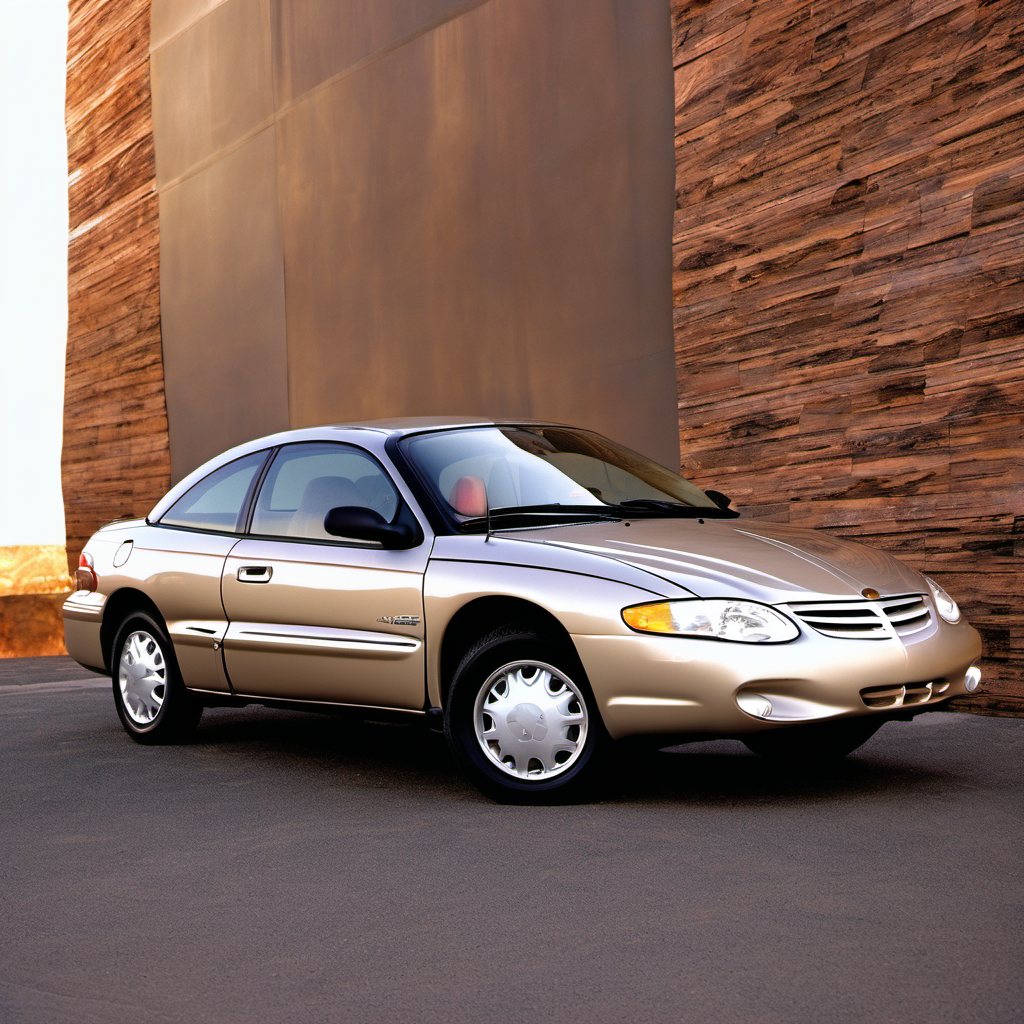
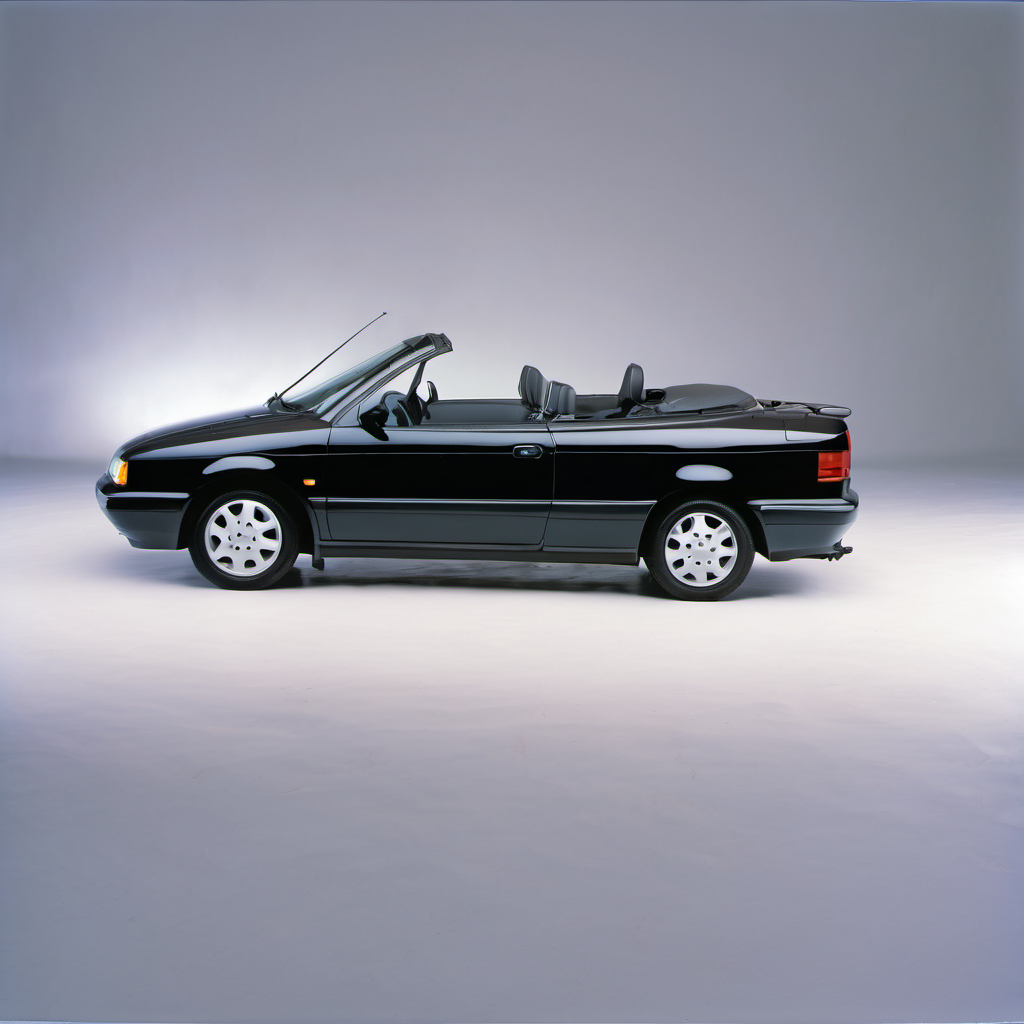
1998 Chrysler Sebring Convertible

1998 Chrysler

SebringConvertible

Convertible

The 1998 Chrysler Sebring Convertible was one of the more affordable American-brand drop-tops of the late 1990s, built on the Chrysler JA platform and assembled in Sterling Heights, Michigan. It offered a genuine full-convertible experience — a proper power soft top, a back seat that could actually fit adults, and a price tag that undercut most foreign rivals. For its era, it was a practical everyday convertible rather than a sports car. Power came from either a 2.0L DOHC four-cylinder or an optional 2.5L V6. The four-cylinder is adequate but not spirited; most buyers who kept theirs for spirited highway cruising wished they'd optioned the V6. The interior quality is typical late-'90s Chrysler — usable and reasonably comfortable but not durable over the long haul. Plastics fade, trims loosen, and convertible-top mechanisms earn their maintenance costs as the car ages. At 25+ years old, any surviving 1998 Sebring Convertible is a value play — cheap to buy, relatively cheap to insure, but increasingly expensive to maintain properly. Expect deferred maintenance to be the norm on these. Rust and convertible-top condition are the two biggest variables on a used example.

Reliability
2/5
Verified data
Specs shown for Sebring — the most common configuration. Other trims may vary in engine, drivetrain, or fuel economy. Sign in to see your vehicle's exact specs.
Engine
[object Object]
Drivetrain
FWD
Fuel
Gasoline
MPG
19 city / 27 hwy / 22 combined
Seats
Doors
Body
Compact Cars

Overview

AI-curated

The 1998 Chrysler Sebring Convertible was one of the more affordable American-brand drop-tops of the late 1990s, built on the Chrysler JA platform and assembled in Sterling Heights, Michigan. It offered a genuine full-convertible experience — a proper power soft top, a back seat that could actually fit adults, and a price tag that undercut most foreign rivals. For its era, it was a practical everyday convertible rather than a sports car. Power came from either a 2.0L DOHC four-cylinder or an optional 2.5L V6. The four-cylinder is adequate but not spirited; most buyers who kept theirs for spirited highway cruising wished they'd optioned the V6. The interior quality is typical late-'90s Chrysler — usable and reasonably comfortable but not durable over the long haul. Plastics fade, trims loosen, and convertible-top mechanisms earn their maintenance costs as the car ages. At 25+ years old, any surviving 1998 Sebring Convertible is a value play — cheap to buy, relatively cheap to insure, but increasingly expensive to maintain properly. Expect deferred maintenance to be the norm on these. Rust and convertible-top condition are the two biggest variables on a used example.

Known for
  • Affordable full convertible with a usable rear seat
  • Smooth, quiet highway cruising for the class
  • Wide availability of basic parts
  • Distinctive styling that aged reasonably well
Best for
  • Budget-conscious buyers wanting a weekend convertible
  • Warm-weather cruising and summer road trips
  • First-time convertible owners
  • Low-mileage collector or hobby car
Watch for
  • Convertible top hydraulic or motor failures — expensive and increasingly hard to source
  • Rust on frame rails, floor pans, and rear wheel arches from Wisconsin road salt
  • Neglected cooling systems leading to head gasket issues on the 2.0L
  • Worn or cracked weatherstripping causing leaks that accelerate interior rot
  • Electrical gremlins common in aged wiring, especially top mechanism and power windows

Common issues by mileage

6 known

Convertible top mechanism failure (motor, hydraulic cylinders, or latches)

high
Typically appears
60k+ mi / any age
Estimated repair
$300 – $1,200

Weatherstripping deterioration causing water leaks into cabin and trunk

high
Typically appears
Any mileage on a 25-year-old car
Estimated repair
$150 – $600

Cooling system failure / head gasket (thermostat, radiator, hoses)

medium
Typically appears
80k–130k mi
Estimated repair
$400 – $1,800

Power window regulator failure

high
Typically appears
60k+ mi
Estimated repair
$150 – $350

Rust on floor pans, frame rails, and rear wheel arches

high
Typically appears
Any — age-driven, especially salt-belt cars
Estimated repair
$500 – $3,000

Oxygen sensor and upstream exhaust sensor faults

medium
Typically appears
70k–120k mi
Estimated repair
$100 – $350

Maintenance schedule

  1. 1
    Every 2 years or 30k mi Cooling system flush and inspection

    The 2.0L DOHC runs warm and is sensitive to coolant degradation. Old coolant accelerates corrosion in the aluminum head and plastic tanks, leading to costly head gasket or radiator failures.

  2. 2
    Every 60k mi Serpentine belt and tensioner replacement

    Aged belts can snap without warning. On this engine, a belt failure also risks losing power steering on a vehicle that handles differently with the top down — a real safety concern.

  3. 3
    Every spring and fall Convertible top lubrication and mechanism inspection

    The top motor and pivot points dry out and seize. A few minutes with appropriate lubricant and an inspection of the hydraulic lines (if equipped) can prevent a $700+ repair.

  4. 4
    Every fall before winter Weatherstripping treatment and inspection

    Seals shrink and crack in cold weather. Treating them with a rubber conditioner in fall extends life and prevents water intrusion that rots the floor and causes mold.

  5. 5
    Every 2 years Brake fluid flush

    Brake fluid is hygroscopic. On a 25-year-old car with original or unknown-history fluid, moisture contamination lowers boiling point and accelerates caliper and master cylinder corrosion.

  6. 6
    Every 30k mi Spark plugs and ignition wires

    The 2.0L DOHC runs best with fresh plugs. Worn plugs on aged ignition wires cause rough idle and hard starts — especially noticeable in cold Wisconsin mornings.

  7. 7
    Every fall Battery load test

    A battery that passes in summer can fail at -10°F. Lake Geneva winters are hard on batteries; any battery over 4 years old should be load-tested before the cold season hits.

  8. 8
    Every spring after winter Undercarriage rust inspection and treatment

    This is a convertible with a lower unibody that sits closer to salt spray. Catching rust early — especially on floor pans and frame rails — is far cheaper than structural repair later.

Always defer to the manufacturer's service manual for warranty-mandated intervals.

Cost of ownership

Annual maintenance
$600 – $1,800
Fuel
At 22 MPG combined and current Midwest gas prices, expect roughly $1,600–$2,000/year for average driving (~12,000 mi). Premium not required; regular 87 octane is fine.
Insurance
Generally inexpensive to insure — liability and comprehensive on a 25-year-old convertible typically runs $600–$1,100/year in Wisconsin depending on your history and coverage level. Agreed-value collector coverage may be worth exploring if you keep it garaged.

At face value, this is a cheap car to own: insurance is low, fuel economy is decent, and parts are still findable. The hidden cost is the convertible-specific maintenance — top mechanisms, seals, and weatherstripping that no longer have a normal service interval because they're simply wearing out from age. Budget for at least one significant top or electrical repair every 2–3 years. Structural rust repair, if neglected, can easily exceed the car's market value.
Seasonal care

Lake Geneva, WI
Winter
  • Store the car if at all possible — this is not a salt-season vehicle. A season of Wisconsin road salt will accelerate floor pan and frame rail rust dramatically.
  • If driven in winter, rinse the undercarriage weekly, especially after salted roads; pay close attention to the convertible top drain channels that can trap brine.
  • Load-test the battery every fall; cold cranking amps drop sharply below 0°F and this car's starting system has no margin for a weak battery.
  • Use a full-synthetic 5W-30 oil to ensure proper cold-start lubrication in sub-zero temperatures.
  • Keep the convertible top fully latched and supported — the folding mechanism and vinyl/fabric can crack in extreme cold if the top is left in an intermediate position.
  • Use a winter-rated washer fluid (rated to at least -20°F); the fluid reservoir and lines are exposed and a frozen system is a safety issue.
Summer
  • Inspect and clean the convertible top drains before summer rains — clogged drains flood the trunk and can soak the spare tire well, promoting hidden rust.
  • Check tire pressure monthly; pressures drop roughly 1 PSI per 10°F of temperature change, and summer heat will cause overinflation if not monitored.
  • Flush and inspect the A/C system — refrigerant on these cars is R-134a, and seals degrade with age; a weak A/C is miserable on a black-interior convertible in August.
  • Inspect the cooling system hoses for soft spots or swelling before the hot season; the 2.0L runs warm and a hose failure on a summer highway is a breakdown waiting to happen.
  • Treat the convertible top fabric with a UV protectant to prevent bleaching and cracking from direct sun exposure — critical for keeping the top watertight.

Comparable vehicles

If you're shopping for one

Red flags
  • Convertible top that won't operate, hesitates, or makes grinding noises — budget for a major repair immediately
  • Any standing water in the trunk, wet carpet, or mold smell — top seals have failed and hidden rust may be extensive
  • Rust through the floor pans or structural frame rails — repair cost will exceed the car's value
  • Overheating history or signs of coolant-oil mixing (creamy residue on oil cap) — potential head gasket failure
  • Missing service history on a high-mileage example — deferred maintenance is the norm and you'll be catching up
  • Mismatched paint panels on the body — may indicate prior accident or hidden structural repair
What to inspect
  • Convertible top operation — cycle it fully open and closed; listen for motor strain, watch for uneven movement or latching problems
  • All weatherstripping and window seals — look for cracks, gaps, or water stains on the interior door cards and carpet
  • Floor pans and trunk floor — press firmly on the carpet to feel for soft spots or rust perforation underneath
  • Frame rails and rear wheel arch lips — probe with a screwdriver if concerned; rust here is structural
  • Cooling system condition — check for milky oil on the dipstick, white exhaust smoke, or coolant loss that would indicate head gasket issues
  • Power windows and all convertible-related electrical (top switch, window auto-lowering on door open) — all must work
  • Undercarriage for salt corrosion — get it on a lift; a northern Wisconsin car with 25 winters is high-risk
AI profile generated 13 days ago · claude-sonnet-4-6 · v2.