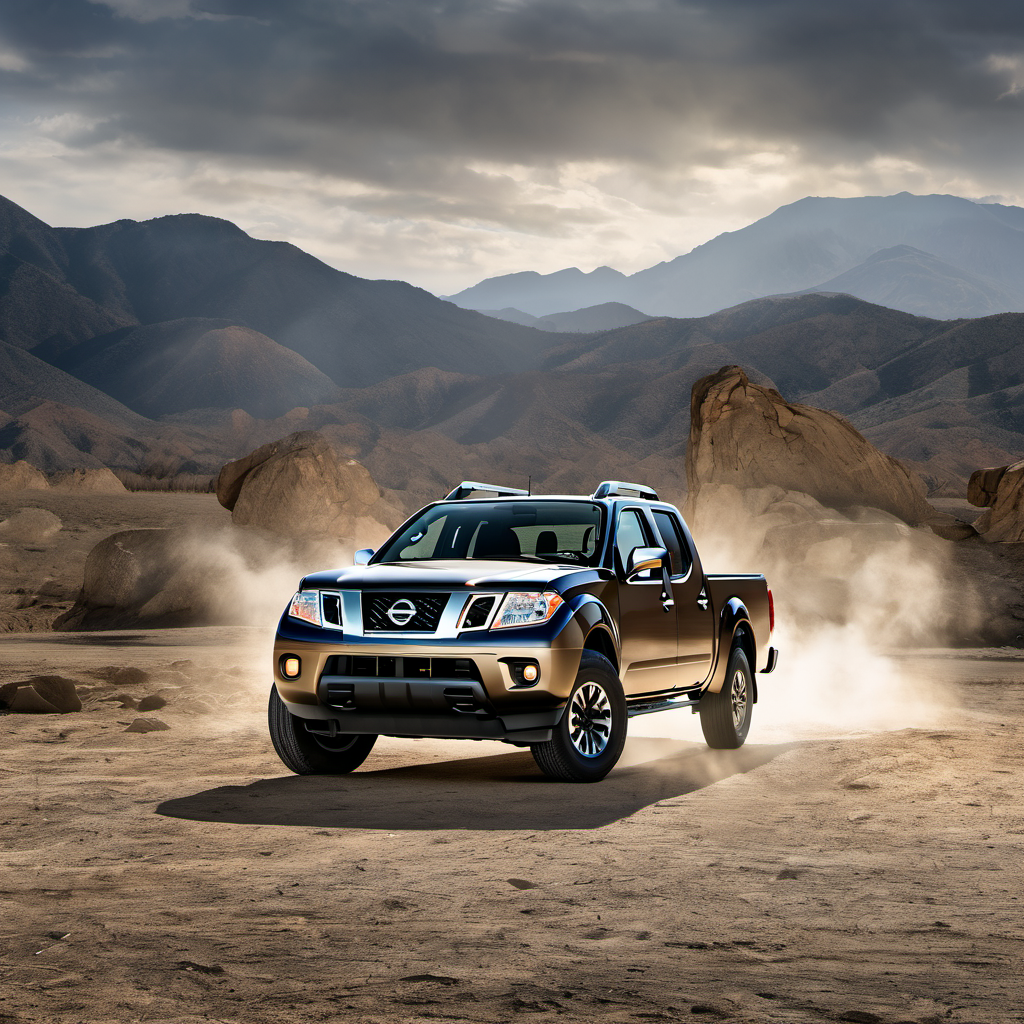
2019 Nissan Frontier Crew Cab Pickup
Popular pick

2019 Nissan

Frontier Crew CabPickup

4.0L V6 · Pickup

The 2019 Nissan Frontier Crew Cab is the tail end of a generation that ran essentially unchanged from 2005 — a rarity in the modern truck market. That long production run is both a blessing and a curse: the platform is thoroughly sorted, parts are cheap and plentiful, and the 4.0L V6 is one of the most proven engines in the midsize truck segment. On the downside, the cabin tech, fuel economy, and payload numbers were already dated when this truck was new. What it lacks in modernity it makes up for in toughness. Frontiers built in Nissan's Smyrna, Tennessee plant have a reputation for holding together well past 200,000 miles when the owner stays on top of oil changes and transmission service. The 4WD system is mechanical and reliable, making it a legitimate winter and trail tool. For buyers in the upper Midwest, the frame rust concern is real and must be factored into any used purchase decision. A Frontier that lived in the salt belt and never saw an undercoating spray is a different truck from one that was garaged and washed regularly. Buy accordingly.

Reliability
3/5
Verified data
Engine
4.0L V6
Drivetrain
4WD/4-Wheel Drive/4x4
Fuel
Gasoline
MPG
15 city / 21 highway
Seats
5
Doors
4
Body
Pickup
MSRP
$23,530

Overview

AI-curated

The 2019 Nissan Frontier Crew Cab is the tail end of a generation that ran essentially unchanged from 2005 — a rarity in the modern truck market. That long production run is both a blessing and a curse: the platform is thoroughly sorted, parts are cheap and plentiful, and the 4.0L V6 is one of the most proven engines in the midsize truck segment. On the downside, the cabin tech, fuel economy, and payload numbers were already dated when this truck was new. What it lacks in modernity it makes up for in toughness. Frontiers built in Nissan's Smyrna, Tennessee plant have a reputation for holding together well past 200,000 miles when the owner stays on top of oil changes and transmission service. The 4WD system is mechanical and reliable, making it a legitimate winter and trail tool. For buyers in the upper Midwest, the frame rust concern is real and must be factored into any used purchase decision. A Frontier that lived in the salt belt and never saw an undercoating spray is a different truck from one that was garaged and washed regularly. Buy accordingly.

Known for
  • Bulletproof 4.0L V6 engine with 200k+ mile potential
  • Simple, durable part-time 4WD system
  • Low cost of ownership compared to domestic competitors
  • One of the longest-running unchanged platforms in modern trucks (2005–2021)
Best for
  • Buyers who want a no-frills, proven workhorse truck
  • Off-road and trail use with 4WD and 8.6" ground clearance
  • Wisconsin winters — robust 4WD and proven cold-weather reliability
  • Budget-conscious truck buyers who prioritize long-term reliability over tech features
  • Light towing and hauling (up to ~6,500 lbs tow rating)
Watch for
  • Automatic transmission wear — the 5-speed auto can develop issues past 90–100k miles
  • Frame rust on salt-belt examples — inspect the undercarriage carefully before buying used
  • Fuel pump failure reported on 2018–2019 model years
  • Outdated infotainment — the 5" NissanConnect screen feels primitive by 2019 standards
  • Fuel economy is poor — 15/21 MPG is bottom-of-class for midsize trucks

Common issues by mileage

6 known

Automatic Transmission Wear / Torque Converter Clutch Failure

high
Typically appears
90–120k mi
Estimated repair
$800 – $3,800

Camshaft Position Timing / VVT Oil Control Valve

medium
Typically appears
70–110k mi
Estimated repair
$300 – $1,200

Fuel Pump Failure

medium
Typically appears
75–100k mi
Estimated repair
$500 – $950

Frame and Undercarriage Rust (Salt Belt)

high
Typically appears
60–150k mi
Estimated repair
$500 – $4,000

Valve Control Solenoid Circuit Faults

medium
Typically appears
80–120k mi
Estimated repair
$200 – $700

A/C Compressor Failure

low
Typically appears
100–130k mi
Estimated repair
$600 – $1,200

Maintenance schedule

  1. 1
    Every 5,000 miles or 6 months Engine Oil Change

    5W-30 synthetic blend, 5.4 quarts with filter. The 4.0L V6 rewards consistent oil changes — this is the single biggest factor in engine longevity. Don't stretch intervals.

  2. 2
    Every 30,000 miles or 24 months Transmission Fluid Change

    Use only Nissan Matic J ATF — substitutions have caused shift quality problems. The 5-speed auto is the truck's weakest link; fresh fluid is the cheapest insurance you can buy against a $3,000+ rebuild.

  3. 3
    Every 30,000 miles or sooner if driven off-road or through deep water Rear Differential Fluid Change

    75W-90 GL-5. Easy to overlook, expensive to ignore. Water intrusion through the axle vent can accelerate wear.

  4. 4
    Every 60,000 miles Spark Plug Replacement

    The 4.0L V6 uses iridium plugs. Neglecting this causes misfires and can trigger VVT-related fault codes, making diagnosis harder.

  5. 5
    Every 30,000 miles (part# 16546-7S000, ~$20) Air Filter Replacement

    Easy DIY. A clogged filter hurts fuel economy, which is already poor on this truck.

  6. 6
    Every 15,000 miles (part# 27277-7S000, ~$15) Cabin Air Filter Replacement

    Easy DIY. Keeps the HVAC system working efficiently — important for both summer A/C and winter defrost performance.

  7. 7
    Every 2–3 years regardless of mileage Brake Fluid Flush

    DOT 3 fluid absorbs moisture over time. In Wisconsin's freeze-thaw cycles, degraded brake fluid increases the risk of caliper corrosion and reduced stopping performance.

  8. 8
    Monthly during winter; full inspection every spring Undercarriage Wash and Inspection

    Salt is the #1 enemy of this truck in Wisconsin. Check frame rails, crossmembers, brake lines, and fuel lines. Catch surface rust early before it becomes structural.

Always defer to the manufacturer's service manual for warranty-mandated intervals.

Cost of ownership

Annual maintenance
$600 – $1,400
Fuel
At 17 MPG combined and ~15,000 miles/year, expect roughly $1,800–$2,400/year in fuel depending on gas prices. This is one of the thirstiest trucks in the midsize class.
Insurance
Typically $1,100–$1,600/year for full coverage in Wisconsin on a 2019 Frontier, depending on driving record and location. Older platform keeps repair costs — and premiums — moderate.

The Frontier is genuinely cheap to own when nothing breaks. Routine maintenance costs are low, parts are affordable, and the V6 doesn't need premium fuel. The risk is transmission work — a rebuild or replacement can run $2,500–$4,000 at an independent shop and can happen earlier than owners expect if fluid changes were skipped. Budget for that eventuality on any high-mileage used example.
Seasonal care

Lake Geneva, WI
Winter
  • Confirm 4WD engagement before the first snowfall — test both 4Hi and 4Lo in a safe area. The part-time system works well but you want to know it's engaging cleanly before you need it.
  • Inspect and load-test the battery before November. Cold cranking a 4.0L V6 below 0°F demands a healthy battery; if it's more than 4 years old, replace it proactively.
  • Switch to a winter-rated wiper fluid rated to at least -30°F. The reservoir is accessible and the swap is easy — do it before the first freeze.
  • Check coolant concentration with a tester. The Nissan Long Life blue coolant should protect to at least -34°F; a 50/50 mix is standard. Flush if the last change is unknown.
  • Wash the undercarriage every 2 weeks during active salt season. Pay extra attention to the frame rails, brake lines, and fuel lines — rust on these trucks starts underneath.
  • Check tire pressure weekly in cold weather. Pressure drops roughly 1 PSI for every 10°F drop in temperature; underinflated tires reduce traction on snow and ice.
Summer
  • Inspect the A/C system operation early in the season — compressor failures on the 2018–2019 Frontier have been reported around 100–120k miles. A weak compressor will struggle even more in July heat.
  • Check tire pressure in hot weather — pressure rises in summer and overinflated tires reduce grip and wear unevenly. Check when tires are cold.
  • Inspect the coolant system for leaks and hose condition. Heat soak on the 4.0L V6 in traffic can stress aging hoses and the thermostat.
  • Keep the bed and cab ventilated when parked to reduce interior heat buildup — the base trim's manual A/C has to work harder to cool a heat-soaked cabin.

Comparable vehicles

If you're shopping for one

Red flags
  • Visible rust on the frame rails or crossmembers — walk away unless priced to reflect significant repair cost.
  • No transmission fluid service records and over 80,000 miles on the odometer.
  • Any check engine light — scan for codes before purchase, particularly P0011/P0012 (VVT) or P0740 (torque converter).
  • 4WD that won't engage or makes grinding noises.
  • Hard starting, stalling, or fuel smell — possible fuel pump failure.
  • Timing chain rattle on cold start — this is a costly repair on the 4.0L V6.
What to inspect
  • Frame and undercarriage: Get under the truck and probe the frame rails with a screwdriver — soft spots mean structural rust. In Wisconsin, this is a deal-breaker item.
  • Transmission behavior: During the test drive, check for hesitation on acceleration, rough upshifts, or slipping between 2nd and 3rd. These are early signs of the known 5-speed auto issues.
  • Transmission and differential service records: If there's no record of a transmission fluid change before 60,000 miles, factor a service into your offer price.
  • 4WD engagement: Test 4Hi and 4Lo. Any grinding, refusal to engage, or warning lights warrants further diagnosis.
  • Fuel pump: Listen for a consistent hum from the fuel pump on key-on (before cranking). Whining, silence, or hard starts can indicate a failing pump.
  • Brake lines and fuel lines: Salt-belt trucks can develop rust-perforated brake and fuel lines. Look for wet spots, rust scale, or makeshift repairs.
  • Timing chain noise: Cold-start a V6 and listen for a rattle in the first 5–10 seconds. Timing chain noise indicates wear and an expensive repair ahead.
  • Oil condition: Pull the dipstick. Milky or sludgy oil suggests cooling system issues or chronic neglect.
AI profile generated 4 days ago · claude-sonnet-4-6 · v2.