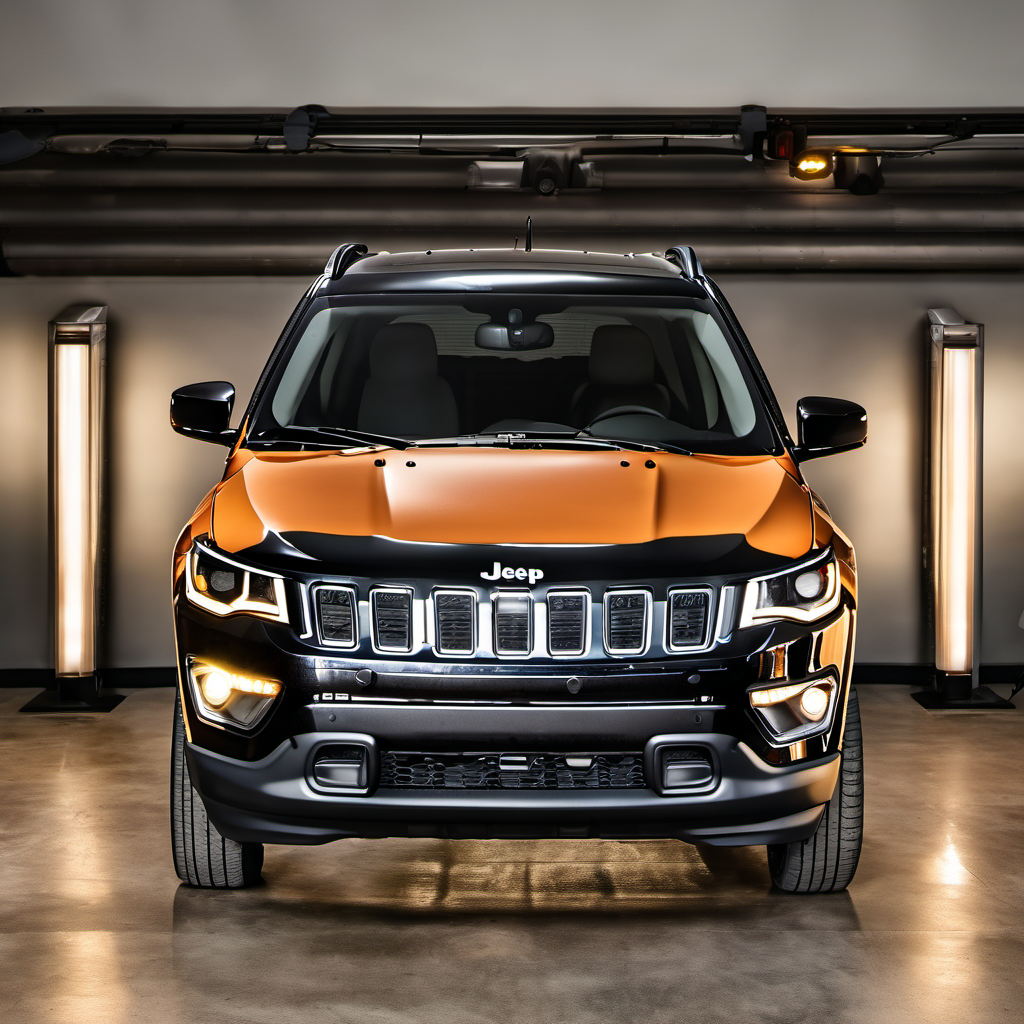
2018 Jeep Compass SUV
Popular pick

2018 Jeep

CompassSUV

2.4L I4 Tigershark MultiAir2 · SUV

The 2018 Jeep Compass is the second-generation model, a complete redesign from the rough-riding first-gen that ran through 2017. Built on FCA's Small Wide platform and assembled in Mexico, it slots between the Renegade and Cherokee in Jeep's lineup. It offers a car-like ride, a clean interior, and available 4WD with a proper low-range mode on higher trims — rare in this class. The second-gen Compass cleaned up most of the complaints from its predecessor: the interior quality improved noticeably, fuel economy is respectable, and it carries genuine Jeep Trail Rated credentials on Trailhawk variants. That said, it still has real-world weak spots: the 9-speed automatic transmission is known for hesitation and rough shifts, and Uconnect infotainment glitches surface regularly. For buyers in the upper Midwest, the available AWD and solid ground clearance make it a practical everyday driver. Just plan for more software and transmission attention than you'd expect from a compact SUV at this price point.

Reliability
2/5
Verified data
Specs shown for Compass 4WD — the most common configuration. Other trims may vary in engine, drivetrain, or fuel economy. Sign in to see your vehicle's exact specs.
Engine
[object Object]
Drivetrain
AWD
Fuel
Gasoline
MPG
22 city / 30 hwy / 25 combined
Seats
5
Doors
4
Body
SUV
MSRP
$26,090

Overview

AI-curated

The 2018 Jeep Compass is the second-generation model, a complete redesign from the rough-riding first-gen that ran through 2017. Built on FCA's Small Wide platform and assembled in Mexico, it slots between the Renegade and Cherokee in Jeep's lineup. It offers a car-like ride, a clean interior, and available 4WD with a proper low-range mode on higher trims — rare in this class. The second-gen Compass cleaned up most of the complaints from its predecessor: the interior quality improved noticeably, fuel economy is respectable, and it carries genuine Jeep Trail Rated credentials on Trailhawk variants. That said, it still has real-world weak spots: the 9-speed automatic transmission is known for hesitation and rough shifts, and Uconnect infotainment glitches surface regularly. For buyers in the upper Midwest, the available AWD and solid ground clearance make it a practical everyday driver. Just plan for more software and transmission attention than you'd expect from a compact SUV at this price point.

Known for
  • Improved second-generation interior quality over the first-gen
  • Available Trail Rated 4WD with low-range on Trailhawk
  • 9-speed automatic transmission hesitation and rough shifts
  • Uconnect infotainment software glitches
  • Comfortable highway ride for its class
Best for
  • Daily commuters wanting light SUV utility
  • Buyers who want Jeep badge with car-like driving manners
  • Occasional light off-road or gravel-road use (Trailhawk)
  • Small families needing a compact AWD crossover
Watch for
  • 9-speed ZF transmission shudder and hunting between gears
  • Uconnect system freezes and black-screen events
  • HVAC blend door actuator failures causing heat/AC complaints
  • Paint and trim fit issues reported on early 2018 builds
  • Higher-than-average FCA dealer software update dependency

Common issues by mileage

6 known

9-Speed Automatic Transmission Shudder / Harsh Shifts

high
Typically appears
0–60k mi
Estimated repair
$150 – $1,200

HVAC Blend Door Actuator Failure (No Heat or No A/C on One Side)

medium
Typically appears
40–100k mi
Estimated repair
$150 – $400

Oxygen / A/F Sensor Heater Circuit Fault

low
Typically appears
80–130k mi
Estimated repair
$150 – $400

Maintenance schedule

  1. 1
    Every 5,000–6,000 miles (do not stretch to OLM max in cold climates) Engine Oil & Filter Change — use full synthetic 0W-20

    The Tigershark 2.4L benefits from clean oil to keep VVT solenoids functioning properly. Dirty or low oil directly triggers camshaft timing codes. Short trips in Wisconsin winters mean more moisture dilution — shorten the interval accordingly.

  2. 2
    Every 40,000 miles or at first sign of shudder Transmission Fluid Service

    FCA lists the 9-speed ATF as 'lifetime,' but real-world use shows fluid degradation contributes to shift quality issues. An ATF drain-and-fill at an independent shop is inexpensive insurance.

  3. 3
    60,000 miles Spark Plug Replacement

    Worn plugs stress the ignition system and can mimic or worsen VVT timing issues on the Tigershark engine.

  4. 4
    Every 15,000–20,000 miles or annually Cabin Air Filter Replacement

    Wisconsin road salt and sand clog cabin filters faster than in dry climates. A clogged filter strains the blower motor and reduces defrost effectiveness.

  5. 5
    Annually or at every major service Uconnect Software Update Check

    FCA released multiple TCM and Uconnect calibration updates for 2018 models. Confirm all TSB-related software is current — this is one of the few things worth a dealer visit.

  6. 6
    Every spring (after winter season) Inspect Underbody / Frame Seams for Rust

    Lake Geneva road salt is aggressive. Check brake lines, subframe mounting points, and rear suspension brackets annually. Treat any bare metal immediately.

  7. 7
    Every 2 years Brake Fluid Flush

    Brake fluid is hygroscopic and absorbs moisture. In a region with extreme temperature swings, degraded fluid lowers the boiling point and can affect ABS module performance.

  8. 8
    Every 5 years or 100,000 miles Coolant System Inspection & Flush

    OAT coolant degrades over time. Sub-zero Wisconsin winters demand a full-strength mix verified by a refractometer — a strip test is not sufficient at extreme temperatures.

Always defer to the manufacturer's service manual for warranty-mandated intervals.

Cost of ownership

Annual maintenance
$600 – $1,400
Fuel
At ~25 MPG combined and 15,000 miles/year, expect roughly $1,650–$2,000/year at $2.75–$3.35/gallon mid-grade.
Insurance
Typically $1,100–$1,600/year for a 2018 Compass in Wisconsin for a driver with a clean record, varying by coverage level and location.

The Compass is not an expensive vehicle to fuel or insure, but maintenance costs run higher than Japanese compact SUV competitors due to transmission service needs and a higher likelihood of software-related shop visits. Budget toward the upper end if the vehicle is out of warranty and the 9-speed has not had a fluid service.
Seasonal care

Lake Geneva, WI
Winter
  • Switch to a full synthetic 0W-20 if not already — critical for cold cranking below 0°F and fast oil delivery to VVT solenoids on startup.
  • Test battery load capacity before November. The 2.4L starter draw combined with heated seats and defrost can kill a marginal battery quickly in sub-zero temps.
  • Refill windshield washer fluid with a -20°F or -30°F rated formula. Standard fluid freezes in the reservoir and nozzle lines on Wisconsin nights.
  • Install winter wiper blades — the Compass's curved windshield traps ice under standard blade frames.
  • Check tire pressure weekly: tire PSI drops roughly 1 PSI per 10°F of temperature drop, causing underinflation and poor traction.
  • Inspect AWD system and rear driveshaft coupler (Active Drive Low-equipped models) for proper engagement before first snowfall.
Summer
  • Check A/C refrigerant charge and cabin filter before July — the Compass's HVAC system is not oversized for hot days and a weak charge becomes obvious quickly.
  • Monitor tire pressure: heat expands air, and overinflated tires in summer reduce contact patch and increase wear on Wisconsin highway roads.
  • Inspect the radiator and coolant overflow reservoir for cracks or seeping hoses — heat soak in stop-and-go traffic stresses the cooling system.
  • Clean underbody and wheel wells of winter salt buildup in early spring to prevent rust acceleration through the summer moisture cycle.

Comparable vehicles

If you're shopping for one

Red flags
  • Persistent transmission shudder after a confirmed software update — may indicate mechanical wear requiring a rebuild or replacement.
  • Any evidence of engine oil sludge (dark, thick residue on oil cap or dipstick) — indicates neglected oil changes and increases VVT failure risk significantly.
  • Uconnect system that requires a reboot during a short test drive — module replacement can run $400–$700 at an independent shop.
  • Rust on brake lines or subframe mounting points — structural and safety concern, costly to remediate properly.
  • Accident history involving rear impact — check rear hatch alignment and spare tire carrier, which are prone to misalignment after even minor hits.
What to inspect
  • Pull transmission service history — if no ATF change has been done and the vehicle has over 40k miles, budget for it immediately.
  • Confirm all FCA/Jeep TSBs and software updates have been applied, especially TCM calibration updates for the 9-speed.
  • Test drive specifically for transmission shudder at light throttle between 25–45 MPH — this is the most common complaint on 2018 models.
  • Cycle the HVAC through all modes and both sides; actuator failures show up as one zone not responding correctly.
  • Check the Uconnect screen for freeze or reboot behavior during the test drive.
  • Inspect underbody and wheel arches closely for rust perforation if the vehicle has been in the upper Midwest its whole life.
AI profile generated 20 days ago · claude-sonnet-4-6 · v2.