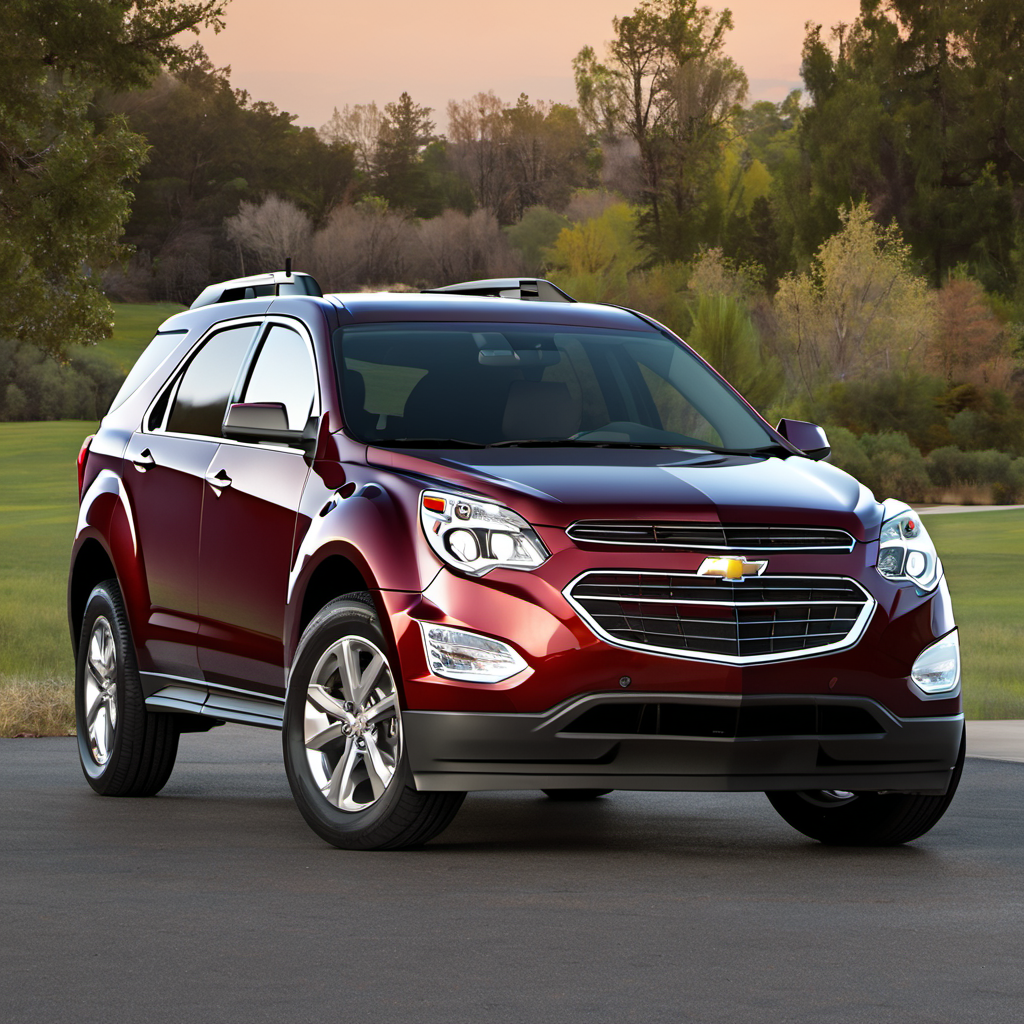
2016 Chevrolet Equinox SUV
Popular pick

2016 Chevrolet

EquinoxSUV

2.4L 4-cylinder · SUV

The 2016 Chevrolet Equinox is a compact crossover SUV that sits squarely in the middle of the market — practical, comfortable, and easy to live with day-to-day. Powered by a 2.4L four-cylinder mated to a 6-speed automatic, the FWD base configuration delivers competitive highway fuel economy for its class. It seats five with a usable cargo area and a comfortable ride that suits commuters and small families alike. By 2016, the Equinox was in the final stretch of its second generation, which ran from 2010 through 2017. GM had ironed out many early gremlins, but a handful of known issues — particularly around the timing chain and oil consumption — remain concerns worth understanding before buying or budgeting maintenance. The 2.4L four-cylinder is the more reliable engine choice compared to the 2.4L's sibling, the 3.6L V6, though neither is problem-free. In Lake Geneva and the broader upper Midwest, the Equinox is a common sight. Its ride height and available AWD make it a reasonable winter vehicle, though the FWD model requires good all-season or dedicated winter tires to handle Wisconsin's worst months confidently. Rust from road salt is an ongoing concern on second-gen Equinoxes, so undercarriage inspection is a must when buying used.

Reliability
3/5
Verified data
Specs shown for Equinox FWD — the most common configuration. Other trims may vary in engine, drivetrain, or fuel economy. Sign in to see your vehicle's exact specs.
Engine
[object Object]
Drivetrain
Front-wheel drive (FWD)
Fuel
Gasoline
MPG
22 city / 32 highway / 26 combined
Seats
5
Doors
4
Body
SUV
MSRP
$23,600

Overview

AI-curated

The 2016 Chevrolet Equinox is a compact crossover SUV that sits squarely in the middle of the market — practical, comfortable, and easy to live with day-to-day. Powered by a 2.4L four-cylinder mated to a 6-speed automatic, the FWD base configuration delivers competitive highway fuel economy for its class. It seats five with a usable cargo area and a comfortable ride that suits commuters and small families alike. By 2016, the Equinox was in the final stretch of its second generation, which ran from 2010 through 2017. GM had ironed out many early gremlins, but a handful of known issues — particularly around the timing chain and oil consumption — remain concerns worth understanding before buying or budgeting maintenance. The 2.4L four-cylinder is the more reliable engine choice compared to the 2.4L's sibling, the 3.6L V6, though neither is problem-free. In Lake Geneva and the broader upper Midwest, the Equinox is a common sight. Its ride height and available AWD make it a reasonable winter vehicle, though the FWD model requires good all-season or dedicated winter tires to handle Wisconsin's worst months confidently. Rust from road salt is an ongoing concern on second-gen Equinoxes, so undercarriage inspection is a must when buying used.

Known for
  • Comfortable, car-like ride quality
  • Competitive highway fuel economy for the class
  • Practical cargo space with 60/40 split-folding rear seats
  • Timing chain and oil consumption issues on the 2.4L engine
  • Widespread ownership in the Midwest — parts and independent shop experience are plentiful
Best for
  • Daily commuters wanting a practical crossover
  • Small families needing cargo flexibility
  • Buyers who prioritize fuel economy over towing or performance
  • Drivers comfortable with FWD and quality winter tires in Wisconsin winters
Watch for
  • Engine oil consumption — check oil level every fill-up, not just at oil changes
  • Timing chain stretch and VVT solenoid failures on the 2.4L
  • Undercarriage and frame rust from road salt exposure
  • Power steering issues (electric power steering failures reported)
  • Intake manifold carbon buildup reducing performance over time

Common issues by mileage

6 known

Timing Chain Stretch / VVT Solenoid Failure

high
Typically appears
60–120k mi
Estimated repair
$800 – $2,200

Excessive Engine Oil Consumption

high
Typically appears
40–100k mi
Estimated repair
$100 – $3,500

Variable Valve Timing (VVT) Solenoid Circuit Faults

medium
Typically appears
60–110k mi
Estimated repair
$150 – $500

Oxygen Sensor / O2 Sensor Heater Circuit Failure

medium
Typically appears
80–130k mi
Estimated repair
$150 – $400

Electric Power Steering Failure or Reduced Assist

medium
Typically appears
60–100k mi
Estimated repair
$400 – $1,200

MyLink Infotainment / CAN Bus Communication Errors

low
Typically appears
50–120k mi
Estimated repair
$100 – $600

Maintenance schedule

  1. 1
    Every fuel fill-up Check engine oil level

    The 2.4L is known for oil consumption. Letting it run low accelerates timing chain and bearing wear — catch it early every time you get gas.

  2. 2
    Every 5,000–7,500 miles (do not stretch to the 10k OLM recommendation on high-mileage examples) Engine oil and filter change

    Fresh oil keeps VVT solenoids clean and reduces sludge buildup, the root cause of many timing chain issues on this engine.

  3. 3
    At 80k mi and every 30k mi thereafter Timing chain system inspection

    Stretched chains and worn tensioners are a documented failure mode. Early diagnosis avoids a far more expensive engine repair.

  4. 4
    Every 45,000 miles Transmission fluid change

    GM specifies 'lifetime' fluid, but upper Midwest driving conditions (cold starts, stop-and-go) degrade fluid faster. Fresh fluid protects the 6-speed at independent shop cost.

  5. 5
    Every 5 years or 100,000 miles Coolant system flush

    Dex-Cool degrades over time and can cause water pump and thermostat failures. Keep it fresh.

  6. 6
    Every spring (after Wisconsin winter) Brake inspection and undercarriage rust check

    Road salt aggressively attacks brake lines, caliper slides, and suspension components on this platform. Annual post-winter inspection catches problems before they become safety issues.

  7. 7
    Every 20,000–25,000 miles Cabin and engine air filter replacement

    Dirty air filters reduce fuel economy and strain the MAF sensor. Cabin filter affects defrost effectiveness — critical in Wisconsin winters.

  8. 8
    Every 6,000–7,500 miles Tire rotation and alignment check

    FWD platforms wear front tires faster. Rotation extends tire life and even wear; alignment check catches suspension wear from pothole-heavy Wisconsin roads.

Always defer to the manufacturer's service manual for warranty-mandated intervals.

Cost of ownership

Annual maintenance
$600 – $1,400
Fuel
At 26 MPG combined and roughly 15,000 miles/year, expect 577 gallons annually. At $3.20–$3.60/gallon (upper Midwest average), budget $1,850–$2,075/year in fuel.
Insurance
Typically $1,100–$1,500/year in Wisconsin for a driver with a clean record on a used 2016 Equinox, depending on coverage level and location.

The Equinox is a reasonably affordable vehicle to maintain in routine years — oil changes, tires, brakes, and filters are the usual spend. The risk is a timing chain or oil consumption repair landing in the $1,500–$3,500 range, which can hit without warning on higher-mileage examples. Budget a modest repair reserve. Parts are widely available and this engine is familiar to independent shops throughout the region, so you won't be forced to a dealer for most repairs.
Seasonal care

Lake Geneva, WI
Winter
  • Switch to dedicated winter tires — FWD on all-seasons is marginal on Wisconsin's ice and packed snow. Winter tires make a real safety difference.
  • Test the battery before November. Cold-cranking amps drop sharply below 0°F, and this engine's oil consumption means you want a strong start every time.
  • Use the correct low-viscosity oil (0W-20 or 5W-30 per spec) — heavier oil thickens in sub-zero temps and starves VVT solenoids on cold starts.
  • Keep the washer fluid reservoir full with a -20°F or lower rated fluid. The 2.4L's hood line creates significant windshield spray from the front wheels.
  • Rinse the undercarriage regularly at a touchless car wash — salt accumulation accelerates rust on brake lines and suspension components.
  • If remote start is equipped, use it to warm the cabin and reduce cold-start engine stress. If not, a brief 30-second idle before driving is sufficient — do not idle for 10+ minutes.
Summer
  • Check tire pressure monthly — tires gain roughly 1 PSI per 10°F increase and can run overinflated in summer heat, affecting handling.
  • Inspect the A/C system before summer heat peaks. Refrigerant leaks are common on aging systems; a weak evaporator smell may indicate microbial buildup in the evaporator.
  • Check coolant concentration — a 50/50 mix protects to -34°F in winter but also raises the boiling point, preventing heat-soak overheating in stop-and-go traffic.
  • Clear any debris from the cabin air intake (base of windshield) to maintain proper A/C and defrost airflow.

Comparable vehicles

If you're shopping for one

Red flags
  • Any history of oil consumption complaints from the seller, or evidence of frequent oil top-offs between changes.
  • Check engine light on or recently cleared — especially concerning on this engine given the VVT and O2 sensor failure patterns.
  • Rust perforation on the undercarriage, particularly around the rear wheel wells or brake line routing.
  • Slipping, delayed engagement, or harsh shifts from the 6-speed automatic — transmission rebuilds run $1,800–$3,200.
  • No maintenance records — oil change discipline is not optional on this engine; walk away from undocumented examples.
  • Timing chain rattle or ticking that does not clear within 60 seconds of start — expect a $1,500+ repair immediately.
What to inspect
  • Pull the oil dipstick — if it's black and sludgy, this engine has been neglected and timing chain damage is likely already present.
  • Check the oil level before the test drive, not after. Low oil on a cold engine is a red flag on this specific model.
  • Scan for active or pending DTCs, especially P0012, P0015, P0026–P0029 — these directly indicate VVT/timing chain system problems.
  • Listen for a rattling or ticking noise on cold start that fades after 30–60 seconds — classic symptom of a worn timing chain tensioner.
  • Inspect the undercarriage and wheel wells closely for rust, especially brake lines, rear subframe, and control arm mounting points.
  • Test the electric power steering at low speed in a parking lot — any jerky, heavy, or intermittent assist is a warning sign.
  • Verify the MyLink screen responds normally and Bluetooth pairs — infotainment module replacements are $300–$600 at independent shops.
AI profile generated 20 days ago · claude-sonnet-4-6 · v2.