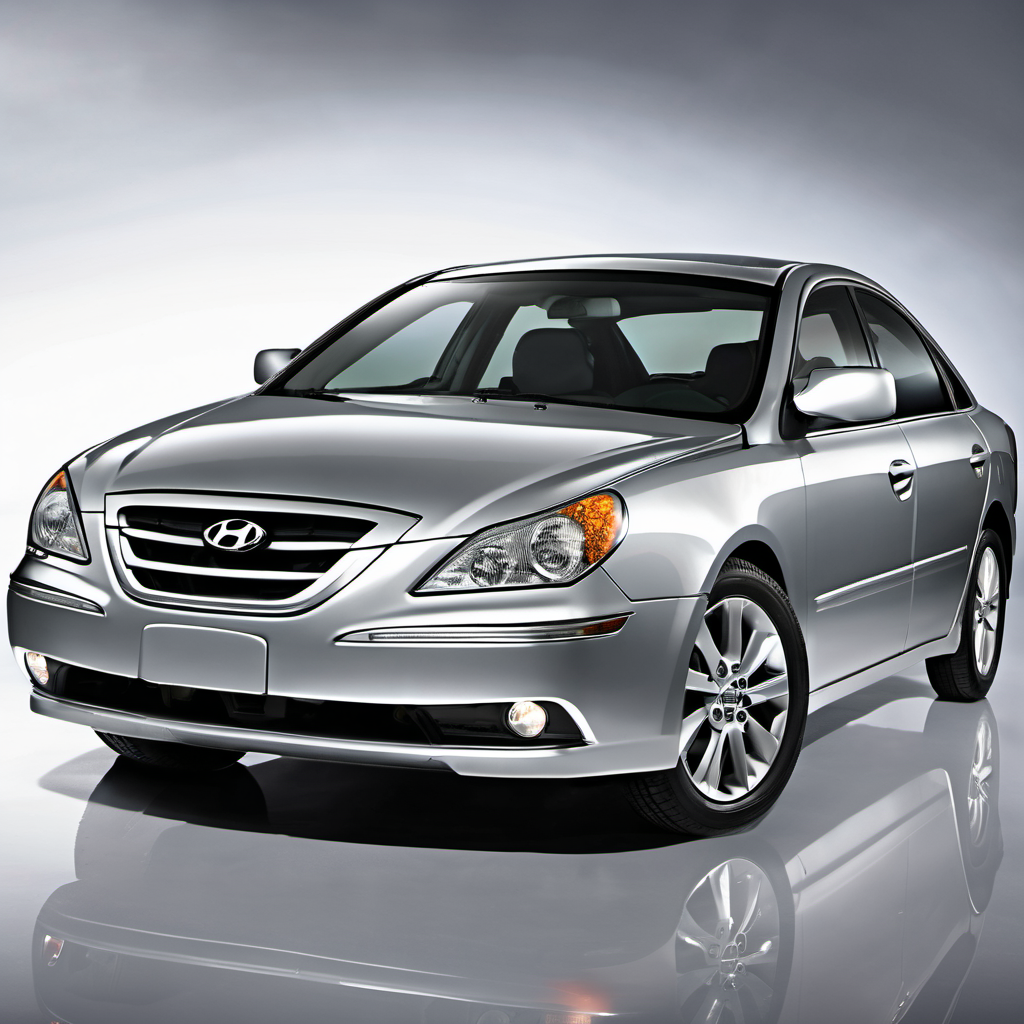
2010 Hyundai Sonata Sedan

2010 Hyundai

SonataSedan

Sedan

The 2010 Hyundai Sonata is a front-wheel-drive midsize sedan from the fifth generation (NF) platform, offered with either a 2.0L turbocharged four or the more common naturally aspirated 2.4L four-cylinder. By 2010 Hyundai had shed its budget-car reputation: the Sonata offered competitive feature content, a solid warranty, and a smooth, refined cabin at a price well below the Japanese competition. It's a practical family hauler that's easy to live with day-to-day. Fuel economy is good for the era — 22 city / 32 highway on the 2.4L — and the suspension is tuned for comfort on rough Midwest roads. Interior space is generous, trunk room is class-competitive, and the ride is smooth enough for long highway stints. It's not sporty, but it was never meant to be. By 2025 these cars are well into high-mileage territory. The main concerns are oil consumption on the 2.4L Theta II engine (a documented issue in this generation), transmission solenoid wear, and the usual rust vulnerabilities that come with a decade-plus of Wisconsin winters. A clean, well-maintained example with documented oil changes is still a reliable daily driver.

Reliability
3/5
Verified data
Specs shown for Sonata — the most common configuration. Other trims may vary in engine, drivetrain, or fuel economy. Sign in to see your vehicle's exact specs.
Engine
[object Object]
Drivetrain
FWD
Fuel
Gasoline
MPG
22 city / 32 hwy / 25 combined
Seats
Doors
Body
Large Cars

Overview

AI-curated

The 2010 Hyundai Sonata is a front-wheel-drive midsize sedan from the fifth generation (NF) platform, offered with either a 2.0L turbocharged four or the more common naturally aspirated 2.4L four-cylinder. By 2010 Hyundai had shed its budget-car reputation: the Sonata offered competitive feature content, a solid warranty, and a smooth, refined cabin at a price well below the Japanese competition. It's a practical family hauler that's easy to live with day-to-day. Fuel economy is good for the era — 22 city / 32 highway on the 2.4L — and the suspension is tuned for comfort on rough Midwest roads. Interior space is generous, trunk room is class-competitive, and the ride is smooth enough for long highway stints. It's not sporty, but it was never meant to be. By 2025 these cars are well into high-mileage territory. The main concerns are oil consumption on the 2.4L Theta II engine (a documented issue in this generation), transmission solenoid wear, and the usual rust vulnerabilities that come with a decade-plus of Wisconsin winters. A clean, well-maintained example with documented oil changes is still a reliable daily driver.

Known for
  • Competitive feature content for the price
  • Smooth, comfortable highway ride
  • Generous interior and trunk space
  • Long 5-yr/60k bumper-to-bumper warranty when new
Best for
  • Daily commuters wanting affordable, reliable transportation
  • Families needing a roomy sedan on a budget
  • High-mileage highway drivers
Watch for
  • Theta II 2.4L engine oil consumption — can be severe if oil changes were neglected
  • Rust on subframe, brake lines, and rocker panels from road salt
  • Automatic transmission shudder or hesitation on higher-mileage examples
  • CVVT (variable valve timing) sludge if oil was changed infrequently

Common issues by mileage

6 known

Theta II 2.4L Engine Oil Consumption / Rod Bearing Failure

high
Typically appears
80–150k mi
Estimated repair
$2,500 – $7,500

CVVT (Variable Valve Timing) Solenoid / Actuator Sludge

high
Typically appears
60–120k mi
Estimated repair
$200 – $900

Automatic Transmission Shudder / Delayed Engagement

medium
Typically appears
90–160k mi
Estimated repair
$150 – $2,200

Brake Line and Subframe Rust (Salt Corrosion)

high
Typically appears
60k+ mi / 8+ years in upper Midwest
Estimated repair
$400 – $1,800

Oxygen Sensor Heater Circuit Failure

medium
Typically appears
80–130k mi
Estimated repair
$150 – $400

Power Steering Noise / Rack Wear

medium
Typically appears
100–150k mi
Estimated repair
$600 – $1,400

Maintenance schedule

  1. 1
    Every 5,000 miles — do NOT stretch to 7,500+ on the Theta II Engine oil and filter change — use full synthetic 5W-20 or 5W-30 per cap

    The 2.4L Theta II is prone to oil consumption and sludge buildup. Frequent oil changes are the single most important thing you can do to protect this engine. Check the dipstick every 1,000 miles until you know how much this engine consumes.

  2. 2
    Every 45,000–60,000 miles Transmission fluid change (automatic)

    Hyundai's 'lifetime' fluid claim does not hold up in real-world high-mileage use. Fresh fluid prevents shudder and solenoid wear.

  3. 3
    Every 60,000 miles Spark plug replacement (iridium)

    Worn plugs stress the ignition coils and can cause misfires; coils are not cheap on this platform.

  4. 4
    Every 60,000 miles or 5 years Coolant flush

    Old coolant becomes acidic and attacks the aluminum block and water pump on the Theta II.

  5. 5
    Every 2–3 years Brake fluid flush

    Moisture-laden brake fluid lowers boiling point and accelerates corrosion in calipers — especially important in a salt-road environment.

  6. 6
    Every spring after winter season Undercarriage wash and inspection for rust

    Wisconsin road salt attacks the brake lines, subframe mounting points, and rocker panels. Catching surface rust early is far cheaper than replacing a brake line or subframe.

  7. 7
    Every 30,000 miles or as needed Air filter replacement

    A clogged air filter reduces fuel economy and puts extra strain on the MAF sensor.

  8. 8
    Every fall, before first hard freeze Battery load test

    A battery that tests marginal in October will fail to start at -10°F in January. OEM batteries on 2010 vehicles are well past service life.

Always defer to the manufacturer's service manual for warranty-mandated intervals.

Cost of ownership

Annual maintenance
$500 – $1,200
Fuel
At 25 MPG combined and 15,000 miles/year, expect roughly $1,500–$1,900/year depending on gas prices. Mostly city driving will push toward the lower end of the fuel economy range.
Insurance
Typically $900–$1,400/year in Wisconsin for a driver with a clean record, depending on coverage level and zip code. Midsize sedans carry moderate insurance rates.

A well-maintained 2010 Sonata is one of the more affordable midsize sedans to own. Routine maintenance is inexpensive, parts are widely available and reasonably priced, and independent shops know this platform well. The big financial wildcard is the Theta II engine — if oil changes were skipped or the car consumed oil unnoticed, a rod bearing job or engine replacement ($2,500–$7,500) can quickly exceed the car's market value. Budget accordingly when buying used.
Seasonal care

Lake Geneva, WI
Winter
  • Install a battery maintainer or trickle charger if the car sits more than a few days — the OEM battery on a 2010 is long overdue for replacement and cold temps reveal weak cells fast.
  • Switch to a full synthetic 5W-20 or 5W-30 if not already; it flows far better on sub-zero cold starts and reduces wear during the critical first seconds of startup.
  • Check and top off engine oil more frequently in winter — cold starts are hardest on the Theta II's oil film.
  • Use a winter-rated washer fluid rated to at least -20°F; the stock reservoir and lines freeze easily in Lake Geneva winters.
  • Inspect rubber brake lines and steel brake line runs for salt corrosion before winter sets in — a rusted line can fail without warning.
  • Consider winter/snow tires. The FWD Sonata handles adequately in snow, but all-season tires on a 15-year-old car may be hardened and offer poor grip below 45°F.
Summer
  • Check tire pressure monthly — pressures drop roughly 1 PSI per 10°F change and summer heat can mask an underinflated tire until a blowout occurs.
  • Inspect the A/C system for refrigerant loss and proper cooling; the condenser sits low and is susceptible to road debris damage.
  • Check coolant level and condition — overheating on the Theta II accelerates head gasket and water pump wear.
  • Inspect the serpentine belt for cracking; heat cycles age rubber belts and a 2010 belt is well into replacement territory.
  • Clear cabin air filter if A/C airflow feels reduced — a clogged filter is a common and cheap fix.

Comparable vehicles

If you're shopping for one

Red flags
  • No oil change records or obvious service history gaps
  • Oil level low or very dark black on dipstick at time of inspection
  • Engine knock or tick, especially at cold start
  • Check engine light on or recently cleared without repair
  • Visible rust perforation on rocker panels, subframe, or brake lines — common on Wisconsin-driven examples
  • Transmission shudder or slipping during test drive — repair costs can exceed the car's value
What to inspect
  • Pull the oil dipstick — check for a dark, low, or milky reading. Low oil on a used 2010 Sonata is a serious warning sign for Theta II engine wear.
  • Ask for all oil change records. Look for changes every 5,000 miles or less with the right viscosity. Gaps in service history are a red flag on this engine.
  • Get a compression test and oil consumption test before purchasing — a trusted shop can run these.
  • Inspect the undercarriage carefully: look at brake lines (steel runs along the frame), subframe mounting points, and rocker panels for rust perforation.
  • Test drive: listen for engine knock or tick at startup, and feel for any transmission shudder or hesitation during 2nd–3rd gear shifts.
  • Check CVVT/VVT operation — if P0012, P0015, P0026, or P0027 codes are present or recently cleared, budget for a solenoid or oil gallery cleaning.
AI profile generated 4 days ago · claude-sonnet-4-6 · v2.