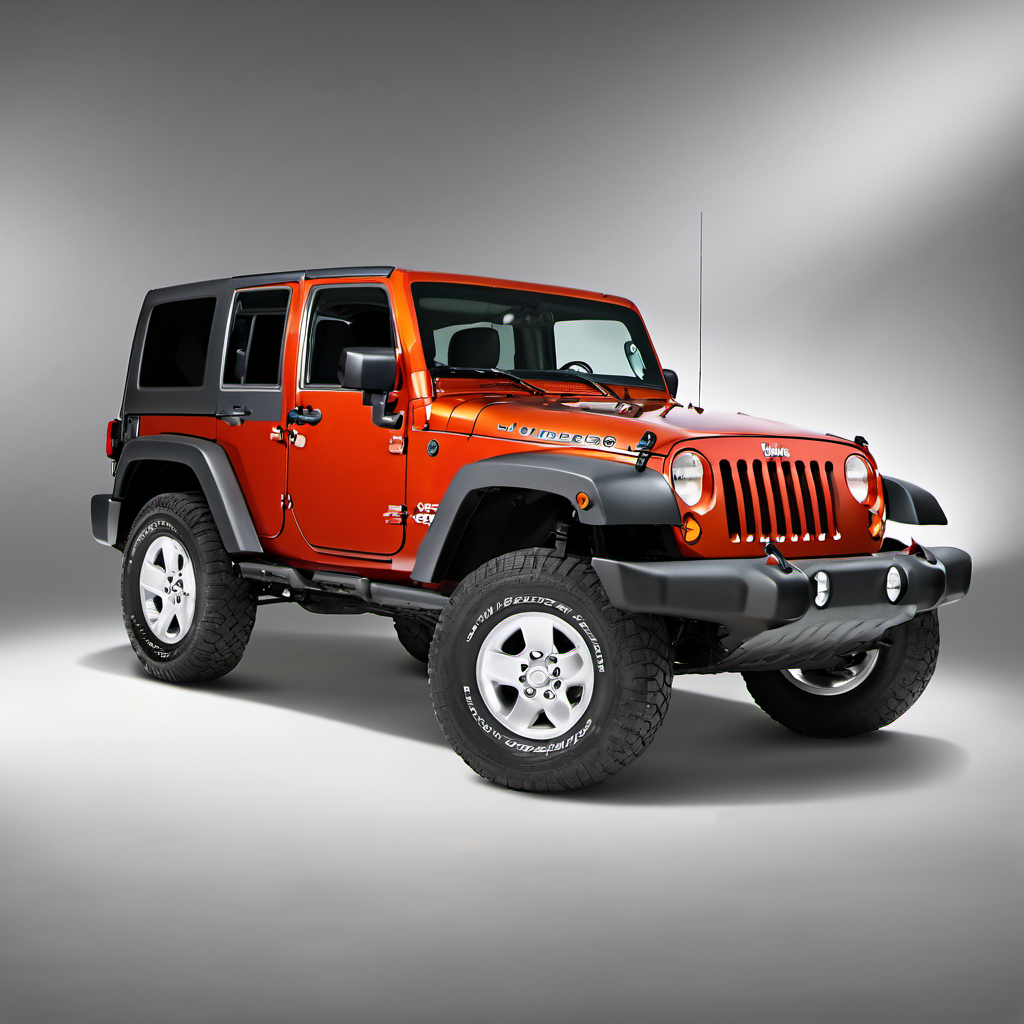
2007 Jeep Wrangler SUV

2007 Jeep

WranglerSUV

SUV

The 2007 Jeep Wrangler (JK generation) marked a major redesign from the previous TJ — it grew wider, added a proper four-door Unlimited body option, and gained a modern coil-link suspension front and rear. It kept the Wrangler's core identity: serious off-road hardware (solid front axle, available 4WD low range, skid plates) wrapped in a go-anywhere attitude. The 3.8L V6 is the only engine offered this year, and while it's not powerful by modern standards, it moves the truck reliably when properly maintained. The first-year JK had some growing pains — the 3.8L V6 carried over from the minivan world and has a well-documented history of oil consumption and cooling issues. The airbag system on 2007 models was also flagged in early NHTSA reviews, so a used example deserves a close look at service history. For a Lake Geneva-area owner, the Wrangler's ground clearance and 4WD system are genuinely useful in Wisconsin winters. The open body style and soft tops, however, mean drafty cabins and significant heat loss in sub-zero temps — plan for longer warm-up times and address any seal or weatherstripping wear promptly.

Reliability
3/5
Verified data
Specs shown for Wrangler 2WD — the most common configuration. Other trims may vary in engine, drivetrain, or fuel economy. Sign in to see your vehicle's exact specs.
Engine
[object Object]
Drivetrain
RWD
Fuel
Gasoline
MPG
15 city / 20 hwy / 17 combined
Seats
Doors
Body
Sport Utility Vehicle - 2WD

Overview

AI-curated

The 2007 Jeep Wrangler (JK generation) marked a major redesign from the previous TJ — it grew wider, added a proper four-door Unlimited body option, and gained a modern coil-link suspension front and rear. It kept the Wrangler's core identity: serious off-road hardware (solid front axle, available 4WD low range, skid plates) wrapped in a go-anywhere attitude. The 3.8L V6 is the only engine offered this year, and while it's not powerful by modern standards, it moves the truck reliably when properly maintained. The first-year JK had some growing pains — the 3.8L V6 carried over from the minivan world and has a well-documented history of oil consumption and cooling issues. The airbag system on 2007 models was also flagged in early NHTSA reviews, so a used example deserves a close look at service history. For a Lake Geneva-area owner, the Wrangler's ground clearance and 4WD system are genuinely useful in Wisconsin winters. The open body style and soft tops, however, mean drafty cabins and significant heat loss in sub-zero temps — plan for longer warm-up times and address any seal or weatherstripping wear promptly.

Known for
  • Legendary off-road capability with solid front axle and two-speed transfer case
  • Highly customizable — massive aftermarket ecosystem
  • First-year JK redesign: bigger interior, improved on-road manners vs. TJ
  • Poor fuel economy for its class
  • Iconic open-air driving experience with removable doors and roof
Best for
  • Off-road enthusiasts and trail drivers
  • Owners who want a highly modifiable platform
  • Wisconsin winter commuters who need real 4WD capability
  • Lifestyle buyers who value the Wrangler brand identity
  • Light towing and overlanding use
Watch for
  • 3.8L V6 oil consumption — can burn oil between changes with no external leaks
  • Cooling system issues leading to overheating if neglected
  • Soft top and door seals deteriorate quickly, especially with Wisconsin salt and UV
  • First-year JK (2007) had more teething issues than later JKs — check full service history
  • Death Wobble — high-speed front-end shimmy linked to worn steering/suspension components

Common issues by mileage

6 known

3.8L V6 Oil Consumption

high
Typically appears
40–120k mi
Estimated repair
$100 – $600

Cooling System Failure / Overheating (thermostat, water pump, hoses)

high
Typically appears
60–130k mi
Estimated repair
$250 – $950

Death Wobble — Front Steering Shimmy at Highway Speed

high
Typically appears
50–150k mi
Estimated repair
$200 – $1,200

Oxygen Sensor / Heater Circuit Fault

medium
Typically appears
80–150k mi
Estimated repair
$150 – $400

Soft Top / Door Seal Deterioration and Leaks

high
Typically appears
30–100k mi
Estimated repair
$80 – $800

Transfer Case / Differential Fluid Neglect Leading to Wear

medium
Typically appears
60–150k mi
Estimated repair
$300 – $2,500

Maintenance schedule

  1. 1
    Every 3,500–5,000 miles Engine oil and filter change

    The 3.8L V6 is known for oil consumption. Shorter intervals and checking the level every fill-up are the single most effective way to prevent premature engine wear on this engine.

  2. 2
    Every fuel fill-up Check and top engine oil level

    This engine can consume a quart every 1,000–2,000 miles without showing an external leak. Running low on oil accelerates wear rapidly.

  3. 3
    Every 2 years / 30,000 miles Coolant flush and cooling system inspection

    Cooling system neglect is a leading cause of 3.8L engine failure. Replace the thermostat and inspect hoses at each flush.

  4. 4
    Every 30,000 miles or after any water crossing Transfer case and front/rear differential fluid change

    Off-road use and water crossings contaminate gear oil quickly. Neglected differentials are expensive to rebuild.

  5. 5
    Every 15,000 miles Inspect and lubricate front axle U-joints and steering components

    Worn U-joints and track bar bushings are the primary cause of Death Wobble. Early detection is much cheaper than a full steering rebuild.

  6. 6
    Every spring and fall Inspect soft top, door seals, and weatherstripping

    Wisconsin salt and UV degrade rubber seals quickly. Cracked seals cause interior water intrusion, rust on floor pans, and a miserable winter cabin.

  7. 7
    Every 30,000 miles Spark plugs replacement

    The 3.8L responds well to fresh plugs for cold-start reliability — important for Wisconsin winters. Worn plugs worsen the engine's already modest fuel economy.

  8. 8
    Every 2 years Brake fluid flush

    Brake fluid absorbs moisture over time, lowering its boiling point and accelerating caliper corrosion — a particular concern in Wisconsin's salted roads.

Always defer to the manufacturer's service manual for warranty-mandated intervals.

Cost of ownership

Annual maintenance
$700 – $1,800
Fuel
At ~17 MPG combined and Wisconsin average gas prices, expect $2,200–$3,000/year for 12,000–15,000 miles of driving. The 3.8L requires premium-grade oil but runs on regular unleaded.
Insurance
Typically $1,000–$1,600/year for a 2007 Wrangler in Wisconsin for a standard adult driver with clean record. Rates vary significantly with usage — off-road-declared policies cost more.

The Wrangler's annual maintenance bill is moderate when nothing major breaks, but the 3.8L's oil consumption, cooling system fragility, and suspension wear items mean budget surprises are common on high-mileage or trail-driven examples. Parts availability is excellent and independent shops are very familiar with this platform, which keeps labor costs reasonable. Fuel costs are the biggest ongoing expense given the poor MPG for a daily driver.
Seasonal care

Lake Geneva, WI
Winter
  • Switch to a full-synthetic 5W-30 oil before temps drop below 20°F — the 3.8L benefits from faster cold-start lubrication in sub-zero Lake Geneva winters.
  • Test and replace the battery if it's more than 3 years old. Wranglers sit with accessories drawing power and cold temps cut battery capacity significantly.
  • Inspect all soft top zippers, seals, and door surrounds in October. A leaking soft top in a Wisconsin winter soaks the interior and causes floor pan rust.
  • Use a winter-grade washer fluid rated to at least -20°F — the open body design means road spray hits the windshield constantly.
  • Check 4WD engagement (4H and 4Lo) before the first snowfall so you know it works. A sticky transfer case shifter in an emergency is a serious problem.
  • Rinse the undercarriage, frame, and axle voids every 2 weeks during salt season. The Wrangler's body-on-frame design has many crevices that trap salt.
Summer
  • Monitor coolant temperature closely during slow off-road trail runs — the 3.8L is prone to heat soak at low speeds with the engine working hard.
  • Check tire pressure monthly; heat causes pressure to rise ~1 PSI per 10°F increase. Wranglers typically run larger tires that are more sensitive to over-inflation on-road.
  • Inspect the A/C system each spring — door removal and soft top use means the cabin heats up fast and puts extra demand on an aging A/C compressor.
  • UV degrades the soft top vinyl and door surrounds quickly in summer sun. Treat with a UV-protectant conditioner to extend life.
  • After any water crossing or lake-area trail use, re-grease front axle U-joints and check diff fluid for a milky color indicating water intrusion.

Comparable vehicles

If you're shopping for one

Red flags
  • Oil consumption of more than 1 qt per 1,000 miles — may indicate worn piston rings requiring engine rebuild.
  • Any evidence of overheating history (warped coolant reservoir cap, stained coolant hose ends, replaced head gaskets in service records).
  • Missing or incomplete service history, especially for oil changes — the 3.8L punishes neglect quickly.
  • Soft top with torn seams, broken zippers, or cracked vinyl windows — replacement tops are $400–$1,200.
  • Aftermarket suspension without documentation of what was installed — unknown lift height and component quality is a safety concern.
  • Check Carfax or equivalent for flood history — Wranglers used near lakes or water crossings can have water damage that's easy to hide.
What to inspect
  • Pull the oil dipstick and check the level and condition — dark, low, or foamy oil is a red flag for consumption or a head gasket issue.
  • Check the coolant reservoir for a brown or oily film, which indicates combustion gases entering the cooling system (head gasket failure).
  • Take it to highway speed and hold 55–65 MPH — any high-frequency steering shimmy (Death Wobble) means steering and front suspension work is needed.
  • Inspect the floor pans and tub interior for rust, water stains, or carpet mold — a sign of leaking soft top or door seals.
  • Check 4WD engagement in all modes (2H, 4H, 4Lo) before purchase. A grinding or non-engaging transfer case is expensive.
  • Look for aftermarket lift kits or oversized tires without matching drivetrain upgrades — lift without axle or steering upgrades accelerates Death Wobble and U-joint wear.
  • Inspect the frame rails, skid plates, and undercarriage for off-road damage: bent skid plates, cracked welds, or damaged axle housing.
AI profile generated 4 days ago · claude-sonnet-4-6 · v2.