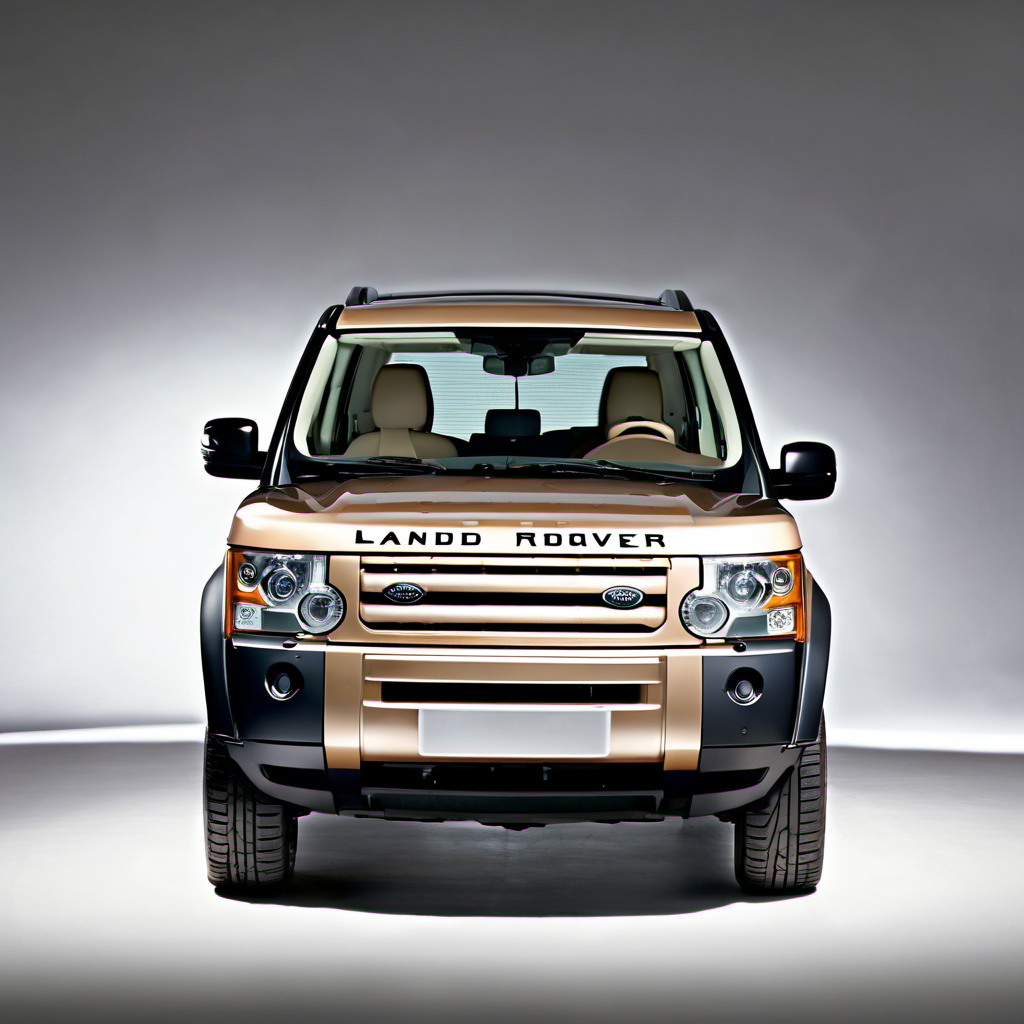
2007 Land Rover LR3 SUV

2007 Land Rover

LR3SUV

SUV

The 2007 Land Rover LR3 is a full-size, body-on-frame-derived SUV built on Land Rover's 'Integrated Body Frame' platform — a ladder-frame chassis wrapped in a monocoque-style body. It seats seven and offers genuine off-road capability through Land Rover's Terrain Response system, locking center differential, and available air suspension. The V8 version pairs a 4.4L Jaguar-sourced AJ-V8 engine with a ZF 6-speed automatic for strong highway performance, though fuel economy suffers accordingly. In the used market the LR3 occupies an interesting niche: it's a legitimate trail rig that also passes as a luxury hauler, but it carries a well-earned reputation for expensive electrical and air suspension gremlins as it ages. Parts and dealer labor are costly, and independent shops with Land Rover/Jaguar experience are the practical path to keeping one on the road. For buyers in the Lake Geneva area, the LR3's 4WD and high ground clearance are genuine advantages in winter. The flip side is that its complex electronics and air suspension components are particularly vulnerable to road salt and moisture intrusion — ongoing undercarriage attention is not optional.

Reliability
2/5
Verified data
Specs shown for LR3 — the most common configuration. Other trims may vary in engine, drivetrain, or fuel economy. Sign in to see your vehicle's exact specs.
Engine
[object Object]
Drivetrain
4WD
Fuel
Gasoline
MPG
12 city / 18 hwy / 14 combined
Seats
Doors
Body
Sport Utility Vehicle - 4WD

Overview

AI-curated

The 2007 Land Rover LR3 is a full-size, body-on-frame-derived SUV built on Land Rover's 'Integrated Body Frame' platform — a ladder-frame chassis wrapped in a monocoque-style body. It seats seven and offers genuine off-road capability through Land Rover's Terrain Response system, locking center differential, and available air suspension. The V8 version pairs a 4.4L Jaguar-sourced AJ-V8 engine with a ZF 6-speed automatic for strong highway performance, though fuel economy suffers accordingly. In the used market the LR3 occupies an interesting niche: it's a legitimate trail rig that also passes as a luxury hauler, but it carries a well-earned reputation for expensive electrical and air suspension gremlins as it ages. Parts and dealer labor are costly, and independent shops with Land Rover/Jaguar experience are the practical path to keeping one on the road. For buyers in the Lake Geneva area, the LR3's 4WD and high ground clearance are genuine advantages in winter. The flip side is that its complex electronics and air suspension components are particularly vulnerable to road salt and moisture intrusion — ongoing undercarriage attention is not optional.

Known for
  • Class-leading off-road capability for a luxury SUV
  • Terrain Response system with selectable surface modes
  • Seven-passenger seating with a fold-flat third row
  • Jaguar-sourced V8 with smooth highway manners
  • High long-term ownership cost driven by complex electronics
Best for
  • Buyers who want serious off-road ability with luxury comfort
  • Families needing 7-seat capacity and all-weather traction
  • Owners with access to a trusted Land Rover independent specialist
  • Rural or semi-rural Wisconsin drivers facing rough or snowy terrain
Watch for
  • Air suspension compressor and bag failures — expensive and common
  • Jaguar AJ-V8 oil consumption and timing chain wear
  • Complex multi-module electrical architecture with high repair costs
  • Salt corrosion on undercarriage air lines, wiring harnesses, and brake hardware
  • High parts cost — many components are Land Rover or Jaguar exclusive

Common issues by mileage

6 known

Oxygen Sensor / Heater Circuit Faults

medium
Typically appears
60–100k mi
Estimated repair
$200 – $600

Timing Chain Stretch and Oil Consumption (AJ-V8)

high
Typically appears
90–150k mi
Estimated repair
$1,500 – $4,000

Rear Differential and Transfer Case Seal Leaks

medium
Typically appears
80–140k mi
Estimated repair
$300 – $900

Maintenance schedule

  1. 1
    Every 5,000 miles or 6 months (do not stretch to Land Rover's 'extended' interval on a used example) Engine oil and filter change — use only approved 5W-30 fully synthetic

    The AJ-V8 is sensitive to oil quality and change intervals. Sludge buildup directly causes VVT solenoid blockage and timing chain wear — the most expensive failure on this engine. Shorter intervals are cheap insurance.

  2. 2
    Every 30,000 miles or when purchasing used Transfer case and differential fluid change

    These fluids are often neglected. Contaminated or low fluid leads to seal failures and costly differential rebuilds, especially with Wisconsin road-salt exposure accelerating corrosion on drain plugs and seals.

  3. 3
    Every 15,000 miles and each spring/fall Air suspension system inspection — check compressor operation, lines, and bags

    Air bags and plastic air lines become brittle with age and salt exposure. Catching a cracked line or failing bag early prevents compressor burnout, which multiplies the repair cost significantly.

  4. 4
    Every 4 years or 50,000 miles Coolant system flush and thermostat inspection

    The V8 runs warm and thermostat failures are not uncommon. Fresh coolant maintains proper freeze protection for Wisconsin winters and prevents electrolytic corrosion in the aluminum-heavy cooling system.

  5. 5
    Every 60,000 miles Spark plug replacement (iridium)

    Worn plugs on this V8 cause rough idle and increased load on the ignition coils. Access is moderate difficulty — do all eight at once to avoid repeat labor costs.

  6. 6
    Every 2 years Brake fluid flush

    The LR3's ABS and traction control system are sensitive to moisture-laden fluid. Fresh fluid also maintains proper freeze-point margin for cold Wisconsin starts.

  7. 7
    Monthly during winter (November–March), full inspection each spring Undercarriage wash and inspection

    Road salt aggressively attacks the air suspension lines, brake lines, wiring harness connectors, and exhaust hangers on this vehicle. Catching corrosion early is far cheaper than replacing failed components.

  8. 8
    Every fall before temperatures drop below freezing Battery load test

    The LR3's many always-on modules create significant parasitic draw. A marginal battery that works fine in summer will leave you stranded at -10°F. Batteries over 4 years old should be tested and replaced proactively.

Always defer to the manufacturer's service manual for warranty-mandated intervals.

Cost of ownership

Annual maintenance
$1,800 – $4,500
Fuel
At 14 MPG combined and Wisconsin driving patterns, expect $3,000–$4,200/year in fuel at typical Midwest pump prices. Premium fuel is recommended for this engine.
Insurance
Expect $1,400–$2,000/year for full coverage in the Lake Geneva area, depending on driver profile. The high parts cost and repair complexity push premiums above average for the segment.

The LR3 is a genuinely expensive vehicle to keep. Annual maintenance on a well-maintained example runs $1,800–$2,500; on one that has been neglected or is accumulating age-related failures, $3,500–$4,500 is realistic. Budget separately for major repairs — an air suspension overhaul or timing chain job can run $2,000–$4,000 in a single visit. This is not a vehicle where deferred maintenance saves money; it compounds it.
Seasonal care

Lake Geneva, WI
Winter
  • Test battery load every October — the LR3's electronics draw significant standby current and a weak battery fails quickly in sub-zero temps
  • Switch to a full-synthetic 5W-30 oil if not already used; cold starts are hard on the VVT system and timing chain with thicker oil
  • Flush washer fluid reservoir and fill with -20°F or colder rated fluid — the hood line and angle can cause splash-back freeze on the windshield at highway speed
  • Inspect and treat all undercarriage air suspension lines, wiring connectors, and brake line fittings before first heavy salt application
  • Verify Terrain Response system cycles through all modes before snow season — faults in this system are harder to diagnose in the field during a storm
  • Keep at least a half tank of fuel; the EVAP system and fuel lines are exposed and a full tank reduces condensation and fuel-line freeze risk
Summer
  • Check tire pressure monthly — the LR3's weight means under-inflation causes rapid shoulder wear and heat buildup on hot asphalt
  • Inspect the air suspension compressor for heat-soak issues; the compressor is already working hard and high ambient temps shorten its life
  • Run the A/C on MAX for 5 minutes weekly if not in daily use — the system uses a clutch-driven compressor that can seize with inactivity
  • Inspect coolant level and condition before summer road trips; the V8 generates significant heat and the system should be clean and full
  • Check for any oil weeping around valve covers and the oil pan — heat cycling accelerates gasket degradation on this engine

Comparable vehicles

If you're shopping for one

Red flags
  • Any corner that sits lower than the others at rest — indicates a failed air spring or leaking line, and compressor may already be damaged
  • Codes U0100–U0104 present — CAN bus faults can indicate widespread module or wiring harness issues that are very expensive to trace
  • Oil sludge visible on the filler cap or dipstick — directly predicts imminent VVT and timing chain failure
  • Service history gaps or oil changes beyond 7,500-mile intervals — this engine does not forgive neglect
  • Rust or heavy corrosion on brake lines, air suspension hard lines, or frame rails — Wisconsin salt makes this a genuine concern on any example over 10 years old
  • Seller cannot demonstrate Terrain Response or low-range operation — either the system has faults or the seller is hiding them
What to inspect
  • Cycle the air suspension through all height settings — watch for slow response, sagging corners, or audible compressor strain
  • Check for VVT-related fault codes P0012, P0015, P0022, P0025 at purchase; these indicate oil maintenance neglect and potential timing chain damage
  • Inspect undercarriage air lines and wiring harnesses for salt corrosion, cracking, or patched repairs
  • Verify all Terrain Response modes engage correctly, including low-range transfer case
  • Pull the oil cap and check for sludge; inspect the dipstick for milky or dark oil — signs of cooling system or maintenance neglect
  • Test all electronic systems: sunroof, power tailgate, seat adjusters, navigation — replacements are costly
  • Request full service history — LR3s with documented oil changes every 5,000 miles are dramatically better bets than those with vague histories
AI profile generated 1 mo ago · claude-sonnet-4-6 · v2.