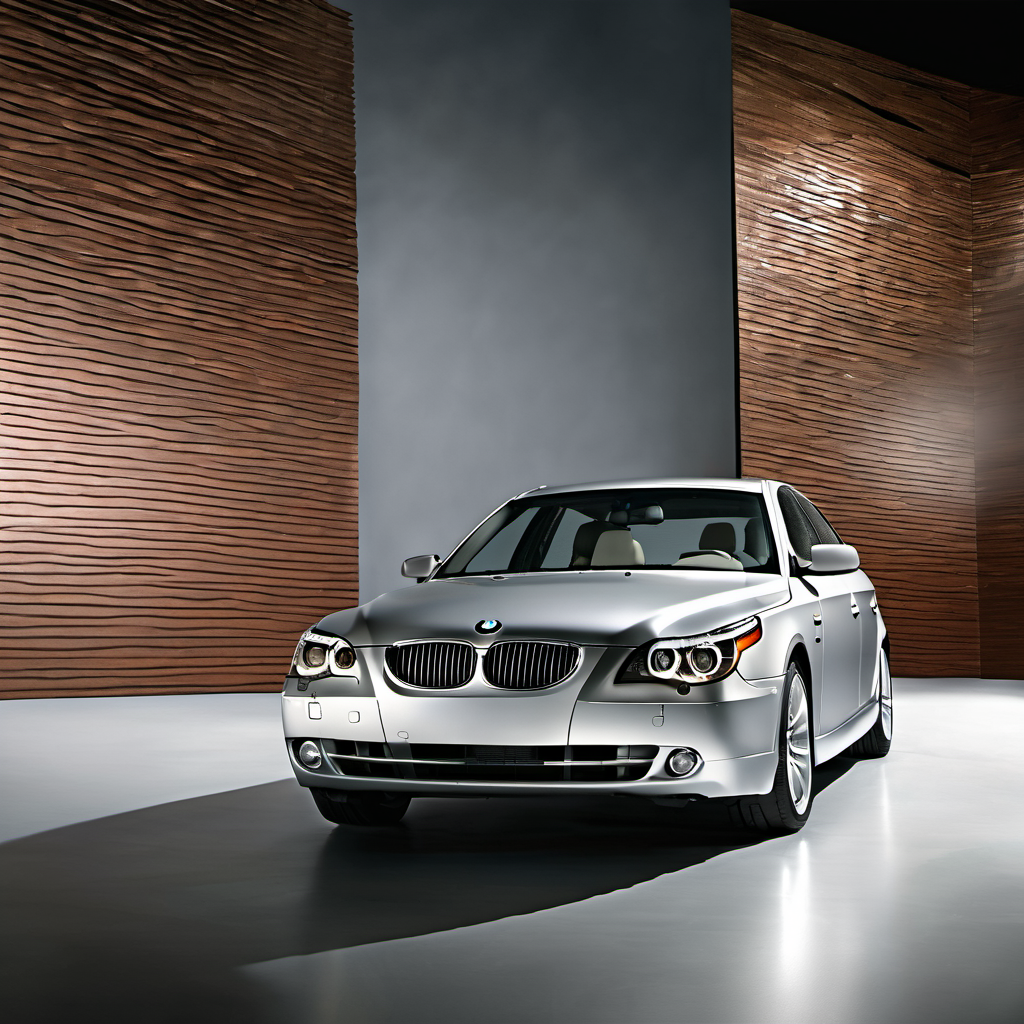
2007 BMW 5 Series Sedan

2007 BMW

5 SeriesSedan

Sedan

The 2007 BMW 5 Series (E60 generation) is a rear-wheel-drive executive sedan built around BMW's inline-six engine. The 530i variant pairs a 3.0L inline-six with a smooth 6-speed automatic, delivering a genuine balance of performance and everyday usability that defined the segment when new. By 2007 BMW had worked through many early E60 teething issues, but this platform carries real long-term ownership costs. Electronics complexity — iDrive, the DSC system, and a dense CAN-bus network — can generate expensive faults as the car ages. The N52 inline-six itself is a sound engine, but it depends on clean oil and a functioning valvetrain oil supply to stay healthy. In the upper Midwest, salt exposure is the E60's worst enemy. Subframe mounting points, brake lines, and the fuel filler neck area are known rust initiators. Budget accordingly and inspect every winter.

Reliability
3/5
Verified data
Specs shown for 525i — the most common configuration. Other trims may vary in engine, drivetrain, or fuel economy. Sign in to see your vehicle's exact specs.
Engine
[object Object]
Drivetrain
RWD
Fuel
Premium gasoline
MPG
18 city / 28 hwy / 21 combined
Seats
Doors
Body
Midsize Cars

Overview

AI-curated

The 2007 BMW 5 Series (E60 generation) is a rear-wheel-drive executive sedan built around BMW's inline-six engine. The 530i variant pairs a 3.0L inline-six with a smooth 6-speed automatic, delivering a genuine balance of performance and everyday usability that defined the segment when new. By 2007 BMW had worked through many early E60 teething issues, but this platform carries real long-term ownership costs. Electronics complexity — iDrive, the DSC system, and a dense CAN-bus network — can generate expensive faults as the car ages. The N52 inline-six itself is a sound engine, but it depends on clean oil and a functioning valvetrain oil supply to stay healthy. In the upper Midwest, salt exposure is the E60's worst enemy. Subframe mounting points, brake lines, and the fuel filler neck area are known rust initiators. Budget accordingly and inspect every winter.

Known for
  • Balanced rear-wheel-drive handling in the executive sedan segment
  • Smooth, refined N52 inline-six with strong mid-range pull
  • Feature-rich cabin with early iDrive infotainment
  • Higher-than-average repair and maintenance costs for the class
Best for
  • Enthusiast drivers who want a sport-oriented daily sedan
  • Buyers comfortable with BMW-specialist or independent European-shop maintenance
  • Highway commuters who can use the 28 MPG highway figure regularly
Watch for
  • Expensive electronics and iDrive repairs as the car ages past 100k miles
  • VANOS variable valve timing failures generating camshaft position fault codes
  • Secondary air pump failures — parts and labor are not cheap
  • Rust on brake lines and subframe mounting points in salt-belt states
  • Cooling system components (water pump, thermostat, expansion tank) that age out in a cluster

Common issues by mileage

6 known

Secondary Air Pump Failure

high
Typically appears
60–100k mi
Estimated repair
$500 – $1,200

Electric Water Pump and Thermostat Failure

high
Typically appears
80–120k mi
Estimated repair
$600 – $1,100

Valve Cover Gasket Oil Leak

high
Typically appears
60–100k mi
Estimated repair
$250 – $550

Oxygen Sensor / Heater Circuit Fault

medium
Typically appears
80–130k mi
Estimated repair
$200 – $500

Maintenance schedule

  1. 1
    Every 7,500 miles or annually — do not stretch to BMW's CBS interval on a used car Engine oil and filter change using BMW-approved 5W-30 full synthetic

    The N52's VANOS system is oil-pressure dependent. Degraded or low oil is the leading cause of VANOS solenoid wear and camshaft timing faults. Shorter intervals are cheap insurance.

  2. 2
    Every 60k miles or at first sign of temperature fluctuation Cooling system inspection — water pump, thermostat, expansion tank cap, and hoses

    The E60's electric water pump and plastic expansion tank are known age-out items. Replacing them as a group before failure prevents a roadside overheat and potential head gasket damage.

  3. 3
    Every 2 years regardless of mileage Brake fluid flush

    BMW specifies this interval and the DSC/ABS system is sensitive to moisture-contaminated fluid. Wisconsin road salt also accelerates corrosion on brake hard lines — inspect at every flush.

  4. 4
    Every 60k miles Spark plug replacement

    N52 uses a coil-on-plug setup. Worn plugs increase misfire risk and can cause rough idle codes that get misdiagnosed as VANOS or fuel trim faults.

  5. 5
    Annually or any time a warning light is present DSC / ABS module scan for stored faults

    The E60 stores non-illuminated chassis codes that can mask developing brake and stability control issues. Catching them early is far cheaper than reactive repair.

  6. 6
    Every 20k miles Cabin and engine air filter replacement

    Wisconsin road grime and late-winter salt dust clog filters faster than dry climates. A clogged engine air filter skews the MAF and fuel trim readings.

  7. 7
    Every 50k miles on a used vehicle — BMW says 'lifetime,' but that lifespan shortens with age Differential and transmission fluid service

    Fresh fluid protects the rear differential against pitting, which is expensive to rebuild. On a car this age, 'lifetime fill' is past its practical life.

  8. 8
    Every spring after winter season Undercarriage wash and brake line inspection

    Lake Geneva road salt is aggressive. Brake lines on E60s are a known rust point. Catching a pinhole before a line failure is a safety issue, not just a maintenance one.

Always defer to the manufacturer's service manual for warranty-mandated intervals.

Cost of ownership

Annual maintenance
$1,200 – $2,800
Fuel
Requires premium unleaded (91+ octane). At 21 MPG combined and 12,000 miles/year, expect $2,000–$2,600/year depending on pump prices.
Insurance
Typically $1,400–$2,000/year for a driver with a clean record in the Lake Geneva area. Higher if under 25 or with prior claims.

This is not a budget vehicle to own used. Routine maintenance (oil, brakes, filters) runs higher than a comparable domestic sedan, and when larger items hit — cooling system, VANOS, secondary air pump — they tend to cluster in the 80k–120k mile window. Budget $1,200–$1,500/year in good years; $2,500+ in a repair year. A pre-purchase inspection at a BMW-specialist shop is worth every dollar before buying.

Seasonal care

Lake Geneva, WI
Winter
  • Switch to a quality full-synthetic 5W-30 if not already running it — cold starts below 0°F are hard on the N52's VANOS oil passages with thicker oil.
  • Test the battery before November. The E60's electrical load (heated seats, DSC, iDrive) drains a weak battery fast. Replace any battery below 550 CCA.
  • Fill the washer fluid reservoir with a -20°F or lower rated fluid. The underhood location means the lines can freeze overnight in a Lake Geneva January.
  • Inspect brake lines and brake hose ends for rust or weeping before winter — salt will find any existing weakness.
  • Use dedicated winter tires. The RWD platform is competent but not forgiving in snow without proper rubber. All-seasons are a compromise, not a solution.
  • Flush coolant if it hasn't been done in 3+ years — depleted coolant loses freeze protection and the E60's electric water pump doesn't tolerate freeze damage.
Summer
  • Check tire pressure after the first hot week — pressures rise 1 PSI per 10°F ambient increase and the 5 Series' handling balance is sensitive to over-inflation.
  • Inspect the A/C cabin filter and have the refrigerant level checked if cooling feels marginal — the E60 evaporator is a known slow-leak area over time.
  • Watch the temperature gauge during stop-and-go traffic. If the electric water pump is aging, heat soak in slow traffic is when it gives out first.
  • Check engine air filter after spring — pollen and road debris from winter clearance can accelerate clogging.

Comparable vehicles

If you're shopping for one

Red flags
  • Any active or recently cleared VANOS or camshaft position fault codes without documented repair
  • Cooling system repairs done piecemeal (just the thermostat, just the pump) rather than as a group — suggests reactive-only maintenance
  • Rust on brake lines, subframe mounting points, or floor pans — Lake Geneva salt exposure accelerates this significantly
  • Missing service records past 60k miles — oil interval compliance is critical for the N52/VANOS and cannot be verified without records
  • Multiple stored network or body codes (U-codes, B-codes) with no explanation — these can indicate water intrusion or a failing iDrive/CAS module
  • Evidence of oil consumption (low dipstick, faint blue smoke at startup) — N52s can develop valve stem seal wear that's expensive to address
What to inspect
  • Pull a full fault code scan — not just powertrain — including body (B-codes) and chassis (C-codes) modules before purchase
  • Check for VANOS-related codes (P0012, P0015, P0022, P0025) and ask for documentation of any solenoid or actuator work
  • Inspect the cooling system: look for milky residue on the oil cap, feel whether the water pump runs smoothly, and check the expansion tank for cracks
  • Look at the valve cover area for oil seepage — the gasket failure here is visible and common
  • Start the engine cold and listen for secondary air pump operation in the first 30–60 seconds; a rattling or absent pump is a near-term repair
  • Check all four brake line runs underneath for surface rust, especially near the rear axle and fuel filler area
  • Verify iDrive, DSC, and all power accessories work — module repairs on this platform are disproportionately expensive
  • Request full service history; an E60 with no records should be priced accordingly to offset unknown deferred maintenance
AI profile generated 24 days ago · claude-sonnet-4-6 · v2.