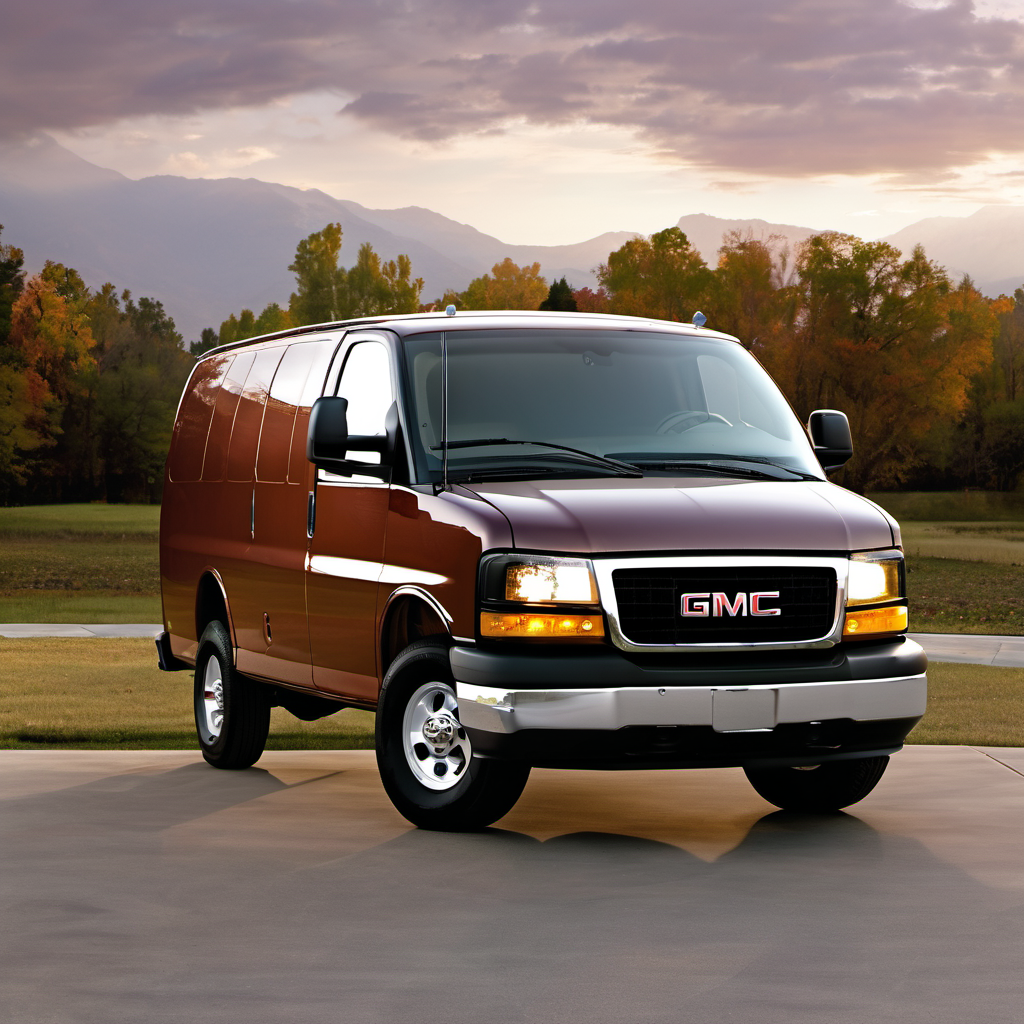
2006 GMC Savana 2500 Cargo Van/Minivan

2006 GMC

Savana 2500 CargoVan/Minivan

4.8L V8 Vortec · Van/Minivan

The 2006 GMC Savana 2500 Cargo Van is the full-size, body-on-frame workhorse of GM's commercial van lineup, sharing its platform with the Chevrolet Express 2500. Designed squarely for tradespeople, delivery fleets, and small businesses, the Savana 2500 prioritizes payload capacity, durability, and ease of cargo access over passenger comfort or modern amenities. With a gross vehicle weight rating in the 8,600-lb class, it sits at the top of the half-ton cargo van segment and can be spec'd to handle serious loads day after day. Under the hood, the 2006 Savana 2500 Cargo typically ran GM's proven Vortec V8 engines — most commonly the 4.8L or 5.3L V8 — mated to a 4-speed automatic. These engines have a strong track record in commercial service and respond well to routine maintenance. The interior is spartan by design: rubber floors, minimal trim, and two front seats, with the entire rear open for cargo. At nearly 20 years old, most Savana 2500s in the market today have high mileage and a commercial service history. Rust from Wisconsin road salt is the single biggest concern on these vans. The underlying platform is tough and parts are cheap and widely available, which makes a clean, well-maintained example a solid value — but a neglected one can become a money pit quickly.

Reliability
3/5
Verified data
Engine
4.8L V8 Vortec
Drivetrain
RWD
Fuel
Gasoline
MPG
12 city / 17 hwy / 14 combined
Seats
2
Doors
4
Body
Van
MSRP
$26,500

Overview

AI-curated

The 2006 GMC Savana 2500 Cargo Van is the full-size, body-on-frame workhorse of GM's commercial van lineup, sharing its platform with the Chevrolet Express 2500. Designed squarely for tradespeople, delivery fleets, and small businesses, the Savana 2500 prioritizes payload capacity, durability, and ease of cargo access over passenger comfort or modern amenities. With a gross vehicle weight rating in the 8,600-lb class, it sits at the top of the half-ton cargo van segment and can be spec'd to handle serious loads day after day. Under the hood, the 2006 Savana 2500 Cargo typically ran GM's proven Vortec V8 engines — most commonly the 4.8L or 5.3L V8 — mated to a 4-speed automatic. These engines have a strong track record in commercial service and respond well to routine maintenance. The interior is spartan by design: rubber floors, minimal trim, and two front seats, with the entire rear open for cargo. At nearly 20 years old, most Savana 2500s in the market today have high mileage and a commercial service history. Rust from Wisconsin road salt is the single biggest concern on these vans. The underlying platform is tough and parts are cheap and widely available, which makes a clean, well-maintained example a solid value — but a neglected one can become a money pit quickly.

Known for
  • Exceptional payload and cargo volume for a full-size van
  • Bulletproof Vortec V8 engines with high-mileage reliability
  • Wide parts availability and low independent-shop repair costs
  • Simple, robust body-on-frame construction
Best for
  • Tradespeople and contractors needing maximum cargo space
  • Small business delivery and fleet use
  • Buyers who prioritize durability and low cost-per-mile over comfort
  • DIY mechanics comfortable with classic GM platform
Watch for
  • Heavy rust on frame, wheel wells, and rocker panels — especially in Wisconsin
  • High commercial mileage with deferred maintenance
  • Aging fuel system components (fuel pump, injectors) at high mileage
  • 4L60E or 4L80E transmission wear if used for heavy towing or frequent stop-and-go

Common issues by mileage

6 known

Frame and underbody rust

high
Typically appears
Any mileage, especially 80k+ mi in northern climates
Estimated repair
$500 – $3,000

Fuel pump failure

high
Typically appears
80–150k mi
Estimated repair
$350 – $650

4-speed automatic transmission wear / slipping

medium
Typically appears
100–175k mi
Estimated repair
$1,800 – $4,500

Oxygen sensor / O2 heater circuit faults

medium
Typically appears
80–130k mi
Estimated repair
$150 – $400

Maintenance schedule

  1. 1
    Every 5,000 miles or 6 months — sooner under heavy commercial use Engine oil and filter change

    The Vortec V8 will run past 200k with consistent oil changes. In commercial service, err toward the short end of the interval.

  2. 2
    Every 30,000 miles, especially if used for towing or frequent stop-and-go Transmission fluid and filter service

    The 4-speed automatic is durable but heat and fluid breakdown are its enemies. Most fleet vans arrive with neglected trans fluid.

  3. 3
    Every 30,000 miles Fuel filter replacement

    The in-tank fuel pump runs cooler and lasts longer when the filter is clean. Neglecting this is the most common cause of early pump failure.

  4. 4
    Every 15,000 miles or annually Brake inspection (pads, rotors, calipers, lines)

    Cargo vans carry heavy loads and brake lines corrode quickly from Wisconsin salt. Rubber flex hoses harden and crack by this age.

  5. 5
    Every fall before winter and every spring after Undercarriage rust inspection and treatment

    Frame rust is the van-killer on 2006 and older GM platforms in the upper Midwest. Catching it early saves thousands.

  6. 6
    Every 5 years / 50,000 miles Coolant flush

    Degraded coolant turns acidic and attacks the intake manifold gaskets and water pump — both common failure points on these engines.

  7. 7
    Every 60,000 miles (copper/standard) or per OEM schedule Spark plugs and wires

    Fouled plugs on a V8 with 8 cylinders noticeably hurt fuel economy — already poor at 14 mpg combined. Fresh plugs restore throttle response.

  8. 8
    Every fall before winter Battery load test

    Cold cranking a 4.8L or 5.3L V8 at -10°F demands a strong battery. A battery that passes a voltage test in summer can still fail a load test and leave you stranded in a Wisconsin winter.

Always defer to the manufacturer's service manual for warranty-mandated intervals.

Cost of ownership

Annual maintenance
$800 – $2,200
Fuel
At ~14 mpg combined and roughly 15,000 miles/year, expect $2,800–$3,600/year at current mid-grade fuel prices in Wisconsin. Heavy highway use improves this slightly; city delivery routes worsen it.
Insurance
Commercial cargo van insurance varies widely by use. Personal-use rates are modest given the age; commercial/business-use policies add cost. Budget $1,000–$2,000/year depending on business classification and driver history.

Day-to-day maintenance costs are low thanks to cheap, widely available GM parts and straightforward labor. The real budget risk is deferred maintenance catching up — a transmission rebuild or fuel system overhaul can easily hit $3,000–$5,000. Rust remediation is the wildcard cost on any northern-state example this age. Well-maintained, this van is an economical workhorse; neglected, it can become expensive fast.
Seasonal care

Lake Geneva, WI
Winter
  • Load-test the battery every fall — cold-cranking a V8 at sub-zero temps is brutal on a weak battery; replace anything under 70% capacity.
  • Switch to a 5W-30 or manufacturer-specified low-viscosity oil if using conventional; thicker oil is slow to circulate at -10°F and starves the Vortec's top end on cold starts.
  • Flush and refill washer fluid with a -20°F or colder rated formula — the van's large windshield ices up fast and the stock reservoir empties quickly on salt-spray days.
  • Inspect all brake lines and rubber hoses before winter; salt accelerates corrosion on the steel lines running the length of the frame.
  • Check rear cargo door seals — cracked seals let in moisture that freezes door mechanisms and allows condensation to pool on the cargo floor, accelerating rust from the inside out.
  • Apply an undercoating or rust inhibitor to the frame and underbody each fall; this is non-negotiable for a Lake Geneva-area vehicle of this age.
Summer
  • Check tire pressure monthly — the cargo van's load range tires lose pressure with heat, and an overloaded van on underinflated tires wears through rubber fast.
  • Inspect the A/C system (refrigerant level, compressor clutch, condenser fins) before the first heat wave; the cab heats up quickly with no insulation in the cargo area behind you.
  • Watch coolant temperature under load — towing or hauling heavy cargo in summer heat stresses the cooling system. Check hoses, clamps, and the thermostat.
  • Clean the condenser and radiator of road debris — at low highway speeds or in stop-and-go delivery work, airflow through the front-end stack is reduced.
  • Check belt condition (serpentine belt) — heat accelerates cracking; a belt failure strands you and kills the alternator's ability to charge.

Comparable vehicles

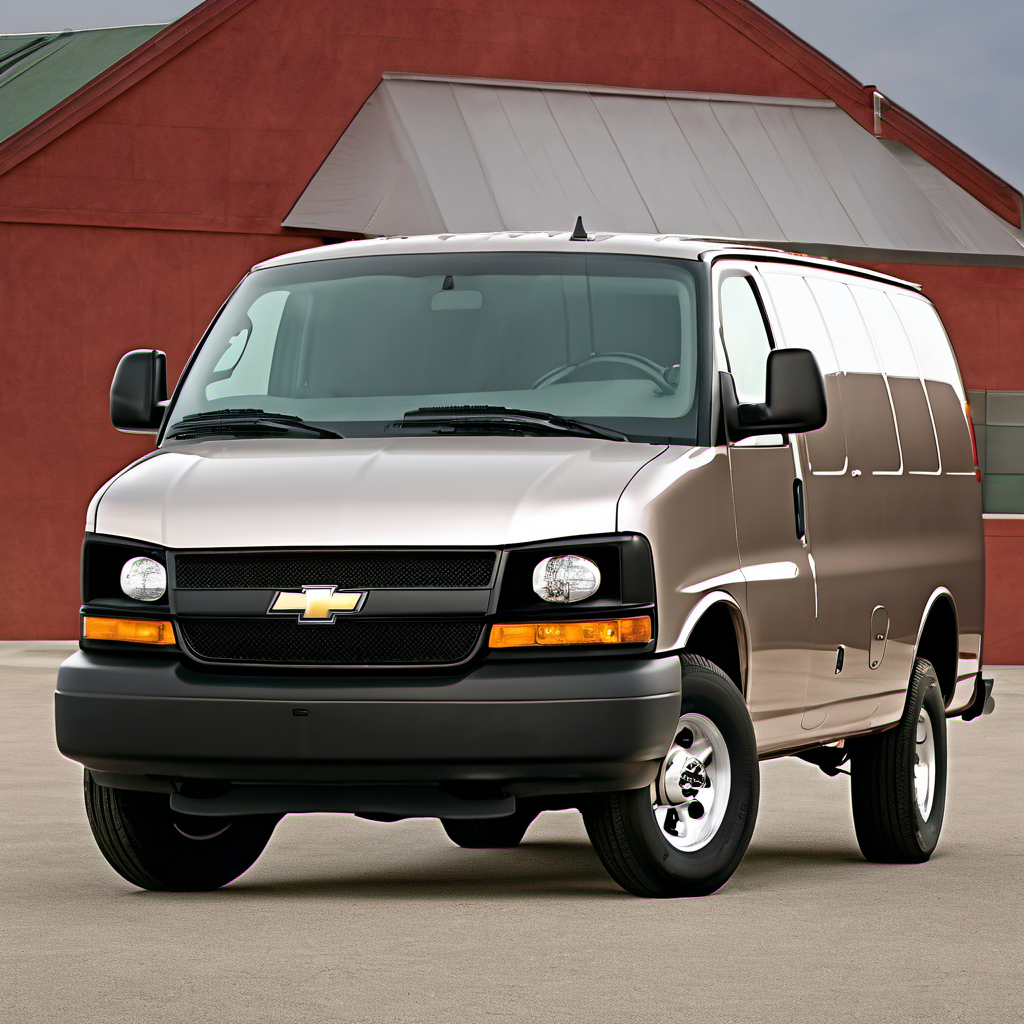
2006 Chevrolet Express 2500 Cargo
2006 Chevrolet
Express 2500 Cargo

Mechanical twin to the Savana — identical platform, engines, and transmission. Parts are interchangeable and pricing is nearly identical. Choose whichever has the better service history.

2006 Ford
E-250 Cargo Van

Ford's equivalent full-size cargo van. The Triton V8 is comparably reliable; parts availability is equally strong. Check for the same rust and transmission wear issues.

No catalog match

2006 Dodge Sprinter 2500
2006 Dodge
Sprinter 2500

Offers a diesel engine option and better fuel economy, but Mercedes-era Sprinters carry higher maintenance complexity and diesel parts costs. Better for highway-heavy routes; higher repair bills when things go wrong.

2006 Ford
Transit Connect

Smaller and more maneuverable for urban delivery work, but significantly less payload and cargo volume than the Savana 2500. Worth considering if outright size is a drawback for your routes.

No catalog match

If you're shopping for one

Red flags
  • Any frame section that flexes, crumbles, or shows flaking scale rust — structural rust on a body-on-frame cargo van is a deal-breaker.
  • Transmission that slips, hunts for gears, or clunks on the 1-2 shift — a rebuild is $2,000–$4,500 and should be factored into or walked away from the deal.
  • Unknown fleet history with no service records — commercial vans with mystery histories are frequently maintenance-deferred.
  • Check engine light on at time of sale — get a scan before purchase and cross-reference any active codes; seller claims of 'it just came on' are a red flag on an 18-year-old commercial vehicle.
  • Oil that is black and tar-like on the dipstick — extended drain intervals on a V8 under load accelerate wear and can shorten engine life significantly.
What to inspect
  • Get the van on a lift and inspect the full frame rail — especially the rear sections and crossmembers where salt packs in. Poke suspected areas with a screwdriver; soft spots mean rust perforation.
  • Check the cargo floor for rust bubbles or soft spots from the inside — water intrusion from leaking door seals pools under any cargo liner and quietly rots the floor pan.
  • Pull the transmission dipstick: fluid should be pink/red and not smell burnt. Dark brown or black fluid with a burnt odor signals neglect.
  • Look for oil leaks around the valve covers and intake manifold — common seepage points on high-mileage Vortec V8s.
  • Start the engine cold and listen for a ticking or tapping noise in the first 30 seconds — can indicate oil pressure or lifter issues on high-mileage examples.
  • Check all four brake line runs from the master cylinder to the wheels for corrosion, especially at brackets and bends.
  • Verify the sliding side door and rear cargo doors open, close, and latch properly — commercial vans take hard use and door hardware wears or corrodes.
AI profile generated 11 days ago · claude-sonnet-4-6 · v2.