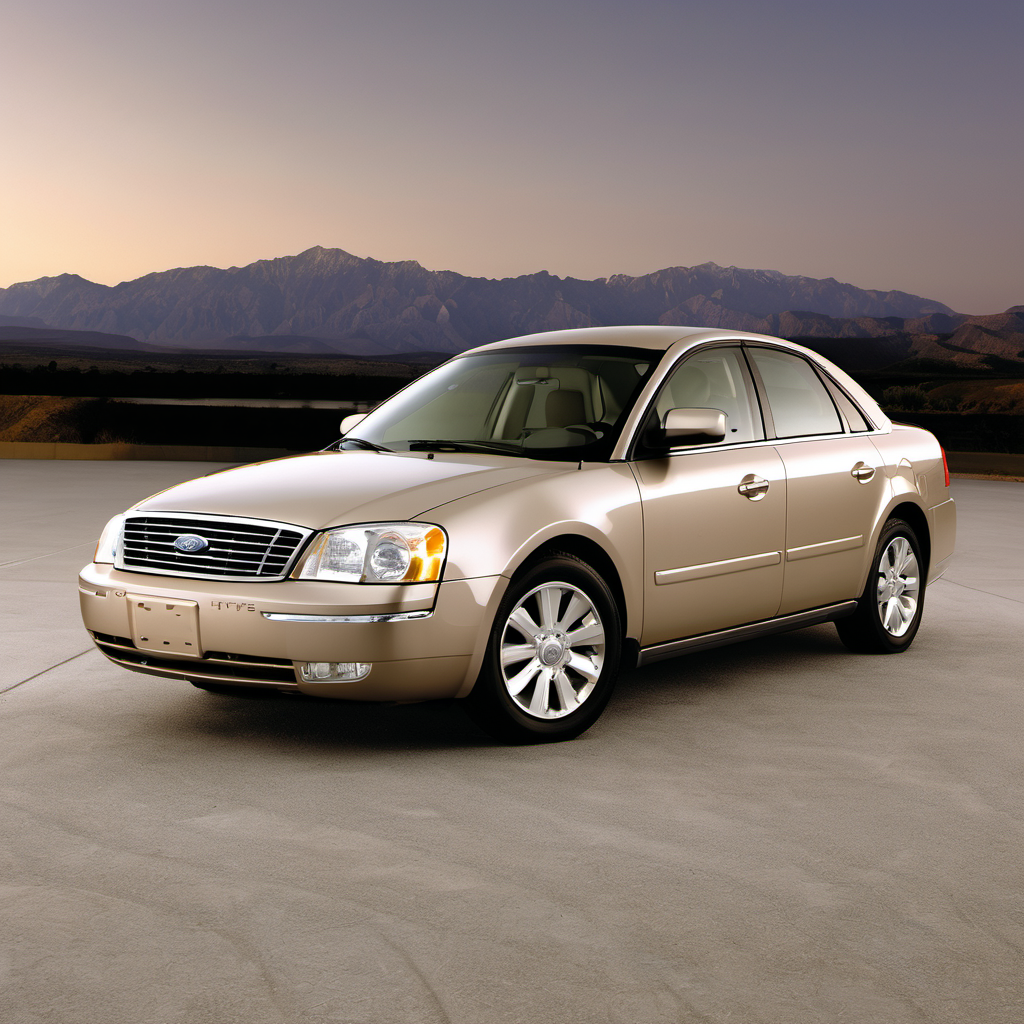
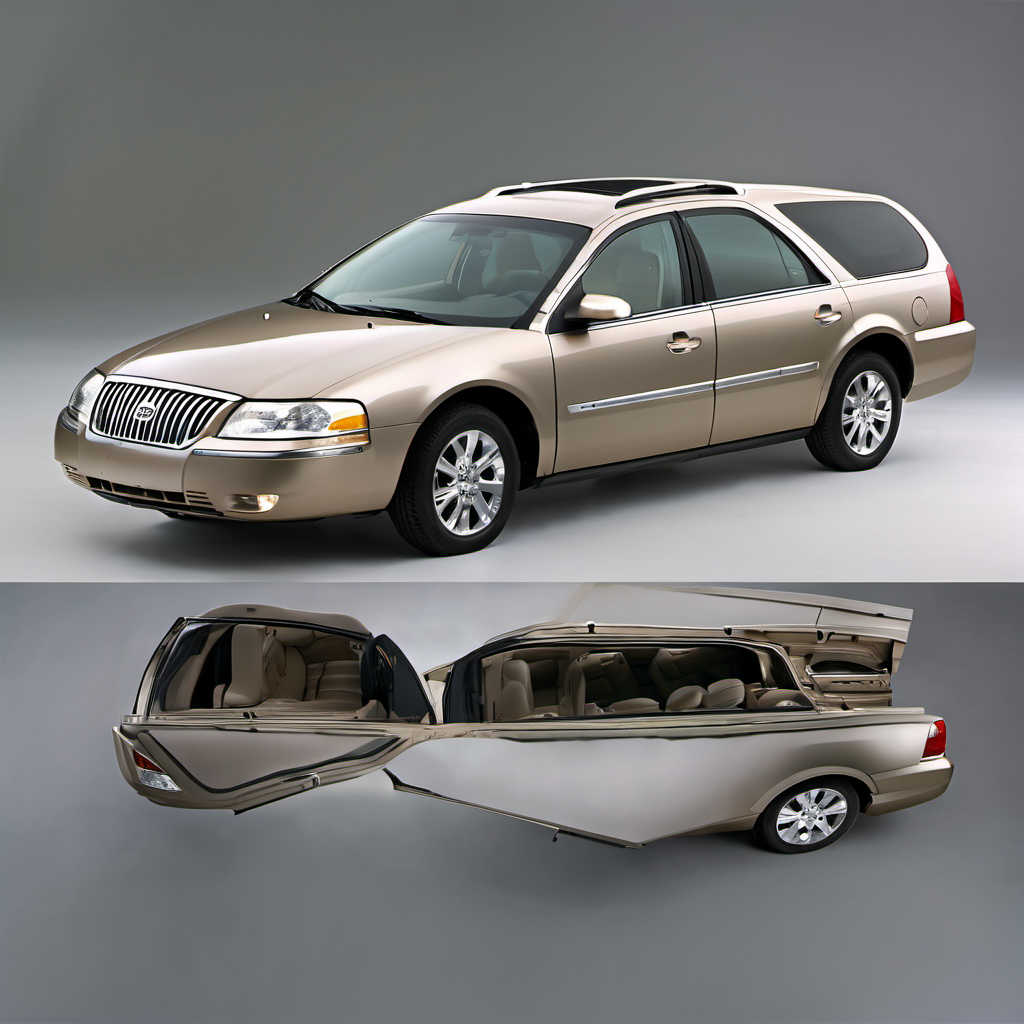
2005 Ford Five Hundred Sedan

2005 Ford

Five HundredSedan

Sedan

The 2005 Ford Five Hundred was Ford's answer to a roomy, comfortable family sedan after the Taurus era. Built on the Volvo-derived D3 platform, it offered genuinely spacious interior dimensions — almost SUV-like headroom and rear legroom — in a traditional four-door package. It was positioned as a conservative, practical choice for buyers who wanted space without a minivan or crossover. The Five Hundred was offered with a 3.0L Duratec V6 and either front-wheel or all-wheel drive. The AWD system came via a Haldex-based coupling and added meaningful traction in snow and rain. Unfortunately, the engine was tuned conservatively and the CVT transmission (on most trims) drew frequent criticism for sluggish, unresponsive performance — a common complaint across the model's run. Ford discontinued the Five Hundred nameplate after 2007, rebadging it as the Taurus for 2008. Parts availability is generally good due to the platform overlap with the Freestyle and Montego. At this age, a well-maintained example can be a solid budget hauler, but you need to scrutinize the CVT and AWD coupling carefully before buying.

Reliability
2/5
Verified data
Specs shown for Five Hundred AWD — the most common configuration. Other trims may vary in engine, drivetrain, or fuel economy. Sign in to see your vehicle's exact specs.
Engine
[object Object]
Drivetrain
AWD
Fuel
Gasoline
MPG
17 city / 23 hwy / 19 combined
Seats
Doors
Body
Large Cars

Overview

AI-curated

The 2005 Ford Five Hundred was Ford's answer to a roomy, comfortable family sedan after the Taurus era. Built on the Volvo-derived D3 platform, it offered genuinely spacious interior dimensions — almost SUV-like headroom and rear legroom — in a traditional four-door package. It was positioned as a conservative, practical choice for buyers who wanted space without a minivan or crossover. The Five Hundred was offered with a 3.0L Duratec V6 and either front-wheel or all-wheel drive. The AWD system came via a Haldex-based coupling and added meaningful traction in snow and rain. Unfortunately, the engine was tuned conservatively and the CVT transmission (on most trims) drew frequent criticism for sluggish, unresponsive performance — a common complaint across the model's run. Ford discontinued the Five Hundred nameplate after 2007, rebadging it as the Taurus for 2008. Parts availability is generally good due to the platform overlap with the Freestyle and Montego. At this age, a well-maintained example can be a solid budget hauler, but you need to scrutinize the CVT and AWD coupling carefully before buying.

Known for
  • Exceptionally roomy cabin with near-class-leading rear seat and headroom
  • Volvo-derived D3 platform with solid structural rigidity
  • Available AWD well-suited to Midwest winters
  • Controversial CVT transmission on most trim levels
  • Understated styling that aged quietly
Best for
  • Families needing maximum interior space on a tight budget
  • Buyers who want AWD traction without an SUV
  • Low-mileage highway commuters
  • Drivers prioritizing ride comfort over performance
Watch for
  • CVT transmission reliability — the single biggest ownership risk
  • AWD rear coupling wear and fluid neglect
  • Age-related rust on underbody and subframe given Wisconsin salt exposure
  • Sluggish acceleration due to conservative V6 tuning and CVT pairing
  • Limited enthusiast or performance aftermarket support

Common issues by mileage

6 known

CVT Transmission Failure or Shudder

high
Typically appears
80–130k mi
Estimated repair
$2,800 – $5,500

AWD Rear Coupling Failure (Haldex Unit)

medium
Typically appears
70–120k mi
Estimated repair
$600 – $1,800

Oxygen Sensor / O2 Heater Circuit Failure

medium
Typically appears
80–120k mi
Estimated repair
$150 – $400

Brake Line and Underbody Rust

high
Typically appears
Any mi on salt-belt vehicles
Estimated repair
$400 – $1,500

Power Steering Rack Leak or Noise

medium
Typically appears
100–150k mi
Estimated repair
$500 – $1,200

Maintenance schedule

  1. 1
    Every 30,000 miles — do not skip CVT Fluid Change

    Ford's original 'lifetime fluid' claim has proven wrong in practice. Fresh CVT fluid is the single best thing you can do to extend transmission life. Use only the specified Ford CVT fluid — substitutions cause shudder and accelerated wear.

  2. 2
    Every 30,000 miles or 3 years AWD Rear Coupling Fluid Change

    The Haldex-style rear coupling runs its own fluid. Neglected fluid leads to coupling failure and loss of AWD function. Most used examples have never had this done — treat it as overdue on any used purchase.

  3. 3
    Every 5,000 miles Engine Oil Change (full synthetic)

    The 3.0L Duratec is sensitive to oil sludge, which can clog VCT solenoids and cause camshaft timing codes. Full synthetic with on-schedule changes keeps sludge at bay.

  4. 4
    Every year — critical in Wisconsin Brake Line Inspection

    Road salt attacks steel brake lines on vehicles this age. Inspect for bubbling, rust scale, and soft spots. A failed brake line is a safety emergency — catch it early.

  5. 5
    Every fall before winter Battery Load Test

    Cold cranking a CVT-equipped vehicle with a weak battery stresses both the battery and the transmission control module. Replace proactively if the battery is over 4 years old.

  6. 6
    Every 5 years or 60,000 miles Coolant Flush

    Degraded coolant becomes acidic and attacks the aluminum Duratec block and head surfaces. Critical in vehicles that see sub-zero Wisconsin winters.

  7. 7
    Every 15,000–20,000 miles Cabin and Engine Air Filter

    Midwest road conditions — dust in summer, heavy salt mist in winter — load up filters faster than mild-climate estimates assume.

  8. 8
    Every 5,000–7,500 miles; pressure check every season change Tire Rotation and Pressure Check

    AWD systems wear unevenly matched tires harder than FWD. Temperature swings between Wisconsin summer and winter can drop tire pressure 6–8 PSI — keep all four matched.

Always defer to the manufacturer's service manual for warranty-mandated intervals.

Cost of ownership

Annual maintenance
$700 – $1,800
Fuel
At 19 MPG combined and typical Midwest driving, expect $1,800–$2,400/year at current fuel prices depending on mileage.
Insurance
Generally low — this is an older family sedan with modest value. Expect $800–$1,400/year for full coverage depending on driver profile.

Routine upkeep on this vehicle is affordable — the 3.0L V6 is not expensive to maintain. The risk is a CVT or AWD coupling failure, which can run $3,000–$6,000 and may exceed the car's market value. Budget conservatively and treat transmission and AWD fluid service as non-negotiable. Brake line work is a near-certainty on a 20-year-old Wisconsin vehicle.
Seasonal care

Lake Geneva, WI
Winter
  • Load-test the battery every October — CVT cold-start draws are hard on weak batteries and sub-zero temps can drop capacity by 30–40%.
  • Switch to full synthetic 5W-20 or 5W-30 if not already; the Duratec needs quick oil flow at cold startup to protect VCT components.
  • Inspect and fill the AWD rear coupling fluid before winter — a worn coupling loses traction exactly when you need it most.
  • Use winter-rated washer fluid rated to at least -20°F; the Five Hundred's windshield is large and takes a lot of highway spray and salt mist.
  • Inspect undercarriage, wheel wells, and brake lines for rust before and after each winter season — salt accumulation on a 20-year-old car accelerates structural damage quickly.
  • Keep the gas tank at least half full to reduce moisture condensation in the fuel system and add weight over the rear axle for AWD balance.
Summer
  • Check tire pressure monthly — heat expands air and masks slow leaks; all four tires must be within 1–2 PSI of each other for the AWD system to operate correctly.
  • Have the A/C system inspected if cooling is weak — R-134a systems on cars this age often need a refrigerant check and potential leak repair.
  • Check coolant concentration — the large Duratec V6 runs warm in stop-and-go summer traffic and a low or degraded coolant mix increases the risk of overheating.
  • Inspect serpentine belt and tensioner — heat cycles age rubber faster, and a snapped belt on a summer road trip leaves you stranded.

Comparable vehicles

If you're shopping for one

Red flags
  • Any CVT shudder, surge, or lag on a test drive — walk away unless price reflects an imminent rebuild.
  • Check engine light present at purchase, especially camshaft timing or VVT codes.
  • Rust perforation on brake lines, subframe, or floor pans — structural rust on a 20-year-old Wisconsin car can be a write-off.
  • No documented oil change history — VCT sludge damage may already be done.
  • AWD warning light or inconsistent traction behavior — rear coupling replacement is costly and parts can be hard to source.
  • Seller claims 'lifetime' CVT fluid and it has never been serviced — this is a known failure vector, not a feature.
What to inspect
  • Get the CVT fluid on a lift and inspected — dark, burnt-smelling fluid means the transmission is already stressed. Budget for a fluid change immediately on purchase.
  • Ask specifically about AWD rear coupling fluid service history — if the seller can't document it, assume it's never been done.
  • Inspect all four brake lines and the front subframe for rust perforation — pay particular attention to the areas near wheel wells and rear axle.
  • Drive the car from a full cold start and feel for CVT shudder or hesitation during initial acceleration — this is when CVT problems are most detectable.
  • Check for VCT-related check engine codes (P0012, P0015, P0022, P0025) with a scan tool — these signal oil maintenance neglect and potential expensive repairs ahead.
  • Look under the car for evidence of oil leaks around the valve covers and front of the engine — sludge buildup on a 20-year-old V6 is a red flag.
AI profile generated 59 min ago · claude-sonnet-4-6 · v2.