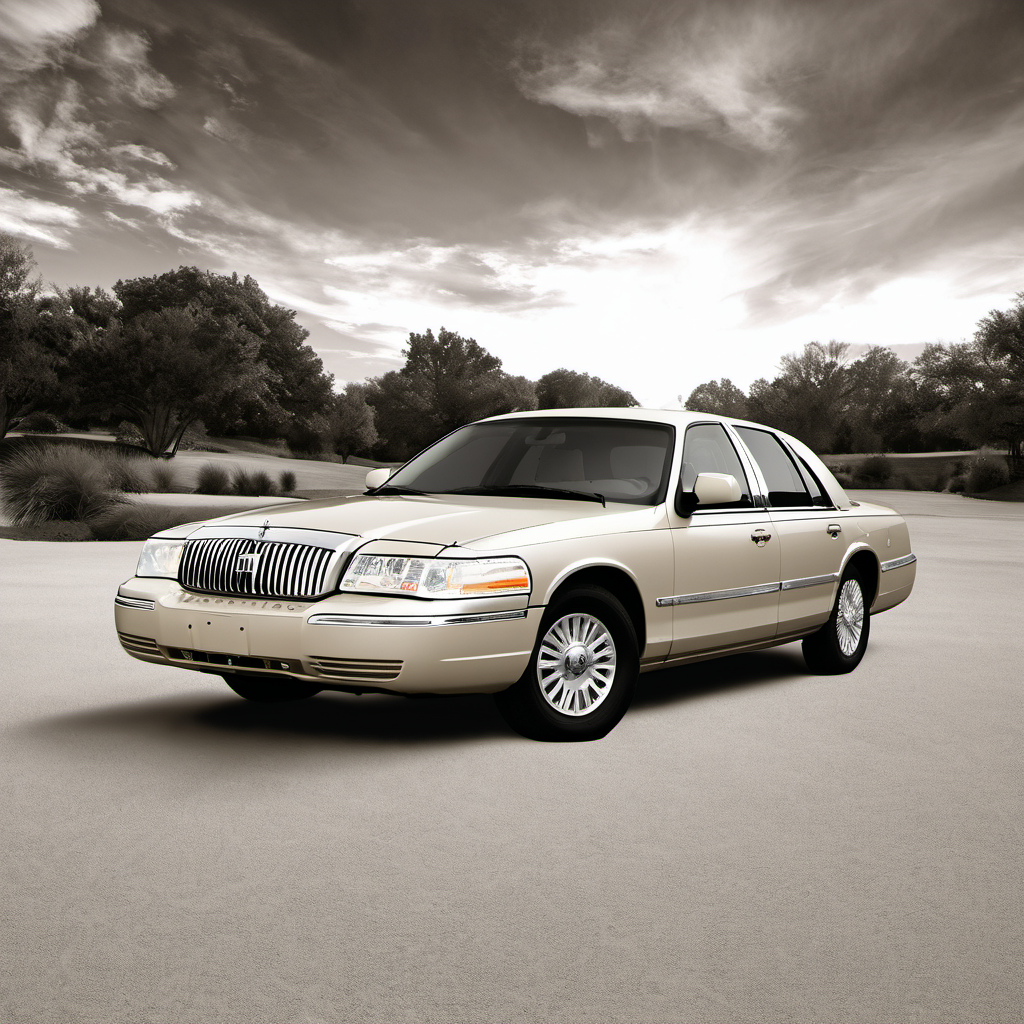
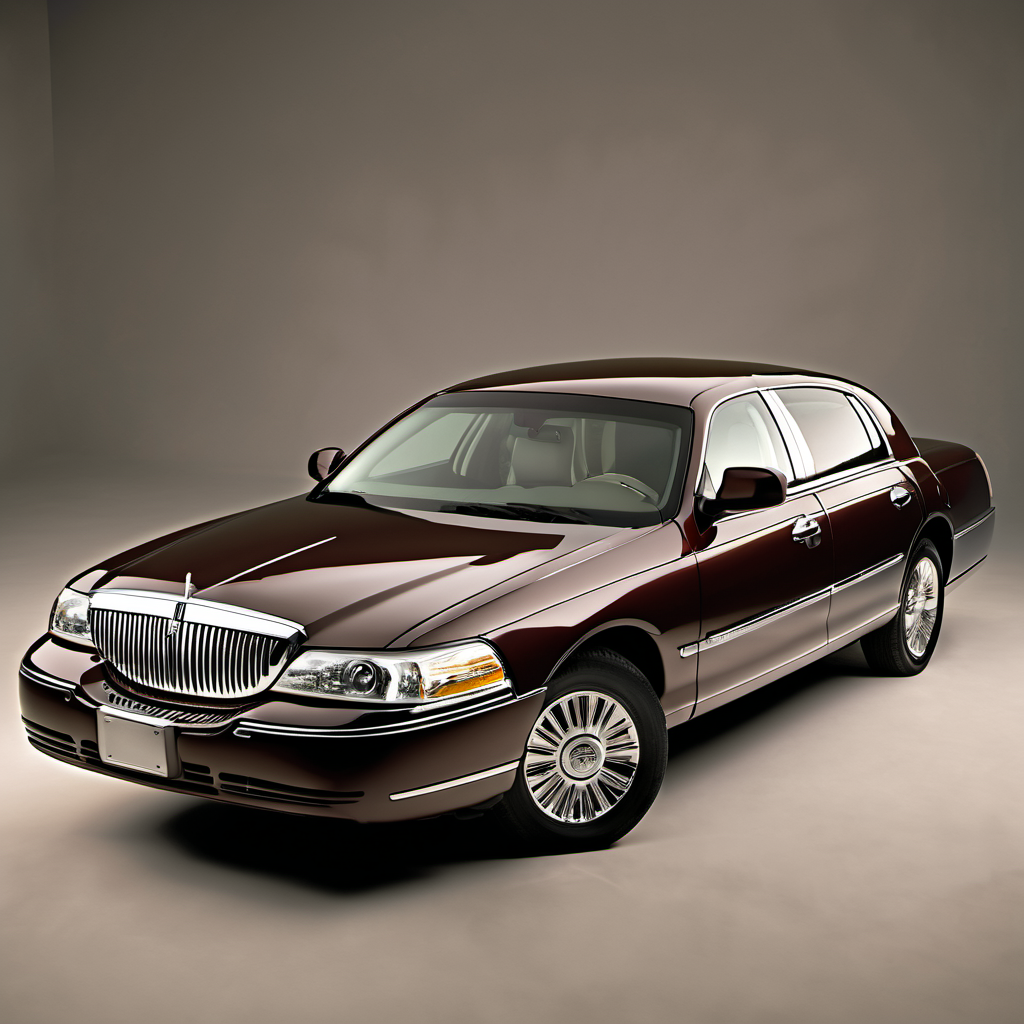
2005 Ford Crown Victoria Sedan

2005 Ford

Crown VictoriaSedan

Sedan

The 2005 Ford Crown Victoria is the final evolution of Ford's long-running body-on-frame, rear-wheel-drive full-size sedan. Built on the Panther platform that dates back to 1979, the Crown Vic was a fixture of police fleets and taxi cabs for good reason — it was engineered for high mileage, abuse, and easy maintenance. By 2005 the platform was mature and well-sorted, making this one of the more reliable large sedans of its era. Under the hood sits Ford's proven 4.6L 2-valve Modular V8, paired to a 4-speed automatic. The engine is conservative in tune but virtually indestructible with regular oil changes, and parts availability remains excellent because the same engine powered F-150s and Mustangs for years. The ride is soft and floaty by modern standards, but interior room is generous and trunk space is massive. Many Crown Vics in circulation were retired from police or taxi service, meaning they carry hard miles. A true civilian-spec car (P71 is police, P7B is taxi, LX/Sport is civilian) with documented maintenance history is worth paying a premium for. This is a vehicle that rewards attentive ownership with longevity well past 200,000 miles.

Reliability
4/5
Verified data
Specs shown for Crown Victoria — the most common configuration. Other trims may vary in engine, drivetrain, or fuel economy. Sign in to see your vehicle's exact specs.
Engine
[object Object]
Drivetrain
RWD
Fuel
Gasoline
MPG
16 city / 23 hwy / 19 combined
Seats
Doors
Body
Large Cars

Overview

AI-curated

The 2005 Ford Crown Victoria is the final evolution of Ford's long-running body-on-frame, rear-wheel-drive full-size sedan. Built on the Panther platform that dates back to 1979, the Crown Vic was a fixture of police fleets and taxi cabs for good reason — it was engineered for high mileage, abuse, and easy maintenance. By 2005 the platform was mature and well-sorted, making this one of the more reliable large sedans of its era. Under the hood sits Ford's proven 4.6L 2-valve Modular V8, paired to a 4-speed automatic. The engine is conservative in tune but virtually indestructible with regular oil changes, and parts availability remains excellent because the same engine powered F-150s and Mustangs for years. The ride is soft and floaty by modern standards, but interior room is generous and trunk space is massive. Many Crown Vics in circulation were retired from police or taxi service, meaning they carry hard miles. A true civilian-spec car (P71 is police, P7B is taxi, LX/Sport is civilian) with documented maintenance history is worth paying a premium for. This is a vehicle that rewards attentive ownership with longevity well past 200,000 miles.

Known for
  • Panther-platform durability — well-documented ability to reach 200k–300k miles
  • 4.6L Modular V8 with massive parts availability and easy serviceability
  • Enormous trunk and spacious rear seat — among the largest in any sedan
  • RWD, body-on-frame construction preferred by police and taxi fleets
  • Simple, no-frills electronics compared to modern vehicles
Best for
  • High-mileage daily drivers who want cheap, easy repairs
  • Drivers who need maximum interior space and comfort on long highway trips
  • First-time RWD owners looking for a forgiving, low-tech platform
  • Buyers on a tight budget who want a reliable V8 sedan
Watch for
  • Former police or taxi units with extremely high hard miles — check the door jamb for fleet codes (P71 = police, P7B = taxi)
  • Rear air suspension (if equipped) that sags or compressor has failed
  • Rust on frame rails, subframe, and rear wheel wells — critical in Wisconsin salt country
  • Fuel tank isolation valve failures that can cause fuel odor in the trunk (a safety recall issue on earlier years, verify VIN for completion)
  • Deferred maintenance on high-mileage examples — spark plugs, coolant, and transmission service are frequently skipped

Common issues by mileage

6 known

Spark plug blowout / thread failure

medium
Typically appears
80–150k mi
Estimated repair
$200 – $600

Intake manifold vacuum line and gasket leaks

medium
Typically appears
80–130k mi
Estimated repair
$150 – $400

Rear air spring failure (air suspension models) — compressor burnout or bag rupture

high
Typically appears
60–120k mi
Estimated repair
$250 – $700

Oxygen sensor heater circuit failure — upstream sensors degrade with age and mileage

medium
Typically appears
80–160k mi
Estimated repair
$120 – $320

Throttle body / IAC valve buildup causing rough idle or stalling

medium
Typically appears
60–120k mi
Estimated repair
$80 – $220

Transmission fluid degradation / solenoid pack wear on 4R70W

medium
Typically appears
100–180k mi
Estimated repair
$200 – $1,800

Maintenance schedule

  1. 1
    Every 5,000 miles or 6 months Engine oil and filter change

    The 4.6L 2V does not have variable valve timing, so sludge from extended intervals is the primary engine killer. Use a quality conventional or synthetic-blend 5W-20 and don't stretch the interval on a high-mileage car.

  2. 2
    Every 30,000 miles Transmission fluid and filter service (4R70W)

    Ford often lists this as 'lifetime' fluid, but real-world experience — especially on ex-fleet cars — shows the 4R70W benefits greatly from regular fluid changes. Dark or burnt-smelling fluid means do it now.

  3. 3
    Every 60,000 miles Spark plug replacement

    The 4.6L 2V uses standard-reach plugs that are straightforward to replace. Do not let them go past 100k — seized plugs can strip the aluminum head threads, turning a $100 job into a $400+ repair.

  4. 4
    Every 50,000 miles or 5 years Coolant flush

    Degraded coolant becomes acidic and attacks the aluminum intake manifold and water pump. The 4.6L is sensitive to cooling system neglect.

  5. 5
    Every 30,000 miles or annually Rear air suspension inspection

    Check air bags for cracking and the compressor for overheating signs. A failed bag in a Wisconsin winter leaves you riding on the bump stops overnight.

  6. 6
    Every 20,000 miles Brake inspection — pads, rotors, and rear drum hardware

    Salt accelerates brake hardware corrosion significantly. Rear drum springs and adjusters seize up on cars that sit outdoors in Wisconsin winters.

  7. 7
    Annually Fuel system inspection — lines, tank straps, and fuel filler neck

    Rubber fuel lines and metal tank straps corrode in the salt belt. The Crown Vic had fuel tank fire recalls on earlier years; verify the recall was completed on your VIN and inspect the area annually.

  8. 8
    Every fall before winter Battery test

    The 4.6L V8 draws significant cranking amps in sub-zero temperatures. A marginal battery that starts fine in October will fail in January in Lake Geneva.

Always defer to the manufacturer's service manual for warranty-mandated intervals.

Cost of ownership

Annual maintenance
$600 – $1,400
Fuel
At 19 MPG combined and Wisconsin gas prices, expect roughly $2,000–$2,600/year at 12,000 miles annually. Highway driving significantly improves economy.
Insurance
Generally low — these are older, inexpensive vehicles with cheap parts. Expect $700–$1,200/year for full coverage depending on driving history and the car's value.

The Crown Vic is one of the cheaper large sedans to keep on the road. Parts are inexpensive and widely available at any auto parts store or salvage yard. Labor costs are low because nothing is buried or complicated. The main budget risk is deferred maintenance catching up — a neglected transmission or ignored air suspension can run $1,000–$2,500 in one shot. Stay ahead of the service schedule and annual costs are very manageable.
Seasonal care

Lake Geneva, WI
Winter
  • Test and replace the battery before November — the 4.6L V8 needs strong cranking power at sub-zero temps. Load-test it, don't just check voltage.
  • Switch to a full synthetic 5W-20 if you're using conventional oil; it flows faster on cold starts and protects during the first few seconds when most wear occurs.
  • Flush washer fluid reservoir and top off with a -20°F or lower rated fluid. The stock reservoir is large but it empties fast on Wisconsin winter roads.
  • Install winter wiper blades — the large windshield on the Crown Vic means standard blades ice up and skip quickly in freezing rain.
  • Undercarriage wash every 1–2 weeks during salting season. Pay special attention to the frame rails, rear subframe, and fuel tank strap area — all known rust points.
  • If equipped with rear air suspension, note that cold temperatures stress air bags and lines. Have it inspected before winter if it hasn't been done recently.
Summer
  • Check tire pressure monthly — the Crown Vic's rear-wheel-drive setup and soft suspension mean underinflated tires noticeably affect handling and wear.
  • Service the A/C system if it hasn't been checked recently — by 2005 these systems are 20 years old and refrigerant leaks and compressor wear are common.
  • Inspect the cooling system — hoses, clamps, and coolant level. The 4.6L runs hot when the cooling system is marginal and traffic is stop-and-go on a hot day.
  • Check the transmission fluid level and condition — summer towing or hauling in heat accelerates fluid breakdown in the 4R70W.

Comparable vehicles

If you're shopping for one

Red flags
  • Cage mount holes or cut wiring in the interior — confirms police service, which means hard idling hours, heavy brake use, and possible pursuit driving.
  • Rust on frame rails that goes beyond surface scale — the Panther frame is repairable but structural rust is a safety concern and a significant repair cost.
  • Rear end sitting low or compressor running constantly — air suspension failure is imminent or already here.
  • Dark brown or burnt-smelling transmission fluid — likely means the 4R70W has been neglected and may be near the end of its service life.
  • No maintenance records on a high-mileage car — assume everything (plugs, coolant, trans fluid, brake fluid) is overdue and price accordingly.
What to inspect
  • Check the door jamb sticker for fleet codes: P71 = police interceptor, P7B = taxi/livery. Civilian LX/Sport trim cars are preferable for private buyers.
  • Inspect the frame rails and rear subframe for rust perforation — lift the car and look carefully. Surface rust is common; through-rust is a dealbreaker in Wisconsin.
  • Start the engine cold and listen for ticking or knock — the 4.6L should start quietly. Excessive tick on cold start may indicate worn cam phasers or low oil pressure.
  • Verify the rear suspension: with the car level on flat ground, check if the rear sits noticeably low or uneven, indicating failed air bags or a dead compressor.
  • Test drive at highway speed and note any transmission shudder, delayed shifts, or slipping — 4R70W wear is expensive to fix.
  • Smell the trunk for fuel odor, which can indicate a fuel tank isolation valve issue or degraded tank strap area.
AI profile generated 59 min ago · claude-sonnet-4-6 · v2.