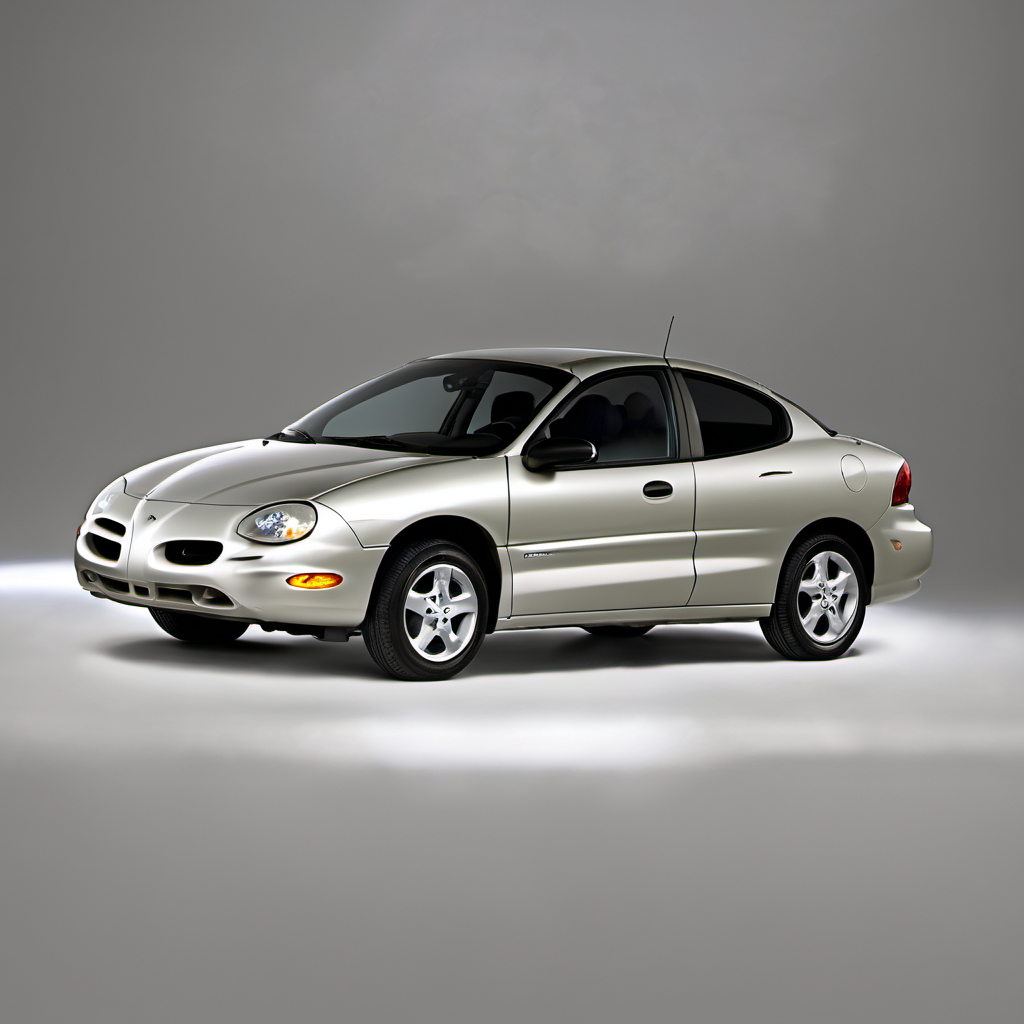
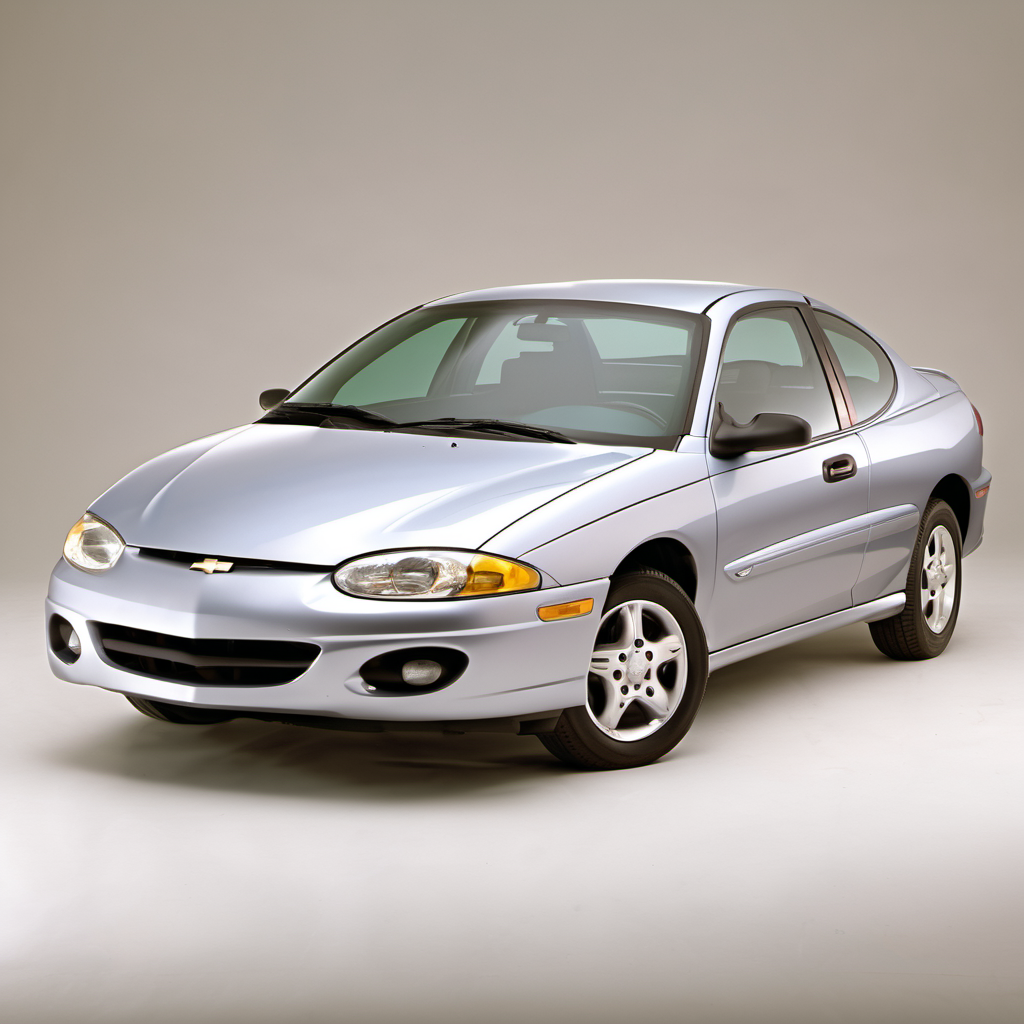
2004 Pontiac Sunfire Coupe

2004 Pontiac

SunfireCoupe

Coupe

The 2004 Pontiac Sunfire Coupe is a front-wheel-drive economy car built on GM's J-body platform — the same bones shared with the Chevy Cavalier. It was aimed squarely at budget-conscious buyers who needed basic transportation, and it delivered exactly that: modest power, reasonable fuel economy, and a low sticker price. By 2004 it was near the end of its production run (the Sunfire was discontinued after 2005), so the platform was mature and well-understood by technicians. Power comes from GM's Ecotec-derived 2.2L inline-4, which in this application produced around 140 horsepower. It was paired with either a 5-speed manual or a 4-speed automatic. Neither transmission is a performance showcase, but both are adequately reliable for everyday driving. The Sunfire's lightweight body and front-wheel drive make it nimble around town, though highway manners and cabin refinement are basic by any standard. At 20 years old, virtually every Sunfire on the road today is a high-mileage car. Rust from road salt is the biggest enemy in Wisconsin — treat any example you're considering as a rust inspection first, mechanical inspection second. Parts availability is generally good since it shares heavily with the Cavalier.

Reliability
3/5
Verified data
Specs shown for Sunfire — the most common configuration. Other trims may vary in engine, drivetrain, or fuel economy. Sign in to see your vehicle's exact specs.
Engine
[object Object]
Drivetrain
FWD
Fuel
Gasoline
MPG
21 city / 31 hwy / 25 combined
Seats
Doors
Body
Compact Cars

Overview

AI-curated

The 2004 Pontiac Sunfire Coupe is a front-wheel-drive economy car built on GM's J-body platform — the same bones shared with the Chevy Cavalier. It was aimed squarely at budget-conscious buyers who needed basic transportation, and it delivered exactly that: modest power, reasonable fuel economy, and a low sticker price. By 2004 it was near the end of its production run (the Sunfire was discontinued after 2005), so the platform was mature and well-understood by technicians. Power comes from GM's Ecotec-derived 2.2L inline-4, which in this application produced around 140 horsepower. It was paired with either a 5-speed manual or a 4-speed automatic. Neither transmission is a performance showcase, but both are adequately reliable for everyday driving. The Sunfire's lightweight body and front-wheel drive make it nimble around town, though highway manners and cabin refinement are basic by any standard. At 20 years old, virtually every Sunfire on the road today is a high-mileage car. Rust from road salt is the biggest enemy in Wisconsin — treat any example you're considering as a rust inspection first, mechanical inspection second. Parts availability is generally good since it shares heavily with the Cavalier.

Known for
  • Budget-friendly ownership costs
  • Shared J-body platform with Chevy Cavalier — parts widely available
  • 2.2L Ecotec engine decent on fuel
  • Simple, straightforward mechanicals easy to work on
  • Lightweight and nimble in city driving
Best for
  • First-time car owners on a tight budget
  • Short urban and suburban commutes
  • Owners who do their own basic maintenance
  • Low-cost secondary vehicle
Watch for
  • Heavy rust on rocker panels, floor pans, and wheel wells — especially on Wisconsin cars
  • High-mileage examples with deferred maintenance
  • Intake manifold gasket failures on the 2.2L
  • Aging plastic interior components cracking or breaking
  • Worn-out suspension bushings adding to an already soft, vague ride

Common issues by mileage

6 known

Intake manifold gasket leak

high
Typically appears
80–130k mi
Estimated repair
$200 – $450

Oxygen sensor failure (upstream or downstream)

medium
Typically appears
90–150k mi
Estimated repair
$120 – $280

Strut and strut mount wear

high
Typically appears
70–120k mi
Estimated repair
$300 – $600

Rust — rocker panels, floor pans, subframe

high
Typically appears
Any mileage on Midwest/salt-belt cars
Estimated repair
$500 – $3,000

Thermostat failure / cooling system issues

medium
Typically appears
80–140k mi
Estimated repair
$100 – $250

Wheel bearing wear (front)

medium
Typically appears
100–160k mi
Estimated repair
$180 – $350

Maintenance schedule

  1. 1
    Every 5,000 miles or 6 months — whichever comes first Engine oil and filter change

    The Ecotec 2.2L is sensitive to oil sludge from extended drain intervals. Dirty oil accelerates wear on cam followers and the timing chain. Use the manufacturer-specified 5W-30.

  2. 2
    Every 5 years or 50,000 miles Coolant flush

    Aged coolant becomes acidic and attacks the intake manifold gasket sealing surfaces — a known weak spot on this engine. Fresh coolant is cheap insurance.

  3. 3
    Every 60,000 miles Spark plug replacement

    Worn plugs cause misfires, rough idle, and reduced fuel economy. Straightforward DIY job on this engine.

  4. 4
    Every 2–3 years Brake fluid flush

    Brake fluid absorbs moisture over time, lowering its boiling point. Critical for safe stops, especially with Wisconsin freeze-thaw cycles stressing brake components.

  5. 5
    Every 5,000–7,500 miles Tire rotation

    FWD cars wear front tires faster due to combined steering and drive loads. Regular rotation extends tire life significantly.

  6. 6
    Every fall before winter Inspect and lubricate door hinges and weather stripping

    Door seals crack and hinges seize on older cars exposed to Wisconsin salt spray and sub-zero cold, leading to water intrusion and floor rust.

  7. 7
    Annually — every fall Undercarriage rust inspection and treatment

    Road salt in Lake Geneva area winters aggressively attacks rocker panels, subframe, and brake lines on cars this age. Catch it early before it becomes structural.

  8. 8
    Every fall, or if battery is 3+ years old Battery test

    Cold-cranking capacity drops sharply below 0°F. A battery that seems fine in summer can strand you on a January morning.

Always defer to the manufacturer's service manual for warranty-mandated intervals.

Cost of ownership

Annual maintenance
$600 – $1,400
Fuel
At 25 MPG combined and ~12,000 miles/year, expect roughly $1,400–$1,600/year at current Wisconsin gas prices. Regular unleaded only.
Insurance
One of the cheaper cars to insure — expect $700–$1,100/year for a typical driver depending on coverage level and driving history.

The Sunfire's biggest ownership advantage is low parts and labor costs — almost everything it shares with the Cavalier, making parts cheap and plentiful. Routine maintenance is affordable. The risk at this age is a single large repair (rust remediation, head gasket, transmission) that can exceed the car's market value. Keep an emergency repair fund and set a ceiling on what you're willing to spend before buying.
Seasonal care

Lake Geneva, WI
Winter
  • Test the battery every fall — sub-zero starts demand full cold-cranking amps and the Ecotec starter draws significant current in the cold.
  • Switch to a winter-grade washer fluid rated to at least -20°F; the reservoir freezes quickly on this car's thin-walled plastic lines.
  • Inspect the undercarriage for brake line rust before winter — salt exposure accelerates corrosion on steel brake lines at this vehicle's age.
  • Check tire tread depth; consider winter tires given Lake Geneva's snowfall. The Sunfire's light weight can make it squirrelly on packed snow with all-season tires.
  • Flush and fill coolant if overdue — old coolant loses freeze protection and can cause freeze damage to the water pump and block.
  • Lubricate door locks and weather stripping before temperatures drop to prevent frozen doors and cracked seals.
Summer
  • Check A/C refrigerant charge and cabin filter — the system is old enough that slow leaks are common, and Wisconsin humidity makes a working A/C essential.
  • Monitor tire pressure weekly in hot weather; pressure rises roughly 1 PSI for every 10°F increase and can cause uneven wear on already-stressed front tires.
  • Inspect coolant hoses for swelling or cracking — summer heat accelerates deterioration on rubber this old.
  • Watch for heat soak starting issues (extended crank after sitting in a hot parking lot), which can indicate a weak fuel pump or failing coolant temp sensor.

Comparable vehicles

If you're shopping for one

Red flags
  • Any structural rust on the subframe or floor pan — walk away
  • Soft or spongy brake pedal — could indicate rusted or leaking brake lines
  • Coolant in the oil (milky dipstick) — head gasket or intake gasket failure
  • Automatic transmission that slips, hesitates, or clunks between gears
  • No maintenance records on a high-mileage example — assume worst-case deferred maintenance
  • Check engine light with VVT or camshaft timing codes (P0012, P0015) — not applicable to this engine, so an OBD scan showing unexpected codes may indicate a salvage or swapped drivetrain
What to inspect
  • Crawl under the car and check rocker panels, subframe mounting points, and brake lines for rust — this is the make-or-break inspection on any Wisconsin Sunfire
  • Check the floor pan inside the cabin, especially under floor mats, for rust-through or water staining
  • Look for coolant smell or white residue around the intake manifold — signs of a leaking intake gasket
  • Drive it cold from a full overnight sit to check for hard starting and warm-up smoothness
  • Listen for knocking or ticking from the top end at startup — indicates oil starvation history
  • Test all power accessories; at this age switches and motors are often failing
  • Check strut bounce and listen for clunking over bumps — suspension wear is nearly universal at this mileage
AI profile generated 15 days ago · claude-sonnet-4-6 · v2.