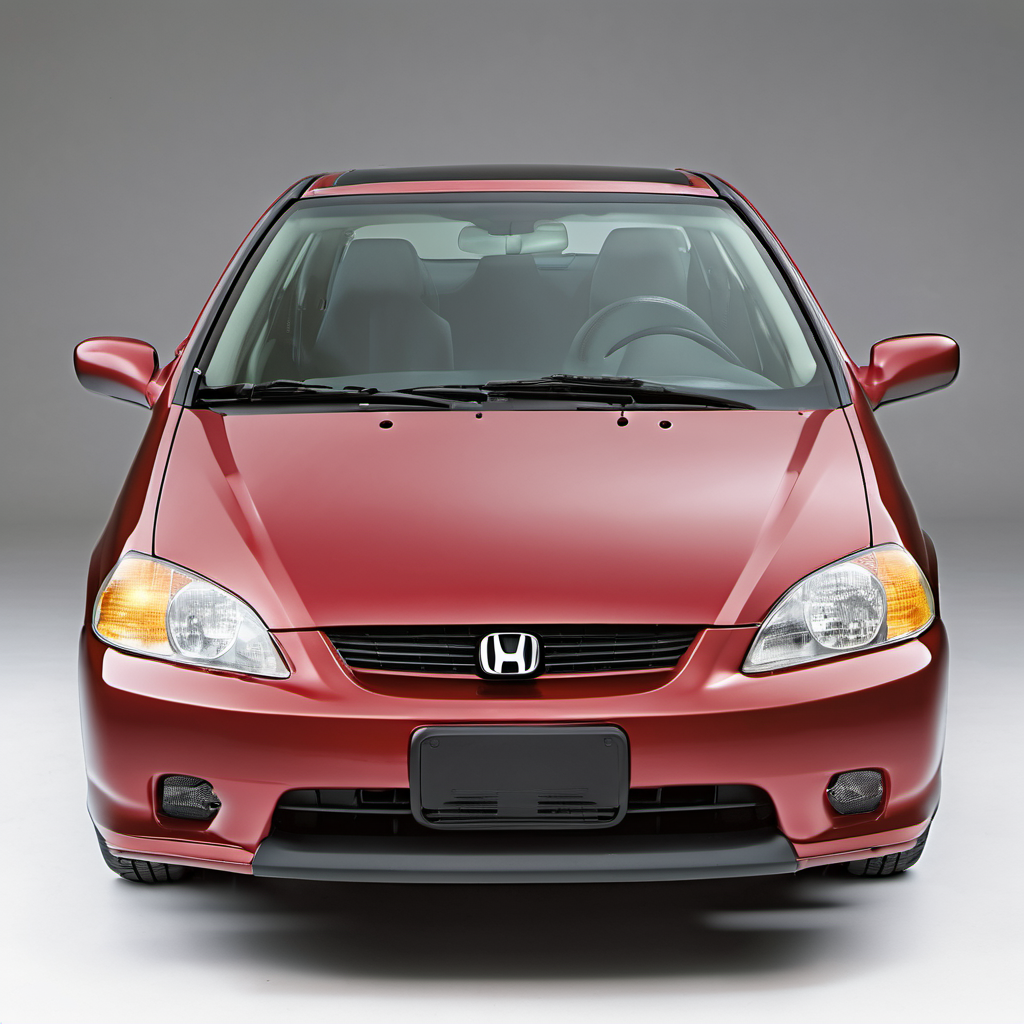
2004 Honda Civic Coupe
Popular pick

2004 Honda

CivicCoupe

1.7L I4 · Coupe

The 2004 Honda Civic Coupe is part of the seventh-generation Civic (2001–2005), widely regarded as one of the most dependable compact cars ever built. Powered by Honda's 1.7L D17A series four-cylinder, it's light, efficient, and mechanically simple — traits that translate directly into low running costs and a long service life when basic maintenance is kept up. This generation was assembled in the US and earned a reputation for going well past 200,000 miles without major drivetrain work. The coupe body style gives it a sportier look than the sedan while sharing nearly all mechanical components. The VTEC-E variant prioritizes fuel economy over performance, delivering real-world highway numbers that compete with many modern economy cars. At 20 years old, most examples are high-mileage daily drivers. The biggest threats to longevity at this point aren't engine or transmission failures — they're rust from Wisconsin road salt, worn rubber components, and deferred maintenance catching up. A well-kept example is still a smart buy; a neglected one can surprise you with suspension and brake costs.

Reliability
4/5
Verified data
Specs shown for Civic — the most common configuration. Other trims may vary in engine, drivetrain, or fuel economy. Sign in to see your vehicle's exact specs.
Engine
[object Object]
Drivetrain
Front-Wheel Drive
Fuel
Gasoline
MPG
29 city / 38 highway
Seats
Doors
4
Body
Compact Cars
MSRP
$15,560

Overview

AI-curated

The 2004 Honda Civic Coupe is part of the seventh-generation Civic (2001–2005), widely regarded as one of the most dependable compact cars ever built. Powered by Honda's 1.7L D17A series four-cylinder, it's light, efficient, and mechanically simple — traits that translate directly into low running costs and a long service life when basic maintenance is kept up. This generation was assembled in the US and earned a reputation for going well past 200,000 miles without major drivetrain work. The coupe body style gives it a sportier look than the sedan while sharing nearly all mechanical components. The VTEC-E variant prioritizes fuel economy over performance, delivering real-world highway numbers that compete with many modern economy cars. At 20 years old, most examples are high-mileage daily drivers. The biggest threats to longevity at this point aren't engine or transmission failures — they're rust from Wisconsin road salt, worn rubber components, and deferred maintenance catching up. A well-kept example is still a smart buy; a neglected one can surprise you with suspension and brake costs.

Known for
  • Exceptional long-term reliability
  • Outstanding fuel economy for its era
  • Low cost of ownership and easy independent-shop serviceability
  • Lightweight, responsive handling
  • Strong resale value retention even at high mileage
Best for
  • Budget-conscious commuters prioritizing low running costs
  • First-time car owners wanting a forgiving, reliable platform
  • High-mileage daily drivers on a tight maintenance budget
  • Anyone wanting a simple, no-frills economy coupe
Watch for
  • Underbody and rocker panel rust from years of road salt exposure
  • Worn or cracked motor mounts causing vibration at idle
  • Aging automatic transmission that may slip if fluid was never changed
  • Deteriorated suspension bushings and ball joints on high-mileage examples
  • Sunroof drain clogs (if equipped) leading to interior water intrusion

Common issues by mileage

6 known

Automatic transmission slipping or delayed shifts

medium
Typically appears
100–180k mi
Estimated repair
$1,200 – $2,800

Worn motor mounts causing idle vibration

high
Typically appears
80–150k mi
Estimated repair
$150 – $400

Oxygen sensor failure (upstream or downstream)

medium
Typically appears
100–160k mi
Estimated repair
$150 – $320

O2 sensor heater circuit fault triggering check engine light

medium
Typically appears
90–150k mi
Estimated repair
$120 – $300

Suspension bushings and ball joint wear

high
Typically appears
100k+ mi
Estimated repair
$200 – $700

Rocker panel and underbody rust (especially in salt-road climates)

high
Typically appears
Any mileage on Wisconsin/Midwest vehicles
Estimated repair
$400 – $2,500

Maintenance schedule

  1. 1
    Every 5,000 miles or 6 months Engine oil and filter change

    The D17 engine tolerates neglect less well as it ages. Fresh oil is the single biggest factor in engine longevity at high mileage.

  2. 2
    Every 30,000 miles or immediately if history is unknown Automatic transmission fluid change

    Honda recommends genuine ATF. Many used Civics have never had this done. Dark or burned-smelling fluid is a warning sign; a drain-and-fill at purchase can extend transmission life significantly.

  3. 3
    Every 5 years / 60,000 miles Coolant flush

    Honda's long-life coolant degrades over time. Old coolant becomes acidic and attacks the aluminum head and water pump. At 20 years old, this is overdue on most examples.

  4. 4
    Every 30,000 miles Spark plug replacement

    The D17 uses standard copper plugs. Worn plugs hurt fuel economy noticeably and can cause rough idle or misfires.

  5. 5
    Every 90,000 miles — verify this has been done Timing belt and water pump replacement

    The D17 is an interference engine. A broken timing belt causes catastrophic engine damage. At this age and mileage, confirm replacement history; if unknown, do it now.

  6. 6
    Every 3 years Brake fluid flush

    Brake fluid absorbs moisture over time, lowering boiling point. Wisconsin stop-and-go in hilly terrain puts real heat into brakes. Fresh fluid is cheap insurance.

  7. 7
    Every spring after winter season Inspect and lubricate door hinges and underbody components

    Road salt accelerates rust on hinges, brake lines, and fuel lines. Annual inspection and lubrication after winter significantly extends service life.

  8. 8
    Every 15,000–20,000 miles Cabin air filter replacement

    Often skipped entirely on older Civics. A clogged filter reduces A/C and defrost airflow, which matters both in summer and during Wisconsin winters when a clear windshield is critical.

Always defer to the manufacturer's service manual for warranty-mandated intervals.

Cost of ownership

Annual maintenance
$400 – $900
Fuel
At ~32 MPG combined and typical Wisconsin driving, expect roughly $1,200–$1,600/year at $3.50/gal for a 12,000-mile driver.
Insurance
Among the cheapest to insure in its class. Expect $700–$1,200/year for full coverage on a 20-year-old vehicle depending on driver profile.

The 7th-gen Civic is genuinely inexpensive to own. Parts are cheap, labor hours are low (simple layout), and fuel costs are hard to beat. The main financial risks at this age are deferred maintenance surprises — transmission service, timing belt, and rust repair. Catch those early and this car can run for years on routine oil changes and consumables.
Seasonal care

Lake Geneva, WI
Winter
  • Switch to 0W-20 or 5W-20 full synthetic oil before temps drop below 0°F — cold starts are harder on the aging D17 with thicker oil.
  • Test and replace the battery if it's more than 4 years old. This generation's small battery reserve leaves little margin for a weak cell in sub-zero temps.
  • Install winter wiper blades and fill the washer reservoir with -20°F or lower rated fluid. The 6-inch ground clearance is adequate but expect slush spray to overwhelm standard fluid quickly.
  • Inspect brake lines and fuel lines for rust and corrosion before winter — road salt will exploit any existing weak spots.
  • Check tire pressure weekly in cold snaps; pressure drops roughly 1 PSI per 10°F. The stock tire size is narrow and already marginal on snow — consider dedicated winter tires.
  • Rinse the underbody at a touchless car wash every 2–3 weeks during active salting periods to slow rocker and subframe rust.
Summer
  • Check coolant concentration and level — the aging cooling system is the primary heat-soak risk on a 20-year-old engine.
  • Inspect the A/C system for refrigerant charge and compressor clutch engagement; the manual A/C system on this car is simple to service but seals dry out with age.
  • Check tire pressure weekly in July/August heat — overinflation from heat expansion reduces contact patch and braking performance.
  • Inspect the radiator for debris buildup and bent fins, especially if the car has lived through multiple Wisconsin winters with road debris.

Comparable vehicles

If you're shopping for one

Red flags
  • Any rust through on the rocker panels, floor, or rear subframe mounting points — walk away or get a structural assessment.
  • Transmission that slips, hunts for gears, or has dark/burnt-smelling fluid with unknown service history.
  • Evidence of overheating (white residue in coolant reservoir, milky oil cap) — head gasket repairs on a D17 can cost more than the car is worth.
  • Check engine light that the seller says 'just came on' — scan it before purchase, not after.
  • Mismatched paint panels or uneven gaps suggesting prior collision repair not disclosed.
What to inspect
  • Lift the car and inspect rocker panels, floor pan, and subframe for rust perforation — this is the #1 killer of Wisconsin Civics this age.
  • Check timing belt service history — if unknown or overdue, budget $400–$600 for immediate replacement before driving.
  • Drive the automatic through all gear ranges and note any hesitation, slipping, or RPM flare between shifts.
  • Check for motor mount wear by putting the car in gear and listening/feeling for a strong 'clunk' or excessive engine movement.
  • Look for oil leaks at the valve cover gasket and cam seal — common at this mileage and inexpensive to fix, but worth negotiating on.
  • Check that heat and A/C work fully; the blower motor resistor and A/C compressor are age-related failure points.
AI profile generated 4 days ago · claude-sonnet-4-6 · v2.