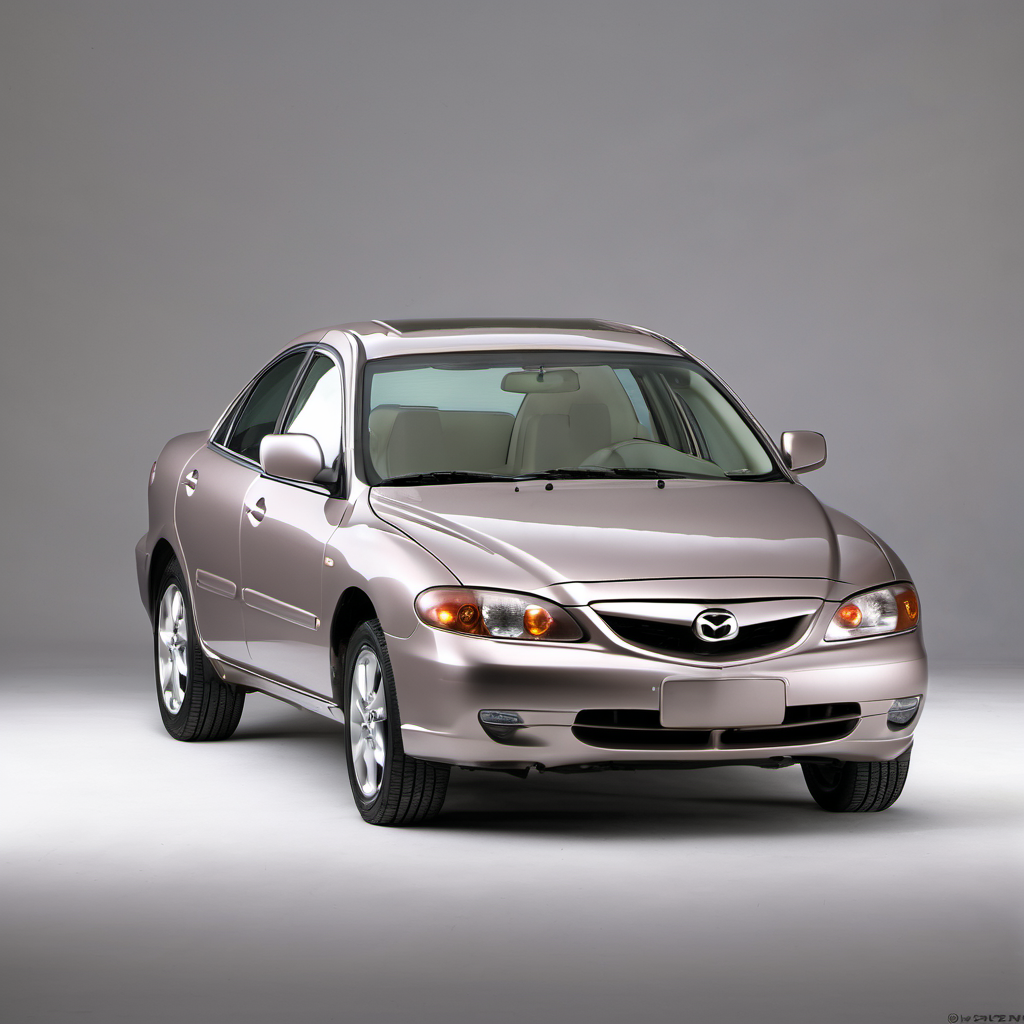
2004 MAZDA MAZDA6 Sedan

2004 MAZDA

MAZDA6Sedan

2.3L I4 · Sedan

The 2004 Mazda6 was a significant turning point for Mazda — a stylish, driver-focused midsize sedan that replaced the aging 626 and put Mazda squarely back on enthusiasts' radar. Built on a platform shared with the Ford Fusion/Milan of that era, the Mazda6 emphasized handling and driving engagement over raw comfort, earning it a reputation as one of the more fun-to-drive family sedans of its generation. Base models came with a 2.3L four-cylinder producing 160 hp, while the Sport trim added a 3.0L V6 with 220 hp — both engines paired to either a 5-speed manual or 5-speed automatic. Ride quality is firm by family-sedan standards, which keeps it sharp in corners but can feel punishing on rougher Wisconsin roads. At 20 years old, these cars are deep into used-vehicle territory. Well-maintained examples are still reliable daily drivers, but deferred maintenance, rust from road salt, and worn suspension components are common at this age. Budget for some catch-up work when buying used.

Reliability
3/5
Verified data
Engine
2.3L I4
Drivetrain
FWD
Fuel
Gasoline
MPG
22 city / 30 hwy / 25 combined
Seats
5
Doors
4
Body
Sedan
MSRP
$18,695

Overview

AI-curated

The 2004 Mazda6 was a significant turning point for Mazda — a stylish, driver-focused midsize sedan that replaced the aging 626 and put Mazda squarely back on enthusiasts' radar. Built on a platform shared with the Ford Fusion/Milan of that era, the Mazda6 emphasized handling and driving engagement over raw comfort, earning it a reputation as one of the more fun-to-drive family sedans of its generation. Base models came with a 2.3L four-cylinder producing 160 hp, while the Sport trim added a 3.0L V6 with 220 hp — both engines paired to either a 5-speed manual or 5-speed automatic. Ride quality is firm by family-sedan standards, which keeps it sharp in corners but can feel punishing on rougher Wisconsin roads. At 20 years old, these cars are deep into used-vehicle territory. Well-maintained examples are still reliable daily drivers, but deferred maintenance, rust from road salt, and worn suspension components are common at this age. Budget for some catch-up work when buying used.

Known for
  • Sharp, sporty handling for a midsize family sedan
  • Strong 3.0L V6 option with real performance feel
  • Attractive styling that aged better than many competitors
  • Solid fuel economy from the base 2.3L four-cylinder
Best for
  • Commuters who want driving engagement without a sports car price
  • Budget-conscious buyers comfortable with older vehicles
  • Drivers who prioritize handling over plush ride comfort
  • Mechanically handy owners who can handle routine upkeep
Watch for
  • Rust on rocker panels, wheel wells, and subframe — serious concern in Wisconsin
  • Automatic transmission reliability on higher-mileage examples
  • Worn or cracked engine mounts causing vibration
  • Deferred timing chain or spark plug service on the V6

Common issues by mileage

6 known

Rust on rocker panels, subframe, and rear suspension points

high
Typically appears
All mileages — age-driven
Estimated repair
$500 – $3,500

Engine oil sludge (V6 3.0L) from extended oil change intervals

medium
Typically appears
80–150k mi
Estimated repair
$400 – $2,000

Automatic transmission slipping or harsh shifts

medium
Typically appears
100–150k mi
Estimated repair
$300 – $2,800

Worn engine and transmission mounts causing vibration

high
Typically appears
80–120k mi
Estimated repair
$200 – $600

Oxygen sensor heater circuit failure (upstream sensor)

medium
Typically appears
80–150k mi
Estimated repair
$120 – $350

Maintenance schedule

  1. 1
    Every 5,000 miles or 6 months — whichever comes first Engine oil and filter change

    The 3.0L V6 is especially prone to oil sludge if intervals are stretched. Fresh oil is the single best thing you can do for this engine's longevity.

  2. 2
    Every 30,000 miles on used vehicles with unknown history; every 45,000 miles thereafter Automatic transmission fluid change

    Mazda didn't always call for frequent ATF changes from the factory, but at this age and mileage, fresh fluid can restore smoother shifts and extend transmission life significantly.

  3. 3
    Every 4–5 years or 60,000 miles Coolant flush

    Old coolant loses its corrosion inhibitors, accelerating internal rust in the cooling system and risking thermostat and water pump failure.

  4. 4
    Every 60,000 miles Spark plugs (I4)

    The 2.3L uses standard iridium plugs. Worn plugs cause misfires, poor fuel economy, and can stress the ignition coils.

  5. 5
    Every 60,000 miles — do not delay Spark plugs (V6)

    The V6's rear bank plugs are difficult to access and can seize if left too long. Removing seized plugs risks damaging the head — address on schedule.

  6. 6
    Every year — every fall before winter Brake lines and fuel lines inspection

    Wisconsin road salt aggressively attacks steel brake and fuel lines on this generation Mazda6. A pinhole brake line failure is a safety emergency; catch it early.

  7. 7
    Every 30,000 miles or at every tire rotation Suspension inspection (ball joints, tie rods, control arm bushings)

    The Mazda6 is known for a well-tuned suspension, but rubber bushings and ball joints wear out with age and salt exposure. Worn suspension hurts both safety and handling.

  8. 8
    Inspect at 80,000 miles; replace if codes P0012/P0015/P0022/P0025 appear VVT oil control solenoid cleaning/replacement

    Sludge and deposits can clog the VVT solenoid screens, causing cam timing faults. Catching this early — before engine timing is actually affected — avoids much larger engine repairs.

Always defer to the manufacturer's service manual for warranty-mandated intervals.

Cost of ownership

Annual maintenance
$600 – $1,400
Fuel
Mid-range for its class. The 2.3L I4 averages around 25 mpg combined — expect roughly $1,300–$1,700/year at current Wisconsin fuel prices for typical 12,000-mile annual driving. The 3.0L V6 drops to roughly 21 mpg combined, adding $200–$300/year.
Insurance
Generally low — older vehicle with modest market value. Expect $600–$1,000/year for full coverage depending on your driving history and ZIP code.

A well-maintained 2004 Mazda6 is inexpensive to own year-to-year for routine items — oil, brakes, tires, and fluids. The wildcard is deferred maintenance and rust. Budget an extra $500–$1,500 upfront for a pre-purchase inspection and any catch-up work. Repair parts are readily available and reasonably priced at independent shops.
Seasonal care

Lake Geneva, WI
Winter
  • Test the battery before first hard freeze — a 20-year-old car likely has an aging battery that will fail in sub-zero temps; replace proactively if it tests below spec.
  • Switch to a full-synthetic 5W-30 oil if not already used — it flows better at cold starts below 0°F and reduces wear during the critical first seconds of start-up.
  • Inspect and flush brake fluid if it hasn't been done recently — moisture absorption lowers the boiling point and can cause spongy pedal feel in winter.
  • Use a winter-rated washer fluid rated to at least -20°F — summer fluid will freeze solid in the reservoir and lines at Wisconsin temps.
  • Inspect the undercarriage for rust on brake lines, fuel lines, and subframe mounting points before winter salt season starts — this is the most important annual check on a car this age.
  • Check that all four tires have adequate tread (4/32" minimum for snow); consider dedicated winter tires for Lake Geneva's lake-effect snow and ice conditions.
Summer
  • Check tire pressure monthly — heat causes pressure to rise, and overinflated tires reduce traction and wear unevenly.
  • Inspect the A/C system for refrigerant charge and compressor clutch engagement — the condenser on this generation can develop small leaks over time.
  • Check coolant level and condition — summer heat puts maximum stress on the cooling system; a failing thermostat or low coolant can cause overheating quickly.
  • Inspect drive belts for cracking or glazing — summer heat accelerates rubber belt deterioration on a 20-year-old vehicle.

Comparable vehicles

If you're shopping for one

Red flags
  • Any visible perforation rust on the subframe or rear suspension mounting points — structural safety concern, not a cosmetic issue.
  • V6 with no oil change records and high mileage — sludge damage may be irreversible without a costly engine teardown.
  • Automatic transmission that slips, hesitates, or bangs into gear — fluid service may help mild cases, but severe cases need a rebuild.
  • Persistent VVT-related check engine codes (P0012, P0015, P0022, P0025) that return after clearing — indicates deeper oil passage or timing component wear.
  • Any signs of overheating history: white residue on the oil cap, discolored coolant, or a warped-looking valve cover gasket area.
What to inspect
  • Lift the car and inspect the subframe, rear suspension mounting points, and all brake lines for rust perforation — this is the most critical check on any Wisconsin-driven Mazda6 this age.
  • Check underneath the rocker panels and rear wheel arches for bubbling paint or soft metal indicating rust-through.
  • Start the engine cold and listen for VVT rattle or ticking that fades after warm-up — a sign of sludge or worn timing components.
  • With the engine warm, check for smooth, firm shifts through all gears on the automatic — slipping or hesitation suggests a worn transmission.
  • Check all engine and transmission mounts for cracking and excessive movement — a common wear item at this age.
  • Verify the A/C blows cold and the compressor doesn't make noise under load.
AI profile generated 11 days ago · claude-sonnet-4-6 · v2.