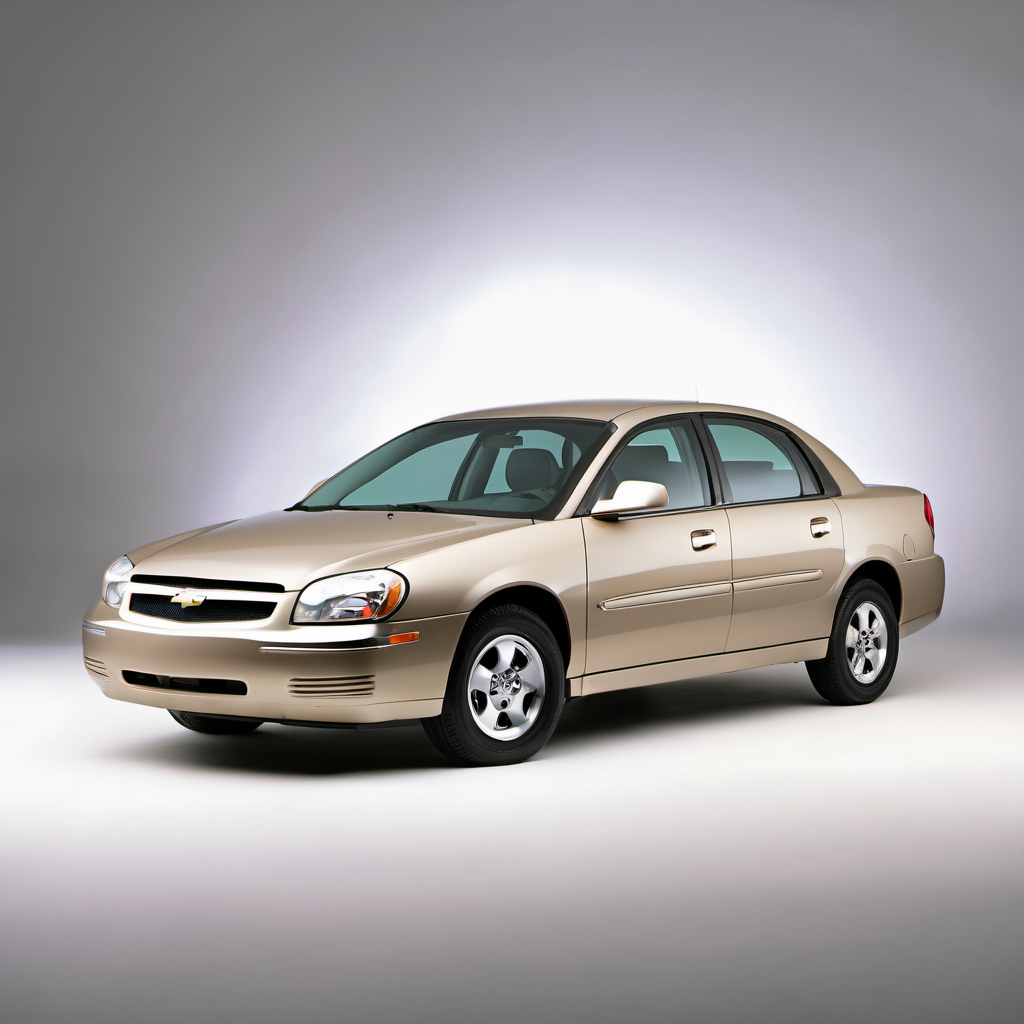
2004 Chevrolet Malibu Hatchback

2004 Chevrolet

MalibuHatchback

Hatchback

The 2004 Chevrolet Malibu was a significant reboot for GM's mid-size sedan lineup, riding on the Epsilon platform shared with the Pontiac G6. It replaced the aging W-body Malibu and brought a much more modern, car-like driving experience with improved interior quality and respectable fuel economy from its Ecotec 4-cylinder engine. The base 2.2L Ecotec four-cylinder is the most common powertell configuration and delivers a solid balance of efficiency and adequate daily-driver power. Note: Chevrolet did not offer the 2004 Malibu as a hatchback — this generation was a conventional sedan (and a Maxx wagon/hatchback variant also existed as a separate model). If your vehicle is the Malibu Maxx, it shares the same drivetrain and most mechanical components but adds a stretched wheelbase and rear liftgate. The specifications and issues below apply to both. At this age, the 2004 Malibu is firmly in high-mileage territory. It was a rental-fleet staple, so used examples have often led hard lives. Rust is a real concern on any Wisconsin-driven unit at this point, and deferred maintenance is common. That said, a well-kept example with documented service history can still be a practical, affordable commuter.

Reliability
2/5
Verified data
Specs shown for Malibu — the most common configuration. Other trims may vary in engine, drivetrain, or fuel economy. Sign in to see your vehicle's exact specs.
Engine
[object Object]
Drivetrain
FWD
Fuel
Gasoline
MPG
21 city / 31 hwy / 25 combined
Seats
Doors
Body
Midsize Cars

Overview

AI-curated

The 2004 Chevrolet Malibu was a significant reboot for GM's mid-size sedan lineup, riding on the Epsilon platform shared with the Pontiac G6. It replaced the aging W-body Malibu and brought a much more modern, car-like driving experience with improved interior quality and respectable fuel economy from its Ecotec 4-cylinder engine. The base 2.2L Ecotec four-cylinder is the most common powertell configuration and delivers a solid balance of efficiency and adequate daily-driver power. Note: Chevrolet did not offer the 2004 Malibu as a hatchback — this generation was a conventional sedan (and a Maxx wagon/hatchback variant also existed as a separate model). If your vehicle is the Malibu Maxx, it shares the same drivetrain and most mechanical components but adds a stretched wheelbase and rear liftgate. The specifications and issues below apply to both. At this age, the 2004 Malibu is firmly in high-mileage territory. It was a rental-fleet staple, so used examples have often led hard lives. Rust is a real concern on any Wisconsin-driven unit at this point, and deferred maintenance is common. That said, a well-kept example with documented service history can still be a practical, affordable commuter.

Known for
  • Solid fuel economy from the Ecotec 2.2L four-cylinder
  • Comfortable, roomy interior for a mid-size sedan
  • Fleet/rental-car popularity means high used-market supply
  • Passlock III theft-deterrent system causing no-start issues
Best for
  • Budget-conscious daily commuters
  • City and highway driving with good MPG
  • Buyers who need affordable parts availability
Watch for
  • Passlock anti-theft system failures causing no-start
  • Intake manifold gasket leaks on the 2.2L Ecotec
  • Significant underbody rust after 20 years of Midwest winters
  • Transmission issues (slipping or harsh shifts) on high-mileage units
  • Turn signal / multifunction switch failures

Common issues by mileage

6 known

Passlock III Anti-Theft No-Start

high
Typically appears
Any mileage
Estimated repair
$50 – $350

Intake Manifold Gasket Leak (2.2L Ecotec)

high
Typically appears
60–120k mi
Estimated repair
$200 – $500

Turn Signal / Multifunction Switch Failure

high
Typically appears
60–150k mi
Estimated repair
$100 – $280

Automatic Transmission Slipping or Harsh Shift

medium
Typically appears
80–150k mi
Estimated repair
$300 – $2,200

Oxygen Sensor Heater Circuit Failure

medium
Typically appears
80–130k mi
Estimated repair
$120 – $320

Underbody / Subframe Rust (Wisconsin specific)

high
Typically appears
Any mileage — age-driven
Estimated repair
$200 – $3,000

Maintenance schedule

  1. 1
    Every 5,000 miles or 6 months Engine oil and filter change

    The Ecotec 2.2L is sensitive to oil sludge from extended drain intervals. Stick to conventional or full-synthetic 5W-30. Clean oil is the single best investment in engine longevity on this car.

  2. 2
    Every 30,000 miles on used/unknown-history vehicles Transmission fluid change (automatic)

    GM's 4T45-E transmission is durable when fluid is kept fresh but struggles once fluid breaks down. If fluid history is unknown, do it immediately — dark or burnt-smelling fluid is a red flag.

  3. 3
    Every 5 years or 60,000 miles Coolant flush and fill

    Use GM DEX-COOL (orange) only. Mixing with green coolant causes gel deposits that clog the cooling system and accelerate intake gasket failure.

  4. 4
    Every 30,000 miles Spark plugs

    The 2.2L Ecotec uses standard copper plugs at this model year. Worn plugs cause rough idle and reduced fuel economy.

  5. 5
    Every 30,000 miles or at any sign of rough idle or coolant loss Inspect intake manifold gasket for coolant/vacuum leaks

    A known failure point on the Ecotec. Catching a seeping gasket early prevents coolant from entering the intake and causing much more expensive repairs.

  6. 6
    Annually — every fall before winter Inspect brake lines and fuel lines for rust

    Road salt in Lake Geneva winters accelerates line corrosion. A rusted-through brake line is a safety emergency. Catching surface rust early with professional inspection can prevent catastrophic failure.

  7. 7
    Every fall, especially after 3 years of service Battery load test

    Cold cranking amps drop sharply in sub-zero temps. A battery that seems fine in summer can fail to start the car on a January morning in Lake Geneva.

  8. 8
    Replace blades each fall; top off washer fluid with -20°F rated fluid before winter Wiper blades and washer fluid

    Summer blades crack in freezing temps and streak badly. Standard washer fluid freezes in nozzles and lines — use rated winter fluid before the first hard freeze.

Always defer to the manufacturer's service manual for warranty-mandated intervals.

Cost of ownership

Annual maintenance
$600 – $1,800
Fuel
At 25 MPG combined and ~12,000 miles/year, expect roughly $1,400–$1,700/year at current Midwest gas prices.
Insurance
Typically very affordable — expect $600–$1,100/year for full coverage depending on driver profile, given the car's age and low market value.

The 2004 Malibu is one of the cheapest vehicles to insure and fuel in its class. Parts are inexpensive and widely available. Annual maintenance on a well-kept example runs $600–$1,000. The risk is deferred repairs — if a used example has neglected transmission service, Passlock issues, or heavy rust, a single repair can exceed the car's market value. Set a realistic budget cap before committing to major repairs on any example at this age.
Seasonal care

Lake Geneva, WI
Winter
  • Load-test the battery every fall — cold snaps expose weak batteries fast, and the Passlock system adds extra drain on startup attempts.
  • Switch to a -20°F or colder rated washer fluid before the first freeze; the underhood lines and nozzles on this car are prone to cracking if fluid freezes.
  • Inspect brake lines, fuel lines, and the subframe for rust every fall — salt exposure since 2004 means corrosion is likely present somewhere on a Wisconsin-kept car.
  • Use winter wiper blades or at minimum lift standard blades off the glass when parked to prevent them freezing to the windshield.
  • Check tire pressure monthly — every 10°F drop in temperature costs roughly 1 PSI. Underinflated tires reduce traction on icy roads.
  • If the car sits for extended periods in extreme cold, consider a battery tender — the Passlock system can draw enough parasitic current to kill a marginal battery overnight.
Summer
  • Check tire pressure after any heat wave — over-inflation from heat buildup increases blowout risk.
  • Inspect the A/C system for refrigerant leaks and proper compressor clutch engagement before summer; the evaporator and condenser on a 20-year-old car may need attention.
  • Check coolant level and condition — DEX-COOL degrades over time and a low or contaminated system can overheat in traffic during Wisconsin summers.
  • Inspect the serpentine belt and tensioner — heat accelerates belt cracking, and a snapped belt leaves you stranded and can cause overheating.

Comparable vehicles

If you're shopping for one

Red flags
  • Long security light on during startup (Passlock system in relearn — can mean recurring no-start issues ahead)
  • Any signs of rust perforation on the subframe or floor — walk away, repair costs will exceed the car's value
  • Dark, burnt, or low transmission fluid — indicates neglected service on a transmission that doesn't tolerate neglect
  • Coolant that's brown or muddy — suggests DEX-COOL contamination or overheating history
  • Unknown service history combined with over 120,000 miles — too many potential deferred repairs to gamble on
What to inspect
  • Lift the car and inspect the subframe, floor pans, brake lines, and fuel lines closely for rust perforation — this is the top concern on any 20-year-old Midwest car.
  • Verify the Passlock system works correctly: the car should start without a long security relearn delay.
  • Check the automatic transmission: it should shift smoothly through all gears with no slipping, flare, or hard banging. Ask for a transmission fluid check on the spot.
  • Look for coolant loss or milky oil — signs of an intake manifold gasket leak or head gasket issue on the Ecotec.
  • Test all turn signals, the horn, and the cruise control stalk — the multifunction switch fails frequently and is a nuisance.
  • Inspect the tires for uneven wear, which can indicate alignment or suspension issues from pothole-heavy roads.
AI profile generated 16 days ago · claude-sonnet-4-6 · v2.