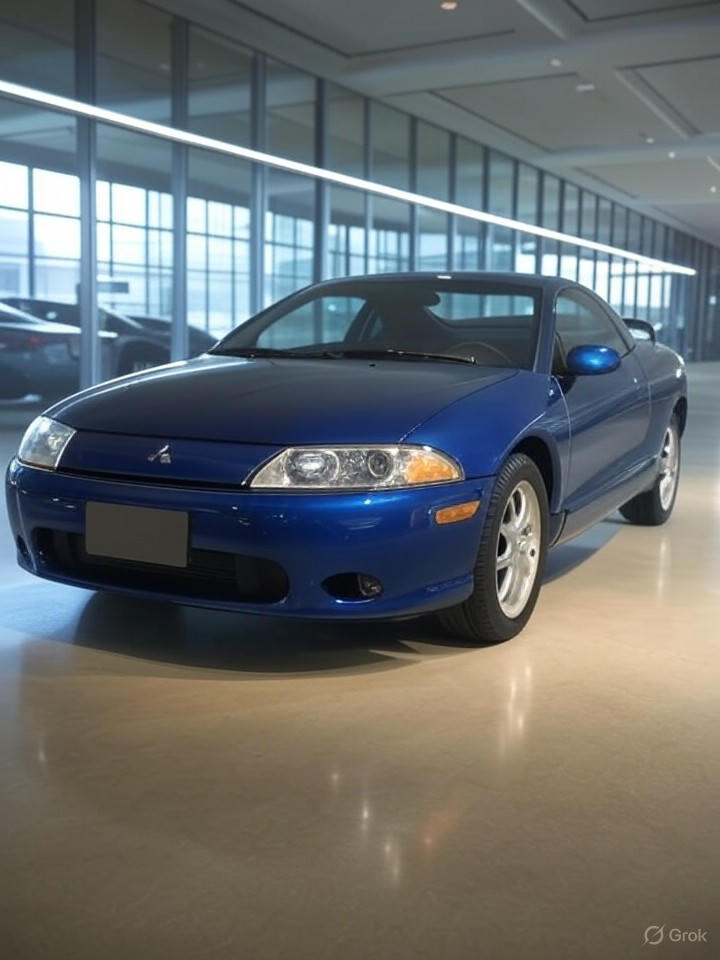
2003 Mitsubishi Eclipse Coupe

2003 Mitsubishi

EclipseCoupe

Coupe

The 2003 Mitsubishi Eclipse is a front-wheel-drive sport coupe in its third generation (1999–2005). By 2003 the turbocharged AWD models of the earlier Eclipse were long gone, leaving naturally aspirated four- and six-cylinder options aimed at style-conscious buyers rather than hard-core sports car enthusiasts. The GS trim with the 2.4L four-cylinder was the volume seller — adequate power, reasonable fuel economy, and a sporty profile at an accessible price point. As a used car today, the Eclipse sits in an interesting spot. Parts availability has thinned as Mitsubishi's U.S. footprint shrank, and the enthusiast community that kept early Eclipses thriving isn't as large for the third-gen cars. That said, a well-maintained GS example with a clean undercarriage can still be a fun, cheap-to-insure daily driver for the right owner. At 20+ years old, every surviving Eclipse needs a thorough inspection before purchase. Rust is the primary enemy in Wisconsin — these cars were not built with Great Lakes winters in mind, and floor pans, rocker panels, and subframe mounting points deserve hard scrutiny. Mechanically the 4G64 2.4L is a durable engine when maintained, but deferred oil changes and neglected timing belt services are common on these age-appropriate vehicles.

Reliability
3/5
Verified data
Specs shown for Eclipse Spyder — the most common configuration. Other trims may vary in engine, drivetrain, or fuel economy. Sign in to see your vehicle's exact specs.
Engine
[object Object]
Drivetrain
FWD
Fuel
Gasoline
MPG
20 city / 28 hwy / 23 combined
Seats
Doors
Body
Minicompact Cars

Overview

AI-curated

The 2003 Mitsubishi Eclipse is a front-wheel-drive sport coupe in its third generation (1999–2005). By 2003 the turbocharged AWD models of the earlier Eclipse were long gone, leaving naturally aspirated four- and six-cylinder options aimed at style-conscious buyers rather than hard-core sports car enthusiasts. The GS trim with the 2.4L four-cylinder was the volume seller — adequate power, reasonable fuel economy, and a sporty profile at an accessible price point. As a used car today, the Eclipse sits in an interesting spot. Parts availability has thinned as Mitsubishi's U.S. footprint shrank, and the enthusiast community that kept early Eclipses thriving isn't as large for the third-gen cars. That said, a well-maintained GS example with a clean undercarriage can still be a fun, cheap-to-insure daily driver for the right owner. At 20+ years old, every surviving Eclipse needs a thorough inspection before purchase. Rust is the primary enemy in Wisconsin — these cars were not built with Great Lakes winters in mind, and floor pans, rocker panels, and subframe mounting points deserve hard scrutiny. Mechanically the 4G64 2.4L is a durable engine when maintained, but deferred oil changes and neglected timing belt services are common on these age-appropriate vehicles.

Known for
  • Distinctive sporty styling for the era
  • Peppy 2.4L four-cylinder with solid low-end torque
  • Sport-tuned suspension that rewards spirited driving
  • Affordable entry price new and used
Best for
  • Single drivers or couples who want a sporty daily driver
  • Budget-conscious buyers prioritizing style over utility
  • Short-to-medium commuters who value fuel economy
  • Enthusiasts comfortable with basic DIY maintenance
Watch for
  • Severe rust on rockers, floor pans, and subframe in salt-belt states
  • Timing belt neglect — catastrophic engine damage if it breaks
  • Dwindling OEM parts availability through Mitsubishi dealers
  • High-mileage automatic transmissions prone to slipping
  • Sunroof drains that clog and flood cabin interiors

Common issues by mileage

6 known

Timing belt failure

high
Typically appears
60–105k mi (and every 60k thereafter)
Estimated repair
$400 – $700

Automatic transmission slipping / delayed engagement

medium
Typically appears
100–160k mi
Estimated repair
$1,800 – $3,500

Oxygen sensor heater circuit failure

medium
Typically appears
80–130k mi
Estimated repair
$150 – $350

Sunroof drain clog / cabin water intrusion

high
Typically appears
Any mileage on 10+ year-old examples
Estimated repair
$100 – $500

Rocker panel and floor pan rust

high
Typically appears
Any mileage on salt-belt vehicles
Estimated repair
$500 – $3,000

Crankshaft position sensor failure / intermittent no-start

medium
Typically appears
90–150k mi
Estimated repair
$150 – $300

Maintenance schedule

  1. 1
    Every 60,000 miles or 5 years, whichever comes first Timing belt and water pump replacement

    The 4G64 is an interference engine — if the belt snaps, pistons meet valves and the result is typically a destroyed cylinder head. Always replace the water pump at the same time since labor is already open.

  2. 2
    Every 5,000 miles or 6 months with conventional oil; every 7,500 with full synthetic Engine oil and filter change

    Clean oil is the single biggest factor in 4G64 longevity. These engines are now 20+ years old; don't push intervals.

  3. 3
    Every 30,000 miles Automatic transmission fluid drain and fill

    The F4A42 automatic is sensitive to degraded fluid. Regular fluid changes are cheap insurance against the costly slipping issues common on high-mileage examples.

  4. 4
    Every 5 years or 60,000 miles Coolant flush and refill

    Old coolant loses its anti-corrosion additives and accelerates internal corrosion of the aluminum cylinder head and cooling passages.

  5. 5
    Every 30,000 miles (standard plugs) or 60,000 miles (platinum/iridium) Spark plug replacement

    Worn plugs stress the ignition coils and can cause misfires on an engine this age.

  6. 6
    Every spring and fall Sunroof drain cleaning

    Clogged drains route water into the cabin and can saturate the floor, leading to mold and accelerated floor pan rust — a serious issue in Wisconsin.

  7. 7
    Monthly through winter; full inspection each spring Undercarriage wash and inspection

    Road salt aggressively attacks the Eclipse's rocker panels, subframe mounting points, and brake lines. Catching rust early is far cheaper than letting it spread.

  8. 8
    Every 2–3 years Brake fluid flush

    Brake fluid is hygroscopic and absorbs moisture over time, lowering its boiling point and promoting corrosion in the hydraulic system — a real concern in Wisconsin's humid climate.

Always defer to the manufacturer's service manual for warranty-mandated intervals.

Cost of ownership

Annual maintenance
$600 – $1,400
Fuel
At 23 MPG combined and ~12,000 miles per year, expect roughly $1,500–$1,800/year at current Wisconsin gas prices. Premium fuel is not required.
Insurance
Generally inexpensive to insure for a two-door sport coupe — liability-only on an older example runs $600–$900/year for most adult drivers. Collision/comprehensive adds cost but may not pencil out given the car's low market value.

Day-to-day running costs are modest if the car has been maintained. The danger zone is deferred service on a 20-year-old example: a neglected timing belt, automatic transmission rebuild, or significant rust repair can each cost more than the car is worth. Buy a clean, documented example and you'll spend $600–$1,400/year on routine upkeep. Buy a mystery-history car and you're gambling.
Seasonal care

Lake Geneva, WI
Winter
  • Test the battery before first freeze — cold-cranking amps drop sharply below 20°F and this car's compact engine bay leaves little room for a weak battery to compensate. Replace any battery older than 4 years.
  • Switch to a full synthetic 5W-30 or 0W-30 if still running conventional oil — cold starts are much easier on the engine internals.
  • Fill the washer reservoir with fluid rated to at least -25°F. The low hood line means a frozen reservoir or cracked pump is a common and inconvenient failure.
  • Inspect and treat the undercarriage with a penetrating rust inhibitor before the salt season begins. Pay extra attention to rocker panels, pinch welds, and subframe bolts.
  • Keep the fuel tank at least half full — condensation in a near-empty tank accelerates corrosion and can cause fuel delivery issues in extreme cold.
  • Check that the sunroof drains are clear before freeze-thaw cycles begin. Frozen standing water in clogged drains can crack the drain tubes.
Summer
  • Inspect the A/C system for refrigerant leaks and compressor operation — these age-related seals degrade and the cabin gets very hot quickly in a low-slung coupe with large glass surfaces.
  • Monitor coolant temperature closely on hot days, especially in stop-and-go traffic. The aging cooling system (water pump, thermostat, hoses) on a 20-year-old car is worth proactive inspection.
  • Check tire pressure monthly — ambient heat raises pressure and underinflation in summer wears tires unevenly and increases blowout risk. Use the door jamb spec, not the tire sidewall max.
  • Inspect the timing belt visually for cracking or glazing if it's been more than a few years since replacement — heat accelerates belt degradation.

Comparable vehicles

If you're shopping for one

Red flags
  • Any evidence of floor pan rust-through or patched rocker panels
  • No timing belt service history and over 60,000 miles on the clock
  • Automatic transmission that slips, hesitates, or clunks between gears
  • Check engine light present or recently cleared (scan for stored codes)
  • Mismatched paint panels suggesting prior accident repair
  • Sunroof that doesn't open/close smoothly or has visible water damage on headliner
  • Coolant that is brown, rusty, or smells of exhaust (combustion gas intrusion)
What to inspect
  • Rocker panels, door sills, and floor pans — probe with a screwdriver if needed; rust here can be structural and expensive
  • Subframe mounting points for corrosion or crack repair evidence
  • Timing belt service records — if unknown, budget for immediate replacement before driving
  • Automatic transmission: check for slipping, shuddering, or delayed shifts during a test drive
  • Sunroof operation and drain function — look for water stains on headliner or damp carpet
  • Coolant condition and any signs of oil mixing (milky residue on cap = potential head gasket issue)
  • All four oxygen sensors for fault codes using an OBD-II scanner before purchase
  • Brake lines and fuel lines for corrosion — these are often overlooked on salt-belt cars this age
AI profile generated 1 hr ago · claude-sonnet-4-6 · v2.