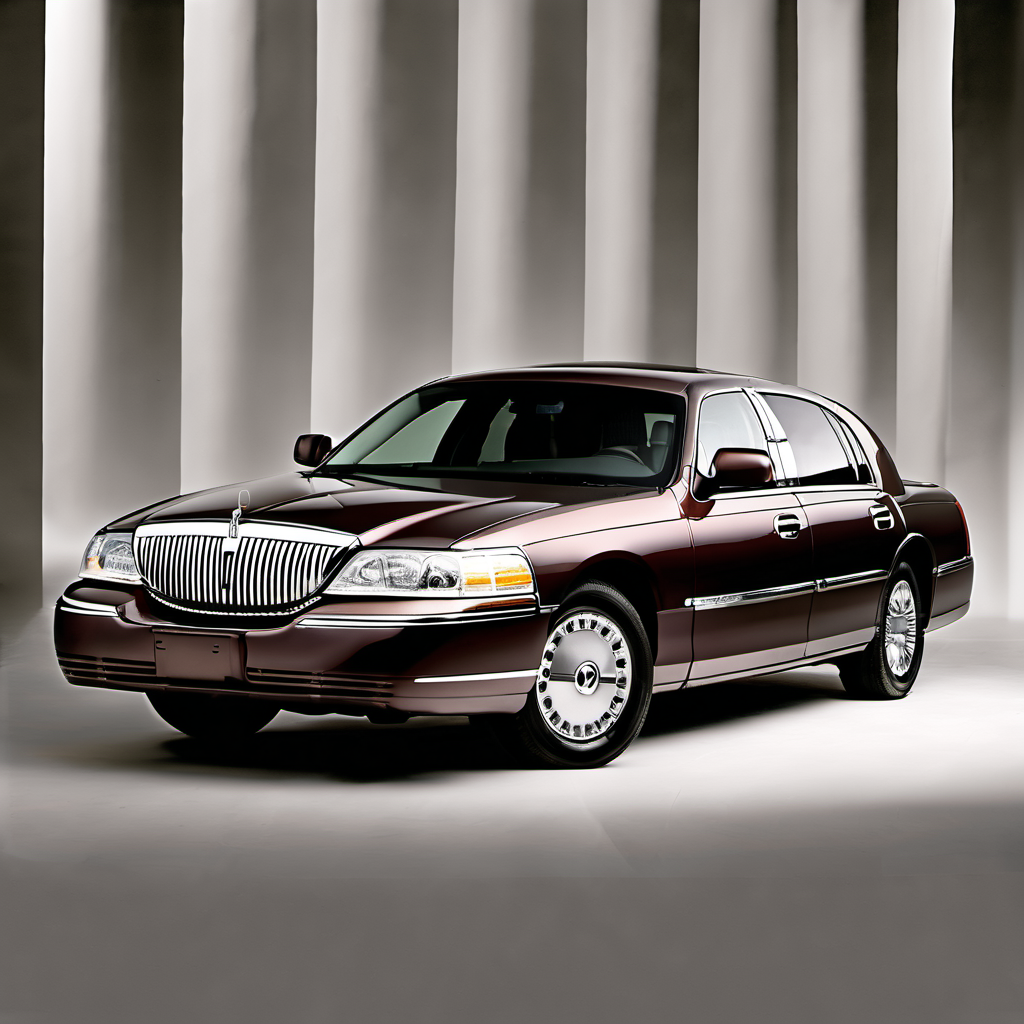
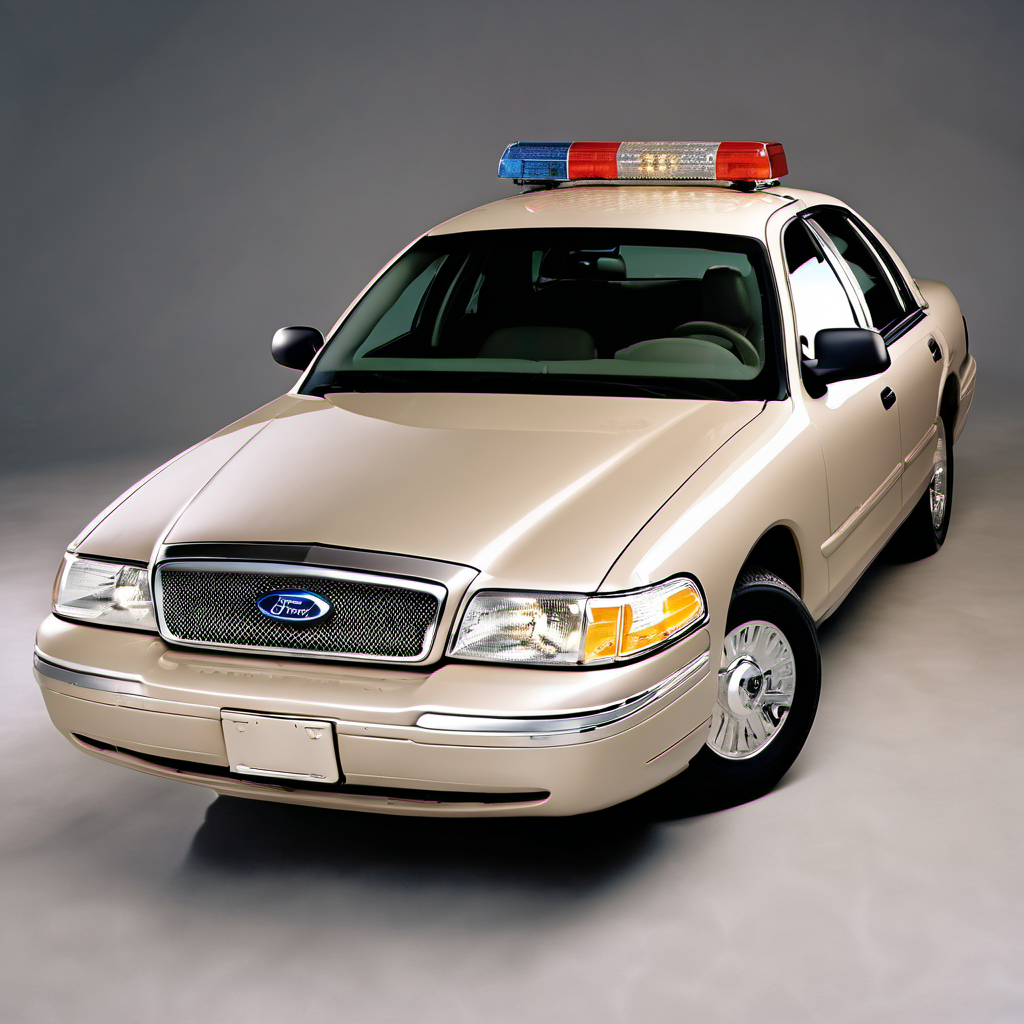
2003 Lincoln Town Car Sedan

2003 Lincoln

Town CarSedan

Sedan

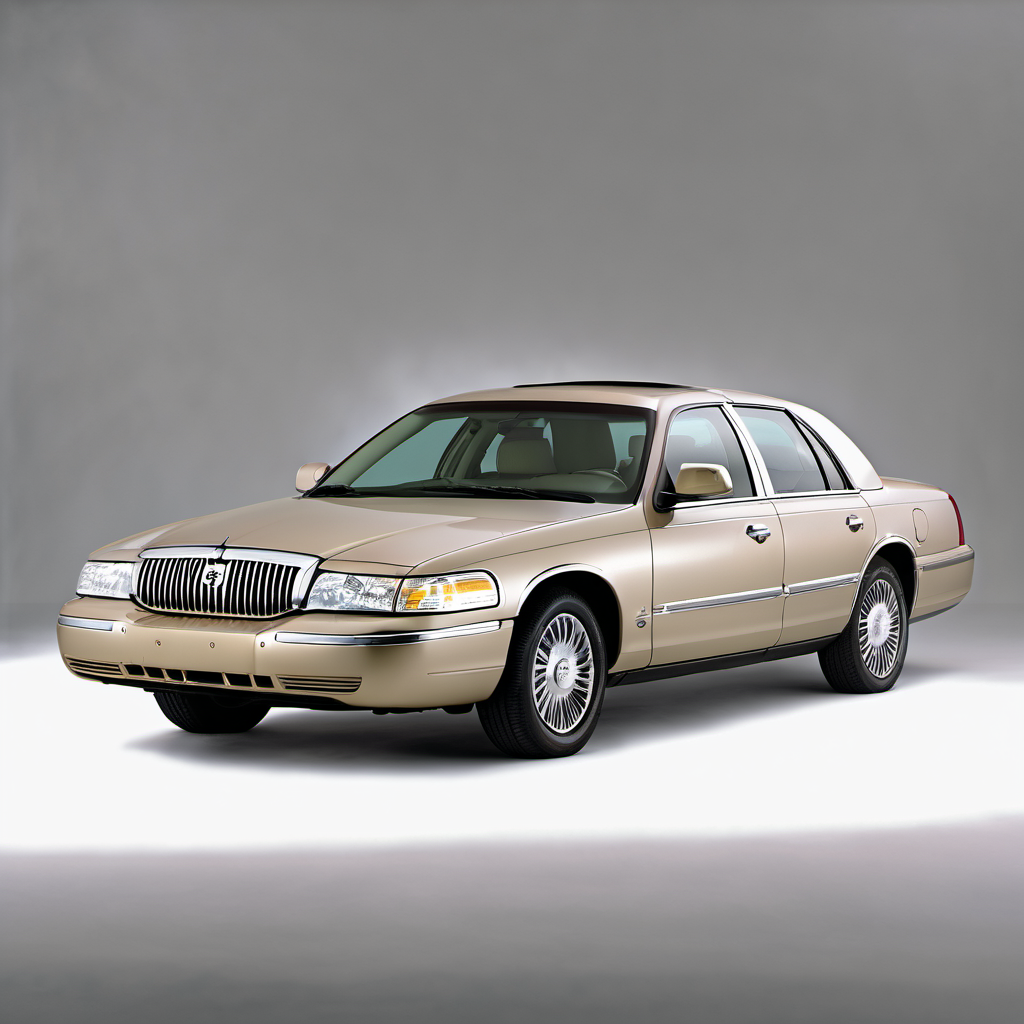
The 2003 Lincoln Town Car is a full-size, body-on-frame rear-wheel-drive luxury sedan — one of the last of a dying breed when it was new. Built on Ford's Panther platform alongside the Crown Victoria and Mercury Grand Marquis, it shares the proven 4.6L V8 and 4-speed automatic that fleet operators and enthusiasts alike trust for longevity. The Town Car was aimed squarely at comfort-first buyers: a soft ride, a cavernous cabin, and enough trunk space to embarrass most SUVs. By 2003 Lincoln had been refining this basic formula for over two decades, which is both its strength and its limitation. You get a mechanically simple, well-understood vehicle with an enormous parts supply — but you don't get modern fuel economy, tight handling, or cutting-edge tech. Air suspension (standard on Cartier trim) is the biggest wildcard on used examples. For Lake Geneva-area owners, the RWD setup means you'll want a proper set of winter tires. The big V8 starts reliably in the cold, but the air-bag suspension and aging electrical accessories need attention before each Wisconsin winter.

Reliability
4/5
Verified data
Specs shown for Town Car — the most common configuration. Other trims may vary in engine, drivetrain, or fuel economy. Sign in to see your vehicle's exact specs.
Engine
[object Object]
Drivetrain
RWD
Fuel
Gasoline
MPG
16 city / 23 hwy / 18 combined
Seats
Doors
Body
Large Cars

Overview

AI-curated

The 2003 Lincoln Town Car is a full-size, body-on-frame rear-wheel-drive luxury sedan — one of the last of a dying breed when it was new. Built on Ford's Panther platform alongside the Crown Victoria and Mercury Grand Marquis, it shares the proven 4.6L V8 and 4-speed automatic that fleet operators and enthusiasts alike trust for longevity. The Town Car was aimed squarely at comfort-first buyers: a soft ride, a cavernous cabin, and enough trunk space to embarrass most SUVs. By 2003 Lincoln had been refining this basic formula for over two decades, which is both its strength and its limitation. You get a mechanically simple, well-understood vehicle with an enormous parts supply — but you don't get modern fuel economy, tight handling, or cutting-edge tech. Air suspension (standard on Cartier trim) is the biggest wildcard on used examples. For Lake Geneva-area owners, the RWD setup means you'll want a proper set of winter tires. The big V8 starts reliably in the cold, but the air-bag suspension and aging electrical accessories need attention before each Wisconsin winter.

Known for
  • Exceptionally smooth, floaty ride quality
  • Proven 4.6L Modular V8 — long-lived with basic maintenance
  • Massive trunk and rear-seat legroom
  • Reliable Panther-platform mechanicals shared with police fleet Crown Vics
  • Abundant and inexpensive OEM and aftermarket parts
Best for
  • Highway cruising and long-distance comfort
  • Buyers who want V8 luxury at a used-car budget
  • Chauffeur or livery-style use
  • Older drivers who prioritize ease of entry/exit and a plush ride
Watch for
  • Air suspension air bags and compressor — expensive to repair, commonly failed on 20+ year old examples
  • RWD in Wisconsin winters without dedicated snow tires
  • Aging vacuum and electrical accessories (air suspension, power seat motors, HVAC blend doors)
  • Rust on frame rails, subframe, and exhaust — critical in salt-belt states
  • Coolant leaks from the plastic intake manifold and thermostat housing

Common issues by mileage

6 known

Plastic Intake Manifold Coolant Crossover Leak

high
Typically appears
60–120k mi
Estimated repair
$350 – $700

HVAC Blend Door Actuator Failure (no heat or A/C on one side)

medium
Typically appears
80–160k mi
Estimated repair
$150 – $400

Oxygen Sensor / O2 Sensor Heater Circuit Fault

medium
Typically appears
80–150k mi
Estimated repair
$150 – $350

Camshaft Position / VCT Timing Code (oil sludge or worn chain)

low
Typically appears
120–200k mi
Estimated repair
$300 – $900

Power Window and Seat Motor Failure

medium
Typically appears
100k+ mi
Estimated repair
$100 – $400

Maintenance schedule

  1. 1
    Every 5,000 miles or 6 months Engine oil and filter change — use 5W-20 full synthetic

    The 4.6L Modular V8 is sensitive to oil quality at high mileage. Clean oil is the single best insurance against timing chain wear and VCT sludge codes.

  2. 2
    Every 3 years / 45,000 miles Coolant flush and intake manifold inspection

    The plastic coolant crossover on the intake manifold is a known failure point. Keeping coolant fresh and at the correct concentration delays cracking and corrosion.

  3. 3
    Every fall, before winter Air suspension inspection — air bags, lines, and compressor

    Cold temperatures accelerate air bag rubber deterioration. Catching a slow leak before it leaves you sitting on the bumpstops in a Wisconsin parking lot saves a tow bill.

  4. 4
    Every 60,000 miles Spark plugs (motorcraft-spec)

    The 4.6L uses coil-on-plug ignition. Worn plugs increase misfire risk and fuel consumption. Use the factory-spec plug to avoid the stripped-thread issues sometimes caused by aftermarket plugs in aluminum heads.

  5. 5
    Every 60,000 miles Transmission fluid exchange

    The 4R70W automatic is durable but fluid breakdown in older units accelerates clutch wear. Use Mercon V as specified.

  6. 6
    Every 2 years Brake fluid flush

    Moisture absorption in brake fluid lowers boiling point and accelerates internal corrosion in calipers and wheel cylinders — a real concern on a 20-year-old vehicle in a salt-belt state.

  7. 7
    Every spring after winter Undercarriage rust inspection — frame rails, brake lines, fuel lines

    Wisconsin road salt is brutal on Panther-platform frames. Brake and fuel lines are steel and rot from the outside in. Catching pinhole leaks early is a safety issue.

  8. 8
    Every fall Battery load test

    A battery that passes a summer test may fail to crank a 4,369-lb car in sub-zero temps. The Town Car's numerous electrical accessories add drain. Replace proactively after 4–5 years.

Always defer to the manufacturer's service manual for warranty-mandated intervals.

Cost of ownership

Annual maintenance
$700 – $1,800
Fuel
At 18 MPG combined and ~12,000 miles/year, expect roughly $1,600–$2,000/year at $2.50–$3.00/gal. Premium is not required; regular 87 octane is factory spec.
Insurance
Typically low — full coverage on a 20-year-old luxury sedan runs $800–$1,400/year for most drivers in the Lake Geneva area, depending on driving record and coverage limits.

On a mechanically sound example, annual maintenance is modest — oil changes, filters, and the occasional sensor or belt. Budget the higher end if the air suspension has never been addressed or if brake/fuel lines haven't been inspected. A full air suspension replacement or intake manifold repair can add $500–$1,200 in a single year. Parts are cheap and widely available; labor rates are forgiving because the engine bay is not cramped.
Seasonal care

Lake Geneva, WI
Winter
  • Switch to a dedicated set of winter/snow tires — RWD on ice with all-seasons is genuinely dangerous, especially on Lake Geneva's hilly roads.
  • Load-test the battery every October. Cold-cranking demand on a big V8 with aging accessories is high; a marginal battery will fail at the worst time.
  • Inspect air suspension bags and compressor before temperatures drop. Rubber bags crack faster in sustained sub-zero cold, and a leaking bag can leave the car sitting on the frame overnight.
  • Top off windshield washer fluid with a -20°F or lower rated fluid. The large windshield surface accumulates road salt fast and a weak fluid will freeze on the glass.
  • Check and treat exposed brake lines and fuel lines with a rust-inhibiting coating if any surface rust is visible — salt season accelerates perforation.
  • Keep the gas tank at least half full in extreme cold to reduce condensation in the fuel system and provide ballast over the rear axle for traction.
Summer
  • Check tire pressure after the first hot week — pressure rises roughly 1 PSI per 10°F, and the Town Car's heavy curb weight accelerates heat buildup in underinflated tires.
  • Inspect the A/C system for refrigerant level and compressor clutch operation before the first heat wave. The Town Car's large cabin is uncomfortable without a fully functional A/C.
  • Check coolant concentration and level — the plastic intake manifold crossover is most likely to show seeping leaks when the engine is heat-soaking in traffic.
  • Inspect the power steering fluid level and hose condition; heat accelerates hose degradation on older high-mileage examples.

Comparable vehicles

If you're shopping for one

Red flags
  • Sagging rear or front end with the engine running — failed air bags or dead compressor; budget $400–$1,200 to fix.
  • Any sign of rust perforation on brake or fuel lines — safety-critical and expensive to address on a full-size car.
  • Milky or frothy coolant in the reservoir — potential head gasket or intake manifold failure.
  • Transmission that slips between 2nd and 3rd or hesitates on cold mornings — worn clutch packs in the 4R70W.
  • Evidence of flooding (musty smell, water stains under carpet, corroded fuse box) — Town Cars were popular livery/fleet vehicles and some were flood-damaged and resold.
  • Mismatched paint panels or signs of heavy bodywork — check the door jambs and trunk weatherstripping for overspray.
What to inspect
  • Air suspension: with the car running, listen for the compressor cycling repeatedly — it should reach pressure and stop. Sagging at one or more corners is a red flag.
  • Undercarriage: get it on a lift and look at brake lines, fuel lines, and frame rails for rust perforation — not just surface rust, but through-rust.
  • Coolant overflow tank: milky or oily coolant indicates a head gasket or intake manifold leak. Check after the engine has fully warmed.
  • Power windows and seats: cycle all of them. Motor failures are common and individual motors cost $80–$200 each.
  • Transmission: should shift smoothly through all gears with no slipping, flares, or hard bangs. A fluid check for dark/burnt smell is essential.
  • Check for any stored DTCs with an OBD-II scanner before purchase, even if no warning lights are on — pending codes can reveal developing issues.
AI profile generated 1 hr ago · claude-sonnet-4-6 · v2.