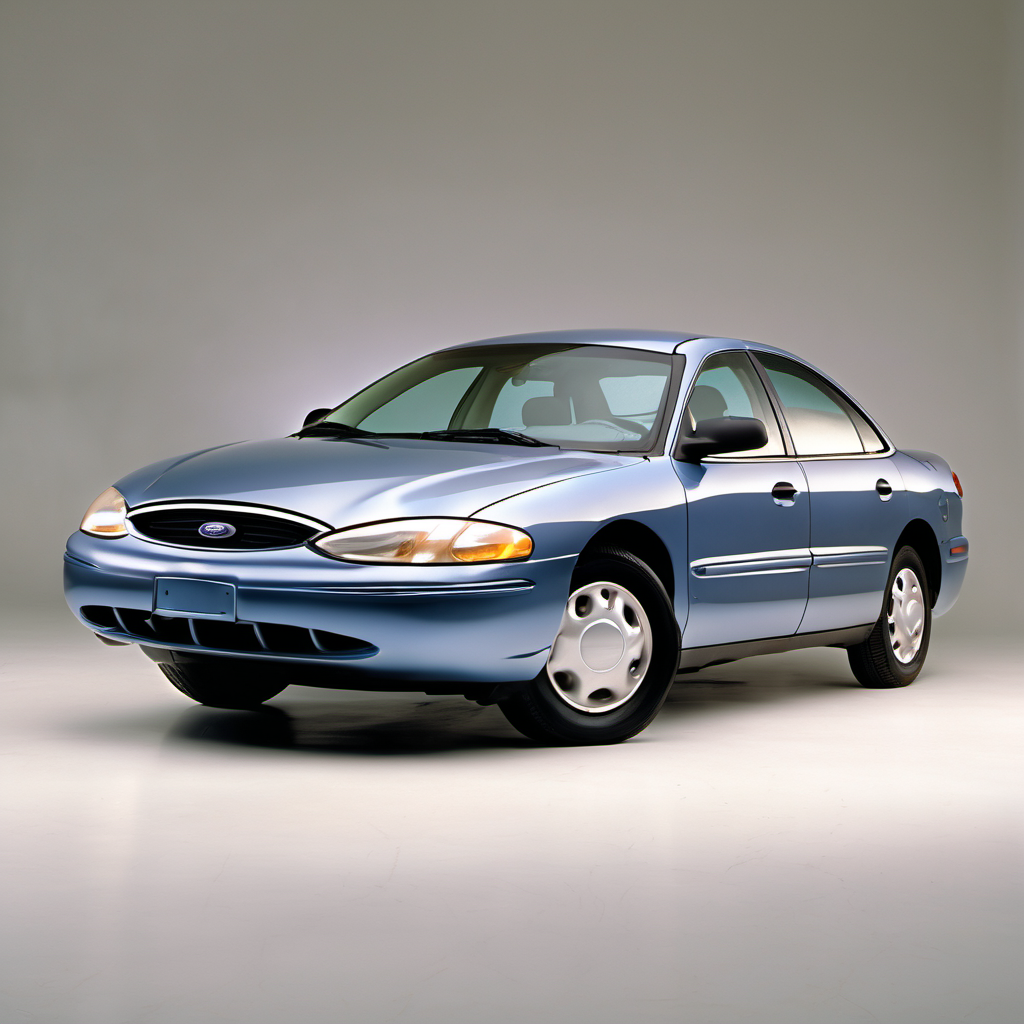
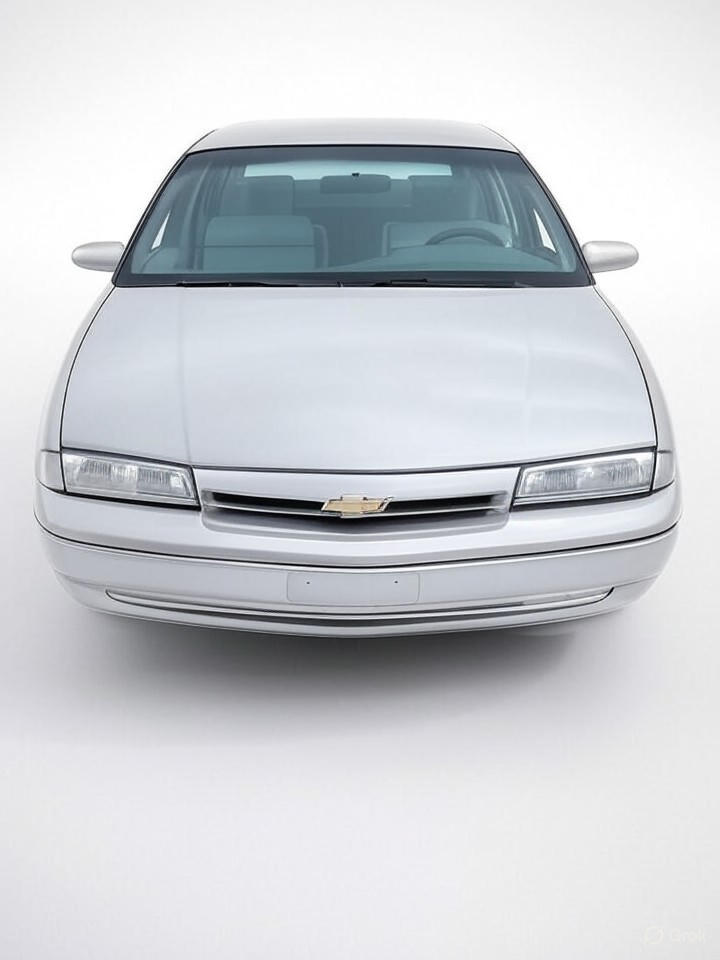
1998 Ford Taurus Sedan

1998 Ford

TaurusSedan

Sedan

The 1998 Ford Taurus was America's best-selling car for much of the 1990s, and for good reason — it offered a practical, roomy front-wheel-drive sedan at an accessible price point. The fourth-generation Taurus (1996–1999) brought a controversial oval-themed interior and exterior redesign that divided opinion, but mechanically it carried over the proven Vulcan and Duratec V6 engines that owners had come to rely on. The 3.0L Duratec 4V (dual overhead cam) version is the more sophisticated engine of the two V6 options offered that year. It delivers stronger power than the base Vulcan but also requires more attention to cooling and timing components as mileage climbs. The AX4S 4-speed automatic transmission paired to it has a long history in the Taurus lineup — reliable when serviced, but known to soften up when fluid changes are skipped. At this age, any surviving 1998 Taurus is a high-mileage machine. The key to ownership is staying on top of cooling system maintenance, keeping an eye on transmission fluid condition, and watching for the rust that Wisconsin roads will accelerate. Parts are cheap and widely available — this is one of the easiest old sedans to keep on the road on a budget.

Reliability
3/5
Verified data
Specs shown for Taurus — the most common configuration. Other trims may vary in engine, drivetrain, or fuel economy. Sign in to see your vehicle's exact specs.
Engine
[object Object]
Drivetrain
FWD
Fuel
Gasoline
MPG
16 city / 25 hwy / 19 combined
Seats
Doors
Body
Midsize Cars

Overview

AI-curated

The 1998 Ford Taurus was America's best-selling car for much of the 1990s, and for good reason — it offered a practical, roomy front-wheel-drive sedan at an accessible price point. The fourth-generation Taurus (1996–1999) brought a controversial oval-themed interior and exterior redesign that divided opinion, but mechanically it carried over the proven Vulcan and Duratec V6 engines that owners had come to rely on. The 3.0L Duratec 4V (dual overhead cam) version is the more sophisticated engine of the two V6 options offered that year. It delivers stronger power than the base Vulcan but also requires more attention to cooling and timing components as mileage climbs. The AX4S 4-speed automatic transmission paired to it has a long history in the Taurus lineup — reliable when serviced, but known to soften up when fluid changes are skipped. At this age, any surviving 1998 Taurus is a high-mileage machine. The key to ownership is staying on top of cooling system maintenance, keeping an eye on transmission fluid condition, and watching for the rust that Wisconsin roads will accelerate. Parts are cheap and widely available — this is one of the easiest old sedans to keep on the road on a budget.

Known for
  • One of the best-selling American sedans of the 1990s
  • Roomy cabin and large trunk for the class
  • Inexpensive parts and wide independent-shop support
  • Smooth, quiet ride on the highway
  • Two distinct V6 engines — Vulcan (base) and Duratec (DOHC)
Best for
  • Budget-conscious commuters needing a reliable A-to-B sedan
  • DIYers — parts are plentiful and cheap
  • Flat-road highway driving
  • Owners who can keep up with cooling system service
Watch for
  • Intake manifold coolant crossover leaks — the single most common failure on 3.0L Vulcan; less common but possible on Duratec
  • Transmission fluid neglect leading to AX4S/AX4N slipping
  • Subframe and underbody rust from Wisconsin salt exposure
  • Aging rubber: hoses, CV axle boots, and suspension bushings all degrade with age
  • Deferred cooling system service on a 25+ year old car

Common issues by mileage

6 known

Intake manifold coolant crossover leak

high
Typically appears
80–150k mi
Estimated repair
$400 – $900

AX4N transmission slipping / delayed engagement

medium
Typically appears
100–160k mi
Estimated repair
$200 – $2,800

Oxygen sensor heater circuit failure (Bank 1 Sensor 1)

medium
Typically appears
80–130k mi
Estimated repair
$80 – $220

Oxygen sensor heater circuit failure (Bank 1 Sensor 2)

medium
Typically appears
80–130k mi
Estimated repair
$80 – $220

CV axle boot failure / axle shaft wear

high
Typically appears
90k+ mi
Estimated repair
$150 – $450

Subframe and underbody rust (accelerated by road salt)

high
Typically appears
Any age in upper Midwest
Estimated repair
$300 – $2,500

Maintenance schedule

  1. 1
    Every 2 years or 30,000 miles — sooner on an unknown-history car Coolant flush and cooling system inspection

    The 3.0L Duratec's plastic coolant crossover and aging hoses are a primary failure point. Old, acidic coolant accelerates corrosion and seal degradation. This is the single most important service on this engine.

  2. 2
    Every 30,000 miles Transmission fluid and filter service

    The AX4N is reliable when fluid is fresh. Dark or burnt-smelling fluid means internal damage may already be underway. Service immediately if history is unknown.

  3. 3
    Every 60,000 miles or at first sign of cracking/glazing Serpentine belt and tensioner inspection

    A belt failure at 25+ years old leaves you stranded. Tensioner pulleys seize with age regardless of belt appearance.

  4. 4
    Every 30,000 miles on a vehicle this age Spark plugs and ignition wires

    Original or long-neglected plugs cause misfires and fuel economy loss. Wires crack and arc with age, especially in cold Wisconsin winters.

  5. 5
    Annually or at every oil change Inspect CV axle boots and front suspension bushings

    Torn boots allow grease loss and grit entry, destroying the axle shaft quickly. Worn control arm bushings cause vague steering and accelerated tire wear.

  6. 6
    Annually, ideally before winter Undercarriage rust inspection and treatment

    Wisconsin road salt attacks exposed metal year-round. Catch rust at the surface-bubbling stage before it reaches structural subframe metal.

  7. 7
    Every 2–3 years Brake fluid flush

    Brake fluid absorbs moisture over time, lowering its boiling point and corroding calipers and wheel cylinders — a real concern on a 25-year-old vehicle.

  8. 8
    Every fall before winter Battery load test

    Cold-cranking capacity drops sharply in sub-zero temps. A battery that starts the car fine in October may fail in January. Test it before the first hard freeze.

Always defer to the manufacturer's service manual for warranty-mandated intervals.

Cost of ownership

Annual maintenance
$600 – $1,800
Fuel
Expect roughly $1,800–$2,400/year at typical driving distances based on 19 MPG combined and current Midwest gas prices. Premium fuel is not required.
Insurance
Typically low — liability-only coverage is common at this value. Full coverage rarely makes financial sense given the vehicle's current market value of $1,000–$3,500.

The Taurus is one of the cheapest old sedans to maintain in terms of parts cost — nearly everything is available at any auto parts store for a fraction of import-car prices. Labor costs are manageable at an independent shop. The real wildcard is deferred maintenance: a neglected cooling system or transmission can turn a $1,500 car into a $3,000 repair bill overnight. Budget on the higher end if service history is unknown.
Seasonal care

Lake Geneva, WI
Winter
  • Load-test the battery every fall — the Duratec V6 cranks hard in sub-zero temps and an aging battery will fail without warning.
  • Switch to a full-synthetic or synthetic-blend 5W-30 oil if not already in use; conventional oil thickens in extreme cold and delays lubrication on startup.
  • Inspect and replace wiper blades with winter-rated blades before the first snowfall; the standard blades clog with ice and streak badly.
  • Top off washer fluid with a -20°F or lower rated formula — Lake Geneva winters will freeze standard fluid solid in the reservoir and lines.
  • Rinse the undercarriage thoroughly at a self-serve car wash after heavy salt events; the subframe and rear suspension mounts on these cars are known rust targets.
  • Keep the fuel tank above half when possible — moisture condensation in a near-empty tank accelerates fuel line corrosion on a vehicle this age.
Summer
  • Inspect the cooling system hoses and clamps before summer heat; a marginal hose that holds through winter often lets go under summer heat load.
  • Check tire pressure monthly — ambient temperature swings of 40°F between spring and summer add or drop roughly 4–6 PSI and affect handling and wear.
  • Run the A/C system and check for weak cooling; the evaporator and condenser on a 25-year-old car may have slow refrigerant leaks that worsen under heavy summer use.
  • Inspect the cabin air filter (if equipped) or cowl drain for leaf debris — a blocked cowl accelerates floor pan rust and can damage the blower motor.

Comparable vehicles

If you're shopping for one

Red flags
  • Any sign of coolant in the oil (milky dipstick) or oil in the coolant reservoir — walk away unless priced accordingly for a known repair.
  • Transmission that hesitates more than 1–2 seconds before engaging Drive or Reverse from a cold start.
  • Subframe rust so advanced that the metal has been penetrated — structural repairs on a sub-$3,000 car rarely make financial sense.
  • Check engine light on with no explanation from the seller — scan the codes before agreeing to any price.
  • Evidence of overheating history: warped hood paint, water stains on the radiator overflow tank, or a replaced thermostat housing with no other cooling system records.
What to inspect
  • Pull the radiator cap (cold engine only) and look for oily residue or brown froth — a sign of coolant/oil mixing from a head gasket or intake crossover leak.
  • Check the transmission: with the engine warm, it should shift firmly and smoothly through all gears with no slipping, shuddering, or delayed engagement from a stop.
  • Inspect the undercarriage closely — especially the front subframe mounting points, rear trailing arm mounts, and rocker panels. Poke with a screwdriver; rust that flakes away under light pressure is a red flag.
  • Look for coolant smell under the hood or wet spots on the passenger-side floor (heater core leak is common on aging vehicles).
  • Check all four CV axle boots for cracking or grease splatter on the inner wheel wells.
  • Start the engine cold and listen for ticking or rattling from the top of the engine — could indicate low oil pressure or worn timing components on the Duratec.
AI profile generated 1 day ago · claude-sonnet-4-6 · v2.