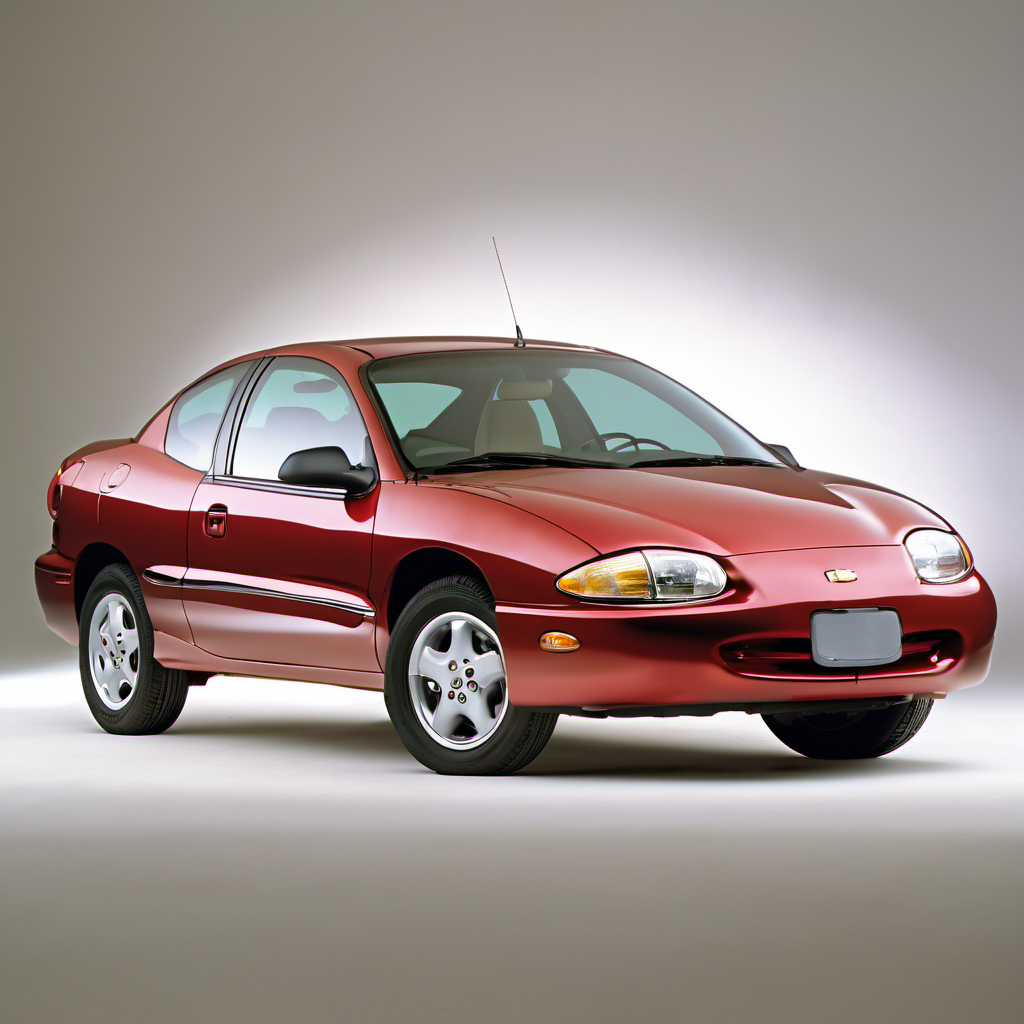
1998 Chevrolet Cavalier Hatchback

1998 Chevrolet

CavalierHatchback

Hatchback

The 1998 Chevrolet Cavalier Hatchback is a compact economy car built on GM's J-body platform, sharing its bones with the Pontiac Sunfire. By 1998, the Cavalier had been in its third generation since 1995 and was one of the best-selling small cars in America largely on the strength of its low price and low running costs. The 2.2L pushrod four-cylinder is a simple, proven engine that tolerates neglect better than most, though 'tolerates' is not the same as 'thrives on.' The hatchback body style gives it modest cargo flexibility that the coupe and sedan can't match — a practical bonus for a car this size. At 26 years old, any surviving Cavalier is well past the point where its history matters more than the nameplate. Rust, deferred maintenance, and worn suspension components are the story now. This is firmly a budget vehicle in 2025 — worth owning if the price is right and the undercarriage is clean, but not worth sinking serious money into. Parts are cheap and widely available, and a good independent shop can keep one running for very little per mile.

Reliability
3/5
Verified data
Specs shown for Cavalier — the most common configuration. Other trims may vary in engine, drivetrain, or fuel economy. Sign in to see your vehicle's exact specs.
Engine
[object Object]
Drivetrain
FWD
Fuel
Gasoline
MPG
20 city / 27 hwy / 23 combined
Seats
Doors
Body
Subcompact Cars

Overview

AI-curated

The 1998 Chevrolet Cavalier Hatchback is a compact economy car built on GM's J-body platform, sharing its bones with the Pontiac Sunfire. By 1998, the Cavalier had been in its third generation since 1995 and was one of the best-selling small cars in America largely on the strength of its low price and low running costs. The 2.2L pushrod four-cylinder is a simple, proven engine that tolerates neglect better than most, though 'tolerates' is not the same as 'thrives on.' The hatchback body style gives it modest cargo flexibility that the coupe and sedan can't match — a practical bonus for a car this size. At 26 years old, any surviving Cavalier is well past the point where its history matters more than the nameplate. Rust, deferred maintenance, and worn suspension components are the story now. This is firmly a budget vehicle in 2025 — worth owning if the price is right and the undercarriage is clean, but not worth sinking serious money into. Parts are cheap and widely available, and a good independent shop can keep one running for very little per mile.

Known for
  • Very low purchase and operating costs
  • Simple, DIY-friendly 2.2L pushrod engine
  • One of the top-selling compact cars of the 1990s
  • Decent fuel economy for its era
Best for
  • First-time or budget-conscious buyers
  • Short urban and suburban commutes
  • Owners willing to do basic DIY maintenance
  • Low-mileage, low-budget daily transportation
Watch for
  • Severe rust on rockers, subframe, and wheel wells — critical in Wisconsin
  • High-mileage engine oil burning from worn piston rings or valve seals
  • Neglected coolant system leading to intake manifold gasket failure
  • Electrical gremlins from aging wiring and connectors
  • Worn or collapsed struts and bushings — very common at this age

Common issues by mileage

6 known

Lower intake manifold gasket failure

high
Typically appears
80–130k mi
Estimated repair
$300 – $550

Oxygen sensor failure (upstream or downstream)

high
Typically appears
80–150k mi
Estimated repair
$100 – $220

Struts and strut mounts worn/collapsed

high
Typically appears
70–120k mi
Estimated repair
$300 – $550

Oil consumption from worn valve seals or piston rings

medium
Typically appears
100–160k mi
Estimated repair
$150 – $1,200

Ignition switch or ignition module failure

medium
Typically appears
80–150k mi
Estimated repair
$120 – $300

Rust perforation on rocker panels, subframe, and rear wheel arches

high
Typically appears
Any — especially post-100k in salt-belt states
Estimated repair
$400 – $2,500

Maintenance schedule

  1. 1
    Every 5,000 miles or 6 months Engine oil and filter change

    The 2.2L OHV runs flat-tappet lifters and is sensitive to dirty oil. Regular changes are the single best thing you can do to keep this engine alive, especially if it's showing any oil consumption.

  2. 2
    Every 2 years or 30,000 miles Coolant flush and refill

    Degraded coolant accelerates intake manifold gasket failure — the most common costly repair on this engine. Use the correct DEX-COOL or green coolant per the fill cap label; don't mix types.

  3. 3
    Every 30,000 miles Spark plugs and wires

    OEM-style plugs and wires are inexpensive on this engine. Worn plugs cause rough idle and misfires, and can mask bigger issues. Replace as a set.

  4. 4
    Inspect at every oil change; replace every 60,000 miles or at first sign of cracking Serpentine belt inspection and replacement

    A snapped belt on this car kills the alternator, power steering, and water pump simultaneously. At this age, just replace it if it's unknown.

  5. 5
    Every 2 years Brake fluid flush

    Brake fluid absorbs moisture over time, lowering boiling point and corroding wheel cylinders and calipers from the inside. Especially important on an older vehicle with aging rubber lines.

  6. 6
    Annually or every 20,000 miles Suspension and steering inspection (tie rods, ball joints, sway bar links, bushings)

    At this age, these components are likely original or near-original. Wisconsin roads accelerate wear. A worn ball joint can cause sudden loss of steering control.

  7. 7
    Every fall before winter Battery load test

    Cold cranking amps drop sharply in sub-zero temps. A battery that seems fine in September may leave you stranded in January. Load-test before winter sets in.

  8. 8
    Every spring after winter salt season Undercarriage rust inspection

    Inspect the subframe mounting points, rocker panels, brake lines, and fuel lines for rust. Brake line rust-through is a safety emergency; catch it early.

Always defer to the manufacturer's service manual for warranty-mandated intervals.

Cost of ownership

Annual maintenance
$400 – $1,000
Fuel
At 23 MPG combined and ~12,000 miles/year, expect roughly $1,300–$1,600/year at $2.50–$3.00/gallon. Easy to keep fuel costs low given the engine size.
Insurance
Typically one of the cheapest vehicles to insure — low value means low comprehensive/collision premiums. Expect $600–$1,000/year for full coverage in Wisconsin depending on driver profile.

This is one of the cheapest cars to own on a per-mile basis — if it's rust-free and not hiding a major mechanical problem. Parts are plentiful and inexpensive. The risk is a single large repair (subframe rust, intake gasket, struts all at once) on a car worth $1,500–$3,000. Always weigh repair cost against vehicle value before authorizing work.
Seasonal care

Lake Geneva, WI
Winter
  • Load-test the battery every October — sub-zero temps will expose a weak battery immediately
  • Switch to a 5W-30 full synthetic oil if still running conventional; it flows faster on cold starts below 0°F
  • Inspect rubber brake lines and metal brake lines under the car for rust before winter — salt accelerates any existing corrosion
  • Fill the washer fluid reservoir with a rated -20°F or colder concentrate; the stock reservoir is small and runs out fast
  • Check that the coolant mixture is at least -34°F protection — test with an inexpensive strip or float tester
  • Apply an undercoating or rust inhibitor spray to exposed subframe and rocker panel areas before first heavy salt exposure
Summer
  • Check tire pressure monthly — pressure rises about 1 PSI per 10°F increase and is often over-inflated in summer heat
  • Inspect the A/C system for refrigerant leaks; the 1998 Cavalier uses R-134a and the system is old enough to have seeping hoses or O-rings
  • Watch coolant temperature gauge closely in stop-and-go traffic — a failing thermostat or weak water pump can cause overheating that leads to head gasket damage
  • Inspect the serpentine belt for cracking or glazing; heat accelerates belt degradation on high-mileage examples

Comparable vehicles

If you're shopping for one

Red flags
  • Any soft, flaky, or perforated rust on the subframe or structural rocker panels
  • Rust-compromised brake lines — do not drive the vehicle until replaced
  • Milky or frothy oil — coolant contamination means significant engine work ahead
  • Sustained blue exhaust smoke at idle or under acceleration
  • Overheating on a test drive — walk away unless you know exactly what was fixed and can verify it
  • Carbureted or non-stock engine modifications — indicates possible deferred or improper repairs
What to inspect
  • Lift the car and inspect the subframe, rocker panels, and rear wheel arches — rust perforation here is a deal-breaker or major negotiating point
  • Check metal brake lines along the undercarriage for rust bubbling or pinhole leaks — critical safety item
  • Start cold and watch for blue smoke on startup (valve seals) or sustained blue smoke (rings) indicating oil consumption
  • Check for white or tan residue under the oil cap or on the dipstick — sign of coolant intrusion from a failing intake or head gasket
  • Test all four windows, the A/C, and the heater blower — electrical repairs on a car this age and value rarely pencil out
  • Bounce each corner of the car and listen/feel for clunking struts or sloppy bushings
AI profile generated 16 days ago · claude-sonnet-4-6 · v2.