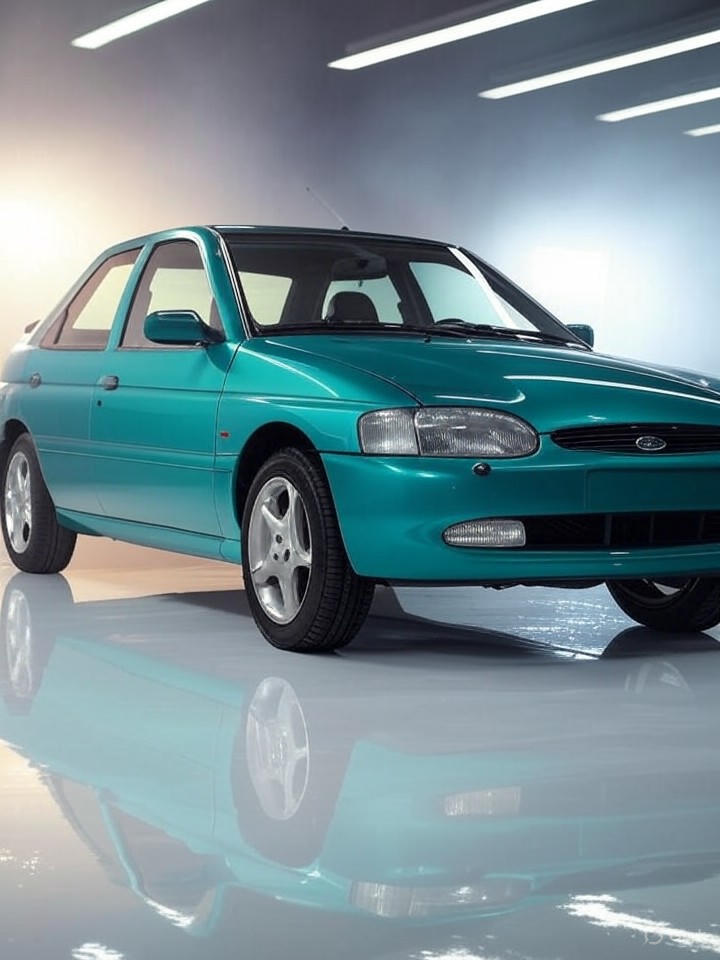
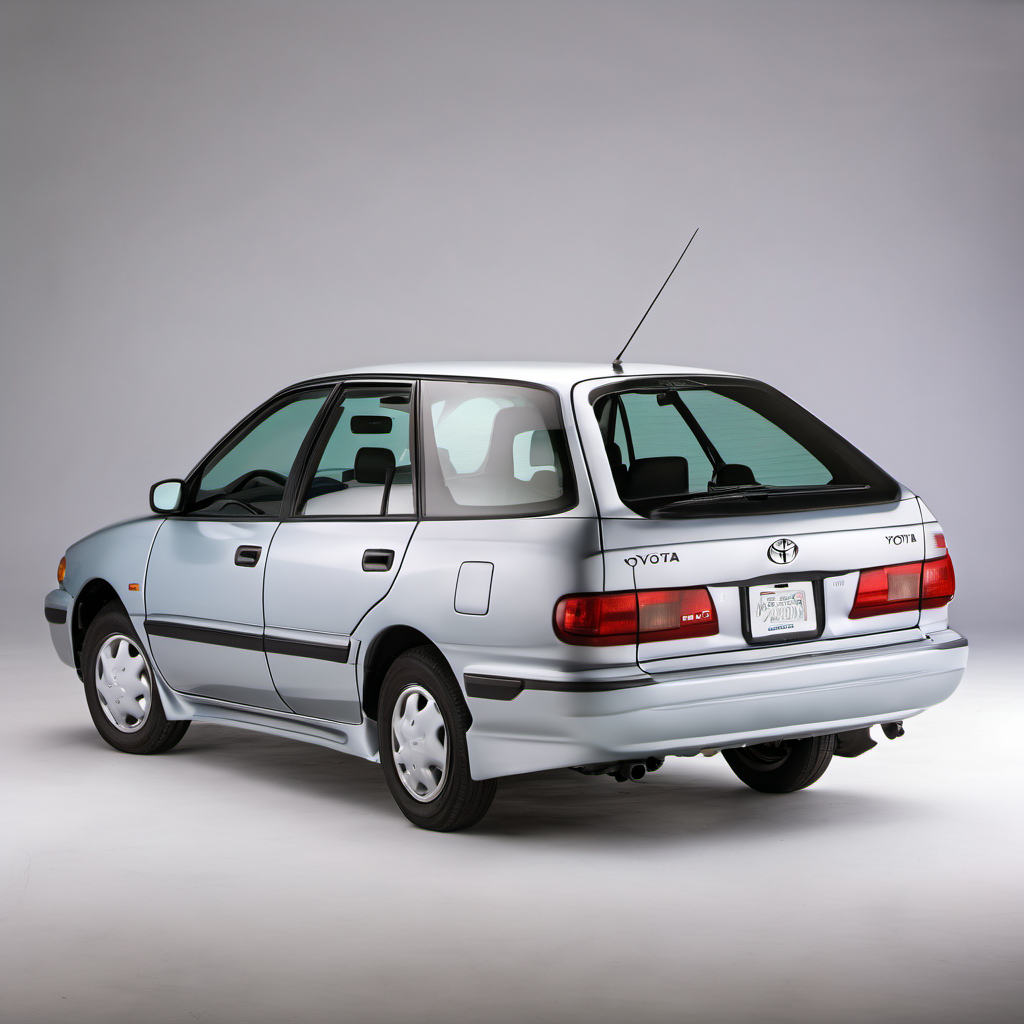
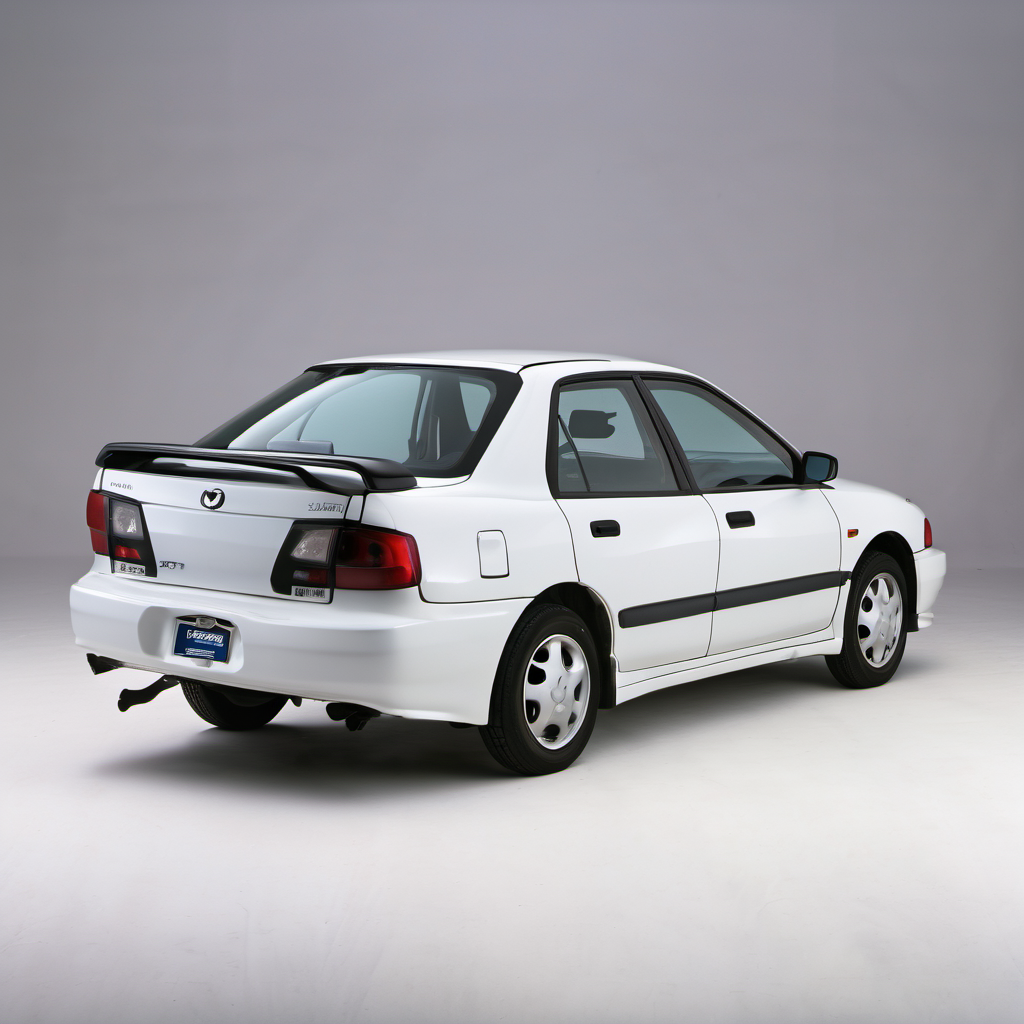
1996 Ford Escort Hatchback

1996 Ford

EscortHatchback

Hatchback

The 1996 Ford Escort Hatchback is a second-generation (1991–1996) front-wheel-drive subcompact that Ford developed in partnership with Mazda, sharing the BP-series engine platform used in the Mazda 323/Protegé. It was one of the best-selling economy cars of its era, prized almost entirely for its low purchase price, low running costs, and simple mechanicals that any competent independent shop could service. By 1996 the Escort was at the end of its production run — the ZX2 coupe and redesigned Escort sedan replaced it for 1997–1999. That means parts are mature and widely available, but it also means you're buying a car with a design that was already aging when it left the showroom. The 1.8L four-cylinder is generally reliable when maintained, but the cooling system, oxygen sensors, and front suspension bushings are the areas that most commonly need attention on cars this age. For a Lake Geneva winter driver, the Escort's light curb weight and FWD work reasonably well in moderate snow, but ground clearance is minimal and the car demands quality winter tires to perform safely. Rust is the biggest enemy of any Escort this old — Wisconsin road salt is brutal on these unibody cars, and finding a rust-free example at this point is genuinely difficult.

Reliability
3/5
Verified data
Specs shown for Escort — the most common configuration. Other trims may vary in engine, drivetrain, or fuel economy. Sign in to see your vehicle's exact specs.
Engine
[object Object]
Drivetrain
FWD
Fuel
Gasoline
MPG
20 city / 27 hwy / 22 combined
Seats
Doors
Body
Compact Cars

Overview

AI-curated

The 1996 Ford Escort Hatchback is a second-generation (1991–1996) front-wheel-drive subcompact that Ford developed in partnership with Mazda, sharing the BP-series engine platform used in the Mazda 323/Protegé. It was one of the best-selling economy cars of its era, prized almost entirely for its low purchase price, low running costs, and simple mechanicals that any competent independent shop could service. By 1996 the Escort was at the end of its production run — the ZX2 coupe and redesigned Escort sedan replaced it for 1997–1999. That means parts are mature and widely available, but it also means you're buying a car with a design that was already aging when it left the showroom. The 1.8L four-cylinder is generally reliable when maintained, but the cooling system, oxygen sensors, and front suspension bushings are the areas that most commonly need attention on cars this age. For a Lake Geneva winter driver, the Escort's light curb weight and FWD work reasonably well in moderate snow, but ground clearance is minimal and the car demands quality winter tires to perform safely. Rust is the biggest enemy of any Escort this old — Wisconsin road salt is brutal on these unibody cars, and finding a rust-free example at this point is genuinely difficult.

Known for
  • Low purchase and operating costs
  • Mazda-sourced 1.8L engine with decent longevity when maintained
  • Simple, DIY-friendly mechanicals
  • Good fuel economy for its era
  • Wide parts availability from both Ford and Mazda supply chains
Best for
  • Budget-conscious commuters with short to medium daily drives
  • First-time car owners or young drivers
  • City and suburban driving where parking is tight
  • Owners comfortable doing basic maintenance themselves
Watch for
  • Severe underbody and rocker panel rust on Wisconsin examples
  • Aging cooling system components (thermostat, hoses, water pump)
  • Worn front struts and control arm bushings at this mileage
  • Oxygen sensor failures causing poor fuel economy and rough running
  • Head gasket leaks, particularly if the car has ever overheated

Common issues by mileage

6 known

Front strut and control arm bushing wear

high
Typically appears
80k+ mi (or age-related on any example this old)
Estimated repair
$350 – $700

Oxygen sensor failure — rough idle, poor fuel economy, check engine light

high
Typically appears
70k–120k mi
Estimated repair
$120 – $280

Cooling system failure — thermostat, hoses, or water pump

high
Typically appears
Any mileage given vehicle age
Estimated repair
$150 – $500

Head gasket seepage or failure (often follows an overheat event)

medium
Typically appears
100k+ mi
Estimated repair
$700 – $1,400

Underbody and rocker panel rust — can become structural

high
Typically appears
All mileages on Midwest examples
Estimated repair
$400 – $2,500

Clutch wear (manual transmission)

medium
Typically appears
90k–140k mi
Estimated repair
$500 – $900

Maintenance schedule

  1. 1
    Every 5,000 miles or 6 months Engine oil and filter change

    The 1.8L Mazda engine tolerates neglect poorly as it ages. Shorter intervals help catch early leaks and sludge buildup in a high-mileage engine.

  2. 2
    Every 2 years regardless of mileage Coolant flush and system inspection

    Hoses, the thermostat, and the water pump are all age-degraded on a car this old. A cooling system failure leading to overheat can destroy the head gasket.

  3. 3
    Inspect now; replace timing belt every 60k mi or 5 years Serpentine/accessory belts and timing belt inspection

    The 1.8L is an interference engine — a snapped timing belt causes catastrophic valve damage. On a car this old, age matters as much as mileage.

  4. 4
    Every 30,000 miles Spark plugs and ignition wires

    Worn plugs and cracked ignition wires cause misfires and rough cold starts, which are especially problematic in Wisconsin winters.

  5. 5
    Every spring (after salt season) Full underbody rust inspection

    Wisconsin road salt actively attacks the Escort's unibody. Catch rust early on the subframe, rocker panels, and floor pans — structural rust makes the car unsafe and uneconomical to repair.

  6. 6
    Every 2 years Brake fluid flush

    Brake fluid absorbs moisture over time, lowering the boiling point and accelerating corrosion in the calipers and wheel cylinders — a real concern on an aging car in a salt-belt state.

  7. 7
    Annually or any time handling feels vague Front suspension inspection (struts, bushings, tie rod ends)

    These components are all age-degraded at this point. Worn front-end components hurt handling on icy roads and cause uneven tire wear.

  8. 8
    Every fall before winter Battery load test

    A marginal battery that starts the car in October may fail completely at -10°F in January. Load-test and replace proactively.

Always defer to the manufacturer's service manual for warranty-mandated intervals.

Cost of ownership

Annual maintenance
$600 – $1,800
Fuel
At 22 MPG combined and typical Wisconsin driving, expect roughly $1,400–$1,700/year in fuel at current prices, depending on your mix of city vs. highway miles.
Insurance
Liability-only insurance on a car this age and value typically runs $400–$700/year in the Lake Geneva area, depending on driver history. Full coverage rarely makes financial sense given the vehicle's market value.

On paper the Escort is cheap to own — parts are inexpensive and fuel costs are modest. The real wildcard is deferred maintenance and rust repair. A car in solid, well-maintained condition costs relatively little to keep running. A neglected example can easily burn through $2,000+ in a single year catching up. Budget on the higher end until you have a full service history in hand.
Seasonal care

Lake Geneva, WI
Winter
  • Install dedicated winter tires — the Escort's light front end loses traction quickly on packed snow and ice with all-season tires.
  • Load-test the battery every fall; cold-cranking a 1.8L in sub-zero temps with a weak battery is a recipe for being stranded.
  • Switch to a full-synthetic 5W-30 oil before temperatures drop below 20°F for easier cold starts and faster warm-up oil flow.
  • Top off washer fluid with a -30°F rated fluid and replace worn wiper blades — the Escort's low windshield angle accumulates ice quickly.
  • Inspect the heater core hoses and heater output; a failed heater core on a car this age is a real possibility and a safety issue in extreme cold.
  • Rinse the undercarriage every 1–2 weeks during active salt season to slow rust progression on what is already a vulnerable underbody.
Summer
  • Check tire pressure monthly — low-profile small tires lose pressure more noticeably in summer heat swings and affect handling.
  • Inspect the A/C system for refrigerant leaks; the Escort uses R-134a but the condenser and hoses on a car this age are prone to slow leaks.
  • Keep an eye on coolant temperature in stop-and-go traffic — the radiator and cooling fan on a high-mileage Escort can struggle in prolonged heat.
  • Check brake pad thickness before summer road trips; heat increases brake fade on thin pads.
  • Inspect rubber CV axle boots for cracking — summer heat accelerates rubber degradation, and a torn boot will destroy a CV joint quickly.

Comparable vehicles

If you're shopping for one

Red flags
  • Any visible rust bubbling on the rocker panels, door bottoms, or wheel arches — this means there is much more rust you can't see.
  • Oil or coolant leaks on the ground where the car is parked.
  • A check engine light that the seller says 'just came on' — on a car this old, deferred diagnosis is a pattern, not a coincidence.
  • A car priced significantly below comparable examples — at this age, cheap price usually means expensive problems.
  • Missing service records entirely — a 28-year-old car with no paper trail has almost certainly had maintenance gaps.
What to inspect
  • Crawl under the car and probe the rocker panels, subframe mounting points, and floor pans with a screwdriver — structural rust is a deal-breaker and is common on Midwest Escorts.
  • Check the coolant for oil contamination (milky brown color) and the oil cap for white sludge — both indicate a head gasket problem.
  • Start the engine cold and listen for rattling on startup — timing belt tensioner noise or cam timing issues are expensive fixes.
  • Test the heater and A/C; both are often deferred on cheap older cars.
  • Drive it on rough pavement and listen for clunking from the front suspension — worn struts and control arm bushings are nearly universal at this age.
  • Inspect all four CV axle boots for cracks or grease fling marks on the inner fender — torn boots lead to CV joint replacement.
AI profile generated 16 days ago · claude-sonnet-4-6 · v2.