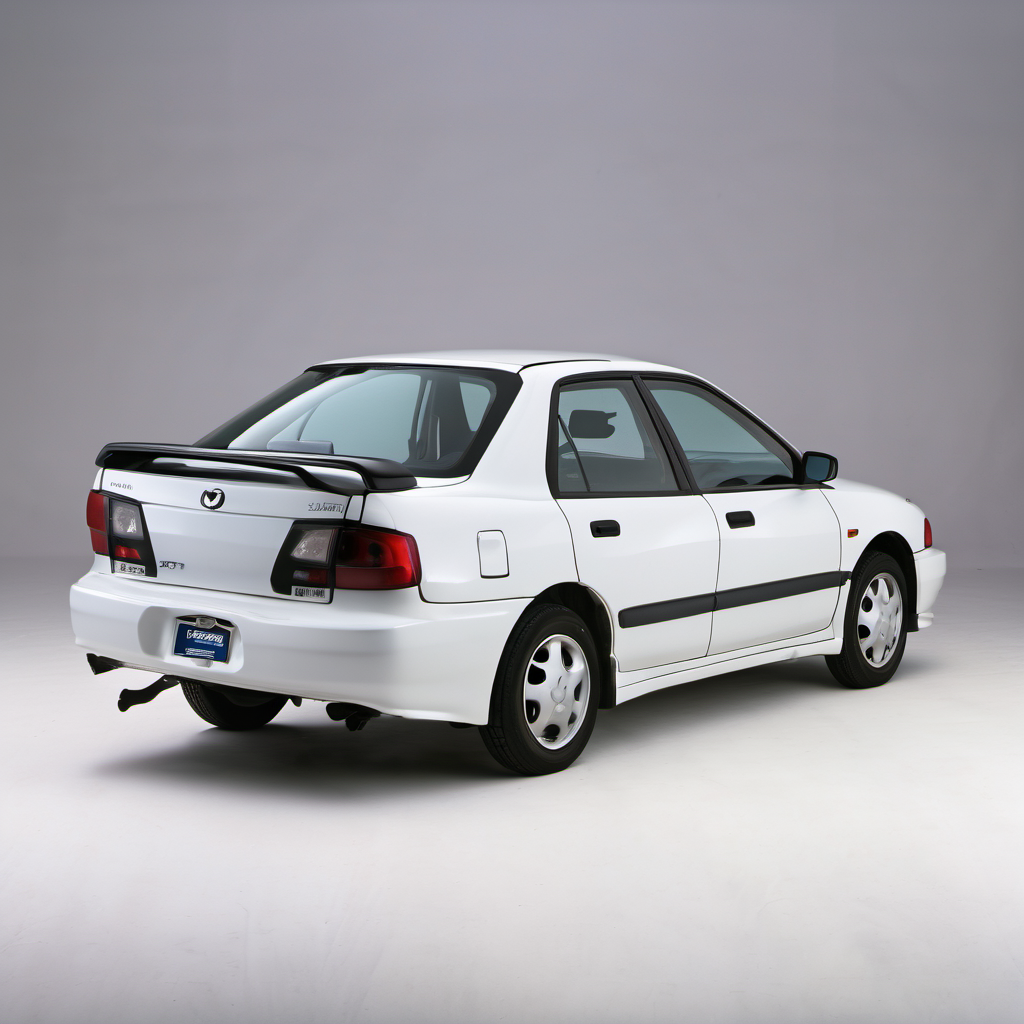
1996 MAZDA Protege Sedan

1996 MAZDA

ProtegeSedan

Sedan

The 1996 Mazda Protege is a compact front-wheel-drive sedan built on Mazda's BG/BH platform. It earned a reputation as a practical, affordable, and unusually fun-to-drive economy car — something Mazda managed to inject into even their entry-level models. The 1.5L four-cylinder is modest on power but very easy on fuel and, when properly maintained, genuinely long-lived. By the mid-1990s the Protege had shed the Familia nameplate in most markets and was firmly positioned as a sensible daily driver with more road feel than its Toyota Corolla and Honda Civic competitors. Owners who kept up with basic maintenance — timing belt, coolant, and rubber — routinely drove these well past 150k miles without major drama. At this age (nearly 30 years old), any surviving Protege is a used-car purchase first and a Mazda second. Rust, aged rubber, and deferred maintenance matter far more than the model's inherent reliability. Approach it accordingly.

Reliability
3/5
Verified data
Specs shown for Protege — the most common configuration. Other trims may vary in engine, drivetrain, or fuel economy. Sign in to see your vehicle's exact specs.
Engine
[object Object]
Drivetrain
FWD
Fuel
Gasoline
MPG
23 city / 32 hwy / 27 combined
Seats
Doors
Body
Compact Cars

Overview

AI-curated

The 1996 Mazda Protege is a compact front-wheel-drive sedan built on Mazda's BG/BH platform. It earned a reputation as a practical, affordable, and unusually fun-to-drive economy car — something Mazda managed to inject into even their entry-level models. The 1.5L four-cylinder is modest on power but very easy on fuel and, when properly maintained, genuinely long-lived. By the mid-1990s the Protege had shed the Familia nameplate in most markets and was firmly positioned as a sensible daily driver with more road feel than its Toyota Corolla and Honda Civic competitors. Owners who kept up with basic maintenance — timing belt, coolant, and rubber — routinely drove these well past 150k miles without major drama. At this age (nearly 30 years old), any surviving Protege is a used-car purchase first and a Mazda second. Rust, aged rubber, and deferred maintenance matter far more than the model's inherent reliability. Approach it accordingly.

Known for
  • Nimble, communicative steering for an economy car
  • Frugal 1.5L engine that responds well to basic maintenance
  • Compact dimensions — easy to park and maneuver
  • Straightforward mechanicals that independent shops can work on affordably
Best for
  • Budget-conscious commuters who want a simple, efficient daily driver
  • DIY owners comfortable with basic maintenance on older Mazda platforms
  • Drivers who prioritize fuel economy and low insurance costs
  • City and suburban use where the compact footprint is an advantage
Watch for
  • Rust — especially rocker panels, floor pans, and wheel arches on Wisconsin cars
  • Timing belt neglect (interference engine — a snapped belt means engine damage)
  • Aged coolant hoses and radiator on any example not recently refreshed
  • Worn or cracked engine and transmission mounts causing vibration and noise

Common issues by mileage

6 known

Timing belt failure (interference engine)

high
Typically appears
60–100k mi (and every 60k thereafter)
Estimated repair
$300 – $550

Coolant system degradation — hoses, thermostat, radiator

high
Typically appears
80k+ mi / any car this age
Estimated repair
$150 – $600

Oxygen sensor failure — Bank 1 Sensor 1 heater circuit

medium
Typically appears
80–150k mi
Estimated repair
$120 – $280

Engine and transmission mount deterioration

high
Typically appears
75k+ mi / age-related
Estimated repair
$150 – $400

Rust perforation — rockers, floor pans, subframe

high
Typically appears
Any mileage on Midwest/salt-belt cars
Estimated repair
$500 – $3,000

Distributor and ignition component wear

medium
Typically appears
100k+ mi
Estimated repair
$200 – $500

Maintenance schedule

  1. 1
    Every 60,000 miles or 5 years, whichever comes first Timing belt and tensioner replacement

    This is an interference engine — if the belt snaps, valves meet pistons and the repair bill can exceed the car's value. Replace the water pump at the same time since it's right there and cheap insurance.

  2. 2
    Every 2 years regardless of mileage Engine coolant flush and hose inspection

    Hoses on a 1996 car are past their expected service life. Inspect for softness, cracking, and swelling. Fresh coolant prevents internal corrosion and electrolysis damage.

  3. 3
    Every 4,000–5,000 miles with conventional oil Engine oil and filter change

    The 1.5L runs clean with regular changes. Extended drain intervals on this vintage of engine accelerate sludge buildup and shorten bearing life.

  4. 4
    Every 30,000 miles Spark plugs and distributor cap/rotor inspection

    Worn plugs and a degraded cap cause misfires and rough cold starts — particularly noticeable in Wisconsin winters.

  5. 5
    Every 2 years Brake fluid flush

    Brake fluid is hygroscopic and absorbs moisture over time, lowering its boiling point. On a car this age, the fluid has almost certainly never been changed.

  6. 6
    Annually before winter Inspect and lubricate door, hood, and trunk weatherstripping

    Original rubber is brittle at this age. Dried-out weatherstripping allows water intrusion that accelerates floor pan rust — a death sentence in Wisconsin.

  7. 7
    Annually, ideally in early spring after salt season Undercarriage rust inspection and treatment

    Wisconsin road salt is the number-one threat to a car this age. Catch rust early on the rocker panels, subframe, and floor pans before it becomes structural.

  8. 8
    Every fall before winter Battery load test

    A marginal battery that starts the car in September may not start it at -10°F in January. The 1.5L's starting demands are low, but a weak battery will still leave you stranded.

Always defer to the manufacturer's service manual for warranty-mandated intervals.

Cost of ownership

Annual maintenance
$400 – $1,200
Fuel
Excellent fuel economy for a vehicle of this era. At current Wisconsin gas prices, expect roughly $1,200–$1,600/year at 12,000 miles annually (varies with city/highway mix).
Insurance
Very low. A 1996 Protege carries minimal replacement value, so comprehensive and collision coverage is rarely cost-effective. Liability-only or minimal coverage is common on cars this age.

Day-to-day operating costs are low — parts are inexpensive and the engine is simple. The wildcard on a nearly 30-year-old car is deferred maintenance catching up all at once: timing belt, cooling system, mounts, and rust repair can stack quickly if the car hasn't been cared for. Budget $400–$800/year if the car is in good shape; expect $1,000–$1,200+ in the first year if you're catching up on neglected items.
Seasonal care

Lake Geneva, WI
Winter
  • Load-test the battery every fall — cold cranking amps drop dramatically at sub-zero temps and a borderline battery will fail.
  • Switch to a 5W-30 or manufacturer-recommended winter-weight oil to ensure proper lubrication on cold starts.
  • Use a washer fluid rated to at least -30°F; the Protege's washer nozzles are small and will freeze with diluted fluid.
  • Inspect wiper blades and consider winter-style blades — standard blades pack with ice and streak on Wisconsin winters.
  • Rinse the undercarriage thoroughly after heavy salting events; this car's rockers and floor pans are rust-prone and salt exposure accelerates perforation rapidly.
  • Keep the fuel tank at least half full to reduce condensation in the fuel system and add weight over the drive wheels in slick conditions.
Summer
  • Check coolant concentration — a 50/50 antifreeze/water mix protects against boiling over as well as freezing; don't let it run straight water.
  • Inspect the A/C system for refrigerant charge and condenser condition; the original R-134a system may need a check on a car this old.
  • Check tire pressure monthly — pressure rises roughly 1 PSI per 10°F increase and overinflated tires reduce traction and wear unevenly.
  • Inspect rubber CV axle boots for cracking after the thermal cycling of a Wisconsin winter; summer heat accelerates deterioration on already-aged boots.

Comparable vehicles

If you're shopping for one

Red flags
  • Any visible rust perforation on the floor pan, rockers, or subframe — walk away unless you're prepared for significant bodywork.
  • No timing belt service history and the seller can't account for it — the cost of a snapped belt on this interference engine can total the car.
  • Coolant that is rusty, milky, or smells burned — signs of head gasket issues or long-neglected cooling system.
  • Oil that is black and sludgy or smells of coolant — engine damage may already be in progress.
  • Excessive smoke from the exhaust on startup (blue = oil burning, white = coolant intrusion).
  • Any structural rust or a frame that has been welded/patched — a safety concern and a sign of a hard life.
What to inspect
  • Timing belt service records — if unknown, assume it needs replacement immediately and price that into your offer.
  • Undercarriage and floor pans for rust perforation — bring a flashlight and a screwdriver to probe suspect areas; soft spots mean structural rot.
  • Rocker panels and wheel arches for bubbling paint or filler, which often hides rust underneath.
  • All coolant hoses for softness, cracking, or swelling — original hoses on a 1996 car are long past due.
  • CV axle boots for grease-slinging cracks; torn boots lead to joint failure.
  • Engine and transmission mounts — with the engine running, watch for excessive vibration or clunking under load.
  • Distributor and plug wires for corrosion and cracking — these cause rough idle and hard starts in cold weather.
AI profile generated 13 days ago · claude-sonnet-4-6 · v2.