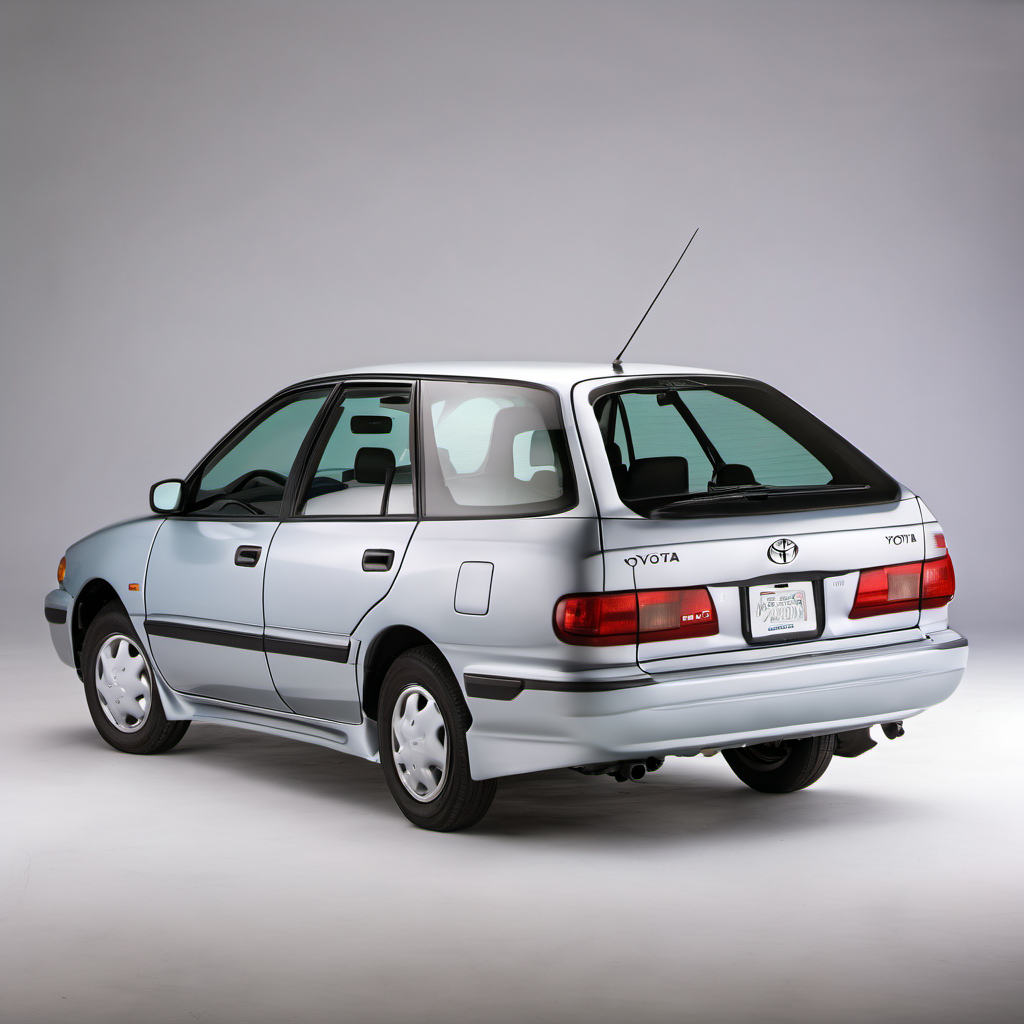
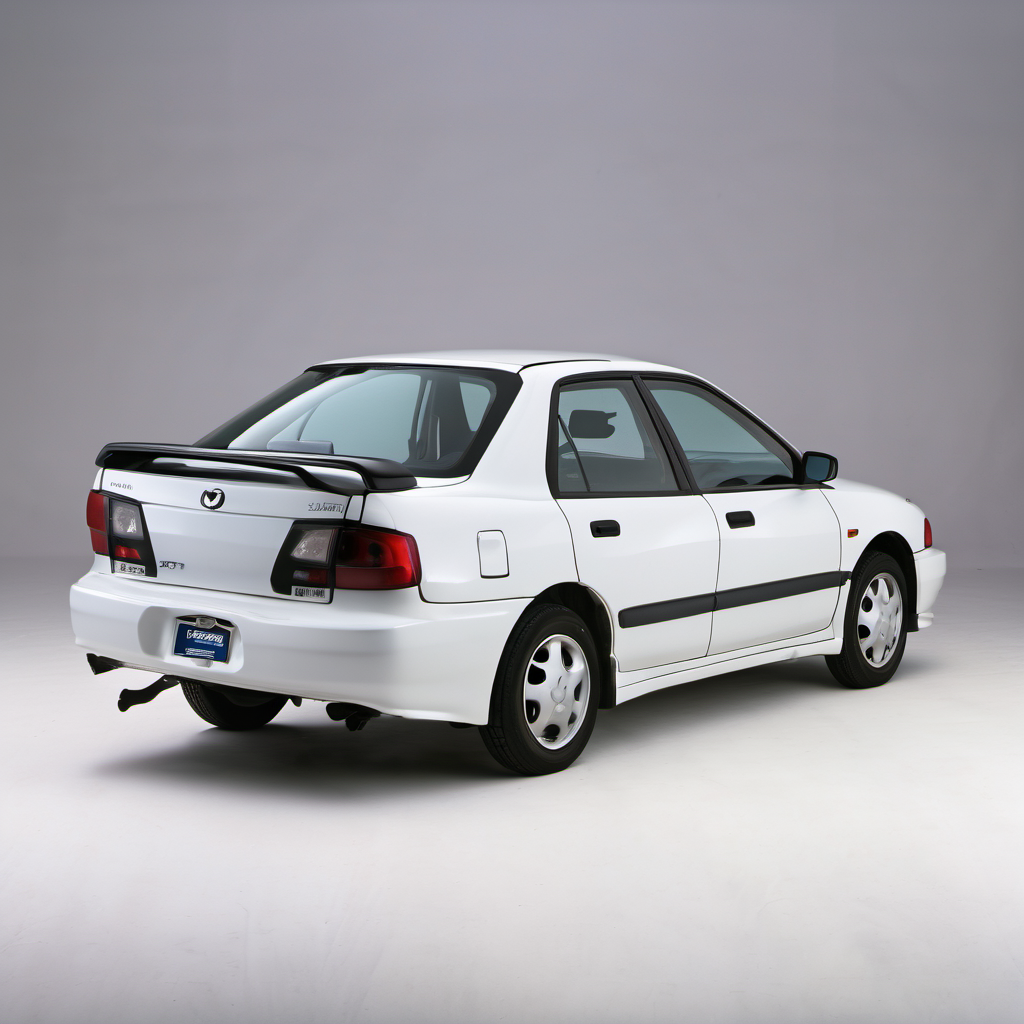
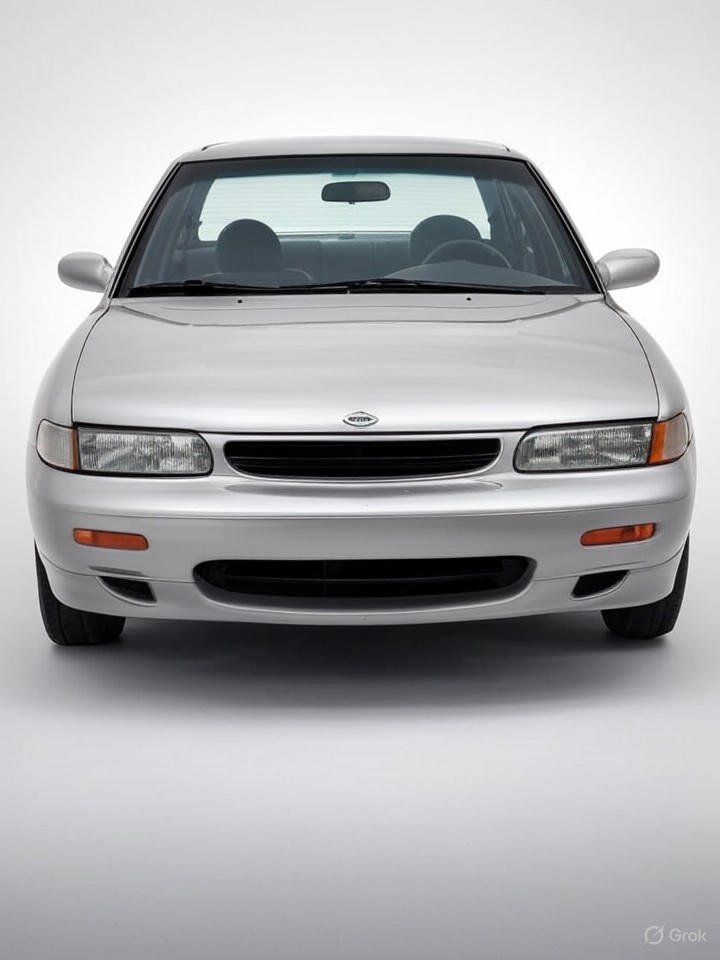
1996 Toyota Corolla Sedan

1996 Toyota

CorollaSedan

Sedan

The 1996 Toyota Corolla is a seventh-generation (E100 series) compact sedan that earned its reputation the old-fashioned way: by simply not breaking. Powered by a 1.6L four-cylinder and paired with either a 3-speed automatic or 5-speed manual, it was designed for maximum efficiency and minimum drama. By 1996 the platform was well-sorted, and examples with documented maintenance routinely surpass 200,000 miles. This generation sits in a sweet spot for used-car buyers who want reliable basic transportation without modern complexity. There's no VVT-i, no electronic throttle body, no CVT — just a carbureted/fuel-injected four-banger and a simple valvetrain that responds well to regular oil changes. Parts are inexpensive and widely available. At nearly 30 years old, any surviving example is a high-mileage or exceptionally well-kept car. Rust is the primary enemy in Wisconsin — inspect carefully before buying.

Reliability
4/5
Verified data
Specs shown for Corolla — the most common configuration. Other trims may vary in engine, drivetrain, or fuel economy. Sign in to see your vehicle's exact specs.
Engine
[object Object]
Drivetrain
FWD
Fuel
Gasoline
MPG
23 city / 27 hwy / 25 combined
Seats
Doors
Body
Compact Cars

Overview

AI-curated

The 1996 Toyota Corolla is a seventh-generation (E100 series) compact sedan that earned its reputation the old-fashioned way: by simply not breaking. Powered by a 1.6L four-cylinder and paired with either a 3-speed automatic or 5-speed manual, it was designed for maximum efficiency and minimum drama. By 1996 the platform was well-sorted, and examples with documented maintenance routinely surpass 200,000 miles. This generation sits in a sweet spot for used-car buyers who want reliable basic transportation without modern complexity. There's no VVT-i, no electronic throttle body, no CVT — just a carbureted/fuel-injected four-banger and a simple valvetrain that responds well to regular oil changes. Parts are inexpensive and widely available. At nearly 30 years old, any surviving example is a high-mileage or exceptionally well-kept car. Rust is the primary enemy in Wisconsin — inspect carefully before buying.

Known for
  • Exceptional long-term reliability with routine maintenance
  • Low operating and repair costs
  • Simple, mechanic-friendly 1.6L 4-cylinder engine
  • Strong resale value relative to age
Best for
  • Budget-conscious commuters who want proven reliability
  • First-time car owners or students
  • Buyers comfortable with basic DIY maintenance
  • Low-mileage city or suburb driving
Watch for
  • Severe underbody and frame rust common on upper Midwest examples
  • At ~30 years old, rubber components (hoses, belts, bushings) are likely overdue
  • Aging automatic transmissions prone to slipping if fluid was never changed
  • Oil burning from worn piston rings on high-mileage engines

Common issues by mileage

6 known

Underbody and rocker panel rust

high
Typically appears
All mileages — age-driven
Estimated repair
$500 – $3,000

Oxygen sensor failure (Bank 1 Sensor 1 or 2)

high
Typically appears
80k–150k mi
Estimated repair
$150 – $350

Timing belt and water pump wear

high
Typically appears
60k–90k mi intervals
Estimated repair
$300 – $550

Worn engine valve stem seals causing oil consumption and blue smoke

medium
Typically appears
120k+ mi
Estimated repair
$400 – $900

Automatic transmission slipping or delayed engagement from neglected fluid

medium
Typically appears
100k+ mi
Estimated repair
$200 – $2,500

Cracked or leaking coolant hoses and radiator

high
Typically appears
All mileages — age-driven
Estimated repair
$100 – $600

Maintenance schedule

  1. 1
    Every 5,000 miles or 6 months Engine oil and filter change

    The 4A-FE is not oil-critical by modern standards, but at this age, shorter intervals catch sludge buildup and keep rings and seals healthy. Use the weight specified on the oil cap.

  2. 2
    Every 60,000 miles or immediately if unknown Timing belt and water pump replacement

    The 1.6L is an interference engine — a snapped timing belt means bent valves and a costly repair. If service history is unknown, replace it now.

  3. 3
    Every 2 years or 30,000 miles Coolant flush

    Old coolant loses its anti-corrosion and freeze-point properties. In Wisconsin winters, degraded coolant is a freeze and overheating risk.

  4. 4
    Every 30,000 miles; immediately if fluid is dark or smells burned Transmission fluid change (automatic)

    These 3-speed automatics respond well to clean fluid. Burned or neglected fluid leads to slipping and early failure that's expensive relative to the car's value.

  5. 5
    Inspect annually; replace on condition Inspect and replace all rubber hoses, belts, and bushings

    At nearly 30 years old, original rubber is almost certainly hardened or cracked. A burst radiator hose or snapped serpentine belt can leave you stranded.

  6. 6
    Every 30,000 miles Spark plugs and ignition wires

    Worn plugs and cracked wires cause misfires, rough idle, and poor fuel economy — especially noticeable on cold Wisconsin winter starts.

  7. 7
    Every 2 years Brake fluid flush

    Brake fluid is hygroscopic — it absorbs moisture over time, lowering boiling point and accelerating caliper and line corrosion. Critical on a car this age.

  8. 8
    Every spring after winter Undercarriage rust inspection

    Road salt in Lake Geneva and surrounding areas attacks brake lines, fuel lines, and floor pans. Early detection prevents dangerous and expensive failures.

Always defer to the manufacturer's service manual for warranty-mandated intervals.

Cost of ownership

Annual maintenance
$400 – $1,200
Fuel
At 25 MPG combined and ~12,000 miles/year, expect roughly $1,300–$1,600/year at current upper Midwest gas prices.
Insurance
Typically very low — expect $600–$1,000/year for full coverage on a car of this value, depending on driver profile.

This is one of the cheapest cars to own and operate if it's in solid mechanical shape. Parts are plentiful and inexpensive, and most repairs are straightforward for any independent shop. The wildcard is deferred maintenance on a 30-year-old car — budget for a thorough inspection and any catch-up items upfront. A car in good condition can be maintained for well under $1,000/year.
Seasonal care

Lake Geneva, WI
Winter
  • Test the battery before first freeze — cold cranking amps drop sharply below 20°F and a marginal battery will fail overnight in a Wisconsin winter
  • Switch to a full-synthetic 5W-30 if not already using one; it flows better during sub-zero cold starts and protects the engine during the critical first seconds
  • Inspect and top off coolant freeze protection to at least -34°F; old coolant on this car may be well past its service life
  • Replace wiper blades with winter-rated blades and keep the washer fluid reservoir filled with a rated -20°F or lower de-icing fluid
  • Spray underbody and wheel wells with a rust-inhibiting coating in October before heavy salting begins — this car's age makes it especially vulnerable
  • Keep the gas tank at least half full to prevent fuel line freeze and reduce condensation in the tank
Summer
  • Check tire pressure monthly — tires gain roughly 1 PSI for every 10°F increase in temperature and overinflation causes uneven wear and blowout risk
  • Inspect the A/C system — refrigerant may have leaked over the years and the compressor and hoses should be checked before the first hot stretch
  • Monitor coolant temperature closely; aging hoses and a worn water pump can cause overheating that's far more damaging in summer heat
  • Inspect the radiator cap seal — a cap that doesn't hold pressure will cause the cooling system to boil over at lower temperatures

Comparable vehicles

If you're shopping for one

Red flags
  • Any visible rust on the rocker panels, wheel arches, or underbody — especially perforated metal or bubbling paint
  • No maintenance records at all on a 30-year-old car
  • Blue or white exhaust smoke, or oil significantly low on the dipstick
  • Transmission that slips, hesitates, or clunks into gear
  • Coolant with oil in it or a reservoir that runs low frequently
  • Asking price that seems high for the condition — these cars are worth $1,500–$4,000 at most in the current market depending on condition
What to inspect
  • Lift the car and inspect all brake lines, fuel lines, and the floor pan for through-rust — this is the #1 killer of upper Midwest Corollas
  • Check for oil burning: look for blue smoke at startup or under acceleration, and pull the dipstick to see if oil is low between changes
  • Ask for the timing belt service record — if unknown, budget $350–$550 to do it immediately
  • Test drive for transmission smoothness: the 3-speed automatic should shift cleanly without slipping, shuddering, or hesitation
  • Inspect all rubber: radiator hoses, heater hoses, CV axle boots, and suspension bushings are all age-critical at 30 years old
  • Check the coolant reservoir for oily film or milky color, which would indicate a head gasket leak
AI profile generated 13 days ago · claude-sonnet-4-6 · v2.