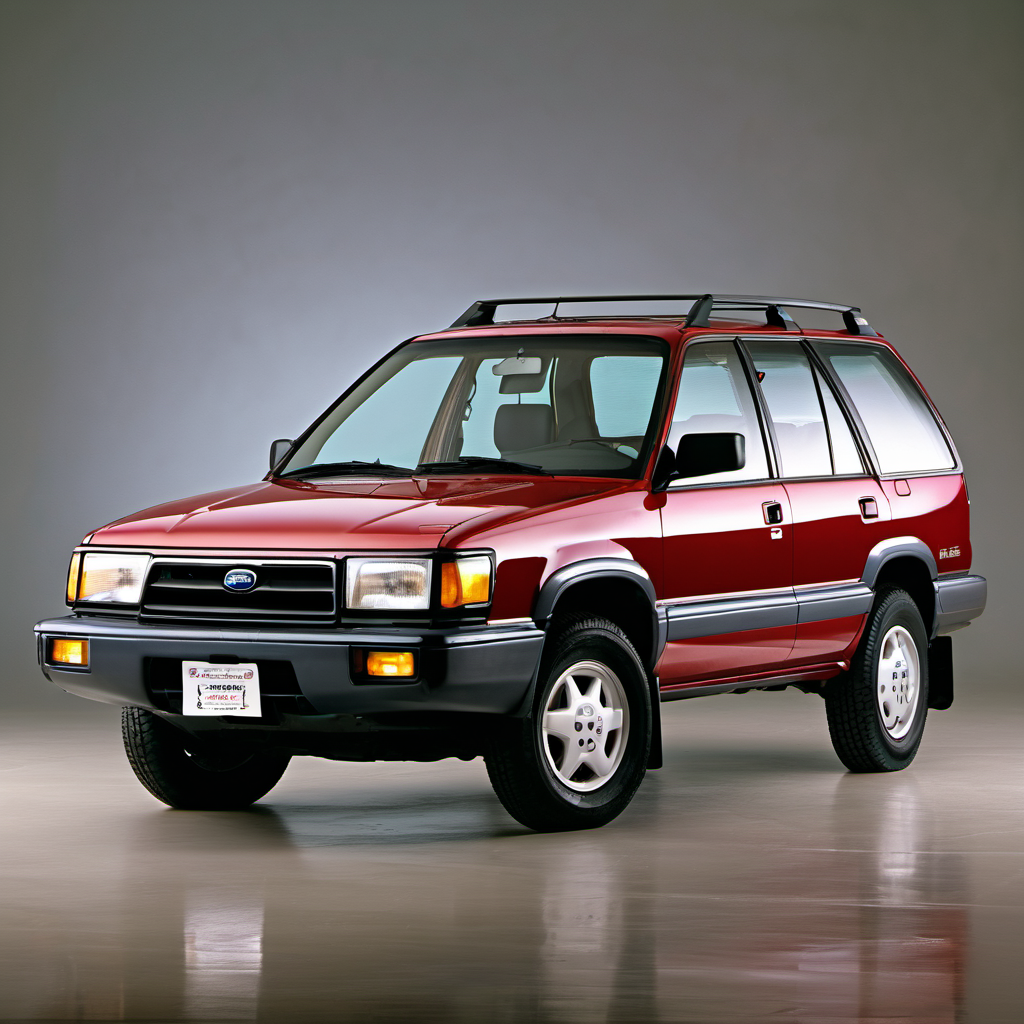
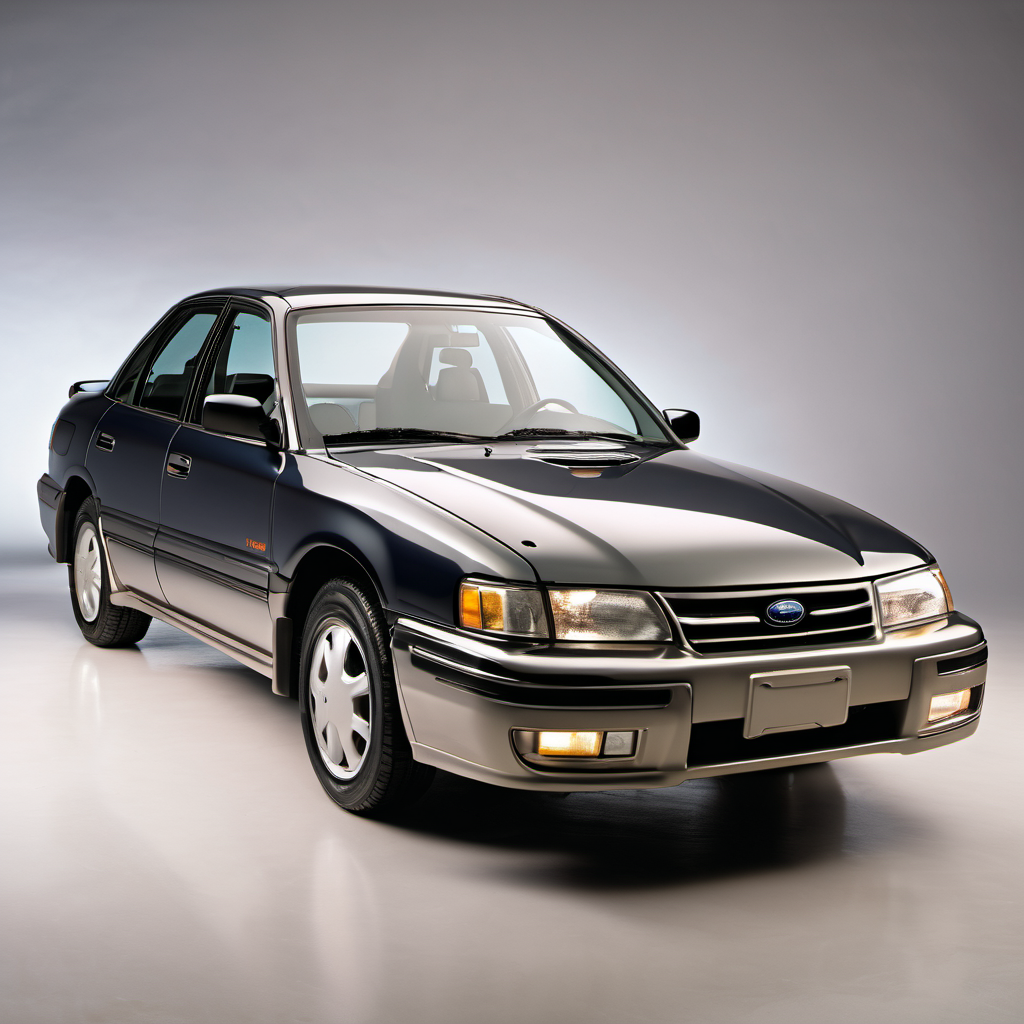
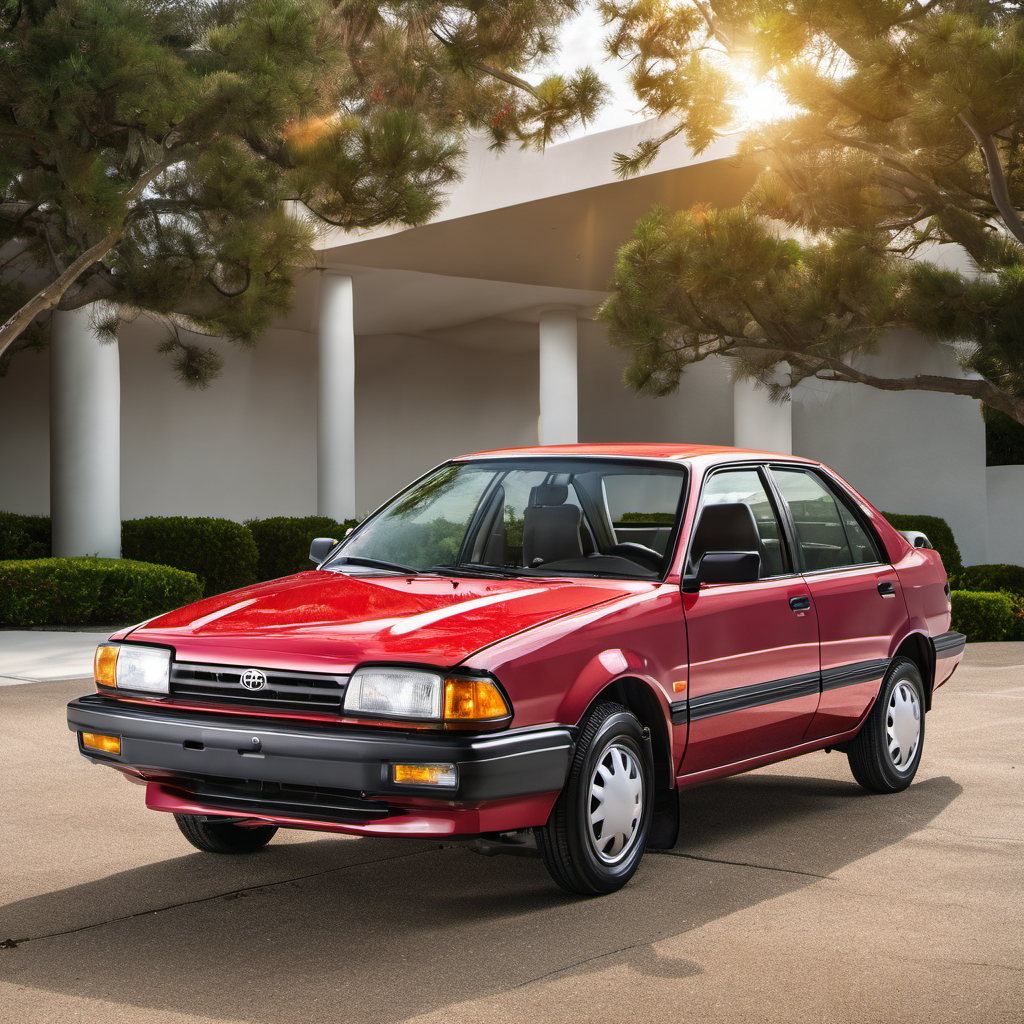
1994 Subaru Loyale Wagon

1994 Subaru

LoyaleWagon

Wagon

The 1994 Subaru Loyale Wagon is the final model year of Subaru's long-running EA-series platform, a car that dates its bones back to the Leone of the late 1970s. By 1994 it was already being replaced by the Impreza and Legacy, so this is a survivor vehicle — the last of a breed rather than a current-generation offering. It's a compact, no-frills all-wheel-drive wagon built for utility over comfort. Powered by a 1.8L four-cylinder and paired with Subaru's full-time AWD system, the Loyale carved out a loyal niche among buyers who needed year-round traction on a budget. In the upper Midwest, these were popular with farmers, rural commuters, and anyone dealing with unpaved roads and heavy snow. They are honest, spartan machines — and in 1994 that was already a dated formula. Today, any surviving 1994 Loyale Wagon is at minimum 30 years old. Finding one that hasn't succumbed to rust, neglect, or worn-out drivetrain seals is the main challenge. Parts availability is thinning out, and mechanically competent Subaru specialists who know the EA-series engine are increasingly rare. If you find a clean one, it can still serve well for light-duty use — but budget for deferred maintenance and rust remediation.

Reliability
3/5
Verified data
Specs shown for Loyale Wagon AWD — the most common configuration. Other trims may vary in engine, drivetrain, or fuel economy. Sign in to see your vehicle's exact specs.
Engine
[object Object]
Drivetrain
AWD
Fuel
Gasoline
MPG
19 city / 20 hwy / 20 combined
Seats
Doors
Body
Special Purpose Vehicles

Overview

AI-curated

The 1994 Subaru Loyale Wagon is the final model year of Subaru's long-running EA-series platform, a car that dates its bones back to the Leone of the late 1970s. By 1994 it was already being replaced by the Impreza and Legacy, so this is a survivor vehicle — the last of a breed rather than a current-generation offering. It's a compact, no-frills all-wheel-drive wagon built for utility over comfort. Powered by a 1.8L four-cylinder and paired with Subaru's full-time AWD system, the Loyale carved out a loyal niche among buyers who needed year-round traction on a budget. In the upper Midwest, these were popular with farmers, rural commuters, and anyone dealing with unpaved roads and heavy snow. They are honest, spartan machines — and in 1994 that was already a dated formula. Today, any surviving 1994 Loyale Wagon is at minimum 30 years old. Finding one that hasn't succumbed to rust, neglect, or worn-out drivetrain seals is the main challenge. Parts availability is thinning out, and mechanically competent Subaru specialists who know the EA-series engine are increasingly rare. If you find a clean one, it can still serve well for light-duty use — but budget for deferred maintenance and rust remediation.

Known for
  • Full-time AWD standard on most trims — genuinely capable in snow and mud
  • Simple, mechanic-friendly EA-series 1.8L engine
  • Spartan, durable interior with a practical hatch-wagon body
  • Long model run meant steady parts supply — now rapidly diminishing
  • Low curb weight making AWD surprisingly efficient for its era
Best for
  • Rural or semi-rural drivers who prioritize AWD traction on a tight budget
  • DIY mechanics comfortable with older, carbureted or early-FI engines
  • Light-duty hauling and weekend utility tasks
  • Collectors or enthusiasts preserving the last of the EA-series lineage
Watch for
  • Severe underbody and rocker panel rust — the #1 killer of these vehicles in the Midwest
  • Leaking rear differential and AWD transfer case seals
  • Aging rubber: timing belt, coolant hoses, and CV axle boots all degrade with age
  • Parts scarcity — OEM components are largely discontinued; used or aftermarket only
  • Head gasket seepage common on high-mileage EA-series engines

Common issues by mileage

6 known

Underbody and Rocker Panel Rust

high
Typically appears
All mileages — age-driven, not mileage-driven
Estimated repair
$500 – $3,500

Timing Belt Failure / Overdue Replacement

high
Typically appears
60k+ mi or 5+ years since last replacement
Estimated repair
$250 – $500

Head Gasket Seepage (EA-series I4)

medium
Typically appears
100k–160k mi
Estimated repair
$600 – $1,400

Rear Differential and Transfer Case Seal Leaks

high
Typically appears
80k+ mi
Estimated repair
$200 – $700

CV Axle Boot Cracking / Joint Wear

high
Typically appears
All mileages — rubber degrades with age
Estimated repair
$150 – $600

Oxygen Sensor Heater Circuit Failure

medium
Typically appears
80k–150k mi
Estimated repair
$100 – $350

Maintenance schedule

  1. 1
    Every 60k miles or 5 years, whichever comes first — verify history before buying Timing belt and tensioner replacement

    The EA-series is an interference engine. A snapped belt means bent valves and a much larger repair bill. On a 30-year-old vehicle, assume it's due unless you have documentation.

  2. 2
    Every 30k miles or immediately if unknown AWD transfer case and rear differential fluid change

    Old or contaminated fluid accelerates wear in the AWD system and causes seal failure. On a used example, change it regardless of claimed history.

  3. 3
    Every oil change CV axle boot inspection

    Cracked boots let grease escape and contaminants in. Catching a torn boot early means a cheap boot replacement; missing it means a full axle replacement.

  4. 4
    Every 2 years Coolant flush and hose inspection

    30-year-old coolant hoses are prone to sudden failure. Fresh coolant also protects the EA-series aluminum head from corrosion-accelerated gasket wear.

  5. 5
    Annually, before winter Underbody rust inspection and treatment

    Wisconsin road salt is the primary cause of Loyale mortality. Inspect frame rails, rocker panels, and floor pan every fall. Treat bare metal with rust inhibitor before the first salting season.

  6. 6
    Every 30k miles Spark plugs and ignition wires

    Aged ignition wires on these vehicles cause misfires and poor cold starts. Affordable insurance given Wisconsin winters.

  7. 7
    Every fall Battery load test

    A borderline battery that starts the car in October often can't turn over a cold engine in January. The Loyale's charging system is basic — a weak battery can also stress the alternator.

  8. 8
    Annually Brake line inspection for rust-through

    Steel brake lines on 30-year-old Midwestern vehicles are a known failure point. Rust-through causes sudden brake pressure loss. Inspect every year; replace any lines showing heavy pitting.

Always defer to the manufacturer's service manual for warranty-mandated intervals.

Cost of ownership

Annual maintenance
$600 – $2,000
Fuel
At 20 MPG combined and ~12,000 miles/year, expect roughly $1,500–$1,800/year at current Midwest gas prices. Simple to run on regular unleaded.
Insurance
Liability and basic comprehensive on a 30-year-old vehicle with low market value is typically $400–$800/year in Wisconsin, depending on driving record and coverage level.

The Loyale is cheap to insure and not bad on fuel, but don't mistake low purchase price for low ownership cost. On a vehicle this age, deferred maintenance — timing belt, seals, CV boots, brake lines — can stack up fast. Budget $1,000–$2,000 in catch-up work when you first buy one, then plan for routine surprises. Parts sourcing takes time and sometimes creative searching through used sources.
Seasonal care

Lake Geneva, WI
Winter
  • Wash the undercarriage every 1–2 weeks during salting season. Salt accumulation accelerates rust on an already vulnerable 30-year-old unibody — this is not optional maintenance in Lake Geneva.
  • Load-test the battery every October. Cold cranking amps drop sharply below 0°F and the Loyale's older charging system won't save a weak battery.
  • Switch to a winter-weight oil (5W-30 or as specified) if not already running it — cold starts on a 1.8L with thick oil add unnecessary wear.
  • Inspect wiper blades and use a winter-rated washer fluid rated to at least -20°F. The low hood line means the windshield ices fast.
  • Check AWD front and rear differential fluid condition — water contamination in old fluid freezes and causes seal damage in sustained sub-zero temps.
  • Confirm the coolant freeze protection is adequate to at least -34°F with a tester. Aged coolant loses its freeze-point protection.
Summer
  • Inspect the cooling system hoses and radiator cap before summer — a 30-year-old cooling system doesn't handle heat soak well if it's already marginal.
  • Check tire pressure monthly; pressure rises roughly 1 PSI per 10°F of ambient temperature gain, and the Loyale's small tires are sensitive to overinflation.
  • Run the A/C system early in the season to verify it holds charge. Refrigerant leaks on aged systems are common, and a non-functioning A/C on a dark interior makes summer driving miserable.
  • Inspect the rubber CV axle boots after winter — road salt and freeze-thaw cycles crack boots faster than heat alone, and summer is when cracks open further.

Comparable vehicles

If you're shopping for one

Red flags
  • Any soft or punchy areas in the rocker panels or floor when probed — walk away, structural rust is not economical to fix on a low-value vehicle
  • Oil leaks at the rear of the engine near the firewall — rear main seal leaks on the EA-series are labor-intensive to address
  • Milky or frothy oil on the dipstick or under the oil cap — head gasket failure letting coolant into the oil
  • No timing belt service history on a vehicle with unknown or high mileage — budget the job immediately or don't buy
  • Clunking from the AWD system under acceleration or turns — could indicate worn transfer case, carrier bearings, or CV joints, all expensive on a parts-scarce platform
  • Rust bubbling under the paint on the rear wheel arches — this is always worse than it looks once the paint is removed
What to inspect
  • Rocker panels, frame rails, and floor pan for rust — probe with a screwdriver; soft spots mean structural rust, not just surface oxidation
  • Timing belt condition and service history — no documentation means assume it's overdue
  • All AWD drivetrain seals (front differential, rear differential, transfer case) for active leaks or heavy oil staining
  • CV axle boots — look for grease splatter on the inside of the wheels indicating a torn boot
  • Brake lines and fuel lines for rust pitting, especially along the frame and near the rear axle
  • Coolant color and condition — brown or sludgy coolant suggests a head gasket weeping into the cooling system
  • Undercarriage welds and subframe mounting points — cracks or repairs here are a deal-breaker
AI profile generated 4 days ago · claude-sonnet-4-6 · v2.