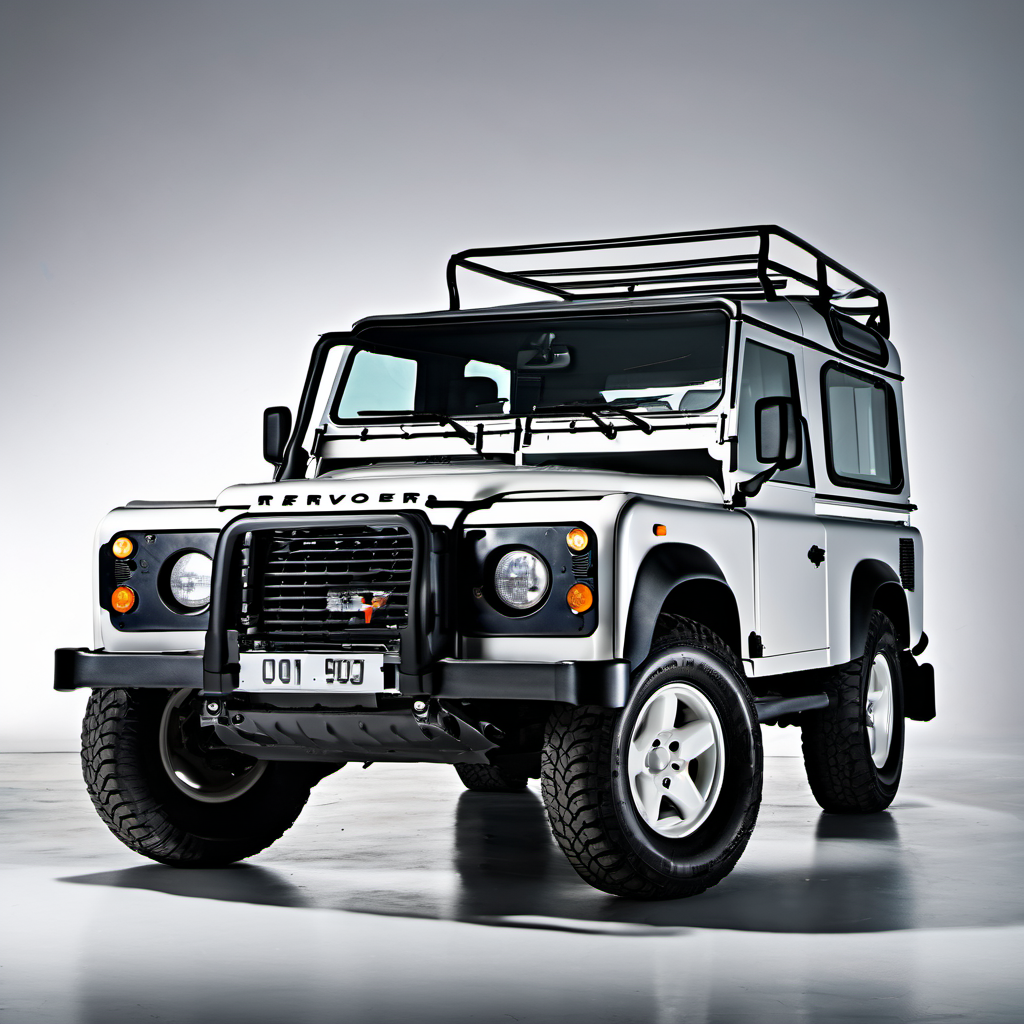
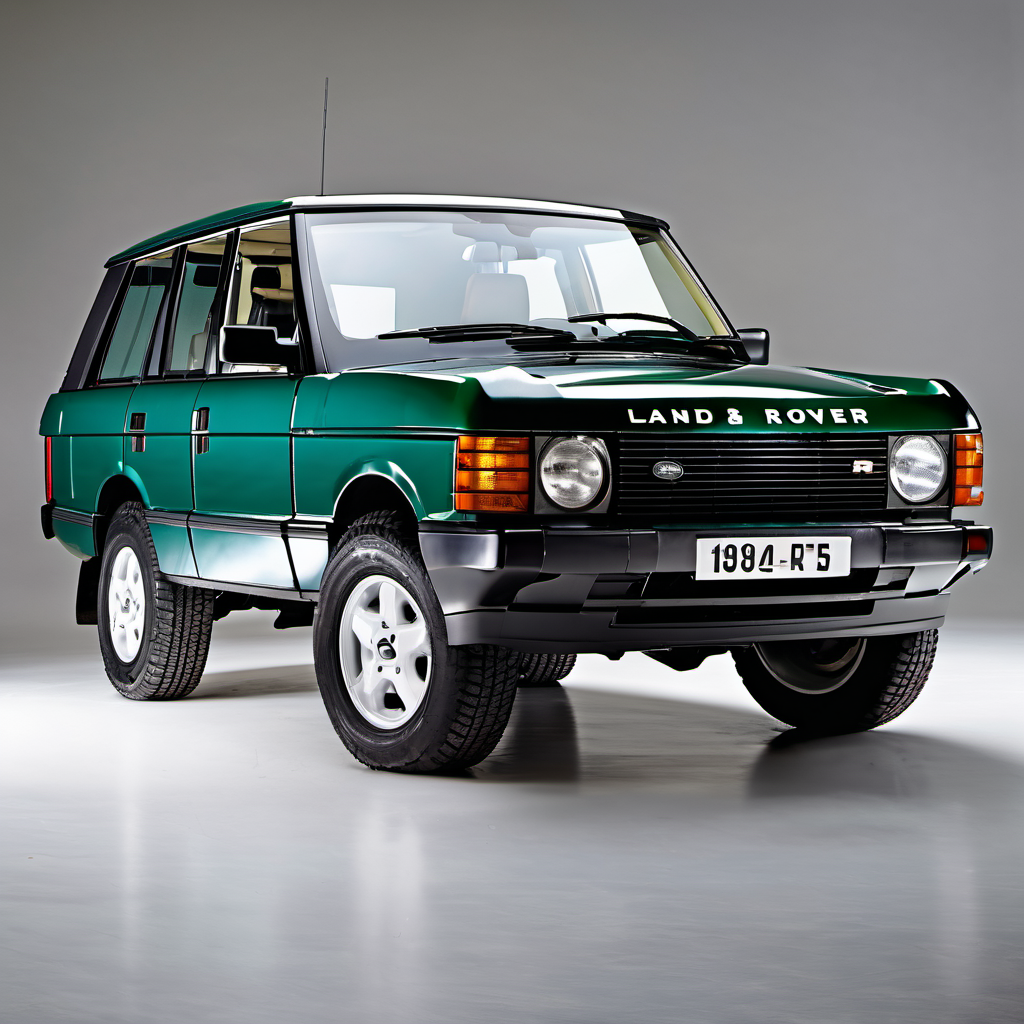
1994 Land Rover Defender 90 SUV

1994 Land Rover

Defender 90SUV

3.9L V8 · SUV

The 1994 Land Rover Defender 90 is a short-wheelbase, body-on-frame off-roader that traces its lineage directly back to the original 1948 Land Rover. Built at Solihull, England, it arrived in the U.S. market in very limited numbers beginning in 1993. This is a purpose-built utility vehicle — spartan, capable, and engineered for genuine terrain work rather than suburban comfort. The aluminum body panels resist rust, but the steel chassis and bulkhead are notorious rust targets, especially after decades on salted roads. Under the hood, U.S.-spec 1994 Defender 90s were powered by a 3.9L Rover V8 paired with a Land Rover LT77S 5-speed manual or, in some configurations, a 4-speed automatic. A permanent 4WD system with a two-speed transfer case and lockable center differential gives it serious go-anywhere credentials. Interior comfort is basic by any modern standard — flat-folding bench seats, minimal soundproofing, and simple switchgear that hasn't changed much in 40 years. Ownership of a 1994 Defender 90 is a commitment. Parts can be expensive and sometimes hard to source quickly. Finding a mechanic who genuinely knows these trucks matters as much as finding a good specimen to buy. Values have appreciated sharply over the past decade — this is now a collector vehicle as much as a driver.

Reliability
2/5
Verified data
Engine
3.9L V8
Drivetrain
4WD
Fuel
Gasoline
MPG
12 city / 15 hwy / 13 combined
Seats
4
Doors
3
Body
SUV
MSRP
$35,000

Overview

AI-curated

The 1994 Land Rover Defender 90 is a short-wheelbase, body-on-frame off-roader that traces its lineage directly back to the original 1948 Land Rover. Built at Solihull, England, it arrived in the U.S. market in very limited numbers beginning in 1993. This is a purpose-built utility vehicle — spartan, capable, and engineered for genuine terrain work rather than suburban comfort. The aluminum body panels resist rust, but the steel chassis and bulkhead are notorious rust targets, especially after decades on salted roads. Under the hood, U.S.-spec 1994 Defender 90s were powered by a 3.9L Rover V8 paired with a Land Rover LT77S 5-speed manual or, in some configurations, a 4-speed automatic. A permanent 4WD system with a two-speed transfer case and lockable center differential gives it serious go-anywhere credentials. Interior comfort is basic by any modern standard — flat-folding bench seats, minimal soundproofing, and simple switchgear that hasn't changed much in 40 years. Ownership of a 1994 Defender 90 is a commitment. Parts can be expensive and sometimes hard to source quickly. Finding a mechanic who genuinely knows these trucks matters as much as finding a good specimen to buy. Values have appreciated sharply over the past decade — this is now a collector vehicle as much as a driver.

Known for
  • Exceptional off-road capability with permanent 4WD and locking center diff
  • Durable aluminum body panels that don't rust
  • Iconic boxy styling with a devoted global following
  • Very spartan interior — form follows function
  • Strong collector appeal and appreciating values
Best for
  • Off-road enthusiasts and overlanders
  • Collectors seeking an appreciating classic
  • Owners willing to wrench or pay specialist labor
  • Rural or farm use where go-anywhere traction matters
Watch for
  • Steel chassis, bulkhead, and outriggers are serious rust targets
  • Rover 3.9L V8 prone to head gasket failure and overheating
  • Very limited U.S. dealer support — specialist shops are essential
  • Electrical gremlins typical of British vehicles of this era
  • Parts availability can mean long waits and high prices

Common issues by mileage

6 known

Rover 3.9L V8 Head Gasket Failure

high
Typically appears
60–150k mi
Estimated repair
$1,800 – $3,500

Steel Chassis and Bulkhead Corrosion

high
Typically appears
Any mileage — age-driven
Estimated repair
$800 – $6,000

LT77S Gearbox Wear — Crunching/Jumping Out of Gear

medium
Typically appears
80–150k mi
Estimated repair
$1,200 – $3,000

Cooling System Failure — Thermostat, Hoses, Radiator

high
Typically appears
50–120k mi
Estimated repair
$300 – $900

Electrical Gremlins — Wiring Harness Deterioration and Ground Faults

medium
Typically appears
Any mileage — age-driven
Estimated repair
$200 – $1,500

Rear Main Oil Seal and Sump Gasket Leaks

medium
Typically appears
70–130k mi
Estimated repair
$400 – $1,000

Maintenance schedule

  1. 1
    Every 2 years / 30k mi Engine coolant flush and cooling system inspection

    The Rover 3.9L V8 is extremely sensitive to cooling system neglect. Overheating is the primary driver of head gasket failure. Inspect hoses, radiator, thermostat, and pressure-test the system at every service.

  2. 2
    Every 3,000–4,000 mi or annually Engine oil and filter change

    The 3.9L V8 develops sludge faster than modern engines with extended drain intervals. Shorter intervals are cheap insurance on a high-value, hard-to-repair engine.

  3. 3
    Every 30k mi Transfer case and gearbox oil change

    The LT77S gearbox and LT230 transfer case use specific gear oils that break down over time. Fresh oil keeps synchros healthy and prevents costly rebuilds.

  4. 4
    Every 30k mi, or after water crossing Front and rear differential oil change

    Axle diff covers are not fully waterproof. Any significant water crossing can contaminate the oil with milky emulsion — check and change if in doubt.

  5. 5
    Every spring after winter season Chassis and bulkhead rust inspection and treatment

    Wisconsin road salt aggressively attacks the steel chassis, outriggers, and bulkhead. Annual inspection and treatment with penetrating oil or chassis wax compound extends structural life significantly.

  6. 6
    Every 2 years Brake fluid flush

    The Defender's brake system is simple but the fluid absorbs moisture over time, lowering boiling point. Critical before off-road use or heavy seasonal driving.

  7. 7
    Every 2 years Inspect and re-torque body tub mounting bolts

    Off-road flex and road vibration loosen the aluminum body tub to chassis fasteners over time. Loose mounts accelerate wear on the aluminum and allow water ingress.

  8. 8
    Every 30k mi Spark plugs and ignition wires

    The Rover V8 uses a distributor ignition; aged plug wires and worn plugs cause misfires that are sometimes misdiagnosed as more expensive issues. Straightforward and inexpensive preventive work.

Always defer to the manufacturer's service manual for warranty-mandated intervals.

Cost of ownership

Annual maintenance
$1,200 – $3,500
Fuel
Expect 12–14 MPG in real-world mixed driving. At current Midwest gas prices (~$3.20–$3.60/gal) and 10,000 mi/yr, budget roughly $2,300–$3,000/year in fuel.
Insurance
Collector/agreed-value policies are common for these trucks and can be surprisingly affordable ($600–$1,200/yr) if mileage is limited. Standard daily-driver insurance runs higher given age and value appreciation.

The Defender 90 is not a cheap vehicle to own. Parts — when they are available — carry a premium, and labor at a Land Rover specialist commands higher hourly rates than a typical domestic truck. A healthy truck with documented maintenance costs $1,200–$2,000/yr in routine upkeep. Factor in one significant repair (head gasket, gearbox work, rust remediation) every few years and annual all-in costs can easily reach $3,000–$5,000. The offset is strong value appreciation — well-kept examples now routinely trade above $40,000–$70,000.

Seasonal care

Lake Geneva, WI
Winter
  • Rinse the entire undercarriage — especially chassis rails, outriggers, and bulkhead — at least every two weeks during salting season. Salt attacks the steel frame aggressively on a 30-year-old truck.
  • Test and if needed replace the battery before first hard freeze. Cold-cranking demand on the Rover V8 is high; a marginal battery will fail at the worst time.
  • Switch to a full-synthetic 5W-30 or 5W-40 engine oil rated for cold starts if not already running synthetic. The 3.9L V8 needs good oil flow at sub-zero temps before the thermostat opens.
  • Use a name-brand winter washer fluid rated to at least -20°F. The Defender's windshield is nearly vertical and gets heavily coated by road spray.
  • Check antifreeze concentration — confirm protection to at least -34°F for Lake Geneva winters. A 30-year-old cooling system should be inspected for hose brittleness at the same time.
  • Keep the fuel tank at least half full to prevent fuel line moisture and to add ballast weight over the rear axle on slippery surfaces.
Summer
  • Inspect and pressure-test the cooling system before hot-weather driving. The Rover V8 runs warm in traffic; a compromised system will boil over fast in July heat.
  • Check tire pressures monthly — heat causes significant pressure gain. The Defender's load range tires should be checked cold against the door-placard spec.
  • Inspect the A/C system (if equipped) — many Defenders have had A/C deleted or have aging R-134a systems. Recharge if needed before summer; the cabin heats up fast with minimal glass insulation.
  • Check power steering fluid level and inspect hoses — summer heat accelerates fluid degradation and can reveal small leaks hidden in cooler months.

Comparable vehicles

If you're shopping for one

Red flags
  • Any evidence of overheating — stained coolant reservoir, warped hood paint, or white exhaust smoke at idle.
  • Rust-perforated chassis rails or heavily plated/welded outriggers — indicates deferred structural maintenance.
  • Mismatched or clearly repainted body panels suggesting undisclosed collision damage.
  • A dramatically low asking price — values have risen sharply, and a suspiciously cheap Defender almost always has a known major problem the seller is motivated to pass along.
  • Absence of any service history on a 30-year-old truck.
  • Aftermarket ECU or wiring modifications without documentation.
What to inspect
  • Chassis, outriggers, and bulkhead (firewall) for rust — jack it up and get underneath. Surface rust is normal; perforated or flaky structural steel is a deal-breaker.
  • Coolant condition and oil cap — milky or foamy oil or coolant strongly suggests head gasket failure or imminent failure on the 3.9L V8.
  • Gearbox operation — LT77S should shift cleanly through all five gears when warm. Crunching into 2nd or 3rd, or popping out of gear, signals worn synchros.
  • Service records — a Defender with no documented coolant, oil, or gearbox service history is a wildcard. Insist on receipts or pass.
  • Wiring harness condition — look for DIY splices, taped connectors, and corroded grounds especially around the bulkhead and under the dash.
  • All four wheel bearings for play and noise — a common wear item on high-mileage examples.
  • Body tub alignment and condition — check for cracked aluminum at mounting points, which indicates chassis flex or loose mounts.
AI profile generated 18 days ago · claude-sonnet-4-6 · v2.