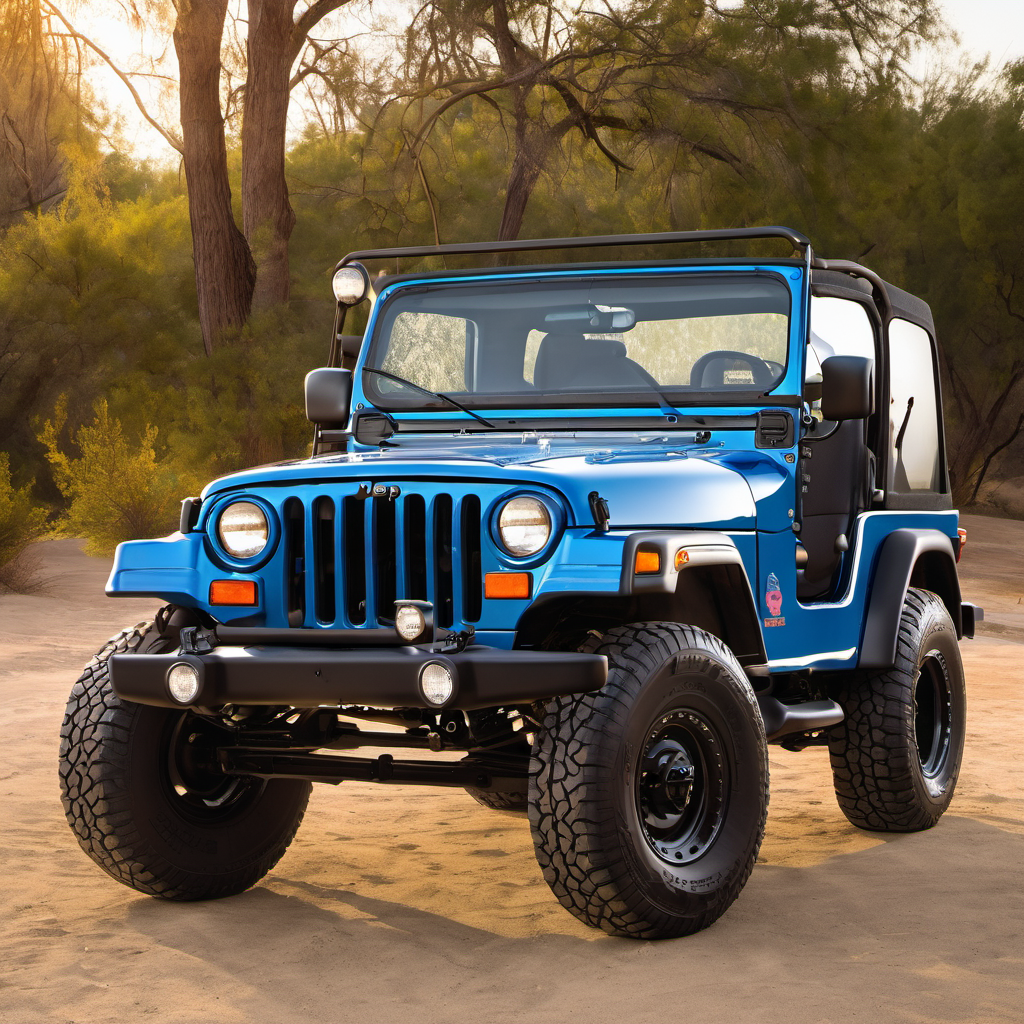
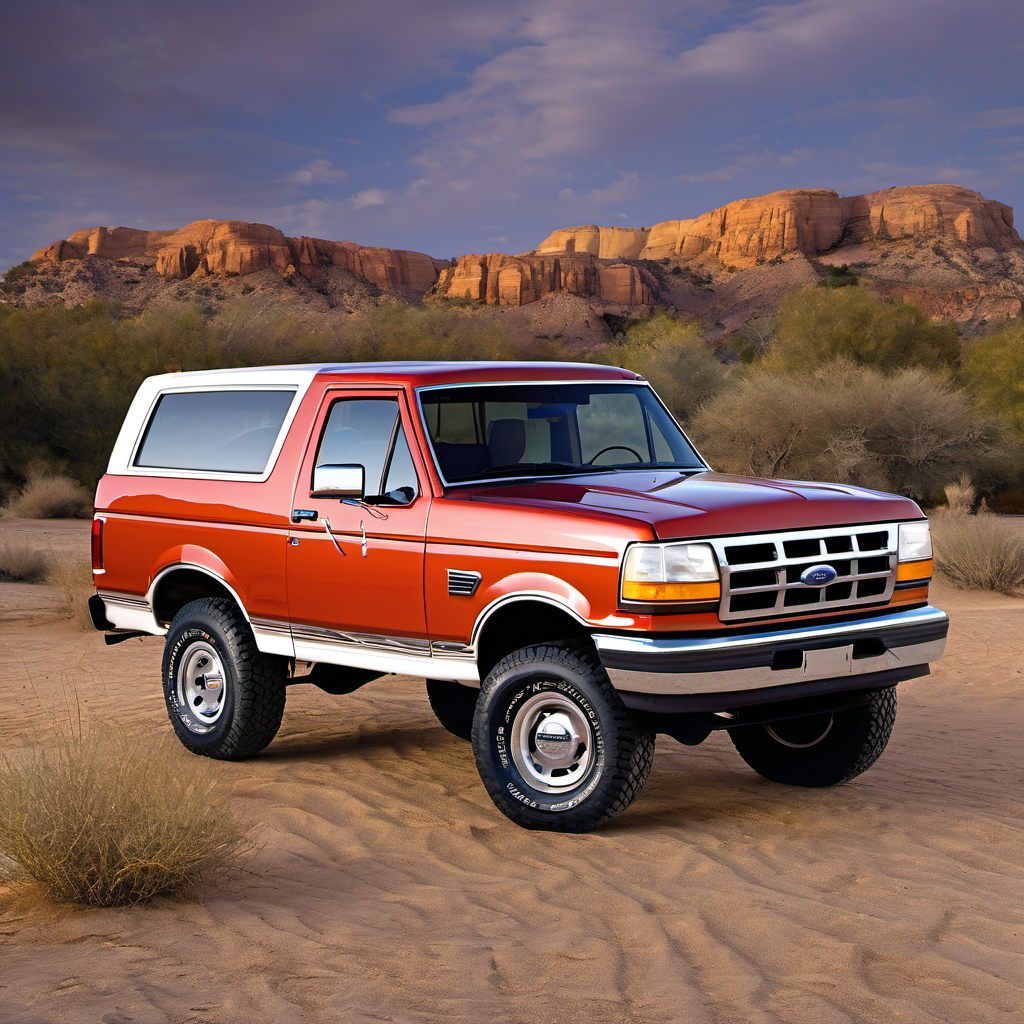
1994 Jeep Wrangler SUV

1994 Jeep

WranglerSUV

SUV

The 1994 Jeep Wrangler (YJ generation, 1987–1995) is the last year of the square-headlight body style before Jeep switched to the round-headlight TJ in 1997. It was built as a purpose-built, body-on-frame off-road SUV with solid front and rear axles — a setup that made it genuinely capable in the dirt but noticeably rough on pavement. The base 2.5L four-cylinder is adequate for daily driving but feels strained on the highway; the optional 4.0L inline-six (not this vehicle's engine) is the preferred powertrain for most buyers. At 30 years old, this Wrangler is firmly in classic/enthusiast territory. Parts availability is strong thanks to a massive aftermarket, but structural rust, neglected maintenance, and prior off-road abuse are the real threats to longevity. A well-preserved example can last hundreds of thousands of miles. A neglected one can become a money pit quickly. For a Lake Geneva owner, the Wrangler's high ground clearance and 4WD capability are genuine assets in winter, but its age means rust prevention and battery health need more attention than a modern vehicle. The soft top (if equipped) adds extra cold-weather complexity around seals and zippers.

Reliability
3/5
Verified data
Specs shown for Wrangler 4WD — the most common configuration. Other trims may vary in engine, drivetrain, or fuel economy. Sign in to see your vehicle's exact specs.
Engine
[object Object]
Drivetrain
AWD
Fuel
Gasoline
MPG
15 city / 17 hwy / 16 combined
Seats
Doors
Body
Special Purpose Vehicles

Overview

AI-curated

The 1994 Jeep Wrangler (YJ generation, 1987–1995) is the last year of the square-headlight body style before Jeep switched to the round-headlight TJ in 1997. It was built as a purpose-built, body-on-frame off-road SUV with solid front and rear axles — a setup that made it genuinely capable in the dirt but noticeably rough on pavement. The base 2.5L four-cylinder is adequate for daily driving but feels strained on the highway; the optional 4.0L inline-six (not this vehicle's engine) is the preferred powertrain for most buyers. At 30 years old, this Wrangler is firmly in classic/enthusiast territory. Parts availability is strong thanks to a massive aftermarket, but structural rust, neglected maintenance, and prior off-road abuse are the real threats to longevity. A well-preserved example can last hundreds of thousands of miles. A neglected one can become a money pit quickly. For a Lake Geneva owner, the Wrangler's high ground clearance and 4WD capability are genuine assets in winter, but its age means rust prevention and battery health need more attention than a modern vehicle. The soft top (if equipped) adds extra cold-weather complexity around seals and zippers.

Known for
  • Legendary off-road capability with solid front and rear axles
  • Simple, robust mechanical design that's easy to work on
  • Massive aftermarket support — parts are never hard to find
  • Iconic styling with a devoted ownership community
  • Removable doors and top for open-air driving
Best for
  • Off-road and trail enthusiasts
  • Buyers who want a project or weekend toy
  • Owners comfortable with older vehicle maintenance demands
  • Light snow and rough-road daily driving
  • Those who value repairability over modern amenities
Watch for
  • Frame and floor pan rust — endemic on Wisconsin vehicles
  • Soft top leaks causing interior rust and mold
  • Prior off-road damage: bent axles, cracked differentials, frame stress
  • Electrical gremlins from 30 years of DIY wiring
  • 2.5L four-cylinder may feel underpowered if modified or loaded

Common issues by mileage

6 known

Frame and floor pan rust

high
Typically appears
All mileages — age-dependent
Estimated repair
$500 – $4,500

Soft top leaks and deteriorated seals

high
Typically appears
All mileages — age-dependent
Estimated repair
$150 – $1,200

Oxygen sensor failure / heater circuit

medium
Typically appears
80k–150k mi
Estimated repair
$80 – $250

Cooling system deterioration (hoses, water pump, thermostat)

high
Typically appears
80k+ mi
Estimated repair
$150 – $600

Dana 35 rear axle (C-clip) failure under stress

medium
Typically appears
Any mileage if off-roaded hard or with larger tires
Estimated repair
$400 – $1,500

Electrical gremlins (grounds, fusible links, aged wiring)

medium
Typically appears
All mileages — age-dependent
Estimated repair
$100 – $800

Maintenance schedule

  1. 1
    Every 3,000–5,000 miles Engine oil and filter change

    The 2.5L runs conventional oil; older engine tolerances and seals benefit from more frequent changes, especially with short-trip Wisconsin driving.

  2. 2
    Every 30,000 miles or every 2 years Coolant flush

    Old coolant loses freeze protection and becomes corrosive — critical in a climate that sees -10°F. Check freeze point every fall.

  3. 3
    Every 30,000 miles Transfer case and differential fluid change

    The Dana 30 front and Dana 35 rear axles, plus the NP231 transfer case, all use gear oil that breaks down and absorbs moisture over time.

  4. 4
    Every season (fall inspection) Full undercarriage rust inspection

    Wisconsin road salt attacks YJ frame rails, floor pans, and rocker panels. Catch rust early — surface rust is cheap, structural rust is not.

  5. 5
    Every 2 years or as needed Inspect and re-lubricate soft top zippers, hinges, and door seals

    Neglected seals crack and leak. Water intrusion leads to floor rust and mold, which are expensive to fix on a 30-year-old tub.

  6. 6
    Every 30,000 miles Inspect brake lines and replace if showing corrosion

    Steel brake lines rust from the inside out in salt climates. A line failure is a safety emergency. This is non-negotiable on a Wisconsin vehicle this age.

  7. 7
    Every fall Battery load test and terminal cleaning

    Cold cranking a 2.5L in sub-zero temps stresses a marginal battery hard. A battery that passes a summer test can still fail at -10°F.

  8. 8
    Every 15,000 miles Inspect and repack front axle U-joints and lube steering components

    Solid front axle U-joints wear faster on lifted or off-roaded rigs. Dry joints can fail suddenly and are cheap to address early.

Always defer to the manufacturer's service manual for warranty-mandated intervals.

Cost of ownership

Annual maintenance
$600 – $2,000
Fuel
Expect roughly $2,200–$2,800/year at average Wisconsin driving miles (~12,000/yr) at current mid-grade prices. The 2.5L returns only 15–17 MPG.
Insurance
Generally low for an older vehicle — expect $600–$1,200/year for full coverage depending on your record and usage, though classic/limited-use policies can be cheaper.

Day-to-day costs on a well-maintained '94 Wrangler are modest — parts are inexpensive and the mechanicals are simple. The wildcard is deferred maintenance and rust repair. A truck that hasn't had its brake lines, coolant, and differentials serviced in years can hit $3,000–$5,000 in catch-up work fast. Budget conservatively if the service history is unknown.
Seasonal care

Lake Geneva, WI
Winter
  • Load test the battery every fall — sub-zero starts with a marginal battery will leave you stranded
  • Verify coolant freeze protection to at least -30°F before the first hard freeze
  • Switch to winter-rated washer fluid rated to -20°F or colder; the Wrangler's primitive cowl lets cold air in and the reservoir can freeze
  • Apply undercoating or fluid film to frame and rocker panels before winter to slow salt damage on this age of vehicle
  • Inspect soft top seals — a leaking top in winter means ice forming inside the cab and accelerated floor rust
  • Check 4WD engagement (transfer case shift and front hubs) before winter; you want to know they work before you need them
Summer
  • Monitor coolant temperature closely — the 2.5L can heat-soak in traffic, especially if the cooling system hasn't been recently serviced
  • Check tire pressure monthly; the Wrangler's larger-footprint off-road tires lose pressure faster with temperature swings
  • Inspect the soft top and door seals for UV cracking; a cracked seal that leaks in a summer storm will rust the floor
  • Clean and treat the convertible top fabric with UV protectant to extend its life
  • Verify A/C function if equipped — the YJ's HVAC is simple but the refrigerant (older R-12 or converted to R-134a) may need attention

Comparable vehicles

If you're shopping for one

Red flags
  • Any soft or holed frame rail — walk away unless you are prepared for a major structural restoration
  • Modified suspension with no documentation — lifted rigs that have been wheeled hard hide bent axles and stressed steering components
  • Mismatched or obviously home-run electrical wiring under the dash or in the engine bay
  • Evidence of water intrusion in the cab (stained carpet, mildew smell, rust on seat brackets)
  • Slipping or grinding in any 4WD mode — transfer case and front axle repairs are not cheap
  • Unknown service history combined with high mileage and deferred-looking maintenance (cracked hoses, dark coolant, black gear oil)
What to inspect
  • Frame rails — poke with a screwdriver; soft spots mean structural rust that may make the vehicle unsafe or unregisterable
  • Floor pans and firewall — lift the carpet and look for holes or paper-thin metal
  • All four brake lines from the master cylinder to the wheels — surface rust is fine, bubbling or weeping is not
  • Dana 35 rear axle for C-clip axle shaft wear and differential housing cracks, especially if the truck has been off-roaded or has oversized tires
  • Soft top frame condition and all seals — budget a replacement if they are cracked or the top lets light through at the seams
  • Transfer case shifting — test all four positions (2H, 4H, Neutral, 4L) before purchase
  • Engine oil for milky appearance (head gasket) and coolant for oil contamination
AI profile generated 4 days ago · claude-sonnet-4-6 · v2.