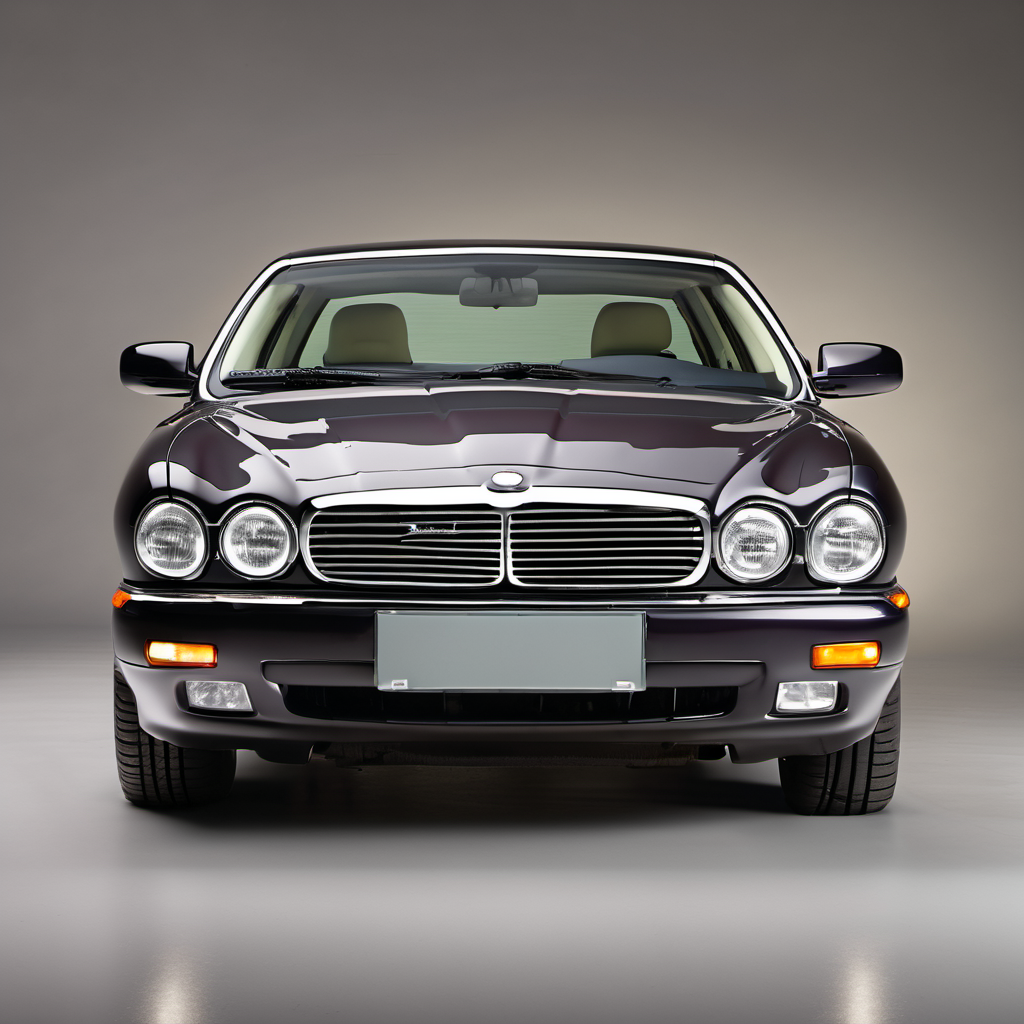
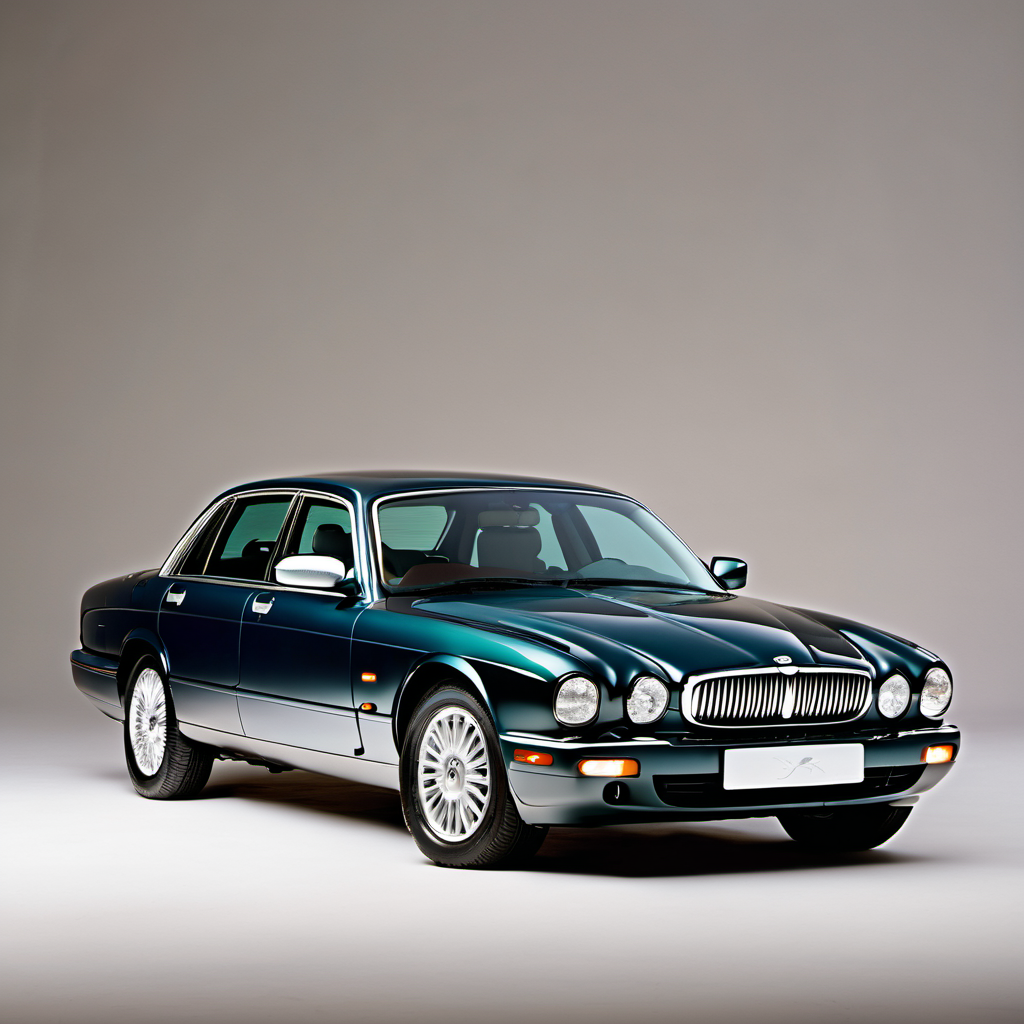
1994 Jaguar XJ Sedan

1994 Jaguar

XJSedan

Sedan

The 1994 Jaguar XJ Series (XJ40/X300 transition era) is a full-size British luxury sedan powered by a 6.0L V12 engine — one of the last gasoline-guzzling flagships of the old-school Jaguar formula. This generation represented Jaguar at its most traditional: long hood, wood-and-leather cabin, silky V12 power, and a reputation for being as beautiful as it was unreliable. By 1994 Jaguar was mid-transition from the aging XJ40 platform to the newer X300, but the V12-powered variant retained the earlier body and its well-documented electrical and mechanical quirks. Ford had already acquired Jaguar in 1989 and reliability improvements were slowly arriving, but a 1994 V12 XJ is still very much an 'old Jag' at heart. This is a collector and enthusiast vehicle at this point — not a daily driver for someone without mechanical patience or a well-funded repair budget. Ownership is rewarding when everything works, but everything working simultaneously is the exception rather than the rule on a 30-year-old V12 British luxury car.

Reliability
2/5
Verified data
Specs shown for XJ12 — the most common configuration. Other trims may vary in engine, drivetrain, or fuel economy. Sign in to see your vehicle's exact specs.
Engine
[object Object]
Drivetrain
RWD
Fuel
Premium gasoline
MPG
11 city / 15 hwy / 13 combined
Seats
Doors
Body
Compact Cars

Overview

AI-curated

The 1994 Jaguar XJ Series (XJ40/X300 transition era) is a full-size British luxury sedan powered by a 6.0L V12 engine — one of the last gasoline-guzzling flagships of the old-school Jaguar formula. This generation represented Jaguar at its most traditional: long hood, wood-and-leather cabin, silky V12 power, and a reputation for being as beautiful as it was unreliable. By 1994 Jaguar was mid-transition from the aging XJ40 platform to the newer X300, but the V12-powered variant retained the earlier body and its well-documented electrical and mechanical quirks. Ford had already acquired Jaguar in 1989 and reliability improvements were slowly arriving, but a 1994 V12 XJ is still very much an 'old Jag' at heart. This is a collector and enthusiast vehicle at this point — not a daily driver for someone without mechanical patience or a well-funded repair budget. Ownership is rewarding when everything works, but everything working simultaneously is the exception rather than the rule on a 30-year-old V12 British luxury car.

Known for
  • Silky, near-silent 6.0L V12 power delivery
  • Sumptuous walnut and leather interior
  • Classic long-hood British luxury proportions
  • Complex and aging Lucas-era electrical systems
  • Notoriously high running costs
Best for
  • Enthusiasts who wrench or have a trusted independent Jaguar specialist
  • Weekend and show use, not daily driving
  • Buyers who want old-world luxury at a fraction of original cost
  • Someone who already owns a reliable daily driver
Watch for
  • Cooling system failures — V12 overheating causes very expensive damage
  • Brittle and failing wiring harnesses throughout the car
  • Leaking fuel injector O-rings (fire hazard on hot engines)
  • Rust on floor pans, sills, and subframe mounting points
  • Deferred maintenance — always assume it needs everything if records are absent

Common issues by mileage

6 known

Cooling system failure / V12 overheating

high
Typically appears
Any mileage on a 30-year-old car
Estimated repair
$800 – $3,500

Wiring harness deterioration and electrical gremlins

high
Typically appears
All mileages — age-related
Estimated repair
$500 – $4,000

Fuel injector O-ring leaks

high
Typically appears
80k+ mi or 20+ years old
Estimated repair
$600 – $1,800

Automatic transmission (GM 4L80-E) shift and solenoid issues

medium
Typically appears
80k–150k mi
Estimated repair
$400 – $2,500

Oxygen sensor and fuel management faults

medium
Typically appears
60k+ mi
Estimated repair
$300 – $900

Rust — floor pans, sills, subframe mounts

high
Typically appears
All mileages — age and road-salt related
Estimated repair
$1,000 – $6,000

Maintenance schedule

  1. 1
    Every 2 years or immediately upon purchase Coolant flush and full cooling system inspection

    The V12 runs hot and is extremely sensitive to cooling system neglect. Overheating warps heads and destroys gaskets — repairs easily exceed $5,000. Replace hoses, thermostat, and pressure-test the system at every service.

  2. 2
    Every 60k mi or if any fuel smell is detected Fuel injector O-ring replacement (all 12)

    Aged rubber O-rings leak fuel onto a hot engine — a fire risk. On a 30-year-old car, do the full set proactively.

  3. 3
    Every 30k mi Transmission fluid and filter service

    The 4-speed automatic responds well to clean fluid. Neglected fluid accelerates solenoid and clutch pack wear.

  4. 4
    Annually Full electrical inspection — connectors, grounds, harness condition

    Brittle insulation, corroded grounds, and oxidized connectors cause cascading faults on these cars. Early detection prevents expensive diagnostic rabbit-holes.

  5. 5
    Every 4,000–5,000 mi Engine oil and filter change with quality 10W-40 or manufacturer-spec oil

    The V12 has a large oil capacity and benefits from more frequent changes to keep internal passages clean, especially on a vehicle that may sit for periods.

  6. 6
    Every 60k mi Oxygen sensor inspection and replacement

    Failed O2 sensors cause rich running, poor fuel economy (which is already bad), and can mask other fuel system issues.

  7. 7
    Every fall before Wisconsin winter Battery load test and terminal cleaning

    The V12 draws heavily on the battery at cold starts. A marginal battery that works in October will strand you in January.

  8. 8
    Every 2 years Brake fluid flush

    Moisture-laden brake fluid is especially problematic in Wisconsin freeze-thaw cycles. ABS and brake components on this car are expensive to replace.

Always defer to the manufacturer's service manual for warranty-mandated intervals.

Cost of ownership

Annual maintenance
$2,500 – $8,000
Fuel
Expect to spend $3,000–$5,000+ annually on premium fuel at average driving distances. At 13 MPG combined, a 12,000-mile year requires roughly 920 gallons.
Insurance
Agreed-value or classic car insurance is worth pursuing if this is a weekend/show vehicle — premiums can be significantly lower than standard coverage for a car driven under 3,000 mi/year.

This is an expensive car to keep on the road. Routine maintenance alone runs $2,500–$8,000 per year at an independent shop, and that assumes nothing major breaks. Parts are scarce and often pricey, and labor is time-intensive on a V12 with tight engine bay packaging. Budget a separate 'repair reserve' of $2,000–$5,000 per year for unexpected issues. The car's current market value (typically $5,000–$15,000 for a nice example) rarely justifies major mechanical investment on pure financial grounds — you own this for the experience, not as an investment.
Seasonal care

Lake Geneva, WI
Winter
  • Do NOT let this car sit outside in Wisconsin winters without a battery maintainer — the V12 demands a fully charged battery for cold starts, and parasitic drain from aging electronics makes this worse.
  • Use a quality 5W-40 full synthetic if the car must be driven in cold weather; the large V12 needs oil to flow immediately at startup in sub-zero temps.
  • Flush and replace wiper fluid with a -40°F rated fluid before first freeze — the washer system components on this age car are hard to source.
  • Inspect and treat all door and trunk seals with rubber conditioner before winter; dried seals freeze shut and tear when forced.
  • Road salt is the enemy of this car's aging floor pans and sills — if you must drive in winter, rinse the undercarriage thoroughly after any salted-road use.
  • Ideally, store this car for winter (October–April in Lake Geneva). Find a heated or at least dry storage facility and use a breathable car cover.
Summer
  • Monitor coolant temperature gauge closely in stop-and-go traffic — the V12 will heat soak quickly and the cooling system on a 30-year-old car may struggle.
  • Check tire pressure monthly; summer heat raises pressure and the wide tires on this car are already running near their load limits with the V12's weight.
  • Inspect A/C system for refrigerant leaks each spring — the system uses R-134a (converted from R-12 on most cars this age) and seals degrade over time.
  • Check under the hood for fuel smell after heat soak — a warm engine will reveal injector O-ring leaks that a cold engine might not.

Comparable vehicles

If you're shopping for one

Red flags
  • Any evidence of overheating — stained coolant reservoir, white residue on oil cap, milky oil
  • Fuel smell anywhere in or around the car
  • No maintenance records or records showing multi-year gaps in service
  • Check engine light on (this car's OBD system is not full OBD-II; codes require specialized Jaguar scan tools)
  • Rust bubbling at sill seams, rear wheel arches, or around subframe mounting points
  • Non-original engine or transmission — parts-car swaps on these are common and complicate future repairs
What to inspect
  • Full cooling system pressure test — do not skip this; overheating history is a deal-breaker
  • Smell inside the engine bay for fuel after the engine has been running 10+ minutes (injector O-ring check)
  • Lift all floor mats and inspect floor pans for rust, soft spots, or repairs
  • Check all electrical systems: windows, sunroof, seats, HVAC blend doors, instrument cluster — budget for any non-working items
  • Look for oil leaks at the rear of the engine and at the cam cover gaskets — common and labor-intensive to fix on a V12
  • Request a full independent pre-purchase inspection from a Jaguar specialist, not a general shop
AI profile generated 4 days ago · claude-sonnet-4-6 · v2.