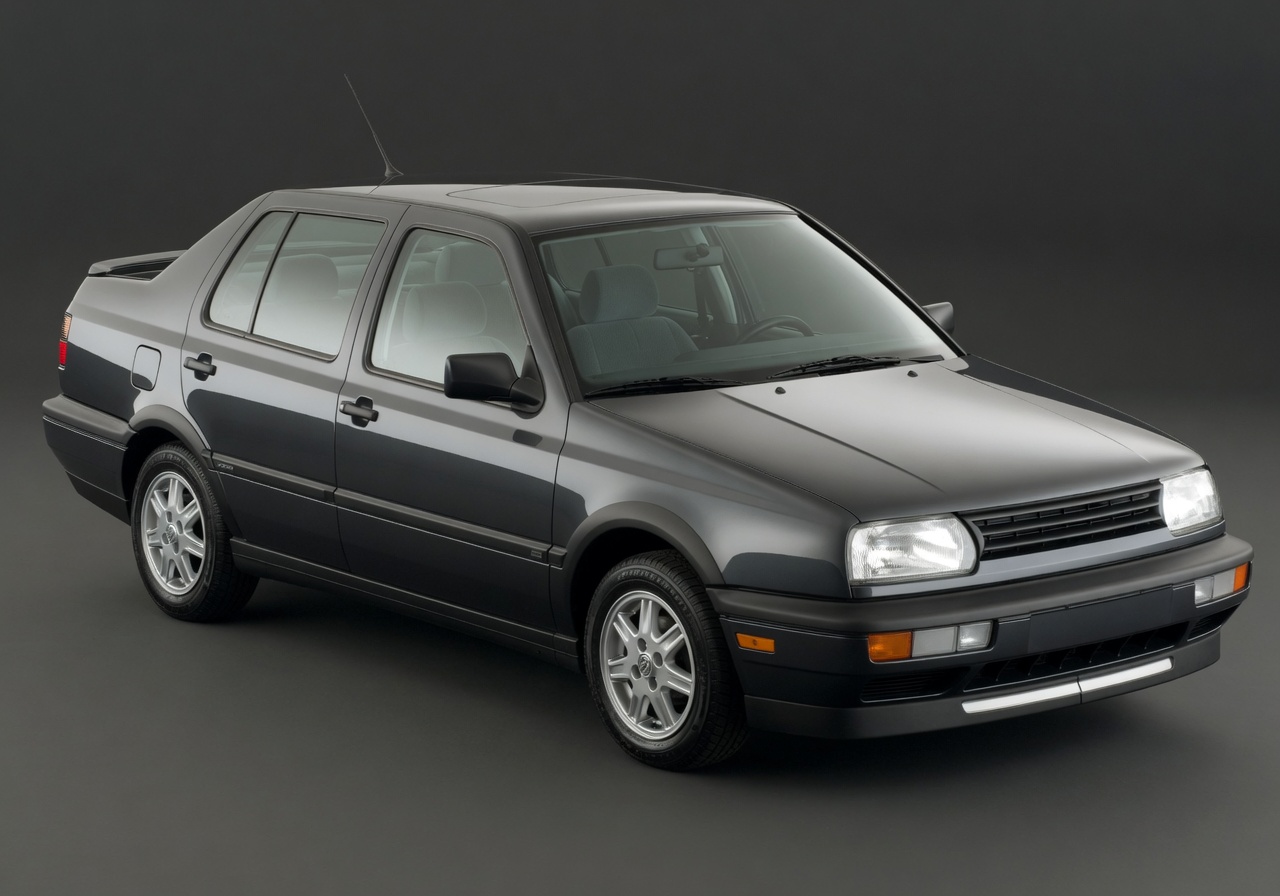
1993 Volkswagen Jetta III Sedan

1993 Volkswagen

Jetta IIISedan

2.0L I4 (8-valve) · Sedan

The 1993 Volkswagen Jetta III (Mk3) was the third generation of VW's compact sedan, introduced to North America for the 1993 model year. It was a significant step up from the Mk2 in terms of interior refinement, ride quality, and safety, though it came at the cost of added complexity and weight. Built on the A3 platform shared with the Golf III, it offered a more car-like driving experience than many of its Japanese and domestic competitors at the time. In the U.S. market, the base Jetta III came equipped with a 2.0L 8-valve four-cylinder engine paired with either a 5-speed manual or 4-speed automatic transmission. It was known for a solid, European-style feel on the road, good build quality for the era, and a practical trunk. However, at 30+ years old, virtually every example still on the road is a project or a daily driver being kept alive by a dedicated owner. At this age, expect deferred maintenance, rust from Wisconsin road salt, and aged rubber components throughout. These cars are simple enough to work on and parts are still reasonably available through VW specialists, but they are not low-maintenance vehicles.

Reliability
2/5
Verified data
Engine
2.0L I4 (8-valve)
Drivetrain
FWD
Fuel
Gasoline
MPG
22 city / 29 hwy / 25 combined
Seats
5
Doors
4
Body
Sedan
MSRP
$12,550

Overview

AI-curated

The 1993 Volkswagen Jetta III (Mk3) was the third generation of VW's compact sedan, introduced to North America for the 1993 model year. It was a significant step up from the Mk2 in terms of interior refinement, ride quality, and safety, though it came at the cost of added complexity and weight. Built on the A3 platform shared with the Golf III, it offered a more car-like driving experience than many of its Japanese and domestic competitors at the time. In the U.S. market, the base Jetta III came equipped with a 2.0L 8-valve four-cylinder engine paired with either a 5-speed manual or 4-speed automatic transmission. It was known for a solid, European-style feel on the road, good build quality for the era, and a practical trunk. However, at 30+ years old, virtually every example still on the road is a project or a daily driver being kept alive by a dedicated owner. At this age, expect deferred maintenance, rust from Wisconsin road salt, and aged rubber components throughout. These cars are simple enough to work on and parts are still reasonably available through VW specialists, but they are not low-maintenance vehicles.

Known for
  • Solid European driving feel for a compact sedan
  • Simple 2.0L 8-valve engine that's relatively easy to work on
  • Good trunk space for the class
  • Refined interior compared to Mk2 predecessor
Best for
  • Enthusiasts who enjoy older European cars
  • Owners willing to do their own maintenance or have a trusted VW shop
  • Low-mileage second car or weekend driver
  • Budget-conscious buyers who understand the vintage vehicle trade-offs
Watch for
  • Severe rust on underbody, floor pans, and wheel arches — especially in Wisconsin
  • Coolant system failures (plastic components become brittle with age)
  • Age-hardened rubber: motor mounts, suspension bushings, CV boots
  • Electrical gremlins common at this age on any European vehicle

Common issues by mileage

6 known

Coolant system failure — thermostat housing and coolant flange

high
Typically appears
Any mileage at 30+ years
Estimated repair
$150 – $400

Timing belt and tensioner failure

high
Typically appears
Any mileage — interval-based, not mileage-based at this age
Estimated repair
$200 – $450

Suspension bushings and control arm wear

high
Typically appears
Any mileage at this age
Estimated repair
$300 – $700

Underbody and floor pan rust

high
Typically appears
All mileage — salt-belt specific concern
Estimated repair
$500 – $3,000

Idle control valve and fuel system deposits

medium
Typically appears
80k+ mi
Estimated repair
$100 – $350

Maintenance schedule

  1. 1
    Every 4–5 years regardless of mileage at this age Timing belt and tensioner replacement

    The 2.0L ABA is an interference engine. A snapped belt destroys the engine. At 30 years old, even a low-mileage belt is overdue on age alone.

  2. 2
    Annually or any time overheating symptoms appear Full coolant system inspection and flush

    Plastic thermostat housings, coolant flanges, and hose connections are 30+ years old. Any crack causes rapid coolant loss and engine damage. Replace plastic components with updated versions when servicing.

  3. 3
    Inspect every oil change; replace when cracked or collapsed Motor mount inspection and replacement

    Rubber mounts harden and crack with age, causing vibration and drivetrain misalignment.

  4. 4
    Every 2 years Brake fluid flush

    Glycol-based brake fluid absorbs moisture over time, lowering boiling point and promoting internal corrosion in calipers and lines — especially important in Wisconsin freeze-thaw cycles.

  5. 5
    Every oil change CV axle boot inspection

    Torn boots allow grease to escape and contaminants to enter. On a 30-year-old car, boot replacement is cheaper than a full axle replacement.

  6. 6
    Annually before winter Underbody rust inspection and treatment

    Lake Geneva road salt is aggressive. Inspect subframe, floor pans, wheel arches, and fuel/brake lines every fall. Treat exposed metal proactively.

  7. 7
    Every 30,000 miles or 3 years Spark plugs and ignition wires

    Aged ignition wires cause misfires and hard starts. On a 30-year-old car, wires are almost certainly overdue regardless of mileage claimed.

  8. 8
    Every fall before winter Battery load test

    Cold cranking amps drop sharply below freezing. An aging battery that seems fine in summer can fail to start a cold-soaked car at -10°F.

Always defer to the manufacturer's service manual for warranty-mandated intervals.

Cost of ownership

Annual maintenance
$600 – $2,000
Fuel
Roughly $1,400–$1,800/year at 12,000 miles and current Midwest gas prices, based on ~25 MPG combined
Insurance
Low — liability/comp on a 30-year-old vehicle typically runs $400–$800/year in Wisconsin depending on coverage and driver profile

On paper this car is cheap to own — low insurance, decent fuel economy, affordable parts. In practice, a 1993 Jetta III is an aging vehicle where deferred maintenance compounds quickly. Budget toward the higher end of the maintenance range if the service history is incomplete. One neglected cooling system or timing belt job can easily cost more than the car's market value.
Seasonal care

Lake Geneva, WI
Winter
  • Load-test the battery every fall — the 2.0L needs strong cranking amps at Wisconsin sub-zero temps, and a marginal battery will leave you stranded.
  • Switch to a full synthetic 5W-30 or 5W-40 if not already used — it flows better during cold starts and protects better until the engine reaches operating temperature.
  • Inspect rubber brake lines and steel brake lines for salt corrosion before winter — a 30-year-old brake line failure in winter is a serious safety event.
  • Use a quality winter washer fluid rated to -20°F or colder. The stock reservoir and lines on older VWs are prone to cracking if plain water freezes inside.
  • Install winter wiper blades — the standard blades ice up quickly and streak, reducing visibility significantly.
  • Apply a rust inhibitor to underbody and wheel arches before first snowfall. After any heavy salt exposure, rinse the undercarriage at a touchless car wash when temps are above freezing.
Summer
  • Inspect the cooling system thoroughly before hot weather — a weeping thermostat housing or cracked hose that leaks slowly in winter will fail completely in summer heat.
  • Check tire pressure monthly — tires lose roughly 1 PSI per 10°F of temperature change, and underinflated tires on hot pavement accelerate wear and risk blowout.
  • Run the A/C system and listen for compressor cycling. A/C on a 30-year-old car may need a refrigerant recharge or may have a failed compressor — address it before peak heat.
  • Inspect the radiator for debris (cottonwood, bugs) blocking airflow, which is common in the Lake Geneva area in late spring.

Comparable vehicles

If you're shopping for one

Red flags
  • Any soft spots, bubbling paint, or visible holes in the floor pans, sills, or wheel arches — rust repair on a car this age can exceed its value
  • Milky or foamy oil on the dipstick or oil cap — indicates a head gasket leak or cracked block, both expensive on a 30-year-old engine
  • No service records at all — assume timing belt, coolant system, and all rubber are overdue
  • Overheating or temperature gauge climbing — coolant system issues are common and can snowball fast
  • Musty or wet smell inside the cabin — floor pan rust is often hidden under carpeting
What to inspect
  • Full underbody inspection on a lift — subframe, floor pans, fuel lines, brake lines, and exhaust hangers
  • Timing belt condition and date of last replacement — this is a must-do before purchase if unknown
  • All coolant hoses, the thermostat housing, and the coolant expansion tank for cracks or seepage
  • CV axle boots for tears and grease fling
  • Brake rotor and pad condition plus brake line integrity at all four corners
  • Compression test on all four cylinders if the car has high mileage or no records
AI profile generated 4 days ago · claude-sonnet-4-6 · v2.