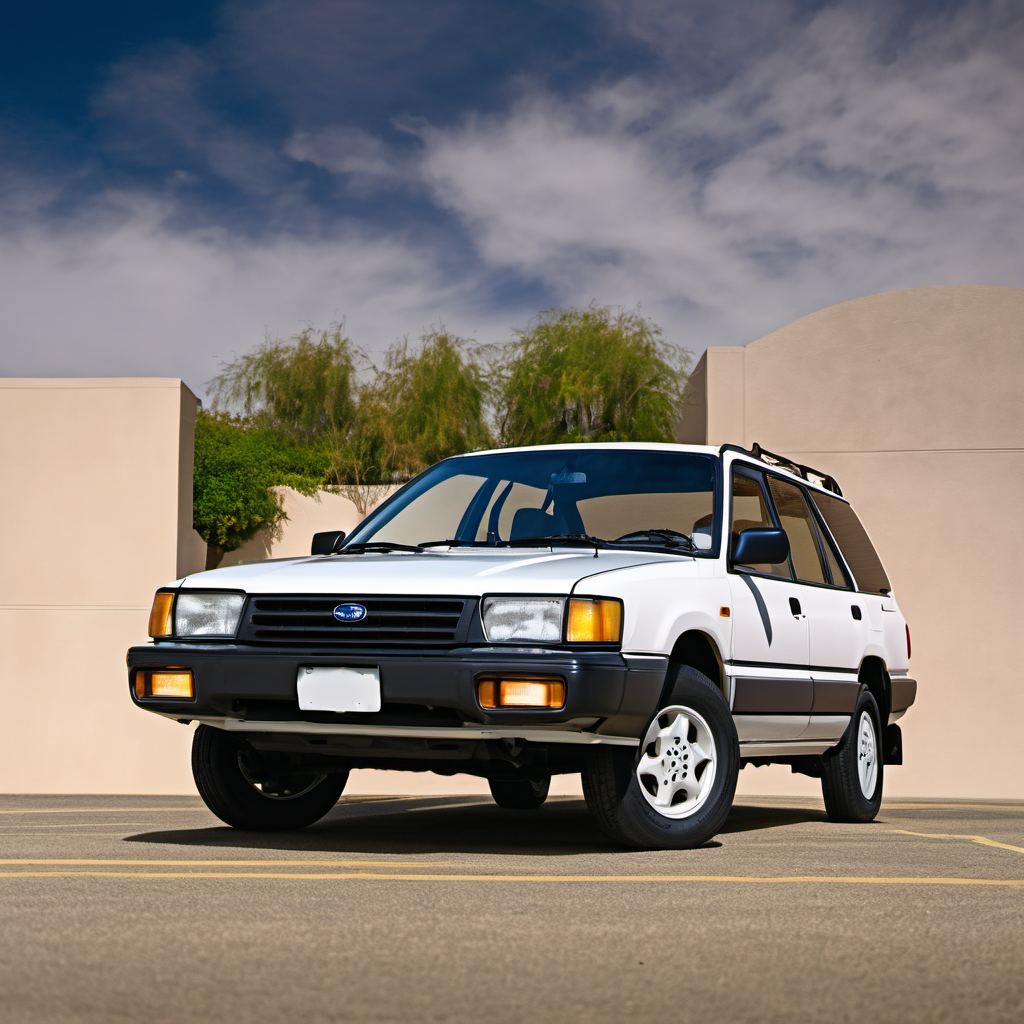
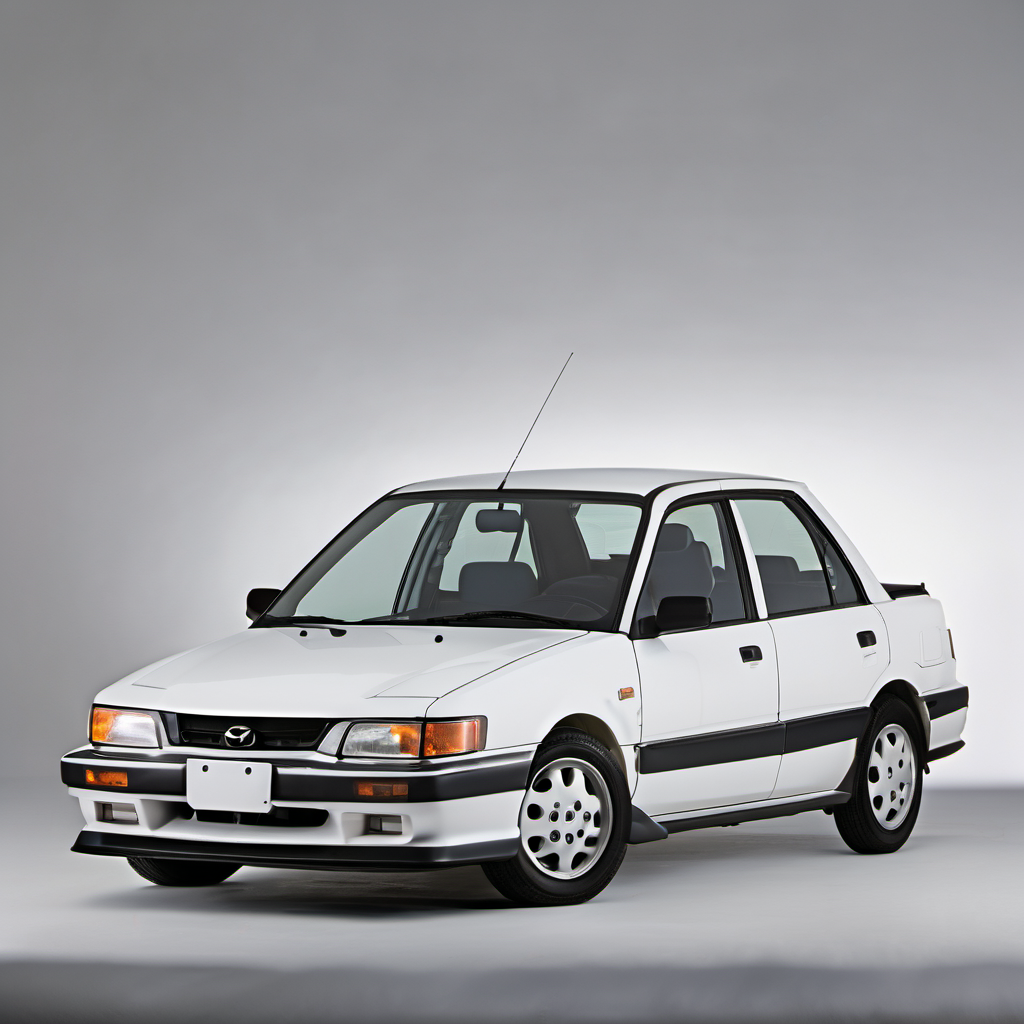
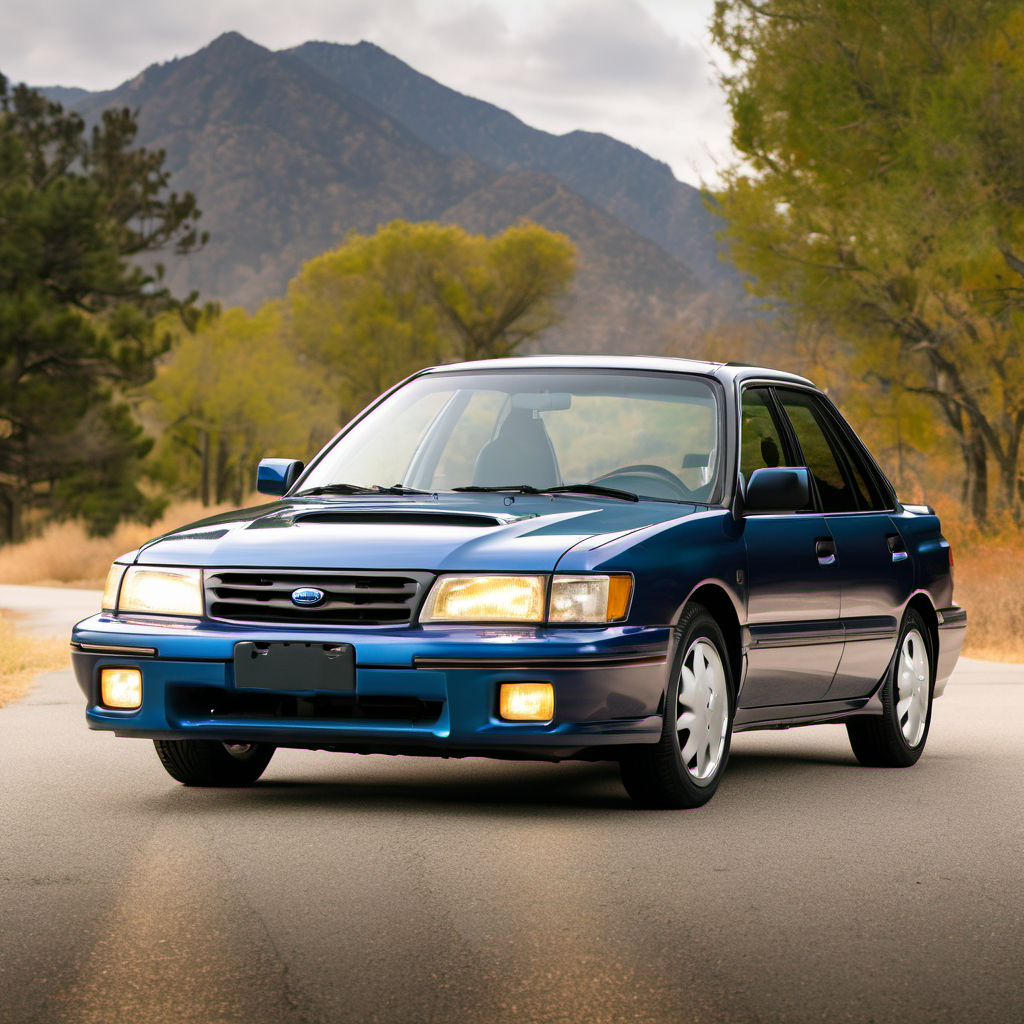
1992 Subaru Loyale Sedan

1992 Subaru

LoyaleSedan

Sedan

The 1992 Subaru Loyale is the final model year of Subaru's entry-level rear-wheel-drive-derived compact lineup that ran from the early 1980s through 1994 in export markets. It was sold alongside the newer Legacy and carried over the older EA-series horizontally opposed (boxer) 4-cylinder engine, which by this point was being phased out in favor of the more modern EJ family. In base FWD sedan trim, it's a bare-bones, lightweight commuter with a simple carbureted or SPFI-equipped drivetrain that is easy and inexpensive to work on. The Loyale occupies a niche today as an affordable, mechanically simple older Subaru. Parts availability has thinned considerably since production ended, but the engine internals and basic wear items can still be sourced through specialty vendors. At over 30 years old, any surviving example should be treated as a used vehicle requiring a full mechanical inspection before purchase. These cars are best appreciated by owners who enjoy older, simple machines and are comfortable with the reality that rust — especially in Wisconsin's salted roads — is the primary enemy. A clean, rust-free Loyale can still be a reliable daily driver with attentive upkeep.

Reliability
2/5
Verified data
Specs shown for Loyale — the most common configuration. Other trims may vary in engine, drivetrain, or fuel economy. Sign in to see your vehicle's exact specs.
Engine
[object Object]
Drivetrain
FWD
Fuel
Gasoline
MPG
21 city / 24 hwy / 22 combined
Seats
Doors
Body
Compact Cars

Overview

AI-curated

The 1992 Subaru Loyale is the final model year of Subaru's entry-level rear-wheel-drive-derived compact lineup that ran from the early 1980s through 1994 in export markets. It was sold alongside the newer Legacy and carried over the older EA-series horizontally opposed (boxer) 4-cylinder engine, which by this point was being phased out in favor of the more modern EJ family. In base FWD sedan trim, it's a bare-bones, lightweight commuter with a simple carbureted or SPFI-equipped drivetrain that is easy and inexpensive to work on. The Loyale occupies a niche today as an affordable, mechanically simple older Subaru. Parts availability has thinned considerably since production ended, but the engine internals and basic wear items can still be sourced through specialty vendors. At over 30 years old, any surviving example should be treated as a used vehicle requiring a full mechanical inspection before purchase. These cars are best appreciated by owners who enjoy older, simple machines and are comfortable with the reality that rust — especially in Wisconsin's salted roads — is the primary enemy. A clean, rust-free Loyale can still be a reliable daily driver with attentive upkeep.

Known for
  • Simple, lightweight EA-series boxer 4-cylinder engine
  • Available in AWD wagon variant (this is the FWD sedan trim)
  • Very basic interior and minimal electronics — easy to work on
  • Long-running nameplate bridging older Leone/DL era to modern Subaru
  • Thin parts availability at 30+ years old
Best for
  • Budget-minded enthusiasts comfortable wrenching on older vehicles
  • Low-mileage around-town commuting
  • Collectors preserving late-era EA-engine Subarus
  • Owners who prefer mechanical simplicity over modern complexity
Watch for
  • Severe rust on floor pans, frame rails, and strut towers in Upper Midwest examples
  • Head gasket seepage on the EA82 engine — a known chronic issue
  • Obsolete OBD1 diagnostics require older scan tools or analog methods
  • Shrinking parts supply — some items are dealer-discontinued or NLA
  • Aging rubber: coolant hoses, CV boots, and fuel lines are all 30+ years old

Common issues by mileage

6 known

Head gasket seepage / failure

high
Typically appears
60–120k mi
Estimated repair
$600 – $1,200

Timing belt & tensioner wear

high
Typically appears
Any — age-based regardless of miles
Estimated repair
$250 – $500

CV axle boots cracked / joints worn

high
Typically appears
Any mileage at this age
Estimated repair
$150 – $400

Rust — floor pans, strut towers, subframe

high
Typically appears
All mileages on Upper Midwest examples
Estimated repair
$500 – $3,000

Cooling system hose failure / coolant leaks

medium
Typically appears
Any — rubber is 30+ years old
Estimated repair
$100 – $400

Carburetor / SPFI throttle body fouling and fuel system aging

medium
Typically appears
80k+ mi or long storage periods
Estimated repair
$150 – $600

Maintenance schedule

  1. 1
    Every 60k mi or 5 years — whichever comes first Timing belt replacement

    The EA82 is an interference engine. A snapped belt causes valve-to-piston contact and destroys the engine. At this vehicle's age, replace it regardless of when it was last done if records are unavailable.

  2. 2
    Every 2 years Coolant system flush and hose inspection

    Aging rubber hoses crack from the inside out. Coolant condition directly affects head gasket longevity on the EA82. Use the correct Subaru-compatible coolant (low-silicate or OAT).

  3. 3
    Every oil change — visually inspect for milky oil or coolant smell Head gasket inspection for seepage

    EA82 head gaskets are the #1 failure point. Early detection (seepage) is far cheaper than a full overheating event that warps the head.

  4. 4
    Annually, before and after winter Underbody rust inspection and treatment

    Lake Geneva roads are heavily salted. Spray exposed metal with rust inhibitor every fall. Any bubbling paint on floor pans or strut towers needs immediate attention before it becomes structural.

  5. 5
    Every oil change CV axle boot inspection

    A torn boot throws grease and leads to rapid joint wear. Replacement joints for the EA-era Loyale are getting scarce — catch torn boots early.

  6. 6
    Every 30k mi or 3 years Fuel filter replacement

    Old fuel filter restricts flow and stresses the fuel pump. On an aging vehicle, a clogged filter is an easy, cheap preventive fix.

  7. 7
    Every fall before winter Battery load test

    Sub-zero Wisconsin temps expose a weak battery fast. A 30-year-old vehicle's charging system should also be tested — alternator output degrades over time.

  8. 8
    Annually Brake lines and hydraulic hoses inspection

    Steel brake lines on 30-year-old Upper Midwest cars are prime corrosion targets. A line failure is a safety emergency. Inspect for rust bubbling, pitting, and soft rubber flex hoses annually.

Always defer to the manufacturer's service manual for warranty-mandated intervals.

Cost of ownership

Annual maintenance
$600 – $2,000
Fuel
Economical — 22 mpg combined means roughly $1,200–$1,600/yr at typical Wisconsin driving distances and current mid-grade prices
Insurance
Typically very low — older vehicle with minimal market value; expect liability-only coverage on most examples

Day-to-day costs are low when nothing is breaking, but at 30+ years old the Loyale is in 'pay as you go' territory. A timing belt job, head gasket repair, or rust remediation in a single year can easily push costs past $1,500–$2,500. Budget accordingly and keep a repair reserve. The car's low market value also means a single large repair can exceed the vehicle's worth — weigh each repair decision carefully.
Seasonal care

Lake Geneva, WI
Winter
  • Load-test the battery every October — cold cranking amps drop sharply below 0°F and the EA82 needs a strong start to avoid flooding
  • Switch to 5W-30 full synthetic oil for winter to ensure oil flow on cold starts; the EA82's tight tolerances suffer with thick cold oil
  • Flush and refill washer fluid reservoir with -20°F or colder rated fluid — Lake Geneva winters will freeze standard fluid solid in the lines
  • Inspect and treat all exposed underbody metal with rust inhibitor before first road salt application; pay special attention to floor pan seams and strut towers
  • Keep fuel tank at least half full to prevent moisture accumulation in the tank and fuel line freeze in extreme cold
  • Check coolant freeze protection — confirm mix protects to at least -34°F with a test strip or refractometer
Summer
  • Inspect all coolant hoses for softness, cracking, or swelling before summer heat accelerates aging rubber failure
  • Check tire pressure monthly — every 10°F rise in temperature adds roughly 1 PSI; the Loyale's small tires are sensitive to overinflation
  • Test the A/C system early in the season — the R-12 refrigerant used in 1992 is no longer produced; any leak now requires conversion to R-134a, which is a meaningful cost
  • Watch coolant temperature closely during hot-weather driving — the EA82's head gasket vulnerability increases under sustained heat stress

Comparable vehicles

If you're shopping for one

Red flags
  • Any soft or crumbling floor pan metal — structural rust makes the car unsafe and uneconomical to repair
  • Milky oil or white smoke from the exhaust — active head gasket failure
  • No timing belt service history on a car with unknown or high mileage — interference engine means the risk is immediate
  • Bubbling paint or visible perforation on strut towers
  • Evidence of overheating history (stained overflow tank, warped coolant cap, cracked reservoir) — the EA82 does not survive overheating well
  • R-12 A/C system with no refrigerant and no conversion — indicates deferred maintenance mindset throughout ownership
What to inspect
  • Crawl underneath and probe floor pans, frame rails, and rear subframe with a screwdriver — rust perforation is a deal-breaker on Upper Midwest cars
  • Pull the oil fill cap and look for creamy, mayonnaise-like residue indicating coolant intrusion from a failing head gasket
  • Ask for timing belt service records — if unknown, budget $300–$500 immediately for replacement before driving
  • Check strut towers from inside the engine bay for rust-through, which compromises suspension integrity and is expensive to repair correctly
  • Start cold and watch for rough idle, smoke, or long crank times indicating fuel system or compression issues
  • Verify the A/C system status — R-12 refrigerant is obsolete; factor in R-134a conversion cost (~$200–$400) if A/C is needed
  • Inspect all rubber: coolant hoses, fuel lines, CV boots, and brake flex hoses — on a 30-year-old car, assume all need replacement unless recently done
AI profile generated 4 days ago · claude-sonnet-4-6 · v2.