2024 Toyota Prius Prime
Popular pick

2024 Toyota

Prius Prime

2L 4-cyl

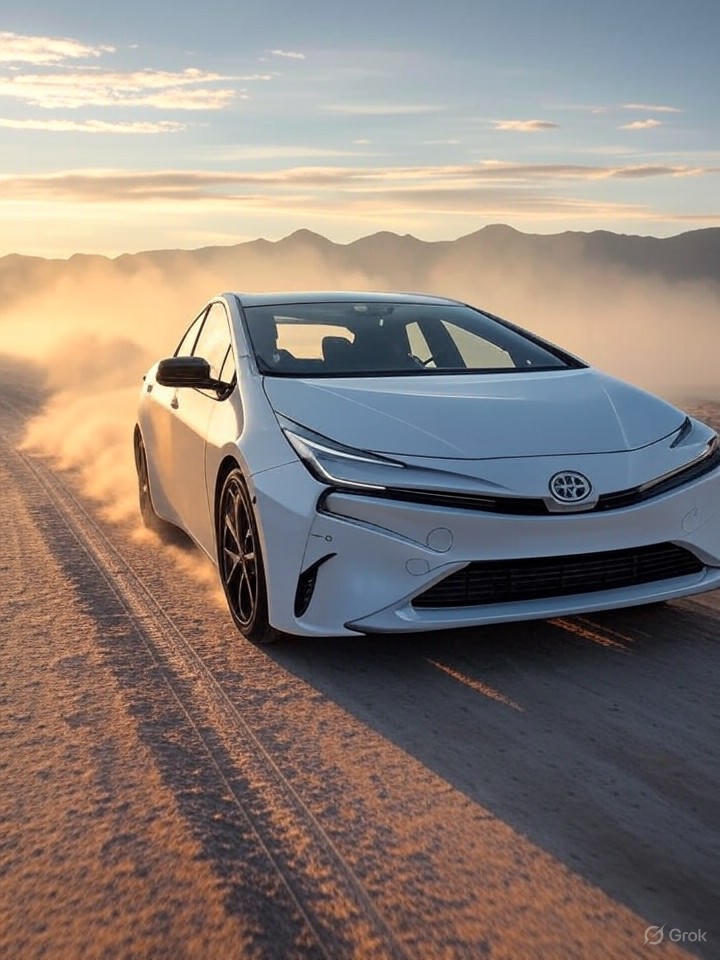
The 2024 Toyota Prius Prime is the plug-in hybrid (PHEV) version of Toyota's legendary Prius, now in its fifth generation following a ground-up redesign for 2023. It pairs a 2.0L Atkinson-cycle four-cylinder with a more powerful electric motor and a larger 13.6 kWh lithium-ion battery, good for roughly 44 miles of pure EV range — a major step up from the previous generation's 25 miles. The result is a car that most daily commuters can drive almost entirely on electricity, while still having a full hybrid powertrain for longer trips. The fifth-gen design shed the frumpy looks that defined older Prius models. It sits lower and wider, with a more aggressive roofline and genuinely stylish interior. Toyota also added standard all-wheel drive (via a rear electric motor) on the XSE and Premium trims, making it more usable in Wisconsin winters than any previous Prius Prime. For Lake Geneva drivers, the Prius Prime is a compelling choice if you have a place to plug in at home. The short electric range covers most local errands and short commutes at near-zero fuel cost, while the hybrid system handles longer runs to Milwaukee or Chicago without range anxiety. Cold weather will cut EV range noticeably, so budget for that mentally.

Reliability
4/5
Verified data
Specs shown for Prius Prime — the most common configuration. Other trims may vary in engine, drivetrain, or fuel economy. Sign in to see your vehicle's exact specs.
Engine
[object Object]
Drivetrain
FWD
Fuel
Plug-in Hybrid
MPG
52 city / 49 hwy / 44 combined (hybrid mode); 114 MPGe electric
Seats
5
Doors
4
Body
Sedan
MSRP
$32,900

Overview

AI-curated

The 2024 Toyota Prius Prime is the plug-in hybrid (PHEV) version of Toyota's legendary Prius, now in its fifth generation following a ground-up redesign for 2023. It pairs a 2.0L Atkinson-cycle four-cylinder with a more powerful electric motor and a larger 13.6 kWh lithium-ion battery, good for roughly 44 miles of pure EV range — a major step up from the previous generation's 25 miles. The result is a car that most daily commuters can drive almost entirely on electricity, while still having a full hybrid powertrain for longer trips. The fifth-gen design shed the frumpy looks that defined older Prius models. It sits lower and wider, with a more aggressive roofline and genuinely stylish interior. Toyota also added standard all-wheel drive (via a rear electric motor) on the XSE and Premium trims, making it more usable in Wisconsin winters than any previous Prius Prime. For Lake Geneva drivers, the Prius Prime is a compelling choice if you have a place to plug in at home. The short electric range covers most local errands and short commutes at near-zero fuel cost, while the hybrid system handles longer runs to Milwaukee or Chicago without range anxiety. Cold weather will cut EV range noticeably, so budget for that mentally.

Known for
  • Exceptional fuel efficiency — among the best in any PHEV segment
  • 44-mile EPA electric range, well above most competitors
  • Redesigned fifth-gen platform: better handling, roomier, better looking
  • Available rear-motor AWD for improved winter traction
  • Toyota's proven hybrid reliability track record
Best for
  • Daily commuters with home or workplace charging access
  • Drivers who want near-EV economy without range anxiety
  • Wisconsin winters with AWD trim selection
  • High-mileage drivers who want low long-term fuel costs
  • Environmentally conscious buyers who aren't ready for a full EV
Watch for
  • Cold weather reduces EV range significantly — expect 25–35 miles instead of 44 in sub-zero temps
  • 12V auxiliary battery drain if the car sits unused for extended periods
  • Infotainment system glitches (screen freezes, reboots) reported on 2023–2024 models
  • Tight rear headroom due to the sloping roofline
  • Hybrid battery replacement is expensive if it ever occurs out of warranty

Common issues by mileage

5 known

12V Auxiliary Battery Drain

medium
Typically appears
10–40k mi
Estimated repair
$150 – $300

Infotainment System Freezing / Reboots

medium
Typically appears
5–30k mi
Estimated repair
$0 – $300

Reduced EV Range in Cold Weather

high
Typically appears
All mileages
Estimated repair
$0

Hybrid High-Voltage Battery Pack Degradation / Failure

low
Typically appears
120k+ mi
Estimated repair
$2,500 – $5,000

VVT / Camshaft Timing Issues (oil-change neglect related)

low
Typically appears
60–120k mi
Estimated repair
$300 – $900

Maintenance schedule

  1. 1
    Every 5,000 miles or 6 months — 0W-20 Full Synthetic, 4.5 qt capacity Engine Oil & Filter Change

    The Atkinson-cycle engine runs at high thermal loads. Clean oil is critical for VVT system health and longevity. Don't stretch intervals — the VVT actuators are oil-pressure sensitive.

  2. 2
    Every 7,500 miles or 9 months Tire Rotation

    Regenerative braking reduces rear brake wear, but the front tires still carry more cornering and acceleration load. Rotation keeps wear even and extends tire life.

  3. 3
    Inspect at 15,000 miles; replace by 30,000 miles or 24 months Engine Air Filter Inspection & Replacement

    A clogged air filter forces the gasoline engine to work harder, reducing hybrid efficiency and increasing fuel consumption.

  4. 4
    Every 2 years or if the car sits unused for 2+ weeks 12V Auxiliary Battery Check

    The PHEV system relies on the 12V battery for startup and electronics. This battery is known to drain on cars that sit — especially relevant during Wisconsin winters when the car may not be driven daily.

  5. 5
    Every 3 years regardless of mileage Brake Fluid Flush

    Brake fluid absorbs moisture over time, lowering its boiling point. Because regenerative braking does most of the work, the hydraulic brakes are used less and the fluid ages by calendar rather than mileage.

  6. 6
    Every 30,000 miles or annually Brake Pad & Rotor Inspection

    Regen braking reduces pad wear dramatically, but rotors can develop surface rust and corrosion from infrequent use — especially with Wisconsin road salt. Inspect rotors for pitting even if pads look fine.

  7. 7
    Every 15,000 miles or 12 months Cabin Air Filter Replacement

    Keeps the HVAC system flowing efficiently. A restricted cabin filter makes the system work harder, which draws more from the hybrid battery on electric-mode drives.

  8. 8
    Every 100,000 miles or per Toyota service schedule High-Voltage Battery Coolant Flush

    The traction battery has its own dedicated cooling loop. Neglecting this flush risks overheating the battery cells, accelerating degradation over time.

Always defer to the manufacturer's service manual for warranty-mandated intervals.

Cost of ownership

Annual maintenance
$400 – $700
Fuel
For drivers who can charge at home nightly, real-world fuel costs are frequently under $500/year for typical commuting. Without regular charging, expect hybrid-mode fuel economy around 50 MPG combined — still exceptional. Budget $800–$1,400/year in fuel depending on driving patterns and charging access.
Insurance
Typically $1,200–$1,800/year in the Lake Geneva area for a 2024 PHEV sedan with full coverage, depending on driver profile and trim.

The Prius Prime has one of the lowest total ownership costs in its class. Maintenance intervals are generous, brake wear is minimal due to regenerative braking, and fuel costs crater if you charge regularly. The one big financial risk is high-voltage battery replacement after warranty — but Toyota's hybrid battery warranty is 10 years / 150,000 miles in most states, so that's well-protected on a new purchase.

Seasonal care

Lake Geneva, WI
Winter
  • Expect EV range to drop to 25–35 miles in sub-zero temps — the battery loses capacity in the cold and cabin heating draws heavily from it. Pre-condition the cabin while still plugged in to preserve range.
  • Keep the 12V auxiliary battery healthy. Cold amplifies drain issues — if the car will sit for more than a week, use a battery maintainer.
  • Switch to dedicated winter tires. The low-rolling-resistance all-season tires that come stock are optimized for efficiency, not snow traction — even with AWD (XSE/Premium trims), winter tires make a meaningful safety difference on Lake Geneva's icy roads.
  • Flush and top off windshield washer fluid with a -20°F or -30°F rated fluid before November. The washer system is used heavily with road salt spray.
  • Check that the brake rotors are not surface-rusting from salt exposure. Regen braking means the friction brakes don't self-clean as often — inspect rotors for pitting at each oil change.
  • Park plugged in whenever possible. The battery management system uses grid power to maintain battery temperature, which preserves both EV range and cold-weather starts.
Summer
  • Check tire pressure monthly — tires lose or gain roughly 1 PSI per 10°F of temperature change. Summer heat will push pressures up from spring baseline.
  • Run the A/C — it draws from the traction battery in EV mode, which will reduce electric range by 5–10 miles on hot days. This is normal.
  • Inspect the cabin air filter before summer if you drive on dusty country roads common around Lake Geneva — a restricted filter strains the A/C system.
  • The high-voltage battery has active cooling; ensure nothing is blocking the battery cooling vents (typically located under rear seat or in the trunk area). Keep the interior from heat-soaking when parked — use a sunshade to reduce thermal load on the cabin and battery.

Comparable vehicles

If you're shopping for one

Red flags
  • Any active hybrid system warning lights — triangular exclamation or 'Ready' light not illuminating normally.
  • P0A80 or related hybrid battery DTC codes in stored history — signals battery cell degradation.
  • A used example with no charging history (check if charge port shows wear) — the battery may have been cycling purely as a standard hybrid, which is fine mechanically but suggests the seller may not have been using it as intended.
  • Excessive rotor wear or brake judder — unusual on a PHEV but indicates heavy city braking without regen, or a regen system that isn't functioning properly.
  • Software version significantly out of date — Toyota has issued OTA and dealer updates for infotainment bugs; a unit that's never been serviced may still have early firmware issues.
What to inspect
  • Verify the high-voltage battery state of health via Toyota's Techstream diagnostic — check for any stored hybrid system codes (P0A80 range) even if no warning lights are present.
  • Test the 12V auxiliary battery voltage — on used examples, a weak 12V battery is the most common headache item and a cheap fix if caught early.
  • Confirm the infotainment system operates without freezing during a 15-minute test drive. Bring up navigation and audio simultaneously to stress it.
  • Inspect rotors for rust pitting — regen braking means friction brakes are used infrequently, and rotors can corrode even on low-mileage examples.
  • Check the charge port and charging cable for any damage or corrosion, and verify the onboard charger actually accepts a full charge.
  • Look underneath for road-salt undercarriage corrosion on Wisconsin-registered used examples, particularly around the battery cooling lines and brake lines.
AI profile generated 20 days ago · claude-sonnet-4-6 · v2.