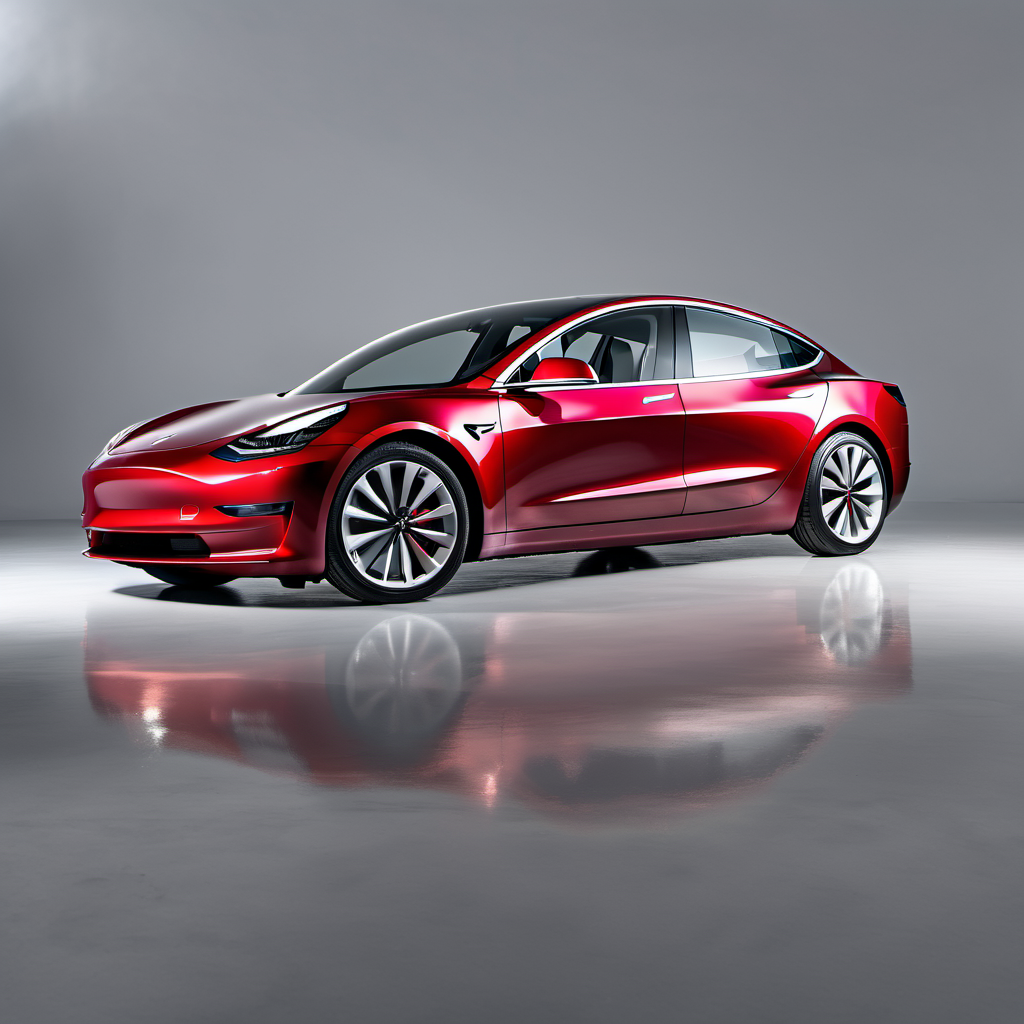
2018 Tesla Model 3 Sedan
Popular pick

2018 Tesla

Model 3Sedan

Electric motor · Sedan

The 2018 Tesla Model 3 is the first mass-market offering from Tesla, slotting below the Model S and bringing the brand's core technology — large touchscreen, over-the-air software updates, and Autopilot — to a more accessible price point. The Standard Range RWD variant starts around $35,000 and delivers an EPA-estimated 220 miles of range, while the Long Range and Performance trims push well past 300 miles. It earned a 5-star NHTSA overall safety rating and quickly became one of the best-selling electric vehicles in the world. As a pure EV, the ownership experience is fundamentally different from any ICE vehicle. There's no oil to change, no exhaust system, no traditional transmission, and no spark plugs. Routine maintenance is minimal by comparison, but high-voltage battery care, 12V auxiliary battery health, and tire management become the key disciplines. Tesla handles most diagnostics and software issues over-the-air or through its own service centers. The 2018 model year was Tesla's first full production year for the Model 3, which means early builds (especially from early 2018) had well-documented panel gap, paint quality, and interior fit-and-finish variability. Later 2018 builds improved significantly. Buyers of used examples should inspect body panel alignment and look for any evidence of repaired glass or trim from early quality control shortcomings.

Reliability
3/5
Verified data
Specs shown for Model 3 Long Range — the most common configuration. Other trims may vary in engine, drivetrain, or fuel economy. Sign in to see your vehicle's exact specs.
Engine
Electric motor
Drivetrain
Rear-wheel drive
Fuel
Electric
MPG
131 MPGe city / 120 MPGe highway
Seats
Doors
Body
Midsize Cars
MSRP
$35,000

Overview

AI-curated

The 2018 Tesla Model 3 is the first mass-market offering from Tesla, slotting below the Model S and bringing the brand's core technology — large touchscreen, over-the-air software updates, and Autopilot — to a more accessible price point. The Standard Range RWD variant starts around $35,000 and delivers an EPA-estimated 220 miles of range, while the Long Range and Performance trims push well past 300 miles. It earned a 5-star NHTSA overall safety rating and quickly became one of the best-selling electric vehicles in the world. As a pure EV, the ownership experience is fundamentally different from any ICE vehicle. There's no oil to change, no exhaust system, no traditional transmission, and no spark plugs. Routine maintenance is minimal by comparison, but high-voltage battery care, 12V auxiliary battery health, and tire management become the key disciplines. Tesla handles most diagnostics and software issues over-the-air or through its own service centers. The 2018 model year was Tesla's first full production year for the Model 3, which means early builds (especially from early 2018) had well-documented panel gap, paint quality, and interior fit-and-finish variability. Later 2018 builds improved significantly. Buyers of used examples should inspect body panel alignment and look for any evidence of repaired glass or trim from early quality control shortcomings.

Known for
  • Minimal routine maintenance compared to ICE vehicles
  • Over-the-air software updates that add features and fix bugs
  • 5-star NHTSA safety rating across all categories
  • Strong straight-line performance relative to price
  • 15-inch central touchscreen controlling nearly all vehicle functions
Best for
  • Daily commuters with home charging capability
  • Tech-forward drivers who want frequent software-driven improvements
  • Drivers wanting low per-mile fuel and maintenance costs
  • Highway commuters in moderate climates with charging infrastructure
Watch for
  • Early 2018 production builds with paint, panel gap, and trim quality issues
  • No traditional service network — Tesla-only for most repairs
  • 12V auxiliary battery failures that can leave the car undriveable
  • Significant range reduction in Wisconsin winters (sub-zero temps can cut range 30–40%)
  • Glass roof and large windshield can be expensive to replace

Common issues by mileage

6 known

12V Auxiliary Battery Failure

high
Typically appears
30k–80k mi (or 3–6 years, whichever comes first)
Estimated repair
$150 – $300

Panel Gaps, Paint Defects, and Misaligned Trim

high
Typically appears
0–20k mi (early 2018 builds)
Estimated repair
$200 – $1,500

Autopilot Camera and Sensor Calibration / Failure

medium
Typically appears
20k–80k mi
Estimated repair
$300 – $1,200

Glass Roof or Windshield Seal Leaks

medium
Typically appears
0–50k mi
Estimated repair
$200 – $800

Door Handle Failure (Retractable Mechanism)

medium
Typically appears
30k–100k mi
Estimated repair
$250 – $600

High-Voltage Battery Degradation / Reduced Range

low
Typically appears
80k–150k mi
Estimated repair
$5,000 – $16,000

Maintenance schedule

  1. 1
    Every 6,250 miles or 6 months Rotate tires

    The Model 3 RWD puts significant torque through the rear tires. Without rotation, rear tires wear out 2–3x faster than normal. This is the single most important maintenance task on this car.

  2. 2
    Every 2 years Inspect and replace cabin air filter

    Tesla specifies a 2-year interval. The HEPA-style filter in the Model 3 affects interior air quality and HVAC efficiency — important in Wisconsin where windows stay closed much of the year.

  3. 3
    Every 3–4 years regardless of apparent health Test and replace 12V auxiliary battery

    When the 12V battery dies, the car may not unlock or start at all. In a Wisconsin winter this is a serious stranding risk. Proactive replacement is cheap insurance.

  4. 4
    Every 2 years Flush brake fluid

    Tesla recommends this interval. Regenerative braking means the friction brakes are used far less often, so brake fluid moisture accumulation over time — not pad wear — is the primary concern.

  5. 5
    Annually Inspect brake calipers and rotors for corrosion/seizing

    Because regenerative braking does most of the work, friction brakes rarely get hot enough to burn off rust. Wisconsin road salt accelerates rotor surface rust and caliper corrosion. Seized rear calipers are a real-world issue on lightly-used EVs in the Midwest.

  6. 6
    Every month in winter Check and top off windshield washer fluid

    Use rated -20°F or colder fluid. Wisconsin winter road spray depletes washer fluid quickly, and the glass-heavy Model 3 design means you use more than average.

  7. 7
    Every 4 years or per Tesla service notification Inspect and clean high-voltage battery cooling system

    The liquid-cooled battery pack uses a glycol-based coolant loop. Degraded coolant can cause thermal management issues that reduce range and accelerate battery wear.

  8. 8
    Monthly and every significant temperature change Check tire pressures

    Tires lose approximately 1 PSI per 10°F drop in temperature. Under-inflated tires in a Wisconsin winter reduce range noticeably and accelerate wear. The Model 3 does not have a spare tire.

Always defer to the manufacturer's service manual for warranty-mandated intervals.

Cost of ownership

Annual maintenance
$300 – $700
Fuel
Approximately $500–$900/year charging at home at Wisconsin average residential electricity rates (~$0.14–0.17/kWh) for 12,000–15,000 miles annually. Supercharger use will add to this. Compare to $1,800–$2,400/year for a comparable gasoline sedan.
Insurance
Typically $1,400–$2,200/year in Wisconsin for a driver with a clean record. Repair costs are higher than average due to Tesla-specific parts and labor, which pushes premiums up relative to comparable ICE sedans.

Day-to-day running costs are very low — no oil changes, no spark plugs, no exhaust work, minimal brake wear. The savings on fuel and routine maintenance are real and significant. The risk is on the tail end: out-of-warranty repairs (battery, Autopilot hardware, glass) can be expensive, and Tesla service center access from Lake Geneva requires a trip to Milwaukee or Chicago. Budget for tires (they wear faster than average due to EV torque and vehicle weight) and a proactive 12V battery replacement.
Seasonal care

Lake Geneva, WI
Winter
  • Switch to winter tires rated for sub-zero temperatures — the stock Michelin all-season tires lose significant grip below 20°F and the car's weight (3,582 lbs) and instant torque make this a real safety concern on Wisconsin ice and snow.
  • Expect 30–40% range reduction in extreme cold. Plan charging stops accordingly and do not let the battery sit below 20% state-of-charge in sub-zero temps.
  • Use the Tesla app to pre-condition the cabin and battery while still plugged in — this preserves range and ensures the battery is at optimal temperature before driving.
  • Keep the charge port area clear of snow and ice buildup, which can prevent the charge connector from latching properly.
  • Apply dielectric grease or a silicone spray to door seals to prevent them from freezing shut — the glass-heavy design and tight seals are prone to this in Wisconsin winters.
  • Rinse the undercarriage frequently to remove road salt. The flat battery pack underfloor has limited ground clearance (5.5 in) and accumulates salt spray aggressively.
Summer
  • Park in shade or use the Tesla app's cabin overheat protection feature — the large glass roof and windshield can raise interior temps above 150°F, which stresses the touchscreen and interior materials.
  • Check tire pressure monthly; tires gain approximately 1 PSI per 10°F of temperature rise and can easily become overinflated in a hot Wisconsin summer.
  • Inspect wiper blades after winter — the panoramic windshield requires longer blades and UV degradation from summer sun shortens blade life.
  • Verify A/C performance early in the season; the heat pump HVAC system is efficient but any refrigerant loss will be more noticeable when temperatures spike into the 90s.

Comparable vehicles

If you're shopping for one

Red flags
  • Any fault codes related to the high-voltage battery management system or BMS warnings on the touchscreen.
  • State of health below 85% on the main battery pack (Tesla service can confirm this).
  • Evidence of third-party bodywork without a Tesla-certified repair record — glass seals and structural repairs on this car require precise re-sealing.
  • A non-functioning or glitchy 15-inch touchscreen — the MCU (media control unit) on 2018 models used an 8GB eMMC chip that can fail, a known issue, and replacement is $1,000–$1,500.
  • Missing front underbody aero panels or visible undercarriage damage — the low ground clearance makes curb and pothole contact common.
  • Any title history showing flood damage — water intrusion into the high-voltage battery pack or electronics is a serious long-term risk.
What to inspect
  • Check all body panel gaps — hood, trunk, doors, and frunk should be consistent and even. Uneven gaps on early 2018 VINs can indicate poor original build quality or a repaired collision.
  • Inspect the paint under bright light for orange peel texture, thin coverage at panel edges, or mismatched color from previous bodywork.
  • Test all four door handles — they should extend and retract smoothly with no grinding or hesitation.
  • Check the glass roof and rear windshield seals carefully for any evidence of leaks (water stains on headliner, damp trunk floor).
  • Run the HVAC fan on high and verify no unusual noises from the blower — cabin air filter servicing is often skipped on used EVs.
  • Verify the 12V auxiliary battery date of manufacture (sticker on battery) — if it's original to the car and over 3 years old, budget for immediate replacement.
  • Review Tesla's in-app service history and check for any Autopilot hardware faults or camera replacements.
  • On a test drive, verify Autopilot engages cleanly and all cameras show correctly on the touchscreen display.
AI profile generated 4 days ago · claude-sonnet-4-6 · v2.