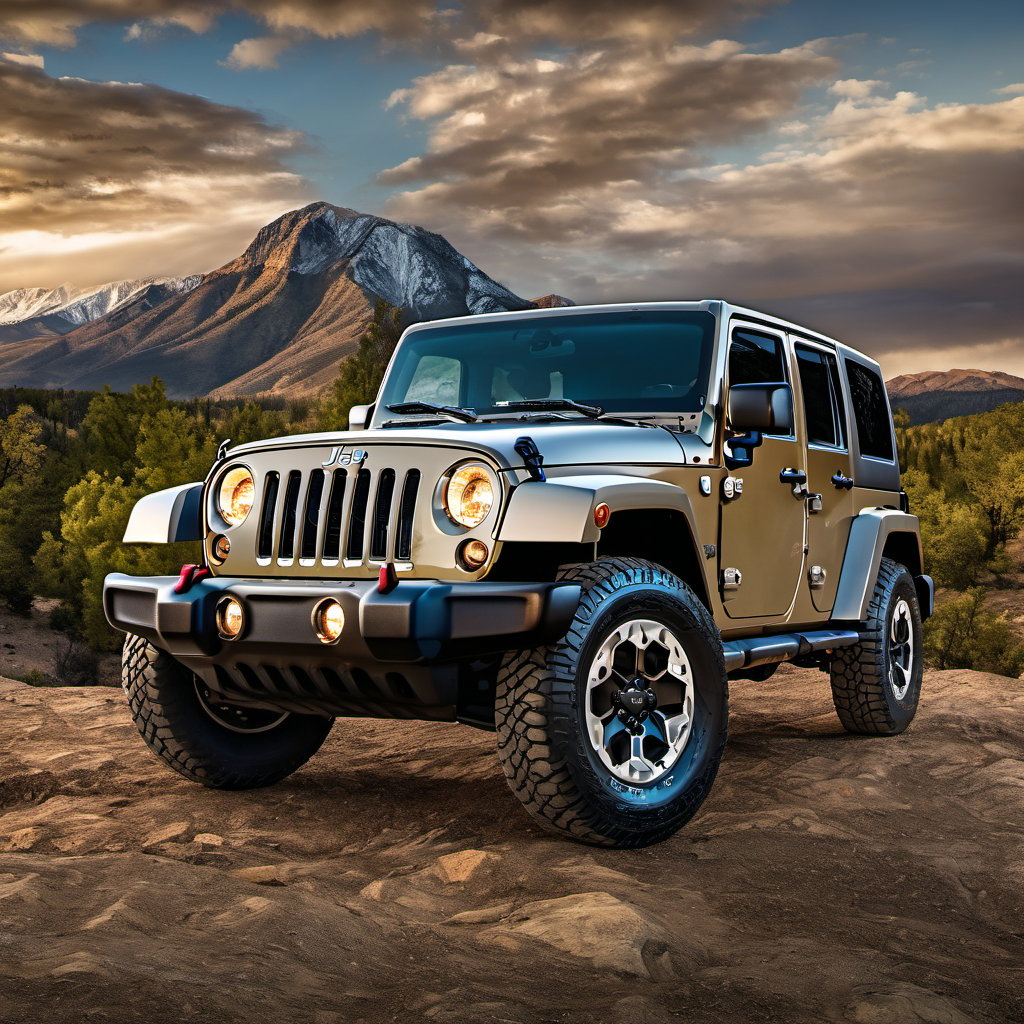
2017 Jeep Wrangler SUV

2017 Jeep

WranglerSUV

3.6L V6 Pentastar · SUV

The 2017 Jeep Wrangler (JK generation, 2007–2018) is one of the most iconic off-road vehicles ever built. It carries a body-on-frame construction, solid front and rear axles, and a removable top and doors — features almost no other mainstream vehicle still offers. It's purpose-built for trail driving but is also a daily driver for hundreds of thousands of owners who simply love the lifestyle. Under the hood, the vast majority of 2017 Wranglers left the factory with the 3.6L Pentastar V6, a generally strong engine that replaced the old 3.8L around 2012. The Wrangler is available in two- and four-door configurations (Sport, Sahara, Rubicon trims), and nearly all feature the Command-Trac or Rock-Trac 4WD system depending on trim. The JK Wrangler is not a fuel-efficient, smooth-riding commuter — it's boxy, loud, and thirsty by modern standards. But for buyers who want genuine off-road ability, open-air driving, and a truck that holds its resale value better than almost anything else in its class, it's hard to beat.

Reliability
3/5
Verified data
Specs shown for Wrangler 4WD — the most common configuration. Other trims may vary in engine, drivetrain, or fuel economy. Sign in to see your vehicle's exact specs.
Engine
[object Object]
Drivetrain
4WD
Fuel
Gasoline
MPG
17 city / 21 hwy / 18 combined
Seats
5
Doors
4
Body
SUV
MSRP
$27,495

Overview

AI-curated

The 2017 Jeep Wrangler (JK generation, 2007–2018) is one of the most iconic off-road vehicles ever built. It carries a body-on-frame construction, solid front and rear axles, and a removable top and doors — features almost no other mainstream vehicle still offers. It's purpose-built for trail driving but is also a daily driver for hundreds of thousands of owners who simply love the lifestyle. Under the hood, the vast majority of 2017 Wranglers left the factory with the 3.6L Pentastar V6, a generally strong engine that replaced the old 3.8L around 2012. The Wrangler is available in two- and four-door configurations (Sport, Sahara, Rubicon trims), and nearly all feature the Command-Trac or Rock-Trac 4WD system depending on trim. The JK Wrangler is not a fuel-efficient, smooth-riding commuter — it's boxy, loud, and thirsty by modern standards. But for buyers who want genuine off-road ability, open-air driving, and a truck that holds its resale value better than almost anything else in its class, it's hard to beat.

Known for
  • Best-in-class off-road capability with solid front and rear axles
  • Strong resale value — holds value better than most SUVs
  • Removable doors, roof, and fold-down windshield
  • Loyal, active owner community with massive aftermarket support
Best for
  • Off-road and trail enthusiasts
  • Buyers who want open-air driving
  • Those needing serious 4WD in Wisconsin winters
  • Owners who plan to modify and personalize their vehicle
Watch for
  • Poor fuel economy — expect 17–18 MPG combined in real-world driving
  • Highway wind noise and vibration are significant at speed
  • Soft-top and door seals wear out and leak, especially after Wisconsin winters
  • 3.6L Pentastar has a known oil consumption issue on some units

Common issues by mileage

6 known

3.6L Pentastar oil consumption / valve train tick

medium
Typically appears
40–100k mi
Estimated repair
$200 – $1,200

Death Wobble — violent steering oscillation at highway speed

medium
Typically appears
50–120k mi
Estimated repair
$300 – $900

Totally Integrated Power Module (TIPM) failure — random electrical faults

medium
Typically appears
60–120k mi
Estimated repair
$400 – $1,100

Freedom top / soft top leaks and seal deterioration

high
Typically appears
30–80k mi
Estimated repair
$100 – $600

Exhaust manifold studs cracking / breaking

medium
Typically appears
60–130k mi
Estimated repair
$250 – $700

Frame and floor pan rust (especially in salt-belt states)

high
Typically appears
50k mi+
Estimated repair
$500 – $3,500

Maintenance schedule

  1. 1
    Every 5,000 miles or 6 months Oil change with quality full-synthetic 5W-20

    The Pentastar has documented oil consumption tendencies — synthetic helps, and checking the level between changes is strongly recommended. Don't stretch intervals.

  2. 2
    Every 30,000 miles or after significant off-road use Inspect and re-torque front track bar, tie rod, and control arm bolts

    Loose front-end components are the primary cause of Death Wobble. Catching wear early is far cheaper than chasing a wobble after the fact.

  3. 3
    Every 30,000 miles (sooner if submerged off-road) Differential and transfer case fluid service

    Solid axles and the NV241/241OR transfer case use gear oil that breaks down and absorbs moisture. Water intrusion after deep-water crossings accelerates wear.

  4. 4
    Every spring and fall Inspect and lubricate door hinges and freedom top latches

    Door removal and reattachment, plus freeze-thaw cycles, wear hinge pins and corrode latch hardware. Greasing them twice a year prevents binding and cracking.

  5. 5
    Every fall before winter Inspect top seals and soft top windows

    Cracked or shrunken seals let in Wisconsin precipitation and road salt spray, which leads to floor rust and electrical issues from water intrusion.

  6. 6
    Every 2 years Brake fluid flush

    Brake fluid is hygroscopic and absorbs moisture over time, lowering its boiling point. Important given the Wrangler's use in demanding terrain.

  7. 7
    Every fall Inspect frame rails and floor pan for rust

    Wisconsin road salt attacks Wrangler floor pans and frame rails aggressively. Early treatment with rust converter and undercoating is far cheaper than structural repair.

  8. 8
    Every 60,000 miles Spark plug replacement

    Worn plugs on the Pentastar can trigger misfires and contribute to rough idle. Access is reasonable on the Wrangler compared to other V6 applications.

Always defer to the manufacturer's service manual for warranty-mandated intervals.

Cost of ownership

Annual maintenance
$700 – $1,400
Fuel
At 18 MPG combined and ~15,000 miles/year, expect roughly $1,700–$2,100/year at current Midwest gas prices. Lifted Wranglers on larger tires will see noticeably lower real-world MPG.
Insurance
Typically moderate — the Wrangler's high resale value pushes comprehensive premiums up slightly, but the low theft rate and simple safety profile keep liability costs reasonable. Expect $1,000–$1,600/year for a typical adult driver in Wisconsin.

The Wrangler's annual maintenance cost is reasonable for what it is — a body-on-frame 4WD with solid axles. Parts are widely available, and independent shops can handle virtually everything. The bigger budget wildcard is modifications: lift kits, larger tires, and lockers are common on this platform and add both upfront cost and ongoing wear-related maintenance. Keep up with fluids and front-end hardware and it's a durable, long-lived truck.
Seasonal care

Lake Geneva, WI
Winter
  • Apply a quality undercoating or frame sealant every fall — Wisconsin road salt is extremely aggressive on Wrangler floor pans and frame rails.
  • Check and replace the battery before first hard freeze. Cold cranking amps drop sharply below 0°F; the Wrangler's 6-cylinder needs a strong battery.
  • Switch to a winter-rated washer fluid rated to at least -30°F — the Wrangler's large windshield and soft-top gaps collect spray quickly on Wisconsin roads.
  • Inspect soft-top and hardtop seals before winter. Cracked seals allow salt water intrusion that rusts floors and damages wiring under carpet.
  • Use a silicone-based lubricant on door seals and freedom top latches to prevent them from freezing shut.
  • Check 4WD engagement (both 4H and 4L) before winter season so you know it's working before you need it in a ditch.
Summer
  • Monitor tire pressure closely — tires on lifted Wranglers with non-standard sizes can lose pressure faster in summer heat and handle poorly if underinflated.
  • Inspect the A/C system before summer heat arrives — the compressor and cabin filter are often neglected on Wranglers where owners frequently remove doors/top.
  • Check coolant level and condition; the Pentastar can run warm in stop-and-go traffic with a marginal cooling system.
  • If running a soft top, condition the windows and seams with vinyl protectant to prevent UV cracking through the summer.
  • Inspect brake pads and rotors after a winter of salt exposure before summer off-road or towing use.

Comparable vehicles

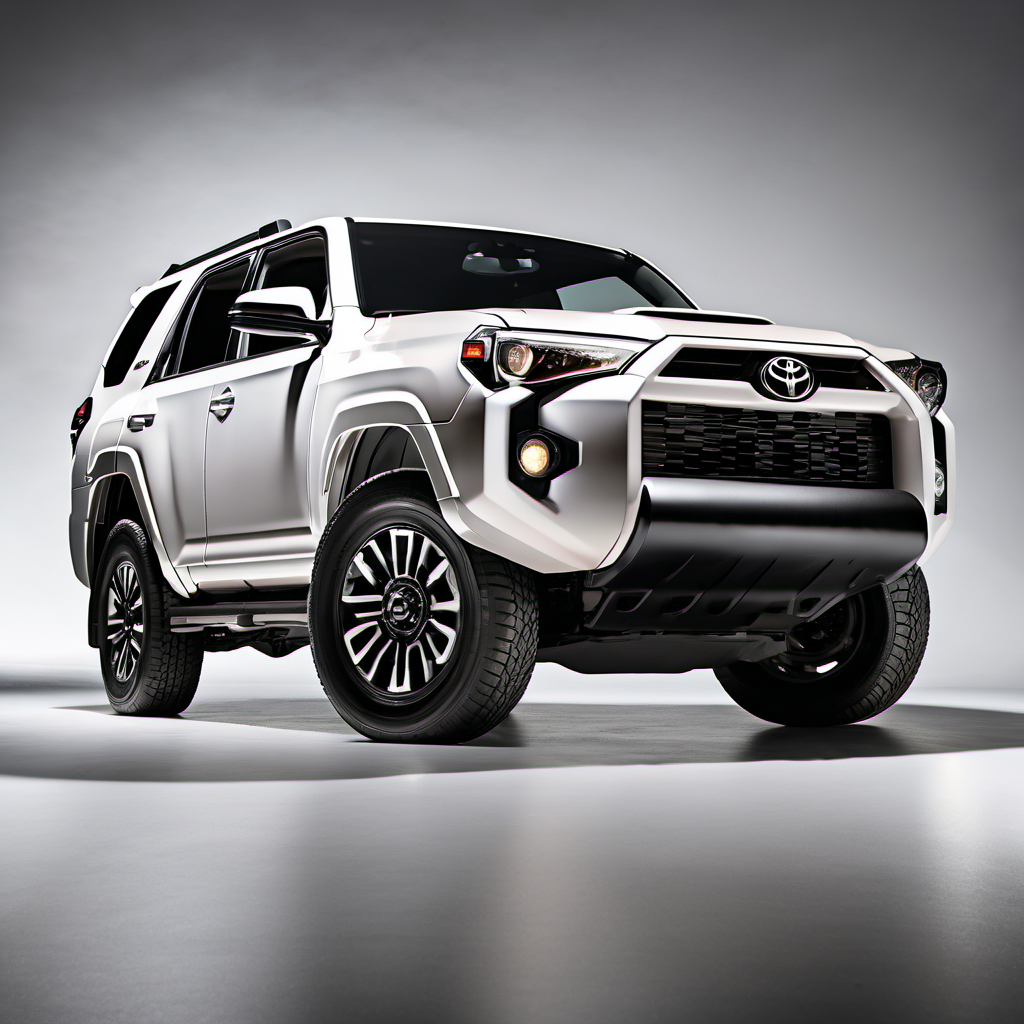
2017 Toyota 4Runner
2017 Toyota
4Runner

Body-on-frame, solid rear axle, excellent long-term reliability, similar price range. Less open-air fun but better on-road manners and stronger resale in some markets.

2017 Ford
Bronco Sport

Not yet available in 2017, but for buyers cross-shopping the Wrangler's successor era — the full-size Bronco (2021+) is the most direct competitor. For 2017, the closest Ford alternative is the F-150 with FX4 package for off-road buyers.

No catalog match
2017 Land Rover
Defender

Iconic off-road capability and similar open-air appeal, but significantly higher ownership cost and dealer-dependent maintenance. Worth a look for buyers wanting premium finish.

No catalog match
2017 Chevrolet
Colorado ZR2

Mid-size truck with serious off-road hardware (Multimatic DSSV shocks, locking diffs). More practical daily driver than the Wrangler with similar trail credibility at a comparable price point.

No catalog match

If you're shopping for one

Red flags
  • Any signs of Death Wobble history (worn track bar ends, bent tie rods, uneven front tire wear) — can be a money pit if neglected.
  • Rust-through on floor pans or frame — structural repair costs can exceed the vehicle's value.
  • Evidence of repeated water intrusion (musty smell, stained carpet, corroded fuse box connections).
  • A lift kit with no paperwork or clearly uneven installation — walk away unless you're prepared to re-do the front end.
  • Low oil level at time of inspection with no good explanation from the seller.
  • TIPM-related complaints in the seller's history (intermittent no-start, random accessory behavior) — module replacement is expensive.
What to inspect
  • Frame rails and floor pans — get under the vehicle and look for active rust, not just surface scale. Pay extra attention to the area behind the front wheels and under the rear seat.
  • Front-end hardware: grab the front tires and shake them for play in the track bar, tie rod ends, and ball joints. These are death wobble contributors.
  • Top seals and drain channels — look for water stains on the carpet and under the rear cargo area. Wet carpet means rust is forming underneath.
  • Check oil level and condition at time of inspection. If it's low, ask how often the owner checked it — Pentastar oil consumption is real.
  • Engage 4H and 4L during test drive and confirm smooth engagement. Listen for clunking or binding.
  • Inspect door hinges for slop or cracking — especially on lifted examples where doors have been removed repeatedly.
  • Look for aftermarket lift kits and ask for the installer's documentation. Improperly installed lifts are a leading cause of Death Wobble and premature front-end wear.
AI profile generated 20 days ago · claude-sonnet-4-6 · v2.